Table of Contents
- What a diamond report actually is
- Key components of a diamond grading report
- Major grading laboratories in the U.S.
- How to verify a diamond report’s authenticity
- Grading reports, certificates, and appraisals: what’s the difference?
- Limitations and common concerns
- Expert tips from Superjeweler on using reports wisely
- How labs actually create a diamond report
- How to interpret the 4Cs and their impact on value
- The role of a diamond report when buying
- Natural vs. lab-grown diamond reports
- Key Takeaways
What a diamond report actually is
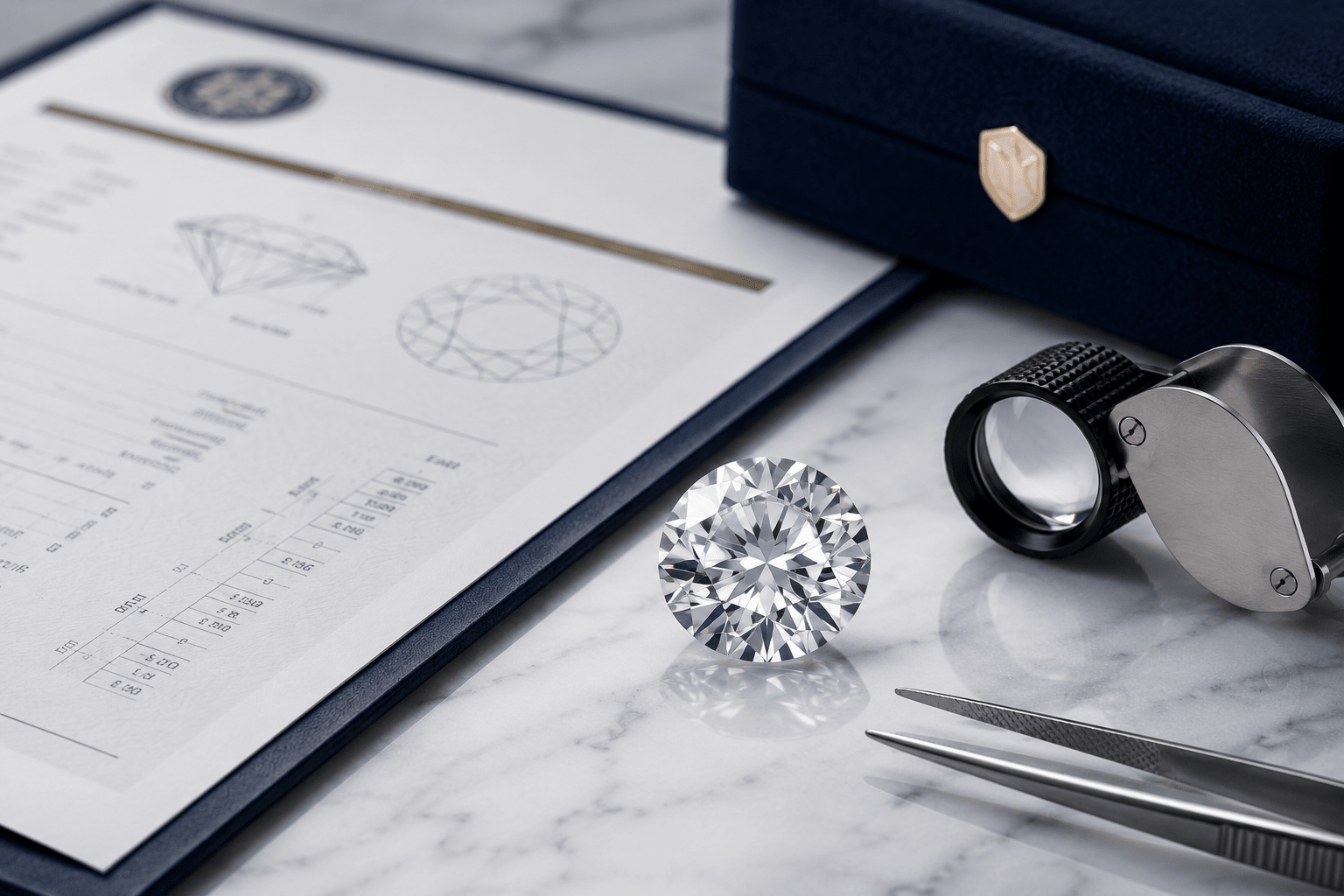
A diamond report is an independent, scientific document issued by a third-party gemological laboratory that objectively assesses a loose diamond’s authenticity, quality, and physical characteristics. It is not a price tag, not an insurance document, and not a guarantee of value. Think of it as a passport for your stone.
The report covers the four core quality factors, known as the 4Cs: color, clarity, cut, and carat weight. Beyond those, it discloses any treatments the diamond has undergone, such as fracture filling or laser drilling. Labs measure dimensions to the hundredth of a millimeter and record weight to the thousandth of a carat, so the data is genuinely precise.
- Confirms the stone is a real diamond (natural or lab-grown)
- Documents color, clarity, cut grade, and carat weight
- Discloses treatments that affect appearance or durability
- Includes measurements, fluorescence, polish, and symmetry grades
- Does not assign a dollar value or serve as an appraisal
Key components of a diamond grading report
Every diamond grading report from a reputable lab follows a consistent structure, though the exact layout varies by issuer. The 4Cs form the core, but the supporting details are where buyers often learn the most.
- 4Cs grades: Color (D-to-Z scale for colorless stones), clarity (FL to I3), cut (Excellent to Poor for round brilliants), and carat weight
- Measurements: Length, width, and depth in millimeters, plus table and depth percentages
- Polish and symmetry: Graded Excellent, Very Good, Good, Fair, or Poor; both affect how light moves through the stone
- Fluorescence: Describes the stone’s glow under UV light, rated None to Very Strong
- Clarity plot diagram: A mapped diagram of the stone’s inclusions and blemishes, unique to that diamond
- Treatments: Any known enhancements are disclosed, including HPHT color treatment or fracture filling
“A GIA report contains a full scientific and unbiased assessment of your diamond’s 4Cs. GIA tests every diamond submitted to establish its authenticity as a diamond and whether it’s been subjected to treatments.” — GIA
The clarity plot is particularly useful at the point of purchase. It lets you physically match the inclusions visible under magnification to the diagram on the report, confirming the stone in your hand is the one that was graded.

Major grading laboratories in the U.S.
Two labs dominate the U.S. market: GIA (Gemological Institute of America) and IGI (International Gemological Institute). Both issue reports for natural and lab-grown diamonds, but their reputations and grading standards differ in ways that matter to buyers.
- GIA: Founded in 1931 and a nonprofit research institute, GIA set the global standard for diamond grading in the 1950s. Its reports are trusted by jewelers, auction houses, and museums worldwide. GIA grades only loose stones and does not sell gems, which keeps its evaluations impartial.
- IGI: A for-profit lab with locations across North America, Europe, and Asia. IGI has grown significantly in the lab-grown diamond segment and issues reports that are widely accepted by U.S. retailers.
- Other labs: Additional laboratories operate in the U.S. market. Their reports vary in consistency and industry acceptance, so the issuing lab’s reputation always matters.
“For nearly 100 years, GIA has helped advance the global diamond industry through innovation and education. A GIA Diamond Grading Report is the internationally trusted source for diamond quality reporting by jewelers, museums and auction houses.” — GIA
How to verify a diamond report’s authenticity
A professional-looking paper report proves nothing on its own. Online verification through the issuing lab is the only reliable confirmation.
- Locate the report number printed on the document (and often laser-inscribed on the diamond’s girdle).
- Visit the lab’s official website. For GIA reports, use the GIA Report Check tool, available 24/7 for all reports issued since January 1, 2000.
- Enter the report number and compare every detail: shape, measurements, color, clarity, and the clarity plot diagram.
- Inspect physical security features. GIA reports carry a hologram, microprint lines, and a security screen that prevent duplication.
- Match the stone to the report. Under 10x magnification, confirm the inclusions visible in the diamond correspond exactly to the plotted diagram.
“All GIA reports contain security features such as a hologram, security screen and microprint lines that prevent them from being forged or duplicated. Also, GIA’s Report Check service can verify whether the information on the report matches what’s contained in our database.” — GIA
A known fraud tactic involves laser-inscribing a counterfeit GIA report number onto a lab-grown or treated diamond cut to closely match a natural stone’s dimensions. Counterfeit inscriptions like these are why digital verification and physical-to-report matching are both necessary, not optional.
Grading reports, certificates, and appraisals: what’s the difference?
These three terms get used interchangeably in jewelry stores, but they describe very different documents.
- Diamond grading report: A scientific description of a diamond’s physical characteristics. It grades quality but assigns no monetary value. This is what GIA and IGI issue.
- Certificate: Technically, labs issue reports, not certificates. The word “certificate” implies a guarantee, which no grading lab provides. When a seller calls a report a certificate, treat it as marketing language.
- Appraisal: A monetary valuation prepared by a certified appraiser, typically for insurance or resale purposes. Appraisals reflect market conditions and can change over time. A diamond appraisal report and a grading report serve completely different purposes and should never be confused.
Use a grading report to understand what you’re buying. Use an appraisal when you need a dollar figure for insurance coverage.
Limitations and common concerns
No grading report is perfect, and buyers who treat one as gospel can get burned.
- Grading is subjective. Expert judgment drives every grade, and the same diamond can receive slightly different grades from different labs. Lab reputation matters precisely because consistency varies.
- Reports don’t guarantee value. A grading report documents quality; it says nothing about what the market will pay for that quality today or tomorrow.
- Fraud is real. Counterfeit inscriptions on treated or lab-grown stones are a documented problem. Digital verification is the defense.
- Physical inspection still matters. Two diamonds with identical grades can look very different in person, depending on how inclusions are positioned or how the cut interacts with light.
Consulting a certified gemologist before a major purchase adds a layer of evaluation that no paper document can replicate.
Expert tips from Superjeweler on using reports wisely
A diamond report is a tool, not a verdict. Here’s how to use it well.
- Always verify the report online through the issuing lab before finalizing any purchase.
- Match the physical stone to the clarity plot under magnification. Any mismatch is a red flag.
- See the diamond in person under multiple lighting conditions. Grades on paper don’t capture how a stone performs under candlelight versus fluorescent office lighting.
- Don’t use a grading report as an investment guide. It describes quality, not future price.
Pro Tip: Ask the seller for the report number before you even see the stone, then verify it yourself on the lab’s website. If they hesitate, that hesitation tells you something.
“Reports explain scientific quality but cannot replace viewing diamonds under different lighting or professional evaluation.” — Jewelers of America
How labs actually create a diamond report
The grading process at a reputable lab is designed to reduce individual bias. A diamond submitted to GIA, for example, passes through multiple independent graders who each assess the stone separately without seeing each other’s results. The final grade reflects a consensus, not a single opinion.
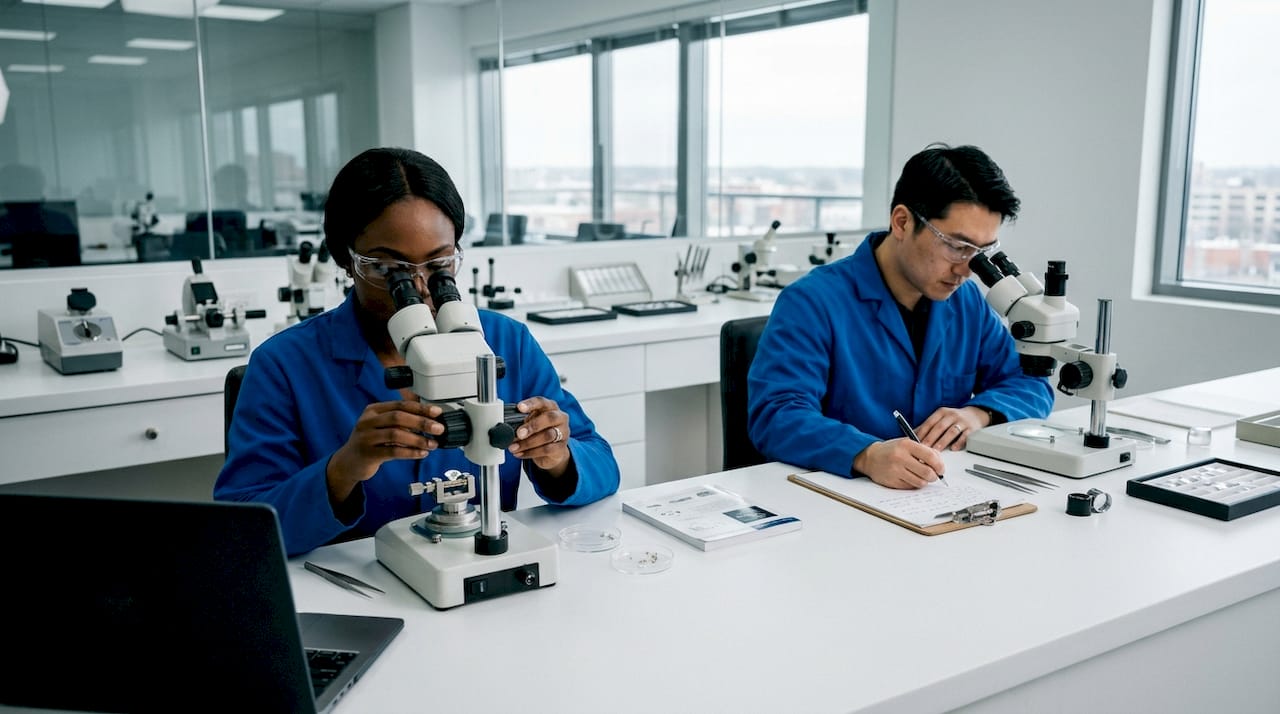
Graders evaluate color by comparing the stone to a set of master diamonds under controlled lighting. Clarity is assessed under 10x magnification, with graders identifying, mapping, and characterizing every inclusion. Cut grading for round brilliants involves precise optical measurements of proportions, angles, and finish. The resulting grades are then compiled into the final report, which is cross-checked before release.
How to interpret the 4Cs grades and their impact on value
Color and clarity grades follow standardized scales, but their real-world impact on appearance is not always linear. A D-color diamond is chemically colorless; an H-color stone shows a faint warmth that most people cannot detect face-up in a setting. The price gap between D and H, however, can be dramatic.
Clarity grades run from Flawless (FL) down to Included (I3). Stones graded VS1 or VS2 (Very Slightly Included) typically have inclusions invisible to the naked eye, yet cost noticeably less than Flawless stones. Cut is the grade that most directly controls brilliance. An Excellent-cut round brilliant will outshine a poorly cut stone of higher color and clarity every time. Carat weight is straightforward in measurement but not in price: a 1.00-carat stone commands a premium over a 0.99-carat stone of identical quality, simply because of the round-number threshold.
The role of a diamond report in the diamond buying process
A grading report levels the playing field between buyer and seller. Without one, you’re taking the seller’s word for a stone’s quality. With one from a respected lab, you have an independent, documented baseline for comparison.
Reports let you compare two diamonds side by side on objective criteria, which is especially useful when shopping online. They also provide documentation you can share with an appraiser, an insurer, or a future buyer if you ever resell. At Superjeweler, every certified diamond listing includes the relevant grading details so you can shop with that baseline already in hand. Browse engagement rings with certified diamonds to see how report data translates into real purchasing decisions.
Natural vs. lab-grown diamond reports
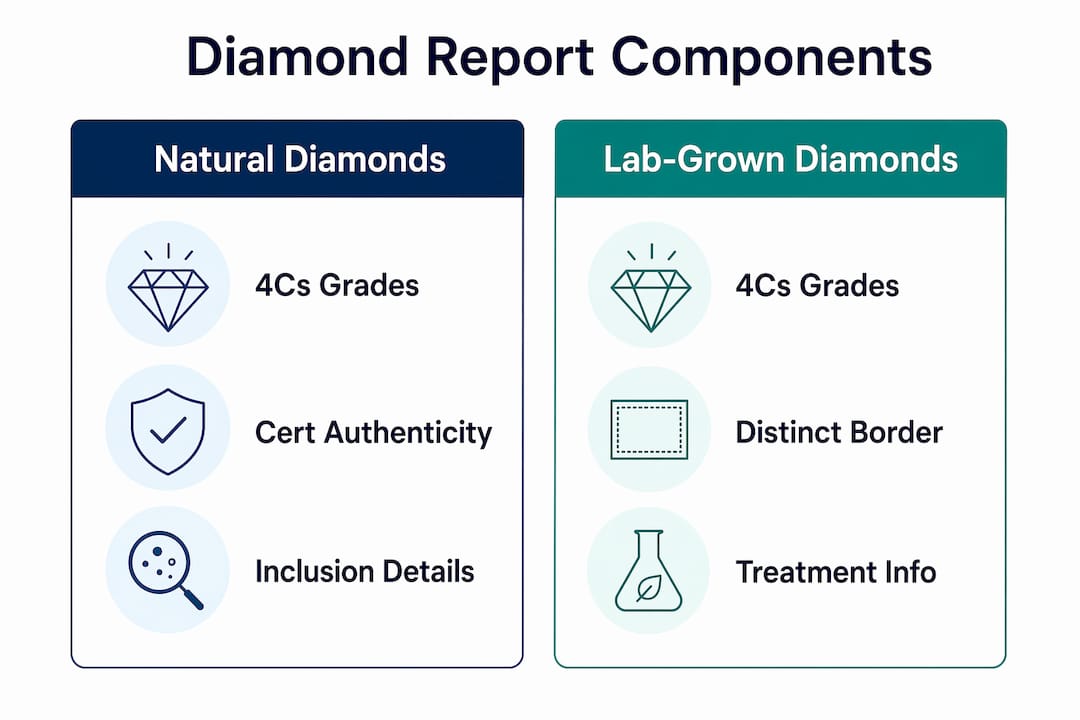
Both natural and lab-grown diamonds can receive grading reports, and the 4Cs apply equally to both. The key difference is disclosure. A report for a lab-grown diamond must identify the stone as laboratory-grown and specify the growth method, either high-pressure high-temperature (HPHT) or chemical vapor deposition (CVD).
GIA issues separate report formats for lab-grown stones, with distinct color borders to prevent confusion with natural diamond reports. IGI similarly differentiates its lab-grown reports. Superjeweler’s lab-grown diamond collection includes stones with full grading documentation, so the same verification steps apply whether you’re buying natural or grown.
Key Takeaways
A diamond report is an independent scientific document that grades quality and confirms authenticity, but it does not assign monetary value or replace in-person evaluation.
| Point | Details |
|---|---|
| Reports grade, not price | A grading report documents the 4Cs and treatments; only an appraisal assigns a dollar value. |
| GIA sets the U.S. standard | GIA has graded diamonds to a globally trusted standard since the 1950s. |
| Online verification is mandatory | Use the GIA Report Check tool to confirm any GIA report; physical security features alone are not enough. |
| Fraud targets inscriptions | Counterfeit report numbers have been laser-inscribed on treated or lab-grown stones; always match the stone to the report’s clarity plot. |
| Reports support, not replace, judgment | Grades on paper don’t capture how a diamond looks in different lighting; see the stone in person before buying. |
