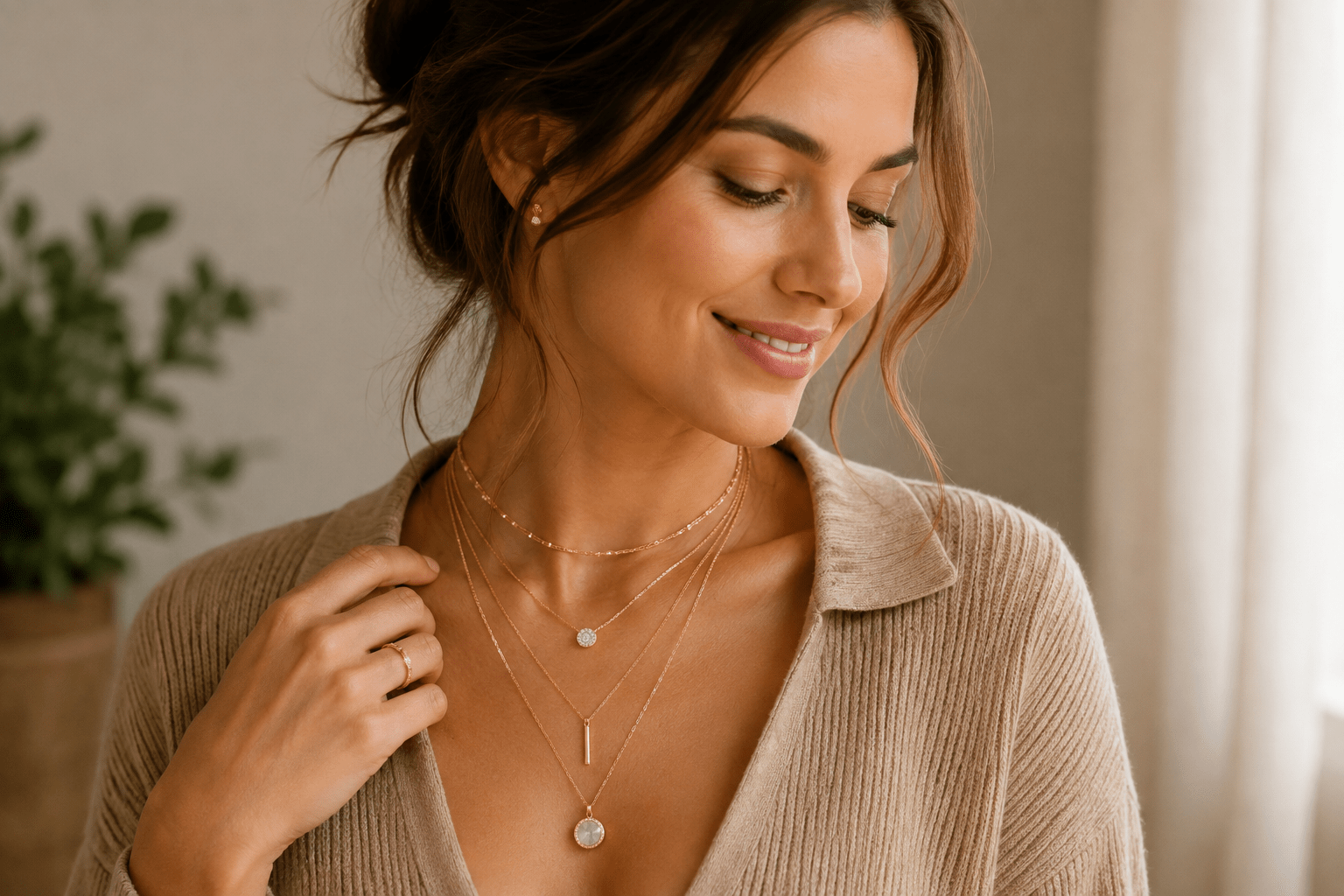
The easiest way to nail necklace layering is to pick one focal piece, stagger several chains spaced apart, and balance texture and weight from lightest at the top to heaviest at the bottom. That single rule covers most situations. Here’s how to apply it in three steps:
- Choose your star piece. This is the necklace with the most visual weight: a pendant, a gemstone drop, or a bold chain. Everything else supports it.
- Stagger your lengths. A classic starting combo: a 16″ choker, an 18″ pendant (your focal piece), and a 22″ longer chain below. Each sits in its own lane.
- Order light to heavy. Fine, delicate chains go closest to the neck; heavier or chunkier styles fall lower. This keeps the stack readable and tangle-resistant, as PrettyPicked’s layering guide confirms.
Pro Tip: If you’re new to layering, start with just two pieces: a 16″ choker and an 18″ pendant. That two-piece stack is the foundation of almost every more complex look.
Key Takeaways
Intentional layering with 2–4 pieces, at least 2 inches of spacing between each, and one clear focal piece produces the most wearable and modern stacked necklace looks.
| Point | Details |
|---|---|
| Start with a focal piece | Pick one standout necklace first; every other chain supports it without competing. |
| Use 2-inch spacing | Keep at least 2 inches between each layer to prevent tangling and keep each piece readable. |
| Order light to heavy | Place fine, delicate chains closest to the neck and heavier styles lower for a clean, stable stack. |
| Repeat a metal tone | Use one metal across at least two layers to keep a mixed-metal stack cohesive rather than accidental. |
| Superjeweler for layering basics | Gemstone pendants, pearl necklaces, gold chains, and extenders at Superjeweler cover every role in a layered stack. |
Table of Contents
- What’s the right necklace layering mood for 2026?
- How do you choose necklace lengths for a layered look?
- Which chain types mix well together?
- How do you layer pendants without them competing?
- How do you mix metals and colors without losing cohesion?
- Which necklace stacks work best with different necklines?
- What tools keep layered necklaces tangle-free?
- Five example stacks to try right now
- Why “less but better” is the only layering rule worth keeping
- Where to find pieces that make layering simple
- Sources
What’s the right necklace layering mood for 2026?
The dominant styling direction for 2026 is what stylists are calling “confident restraint.” Fewer pieces, chosen with more intention. Harper’s Bazaar’s 2026 necklace trend report points to one clear shift: instead of piling on five or six chains, the modern approach anchors a look with one strong necklace and adds at most one softer secondary layer.
Front-fastening chains are part of the same story. Designers are building closures into the front of the necklace as a visible design feature, not something to hide at the back. It’s functional and contemporary at once.
For casual and summer styling, Marie Claire’s jewelry pro guide adds a useful counterpoint: the best stacks feel slightly collected and personal, like a small archive of pieces you’ve gathered over time rather than a curated display. The two ideas aren’t in conflict. Intentional doesn’t mean stiff. It means every piece earns its place.
How do you choose necklace lengths for a layered look?
Length is the single most important variable in any layered necklace stack. Two chains sitting at the same height will fight each other, tangle, and make both pieces unreadable. Get the lengths right first, and almost everything else falls into place.
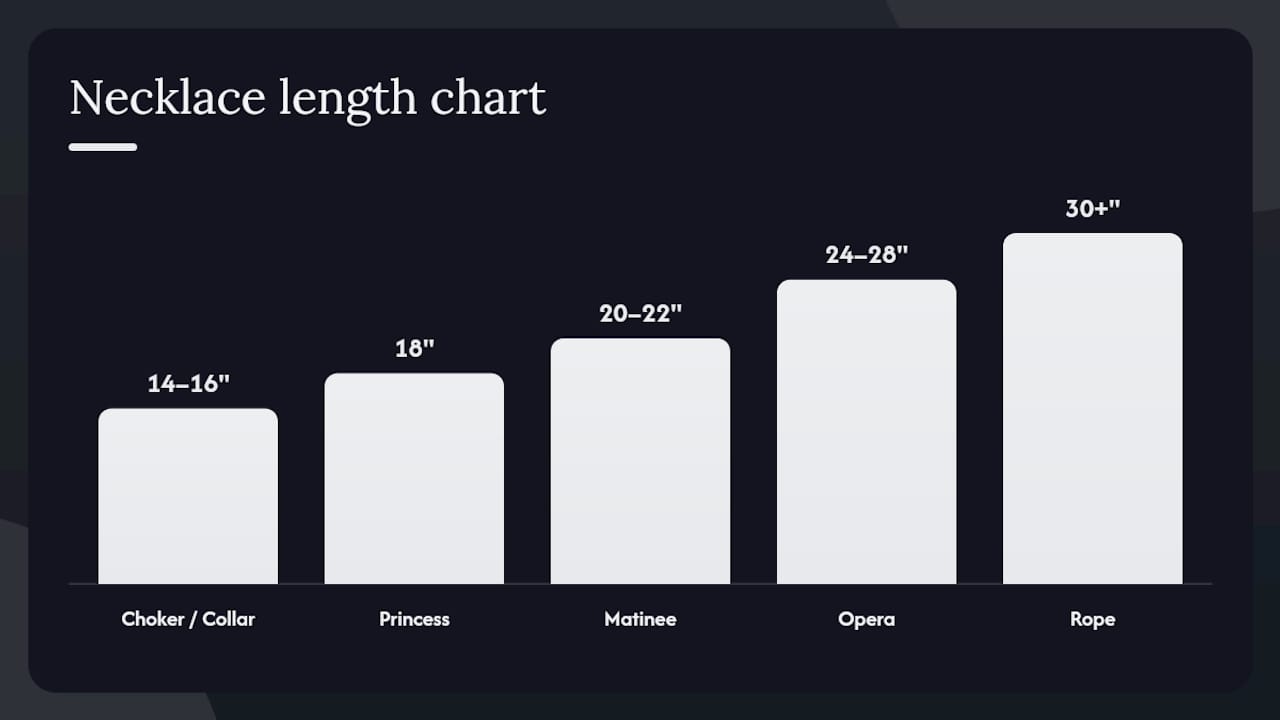
Standard necklace length chart
| Length | Name | Where it sits |
|---|---|---|
| 14–16″ | Choker / Collar | At or just above the collarbone |
| 18″ | Princess | At the collarbone, the most common length |
| 20–22″ | Matinee | Below the collarbone, above the bust |
| 24–28″ | Opera | At or below the bust |
| 30″+ | Rope | Falls to the sternum or lower |
The PrettyPicked layering guide recommends keeping at least a 2-inch gap between each layer. For petite frames, tighter spacing can work, but the gap still needs to be visible. Taller frames can use larger spacing and carry more dramatic length differences without the stack looking sparse.
Four ready-to-wear layering recipes
- Minimal two-piece: 16″ fine chain + 18″ pendant. Clean, modern, works with almost any neckline.
- Stylist sweet spot (three-piece): 16″ choker + 18″ pendant + 22″ longer plain chain. Three is the number most stylists land on as the most wearable combination.
- Boho three-to-four piece: 14″ collar + 18″ beaded or mixed-metal chain + 22″ pendant + 26″ long chain. Layered and personal, best for open necklines and casual outfits.
- Statement two-piece: 16″ bold chain + 22″ dramatic pendant. Two pieces, high impact. Pairs well with a simple crew or V-neck.
Pro Tip: Necklace extenders add 2–3 inches to any chain and cost almost nothing. Keep a few on hand so you can adjust a 16″ chain to 18″ when a recipe calls for it.
Which chain types mix well together?
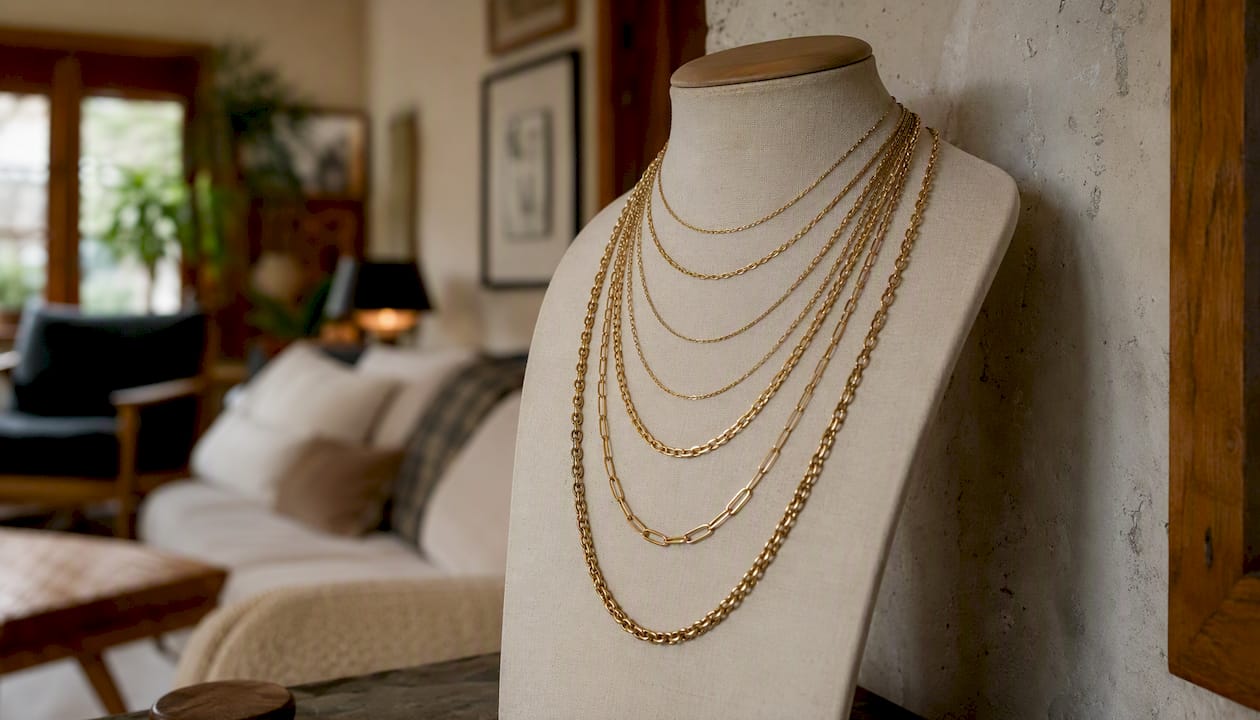
Texture contrast is what makes a layered stack look intentional rather than accidental. Mixing chain styles creates visual depth and, practically, reduces tangling because differently shaped links don’t nest into each other the way identical chains do. Celebrity stylists interviewed by Parade specifically recommend alternating textures as one of the six core layering techniques.
Common chain types and their visual weight:
- Snake chain: Smooth, sleek, low-profile. Reads as fine and modern. Great as a supporting layer.
- Paperclip chain: Flat, graphic, medium weight. Adds structure without bulk.
- Curb chain: Interlocked flat links, medium-to-heavy. Strong visual presence; works as a focal chain.
- Rope chain: Twisted, textured, substantial. Best as a lower, longer layer.
- Cable chain: Classic round links, versatile weight. The most neutral option in any stack.
- Figaro chain: Alternating short and long links. Adds rhythm and visual interest.
- Beaded chain: Casual, tactile, often colorful. Adds warmth and personality to a stack.
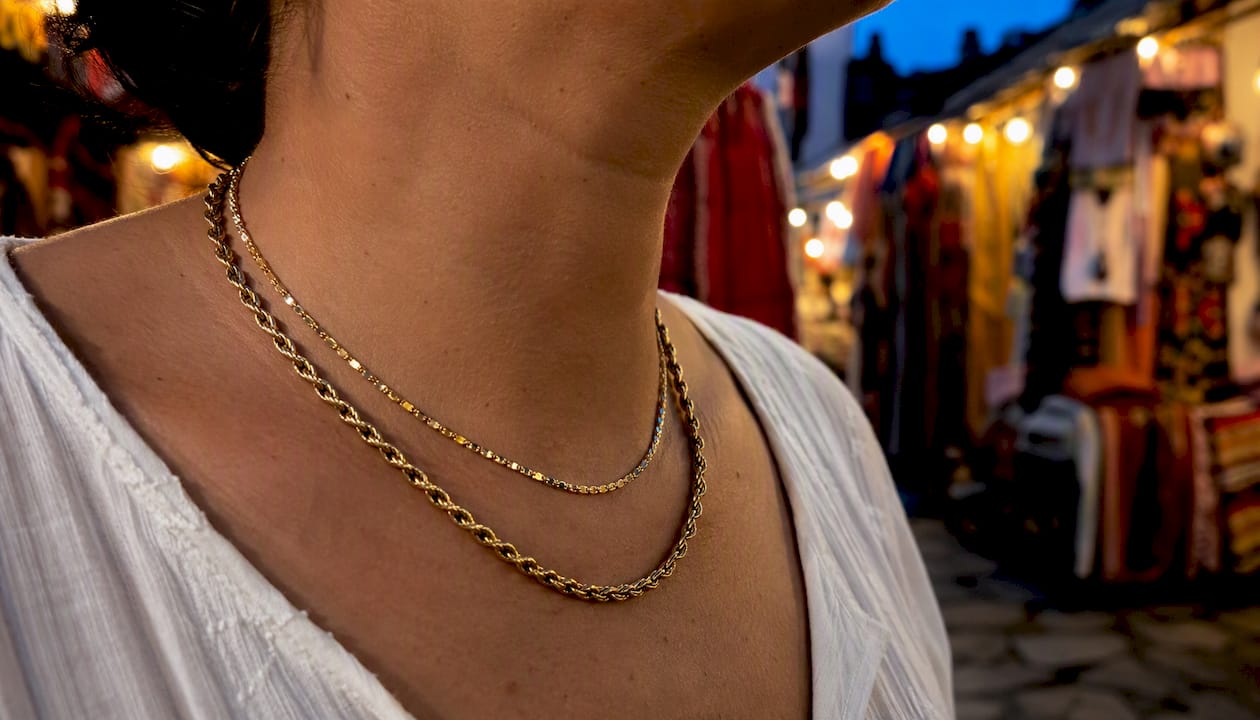
The pairing rule is simple: mix at least two different textures, avoid two chains of identical weight at adjacent lengths, and repeat your dominant metal tone across at least two pieces. A sleek snake chain paired with a paperclip creates exactly the kind of contrast that makes each piece visible on its own.
Pro Tip: Order your chains from lightest (top) to heaviest (bottom). A fine snake chain at 16″ and a rope chain at 22″ will stay in place and read clearly. Reverse that order and both pieces shift and tangle.
How do you layer pendants without them competing?
Pendants are the focal points of most layered looks, which means you can only have one true star. The moment two pendants fight for attention at similar lengths, the stack reads as cluttered rather than curated.
The dos and don’ts:
- Do pick one pendant as the clear focal piece and keep supporting chains simpler (plain or lightly textured, no competing charms).
- Do stagger pendant lengths by at least 2 inches so each hangs in its own visual zone.
- Don’t place two pendants of similar size at adjacent lengths. They’ll overlap and obscure each other.
- Don’t mix more than two pendants in a single stack unless the size difference is dramatic.
For personalized necklaces — initials, birthstone drops, name plates — the same logic applies. Order them by visual weight: the smallest or most delicate piece sits highest, the most significant piece (the one with the most meaning or the largest stone) sits at the focal length. A clean example: a 16″ initial pendant, an 18″ birthstone gemstone necklace as the focal piece, and a 22″ plain chain below to ground the stack without competing.
Parade’s stylist guide frames this as the “anchor piece” principle: one necklace sets the tone, and every other piece in the stack either supports or recedes.
How do you mix metals and colors without losing cohesion?
Mixed metals are fully on-trend for 2026, and the fear of “clashing” is mostly outdated. You don’t need to measure it. Just make sure one tone dominates.
- Gold-forward stack: Two gold chains (yellow or rose) at different lengths, one silver or white-gold accent chain. The silver reads as a deliberate contrast, not an accident.
- Silver-forward stack: Two silver or white-gold chains, one gold chain or a gold-toned pendant as the focal piece.
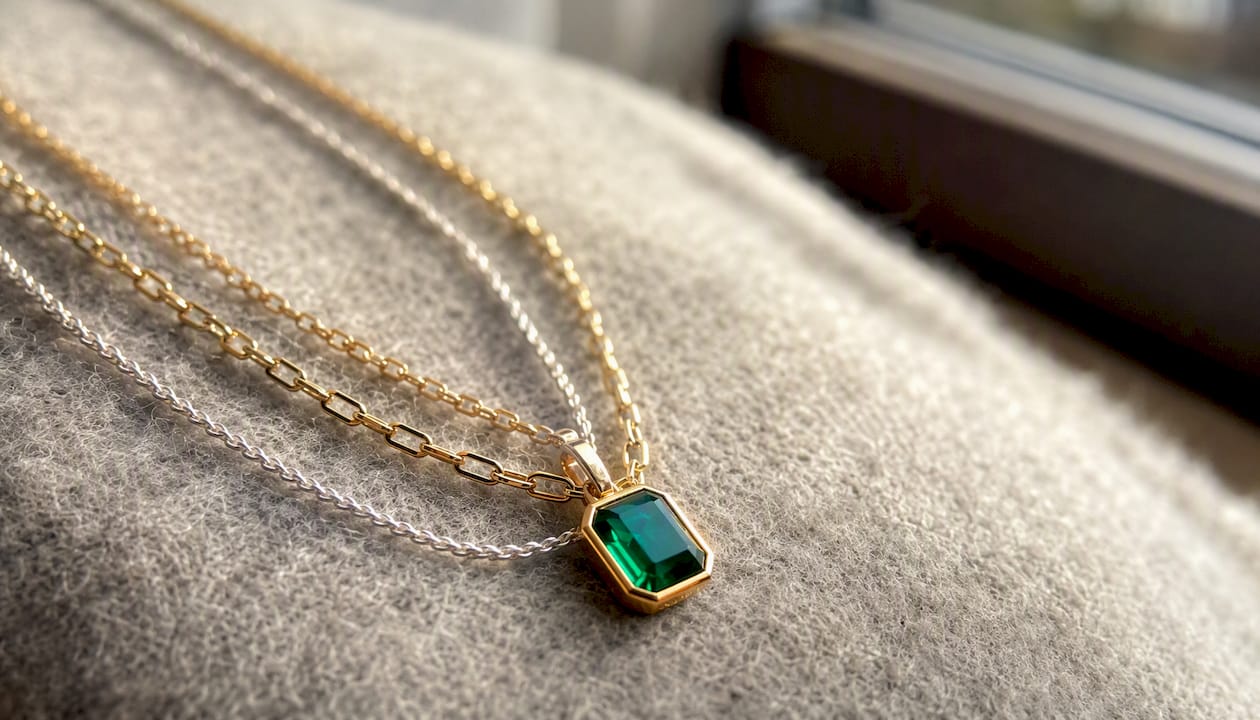
- Mixed with color: A colored gemstone pendant or a strand of pearls acts as a neutral that bridges metal tones. Pearl necklaces work especially well here because their luster picks up both warm and cool metal tones.
Repeating a metal tone across at least two layers is the move that keeps the stack from looking random. One gold chain and one silver chain with nothing to connect them reads as two separate necklaces worn at once. Add a second gold piece, even a small one, and suddenly it’s a stack.
For colored gemstones, treat them the same way you’d treat a focal pendant: one color anchor per stack. A blue gemstone necklace at 18″ with two plain metal chains above and below is a complete, cohesive look.
Which necklace stacks work best with different necklines?
The neckline determines how much of your stack is actually visible, which changes everything about length and quantity choices.
- V-neck: Graduated chains that follow the V shape work best. A 16″ choker + 20″ pendant that echoes the V line. Avoid anything that cuts across the V horizontally.
- Crew neck: Longer pendants (20–24″) that fall below the neckline read clearly. A choker layered over a crewneck can work but needs to sit right at the collar edge.
- Scoop neck: Similar to crew, but the wider opening gives you more room. A 16–18″ piece can sit inside the scoop; longer chains fall naturally below it.
- Button-down (open collar): A long pendant (22–24″) through the open collar plus a shorter chain (16–18″) above. The open collar frames the stack naturally.
- High neck / turtleneck: Skip shorter lengths entirely. A 22–28″ pendant falling over the fabric is the move. One dramatic piece, worn alone or with one long plain chain.
- Strapless / off-shoulder: A choker (14–16″) plus a mid-length chain (20″) creates a balanced frame for the exposed décolletage.
On hair: if your hair is down and long, it will cover shorter chains. Either wear your hair up to show a full stack, or shift your focal piece to 20″ or longer so it clears the hair. With an updo, even a delicate 14″ collar reads clearly.
For earrings, the general rule is: the more necklaces you’re wearing, the simpler the earrings. A full three-piece stack pairs best with diamond studs or small hoops. Save the statement drops for a single-necklace look.
What tools keep layered necklaces tangle-free?
The right hardware makes layered necklaces wearable every day, not just for photos.
- Necklace extenders: A simple chain extender adds 2–3 inches to any necklace, letting you hit the exact length you need for a recipe without buying a new piece. Superjeweler carries extenders and converters that work with standard lobster clasps.
- Layering clasps (multi-clasp spacers): These attach multiple chains to a single back clasp and hold each chain at a fixed height. They eliminate tangling almost entirely because the chains can’t shift relative to each other.
- Front-fastening chains: The 2026 trend toward front-fastening silhouettes is partly a practical solution. When the closure sits at the front, you can adjust placement easily and the clasp becomes a design detail rather than a hidden mechanism.
Anti-tangle checklist:
- Keep at least 2 inches between each layer.
- Order chains from lightest (top) to heaviest (bottom).
- Use a layering clasp or spacer when wearing three or more chains.
- Store layered necklaces flat or hang them separately. Never coil them together in a drawer.
- For gold chain care, wipe with a soft cloth after wearing and avoid contact with perfume or lotion before the chain is on.
For soldered links or clasp issues, take the piece to a jeweler rather than forcing a repair at home. A broken clasp on a fine chain is a quick fix professionally; a snapped soldered link is harder to recover from without the right tools.
Five example stacks to try right now
These five stacks cover the main styling moods, from the most minimal to the most personal. Each one is copyable today.
- The Minimalist: 16″ fine cable chain + 18″ small diamond or gemstone pendant. Two pieces, both gold. Wears well at work or on a date. Shop the look with Superjeweler’s fashion necklaces and a simple pendant from the gemstone collection.
- The Everyday Stack: 16″ choker + 18″ initial or name pendant + 22″ plain chain. Three pieces, mixed textures. The personalized name necklace at 18″ is the focal piece; the plain chain grounds it. Works with almost any outfit.
- The Boho Collected Look: 14″ beaded collar + 18″ mixed-metal chain + 22″ long pendant. Three pieces with different textures and a slightly impulsive feel. A colorful beaded choker at the collar adds warmth and personality. Best for open necklines and summer outfits, and it captures the “collected” aesthetic that Marie Claire’s jewelry pro describes as the ideal summer stack.
- The Statement Two-Piece: 16″ curb or paperclip chain + 22″ bold pendant or cross and heart necklace. High visual impact with just two pieces. Pairs with a simple crew or V-neck and minimal earrings.
Why “less but better” is the only layering rule worth keeping
The styling advice in this article points in one direction: intention beats accumulation. Most people who struggle with layered necklaces aren’t making a mistake with their metals or their chain types. They’re wearing too many pieces at once and hoping the stack resolves itself.
It doesn’t. A stack of six necklaces with no clear focal piece reads as noise. A stack of two or three pieces, each chosen for a specific reason, reads as style. The 2026 “confident restraint” direction isn’t a trend that will age out quickly. It’s a correction toward something that has always been true: editing is the skill.
The practical rules in this article — 2-inch spacing, light-to-heavy ordering, one focal piece, repeated metal tone — aren’t constraints. They’re the structure that makes experimentation repeatable. Once you know why a stack works, you can break the rules deliberately. That’s when layering becomes genuinely personal.
Start with two pieces. Wear them for a week. Then add a third.
Where to find pieces that make layering simple
Superjeweler’s necklace categories are built for exactly this kind of mix-and-match approach. A few places to start:

Gemstone necklaces make strong focal pieces. A colored stone pendant at 18″ anchors almost any stack. Fashion necklaces cover the supporting chains: gold-filled, mixed-metal, and textured styles at lengths that fit the standard layering recipes. Pearl jewelry adds a classic layer that bridges metal tones. Personalized name necklaces work as sentimental focal pieces in everyday stacks. And if your current necklaces are sitting at the wrong length, extenders and converters solve that without replacing the piece.
Superjeweler ships free worldwide and backs every purchase with a warranty and return policy, so you can order a few pieces to test a recipe without risk. Browse the full necklace collection at Superjeweler and build your first intentional stack.
Sources
A few sources worth bookmarking if you want to go deeper:
- How to Layer Necklaces (PrettyPicked)
- How To Layer Necklaces: 6 Best Ways, According to Celebrity Stylists (Parade)
- The 7 necklace trends of 2026 that will dress up even the most basic outfit (Harper’s Bazaar)
- How to Stack Summer Necklaces, According to a Jewelry Pro | Marie Claire
Recommended
- Fashion Necklaces | SuperJeweler
- Cross and Heart Necklaces | SuperJeweler
- Star Of David Necklace | SuperJeweler
- Gold Filled Chain | SuperJeweler
