The single most effective fix is keeping silver away from sulfur gases and moisture in the first place. Store pieces sealed in an anti-tarnish pouch or zip-top bag with a silica gel packet or 3M anti-tarnish strip, and wipe every item with a soft cloth right after you take it off. Add Pacific Silvercloth or a zip-top bag with the air pressed out, and you have solved most of the problem before it starts.
TL;DR:
- Using sealed anti-tarnish storage methods, such as pouches with silica gel or anti-tarnish strips, prevents most tarnish formation before it starts.
- Regularly wiping silver with a soft cloth after each wear removes oils and residue that accelerate tarnishing.
- Keeping silver away from sulfur sources like rubber, wool, newspaper, and cooking fumes significantly reduces exposure to tarnishing agents.
- Avoid aggressive polishing unless heavy tarnish is present, as each attempt removes a tiny layer of silver and may damage fragile pieces.
- Controlling humidity below 50 percent with silica gel or a small dehumidifier helps slow the chemical reactions that cause tarnish.
Table of Contents
- Why Silver Tarnishes in the First Place
- Daily Habits That Slow Down Tarnish
- How to Store Silver So It Doesn’t Tarnish
- When to Clean Silver, and When to Just Leave It Alone
- Products and DIY Tricks Worth Keeping on Hand
- What SuperJeweler Recommends for Long-Term Silver Care
- The Storage-First Case Nobody Talks About
- Keep Your Jewelry Box Full of Pieces Worth Protecting
- Sources
- FAQ
Why Silver Tarnishes in the First Place
Tarnish is a chemical reaction, not dirt. Silver reacts with sulfur compounds in the air, especially hydrogen sulfide, and forms a thin layer of silver sulfide on the surface. That black or yellowish film is the tarnish you’re wiping off.
Conservation researchers point to indoor hydrogen sulfide levels of 86 to 600 parts per trillion as a typical driver of household tarnish, with concentrations climbing near cooking exhaust, rubber, and decaying organic material. Humidity speeds the whole process up, since moisture helps sulfur compounds bond to the metal surface.
Sterling silver complicates things further. Common household sulfur sources include rubber bands, latex gloves, wool, and even the ink and paper in newspapers. Cooking fumes from eggs, onions, and certain meats also release sulfur compounds into the air around your jewelry box.

Daily Habits That Slow Down Tarnish
What you do in the thirty seconds before and after wearing silver matters more than most people realize.
- Put silver jewelry on last, after applying hairspray, perfume, lotion, and makeup, since these products contain chemicals that react with the metal surface.
- Take rings, necklaces, and bracelets off first when you get undressed, before washing your hands or showering.
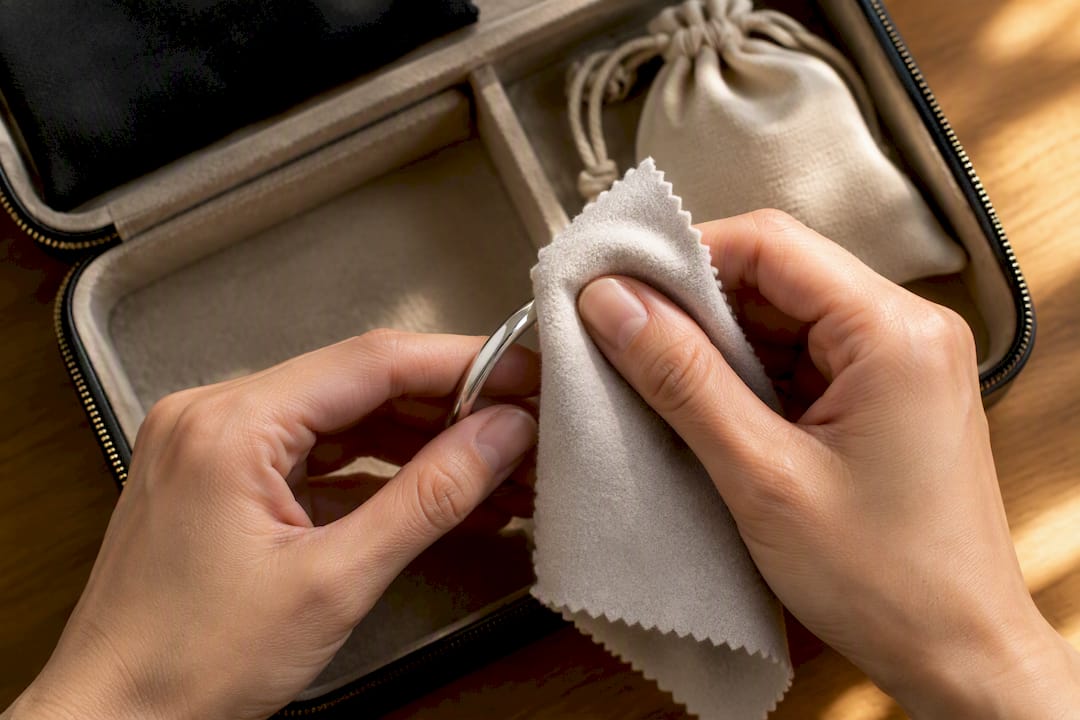
- Wipe every piece with a soft, lint-free cloth after each wear to remove skin oils, sweat, and residue before they have time to react.
- Rotate through pieces you wear often rather than letting them sit untouched in a drawer.
- Keep silver away from swimming pools, hot tubs, and cleaning products containing chlorine or ammonia.
There’s a small upside worth knowing: wearing silver regularly can actually slow tarnishing, because the natural oils in your skin build up a faint protective layer. That’s a reason to save airtight anti-tarnish storage for pieces you only wear occasionally, not for your everyday rings.
Pro Tip: Keep a soft polishing cloth in your bag or car console. Thirty seconds of wiping after a night out prevents weeks of buildup.
How to Store Silver So It Doesn’t Tarnish
Storage is where most of the real prevention happens, and it doesn’t require much money or effort.
- Wrap each piece in acid-free tissue first. Never let an anti-tarnish scavenger touch silver directly. The Winterthur Museum advises a buffer layer of tissue or soft cloth between the metal and any strip or gel packet to avoid chemical staining.
- Add the scavenger. Tuck a 3M anti-tarnish strip or a silica gel packet into the same pouch or bag. Both work by pulling moisture and sulfur compounds out of the enclosed air.
- Seal it up. A zip-top polyethylene bag with the air pressed out, or a dedicated anti-tarnish pouch lined with Pacific Silvercloth, cuts off the silver’s exposure to airborne sulfur almost entirely. The Canadian Conservation Institute recommends this sealed-bag approach with tissue and desiccant for long-term storage.
- Control humidity. Aim to keep relative humidity below roughly 50% in the storage area. Silica gel packets, a small closet dehumidifier, or even a stick of white chalk tucked into a drawer can absorb enough moisture to make a measurable difference, according to Southern Living’s testing.
- Separate every piece. Silver transfers tarnish and scratches other metals and gemstones on contact, so individual pouches or lined compartments matter as much as the sealing itself.
Avoid storing silver near rubber bands, wool sweaters, newspaper, PVC cling wrap, or leather and treated wood, since all of these release sulfur compounds or acidic vapors over time. Flatware does best in a tarnish-resistant chest or Pacific Silvercloth roll, while jewelry holds up better in individual anti-tarnish pouches inside a sealed drawer or box.
When to Clean Silver, and When to Just Leave It Alone
Tarnish looks alarming, but it isn’t structurally damaging. A thin, even patina can actually slow further corrosion by acting as a barrier, and conservators specifically warn against polishing more than necessary, since every pass removes a microscopic layer of actual silver.
- For light haze, a soft polishing cloth is usually enough. No chemicals required.
- For everyday grime, washing gently with mild dish soap and warm water removes oils and film, an approach Good Housekeeping’s cleaning lab backs for routine care.
- For heavier tarnish, a paste of baking soda and a little water, worked gently with a soft cloth, lifts more without scratching.
- If polishing is genuinely needed, precipitated calcium carbonate is the safer abrasive; household chalk or whiting has coarser particles that can scratch the surface.
- Skip aggressive commercial dips on plated, gold-washed, or hollow items, since these formulas can strip thin plating or damage lacquered finishes.
The aluminum-and-baking-soda electrochemical method (foil in a bowl with hot water and baking soda) does pull tarnish off through a chemical reaction, but it can leave a dull, matte residue and isn’t appropriate for hollow, weighted, or plated pieces. Rinse and dry thoroughly afterward, and skip this method entirely on anything with gemstones or antique finishes. When in doubt on an heirloom, a conservator’s judgment beats any home remedy.
Products and DIY Tricks Worth Keeping on Hand
A small, inexpensive kit covers almost every prevention scenario:
- Pacific Silvercloth pouches or rolls for flatware and jewelry that won’t be worn for a while.
- 3M anti-tarnish strips tucked into drawers, boxes, or sealed bags for ongoing protection.
- Silica gel packets, reusable if you re-dry them in a low oven, for humidity control anywhere silver sits.
- Sealed anti-tarnish pouches for individual pieces you want to keep scratch-free and separated.
- Soft polishing cloths for quick maintenance between deep cleans.
On the budget end, a stick of chalk in a drawer, a zip-top freezer bag with the air squeezed out, or a baking-soda paste for occasional touch-ups all work reasonably well for low-value or lightly worn pieces. Save the more careful, gentler methods for anything set with gemstones or in contact with food, since some pastes and dips can dull stones or leave residue you don’t want near flatware.
What SuperJeweler Recommends for Long-Term Silver Care
If a piece is beyond saving, or you’re ready to add something new, Superjeweler carries jewelry designed with everyday wear in mind, alongside care guidance on keeping pieces sparkling longer. Always check the specific care notes for a piece, since gemstone settings and mixed-metal designs sometimes need different handling than plain silver.
For heirlooms, antique flatware sets, or anything with sentimental or historical value, a professional conservator is worth consulting before attempting any home cleaning method. This article, written by contributor Andrew, draws on museum and conservation guidance to keep that advice grounded rather than guesswork.
The Storage-First Case Nobody Talks About
Most advice about silver care obsesses over cleaning products. That’s backward. The conservation world figured this out decades ago: prevention beats restoration every time, and the Winterthur Museum’s guidance makes that explicit by telling caretakers to polish as little as possible and store as carefully as possible.
Home guides tend to skip the humidity piece entirely, focusing only on what polish to buy. But a sealed bag with a silica packet does more long-term work than any cloth or paste ever will, because it stops the reaction before it starts instead of undoing it after the fact.
Here’s the uncomfortable part for polish enthusiasts: every time you buff tarnished silver, you’re removing actual metal, not just grime. On plated or thin-walled pieces, that adds up. If a piece looks slightly dull but isn’t heavily blackened, leaving it alone until you actually want to wear it is the better move. Prioritize the sealed pouch and the silica packet first. Reach for the polishing cloth second, and only when you need to.
— Andrew
Keep Your Jewelry Box Full of Pieces Worth Protecting
All the anti-tarnish strips and silica packets in the world won’t help if the jewelry underneath isn’t worth the effort. There are jewelers that focus on jewelry built for regular wear, not just display, sometimes with guarantees and worldwide shipping options.

If a favorite silver ring or necklace has finally tarnished beyond saving, or you’re looking for something new to add into rotation, browse rings, earrings, necklaces, and bracelets built with everyday care in mind. Pair a new piece with a proper storage routine from day one, and it will need far less rescuing down the road. Start browsing the current collection at Superjeweler and check the care notes listed on each product page before it ships.
Sources
- Canada
- Silver treatment advice • Winterthur Museum (2026)
- Care, Silver — Canadian Conservation Institute (CCI) Notes 9/7
- How to make tarnished silver shine — Good Housekeeping (2026)
FAQ
What can I put on silver to keep it from tarnishing?
Store silver in a sealed bag or pouch with an anti-tarnish scavenger like a 3M strip, a silica gel packet, or Pacific Silvercloth, wrapping the piece in acid-free tissue first so the scavenger doesn’t touch the metal directly. This combination removes moisture and sulfur compounds from the air around the piece, which is what actually causes tarnish.
What causes silver to tarnish so quickly?
Silver reacts with sulfur-containing gases in the air, primarily hydrogen sulfide, forming a layer of silver sulfide on the surface. Humidity speeds up that reaction significantly, and everyday sources like rubber, wool, newspaper, and cooking fumes add sulfur compounds to the air around stored silver, according to conservation research.
What is the best anti-tarnish liquid for silver?
There isn’t a single “best” liquid, since prevention through sealed storage outperforms any liquid treatment. For actual cleaning, a mild dish soap wash handles light film, and a baking-soda paste lifts heavier tarnish, both methods tested and recommended for routine home care.
Will saran wrap keep silver from tarnishing?
Plastic cling wrap isn’t a reliable choice, since some formulations contain PVC that can actually contribute to corrosion over time. A polyethylene zip-top bag with the air pressed out, or a proper anti-tarnish pouch, does the job far more safely and effectively.
Should I polish silver every time it looks tarnished?
No. Conservators recommend polishing only when a piece needs to be worn or displayed, since every polish removes a thin layer of actual silver. A light, even tarnish isn’t structurally harmful and can even slow further corrosion, according to Winterthur’s conservation guidance.
Recommended
- Jewelry Care Tips for Necklaces: Keep Them Lasting
- Step by Step Jewelry Cleaning: Your Safe Home Guide
- How to Care for Gold Jewelry: A Complete Guide
