TL;DR:
- Choosing earrings with the correct style, metal, and measurements ensures comfort, durability, and personal safety.
- Following a step-by-step checklist before purchase helps prevent returns, mismatched sizing, and allergic reactions.
The fastest way to buy earrings you’ll actually wear: decide how often you’ll wear them, match the style to that frequency, confirm the post material, measure for fit, pick a secure backing, set a realistic budget, and verify the return policy before you check out. That seven-step sequence is the whole game. Everything below unpacks each step with the specifics that prevent returns.
Your 7-step earring buying checklist:
- Decide wear frequency — everyday, occasional, or statement only. This single choice narrows your style options faster than anything else.
- Choose the right style — studs and huggies for daily wear; drops, hoops, and chandeliers for evenings and events.
- Confirm metal and allergy status — check the post material specifically, not just the overall metal description.
- Pick the right backing — screw backs for valuable stones; leverbacks for drops; friction backs only for lightweight, low-risk pieces.
- Measure for fit — hoop diameter, drop length, stud size in mm, and post gauge before you buy.
- Set your budget by material — know what solid metal, plating, and gemstone type actually cost so you don’t overpay or underbuy.
- Complete the purchase checklist — verify dimensions, photos, return policy, and secure checkout before you click buy.
Pro Tip: Build a small earring wardrobe around four versatile pieces: an everyday stud, a huggie or small hoop, a vertical drop, and one statement pair. Four pieces cover nearly every occasion and eliminate daily decision fatigue.
Table of Contents
- What are the main earring types and when should you wear each?
- How do metals and skin sensitivity affect your earring choice?
- Which metal color and backing choices actually improve wearability?
- What closure types should you know before buying earrings?
- What should you check before completing an online earring purchase?
- How do you set a realistic budget for different earring types?
- How do you clean and store earrings to make them last?
- How do you put in new earrings safely for the first time?
- What do you need to know when buying earrings as a gift?
- Key Takeaways
- Why a step-by-step approach actually prevents buyer’s remorse
- Superjeweler makes the earring search easier for U.S. shoppers
- Useful sources and further reading
What are the main earring types and when should you wear each?
Earring styles are not interchangeable. The silhouette you choose affects comfort, outfit compatibility, and how long you can wear a pair without fatigue.
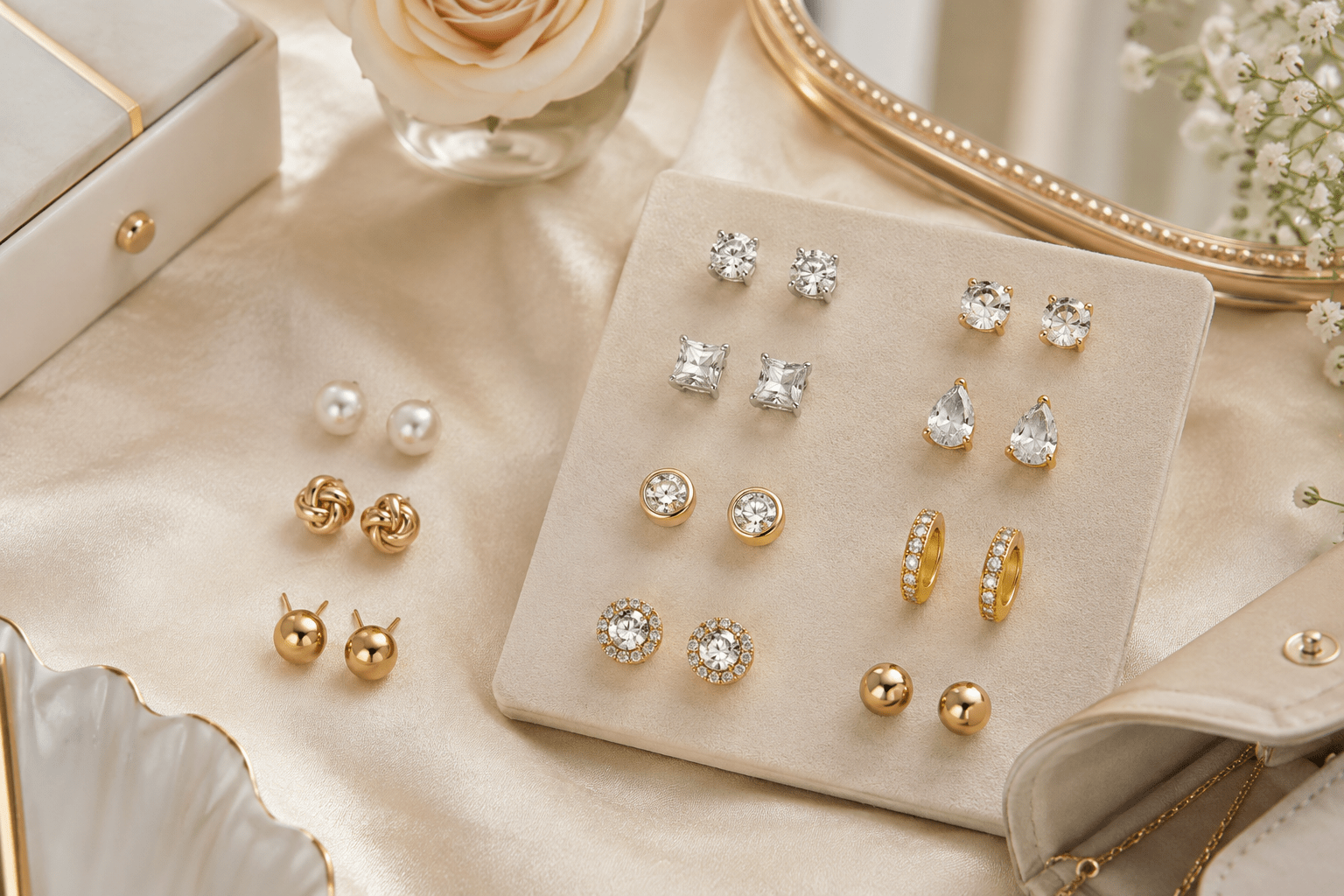
Studs sit flush against the lobe with no movement. They’re the most practical choice for daily wear, office settings, and sleeping (when lightweight). A classic 4mm round stud in gold or diamond is the single most versatile earring you can own. Browse gold stud earrings for everyday options across karat levels.
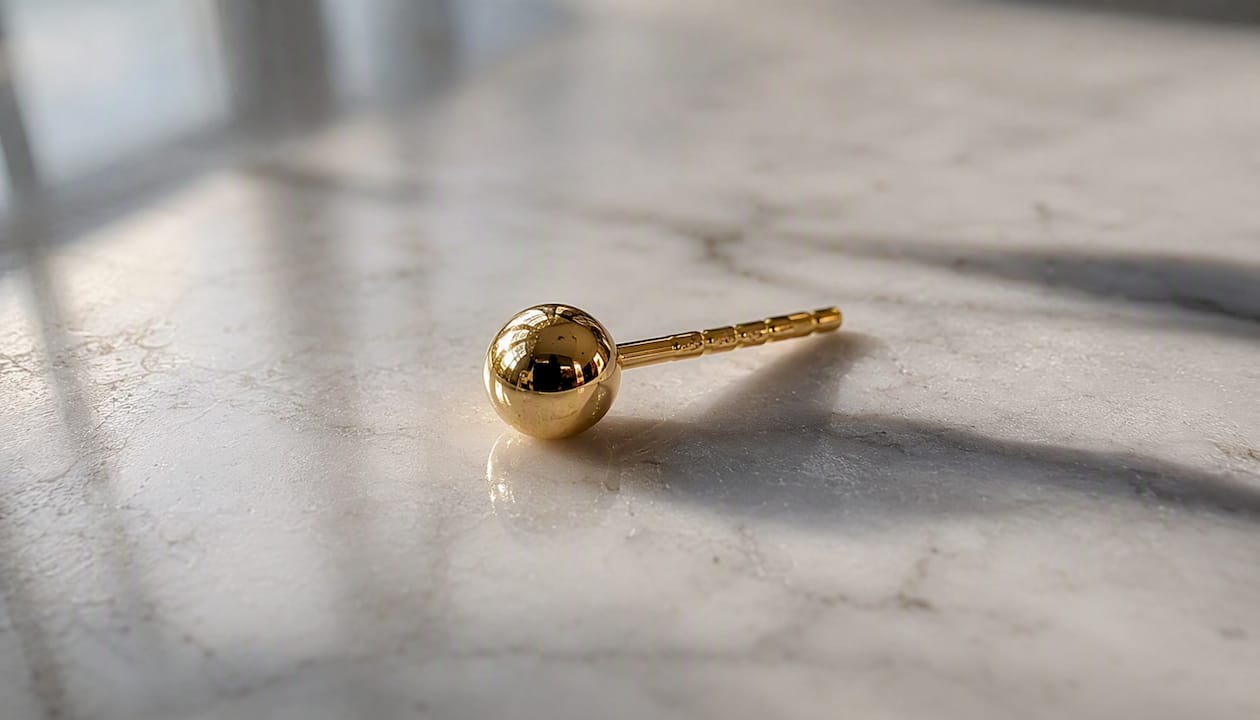
Huggies are small hoops that hug the lobe closely, typically 10–14mm in diameter. They move slightly, which adds visual interest without the weight or swing of a full hoop. Excellent for active lifestyles and professional settings.
Hoops range from petite 15mm circles to dramatic 60mm+ statement rings. Small hoops (under 25mm) work for everyday wear; larger hoops are better reserved for evenings or casual weekend looks where movement is part of the appeal.
Drops and dangles hang below the lobe, from a short 10mm drop to a longer 40mm+ dangle. They add length to the face and neck, making them flattering for formal events and date nights. Diamond drop earrings are a popular choice for special occasions.
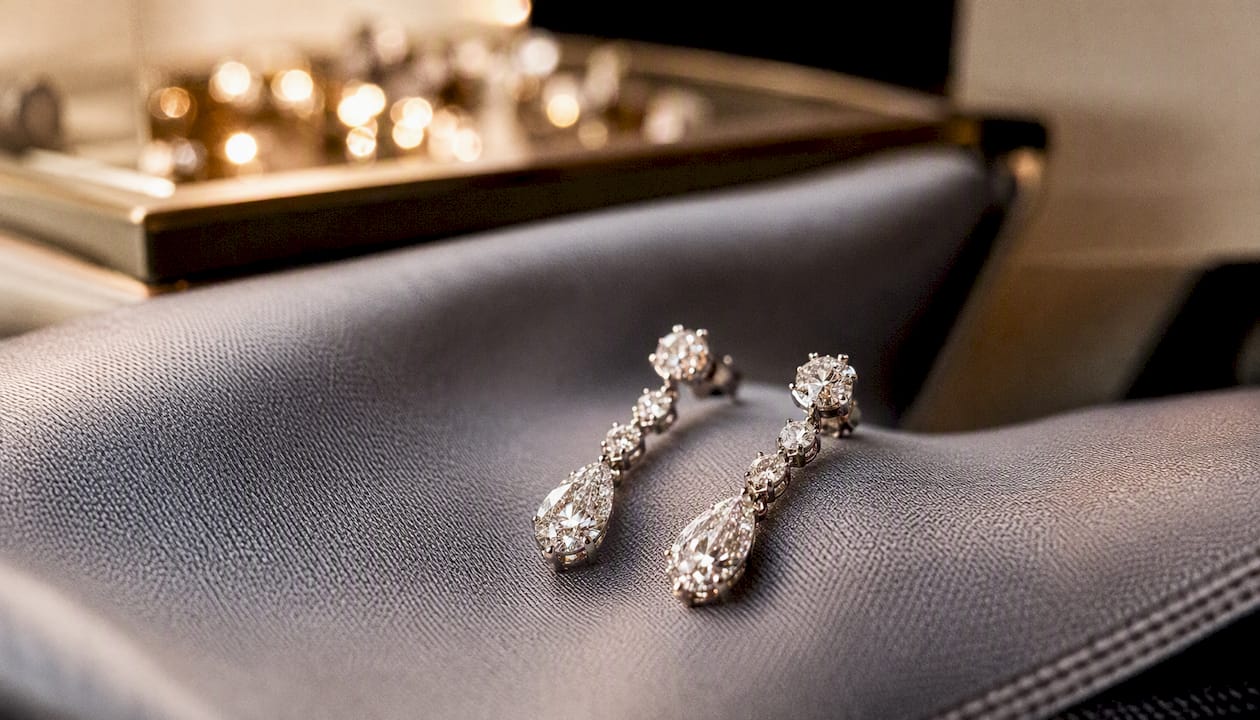
Chandeliers are multi-tiered drops, often with gemstones or intricate metalwork. They’re formal pieces, best for weddings, galas, or black-tie events. Too heavy and too visually loud for everyday wear.
Ear cuffs wrap around the outer ear cartilage without requiring a piercing. They’re a trend-forward option for fashion-forward occasions, though they require more adjustment to stay comfortable.
Clip-ons use a spring or screw mechanism to grip unpierced ears. Modern clip-ons have improved significantly in comfort, but they still cause lobe fatigue after a few hours. Best for occasional wear.
Studs and hoops are the everyday foundation; drops and chandeliers carry your formal moments. If you’re building a wardrobe from scratch, start with one excellent stud and one small hoop before adding anything else.
Pro Tip: When styling for different occasions, long drops add visual length to the face and neck — a useful trick for round or square face shapes. Short studs and huggies balance longer, oval, or heart-shaped faces.
How do metals and skin sensitivity affect your earring choice?
The metal in the post — the thin pin that goes through your ear — matters more than the decorative front of the earring. Many people discover this the hard way when a “gold” earring causes irritation because the post is actually a nickel-based alloy with thin plating.
Many allergic reactions stem from nickel in base metals or thin plating wearing through to a nickel base. The label “hypoallergenic” has no regulated definition in the U.S., so it’s not a reliable guarantee. Ask specifically: What is the post made of?
Metals ranked from lowest to highest allergy risk:
- Implant-grade titanium — the gold standard for sensitive ears; lightweight, durable, and nearly inert
- Niobium — similar to titanium; excellent for reactive skin
- Platinum — dense, hypoallergenic, and extremely durable; the premium daily-wear choice
- 18k gold — higher karat means less alloy content and lower irritation risk
- 14k gold — the most common fine jewelry standard; generally safe for most people
- Sterling silver — safe for many, but some people react to the copper content; tarnishes faster
- Gold-filled and vermeil — thicker gold layer over sterling silver; more durable than standard plating
- Gold-plated base metal — the highest risk; plating wears through to the base metal, often nickel
Solid or implant-grade metals minimize the risk of irritation over extended wear and are far preferable to thinly plated fashion metals for anyone who wears earrings daily.
Pro Tip: When buying online, look for listings that specify “solid 14k gold post” or “implant-grade titanium post” rather than just “gold earrings.” If the listing doesn’t specify, ask customer service before purchasing.
Which metal color and backing choices actually improve wearability?
Two research-backed rules cut through the noise on metal selection: match metal color to your skin undertone, and match backing security to the earring’s value and your activity level.
Undertone and metal color:
- Cool undertones (veins appear blue or purple): silver, white gold, and platinum tend to complement the skin’s natural tone.
- Warm undertones (veins appear green): yellow gold and rose gold harmonize with the warmer base.
- Neutral undertones: most metals work; this is the most flexible category.
This isn’t a hard rule — personal preference always wins — but it’s a useful starting point when you’re unsure.
Security by activity and value:
- Screw backs for diamond studs, valuable gemstone studs, and any earring worn during travel or exercise. The threaded post makes accidental loss nearly impossible.
- Leverbacks for drops and hoops where you want a secure hinge rather than a push-back.
- Friction (push) backs for lightweight, low-value studs worn in controlled settings.
Pro Tip: For platinum or high-quality white gold studs you plan to wear daily without removing, screw backs are worth the slight extra effort at the clasp. The few seconds it takes to unscrew is a fair trade for never losing a diamond stud in a gym locker room.
What closure types should you know before buying earrings?
The backing is the part most buyers ignore until they lose an earring. Here’s what each closure actually does and where it belongs.
- Friction (push) backs — the most common; a small metal disc that grips the post by tension. Easy to use, but they loosen over time and offer minimal security for valuable pieces.
- Screw backs — a threaded post that the backing screws onto. The most secure option for studs; recommended for diamond studs and any earring you’d be devastated to lose.
- Leverbacks — a hinged lever that locks behind the lobe. Standard on many drop and dangle earrings; more secure than a simple hook and easier to use than a screw back.
- Latch backs — similar to leverbacks but with a slightly different hinge mechanism; common on hoop earrings.
- Hooks (French wire) — a simple curved wire that passes through the piercing with no locking mechanism. Convenient but the lowest security; best for lightweight, casual drops.
- Omega backs — a rigid clip-style back often used on heavier earrings to distribute weight. More comfortable for heavy pieces but requires a specific post style.
For a full selection of replacement and upgrade backs, earring backs are available separately if you want to upgrade a pair you already own.
Pro Tip: If you travel frequently or wear valuable studs to the gym, swap standard friction backs for screw backs. It’s a small upgrade that eliminates one of the most common jewelry losses.
How to measure hoop diameter, drop length, stud size, and post gauge
Getting measurements right before you buy is the single most effective way to avoid returns. Product pages list dimensions, but knowing what those numbers mean in practice is what separates a confident purchase from a guess.
Step-by-step measurement guide:
- Hoop diameter: Measure the inner diameter (the space inside the ring) with a ruler. A 20mm inner diameter hoop sits close to the lobe; 40mm reaches the jaw. For everyday wear, 15–25mm inner diameter is the most comfortable range for most people.
- Drop length: Measure from the top of the ear wire (where it enters the piercing) to the lowest point of the charm. A 15mm drop is subtle; 30–40mm is a noticeable statement; anything over 50mm is formal territory.
- Stud size: Studs are measured in millimeters across the face of the stone or setting. A 4mm round stud is understated; 6–7mm is clearly visible; 8mm+ is a statement. For diamonds, carat weight correlates roughly: a 0.25ct round diamond is about 4mm, a 0.50ct is about 5mm.
- Post gauge: Standard earring posts are 20 gauge (0.8mm). Thicker posts (18 gauge, 1.0mm) are more durable and suit heavier earrings. If your piercing has healed around a specific gauge, buying a different size can cause discomfort.
- Weight check: Earrings under roughly 2 grams per earring are generally comfortable for extended daily wear. Heavier pieces pull on the lobe over time and are better reserved for occasional use.
| Measurement | What to look for | Everyday range |
|---|---|---|
| Hoop inner diameter | Ruler, inner circle only | 15–25mm |
| Drop length | Top of wire to lowest point | 15–30mm |
| Stud face diameter | mm listed on product page | 4–7mm |
| Post gauge | Listed in gauge or mm | 20g (0.8mm) standard |
| Weight per earring | Listed in grams | Under 2g |
Pro Tip: Use a well-fitting pair you already own as a physical template. Measure it with a ruler, then compare those numbers directly to the product page specs. This is faster and more accurate than trying to visualize dimensions from photos alone.
What should you check before completing an online earring purchase?
Online buying adds a layer of uncertainty that in-store shopping doesn’t have. The fix is a short pre-purchase checklist that takes about three minutes and prevents most returns.
On the product page, confirm:
- Post material (solid gold, titanium, sterling silver — not just “gold-tone”)
- Exact dimensions: hoop diameter, drop length, stud size in mm, and weight in grams
- Closure type listed explicitly
- Plating details if applicable: base metal and plating thickness
- Stone treatment disclosures (heated, fracture-filled, lab-grown vs. natural)
- Warranty terms and return window
In photos and reviews, look for:
- Model-worn shots that show scale relative to the face and ear
- Customer-uploaded images, which often show the piece under everyday lighting and at realistic distances
- Review flags: mentions of loose settings, color different from photos, or backs that don’t stay secure
At checkout, verify:
- HTTPS in the browser address bar
- Clear contact information (phone number or live chat, not just a form)
- Payment options that include buyer protection (credit card or PayPal rather than wire transfer)
- Estimated shipping timeline and tracking availability
Questions worth asking customer service before buying:
- “What is the exact post material?”
- “Is the plating thickness specified, and what is the base metal?”
- “What does the return process look like if the size isn’t right?”
For a broader jewelry buying checklist, the same pre-purchase logic applies across all fine jewelry categories.
Pro Tip: Customer images in reviews are often the best way to judge real-world scale. Look for photos taken at arm’s length by people with similar face proportions to yours — they’ll tell you more than the studio shot.
How do you set a realistic budget for different earring types?
Price in earrings is driven by three things: the metal (and whether it’s solid or plated), the stone (natural, lab-grown, or simulant), and the setting quality. Understanding those three levers lets you spend confidently instead of guessing.
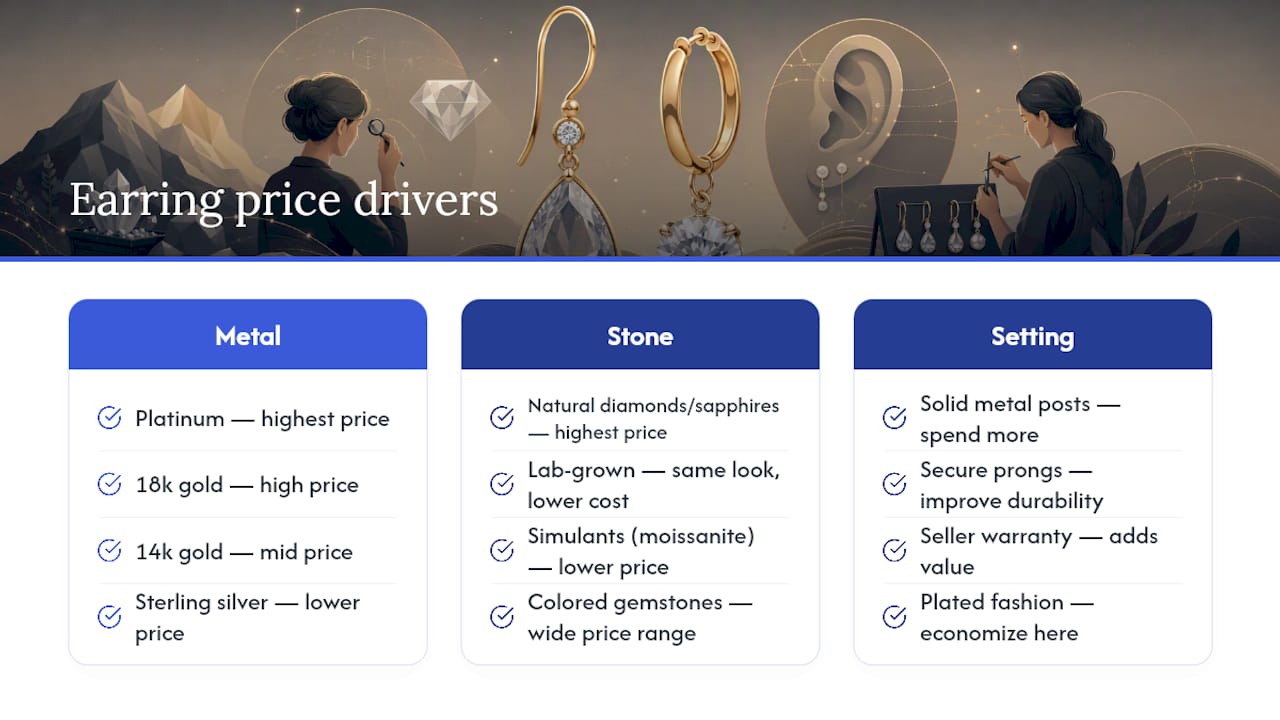
Metal: Platinum costs more than 18k gold, which costs more than 14k gold, which costs significantly more than sterling silver. Gold-plated fashion pieces sit at the lowest price point but also have the shortest lifespan for the decorative finish.
Stone: Natural diamonds and sapphires command the highest prices. Lab-grown diamonds offer the same physical and optical properties as mined stones at a fraction of the cost — a meaningful difference for diamond studs. Lab-grown diamond jewelry is worth exploring if you want the look of fine diamond earrings without the natural-diamond price. Moissanite and other simulants cost less still; moissanite earrings are a popular choice for buyers who prioritize sparkle over stone origin. For colored stone options, gemstone earrings cover a wide range of price points.
Where to spend more: Solid metal through the post, a well-set stone with secure prongs, and a reputable seller with a clear warranty. These are the details that determine whether a pair lasts five years or five months.
Where to economize: Trend-driven styles, plated fashion hoops, and statement pieces you’ll wear a few times a year. Fashion earrings fill this role well — they’re designed for style rotation, not lifetime wear.
Pro Tip: For affordable quality finds, the best value is usually a solid 14k gold stud with a lab-grown or genuine gemstone. You get durable metal, a real stone, and a piece that won’t need replacing in a year.
How do you clean and store earrings to make them last?
The most common earring damage is preventable: plating worn off by perfume contact, pearl surfaces etched by water, and stones loosened by skipping monthly setting checks.
Cleaning by material:
- Gold and platinum: Mild dish soap, warm water, and a soft toothbrush. Rinse thoroughly and pat dry.
- Sterling silver: Same as gold, but dry immediately to slow tarnish. Anti-tarnish strips in your storage box help between cleanings.
- Pearls: Wipe with a soft, dry cloth only. Never submerge in water or use any chemical cleaner. Pearls are porous and absorb moisture and chemicals, which degrades the nacre over time.
- Plated pieces: Wipe with a dry or barely damp cloth. Avoid soap and water, which accelerate plating wear.
Storage:
- Keep pairs in individual soft pouches or compartmentalized jewelry boxes to prevent scratching.
- Anti-tarnish strips in the storage area slow oxidation on silver and lower-karat gold.
- For travel, a hard-sided jewelry case with individual slots prevents tangling and impact damage.
Never spray perfume, hairspray, or sunscreen while wearing earrings. Apply products first, let them dry, then put your earrings on. This single habit extends plating life significantly and protects porous stones like pearls and opals.
Monthly maintenance: Check that prongs haven’t bent, backs are still secure, and stones haven’t shifted. A loose prong caught early is a minor fix; a lost stone is not.
Pro Tip: For plated pieces you wear regularly, a light coat of clear nail polish on the post (not the decorative front) slows plating wear at the point of skin contact.
How do you put in new earrings safely for the first time?
Inserting a new pair incorrectly is the fastest way to irritate a healed piercing or damage a delicate post. The process takes about 30 seconds when done right.
- Wash your hands thoroughly with soap and water before touching the earring or your ear.
- Clean the earring with a gentle alcohol wipe or mild soap, then let it dry completely.
- Locate the piercing hole by feel rather than force — tilt your head slightly toward a mirror and use your fingertip to find the opening.
- Align the post straight with the channel of the piercing. Never angle or force it; a straight, gentle push is all it takes for a healed piercing.
- Secure the backing without over-tightening. The back should hold the earring in place with a small gap between the back and the lobe — tight enough to stay, loose enough for circulation.
- Check both sides in a mirror to confirm the earring sits evenly.
What’s normal vs. what’s a warning sign:
- Mild warmth or slight tenderness in the first hour: normal, especially with a new metal.
- Persistent redness, swelling, or itching after 24 hours: possible allergic reaction, likely to the post metal. Remove the earring and try a titanium or platinum alternative.
- Discharge, significant swelling, or pain: signs of infection. Remove the earring and consult a healthcare provider.
First-wear tips: Wear a new pair for two to three hours the first time, then remove and check the lobe. If there’s no irritation, extend wear time gradually. For diamond stud earrings with screw backs, practice the screw mechanism a few times before wearing so you’re comfortable with it.
What do you need to know when buying earrings as a gift?
Gifting earrings is lower-risk than gifting rings, but a few checks make the difference between a gift that gets worn and one that sits in a drawer.
Pre-purchase checklist for gift buyers:
- Confirm the return and exchange window before ordering — look for at least 30 days.
- Choose timeless styles unless you know the recipient’s specific taste: small studs and huggies are universally wearable; large chandeliers are a gamble.
- Opt for mid-range hoop sizes (20–25mm) when you’re unsure of preference — they suit most face shapes and lobe sizes.
- Look for adjustable or standard-gauge posts, which fit most healed piercings without adjustment.
- Check whether the piece includes a warranty card or certificate, which adds perceived value and practical protection.
Packaging and presentation:
- Confirm the earrings ship in a gift-ready box or ask about gift packaging options.
- Include a gift receipt so the recipient can exchange for a different size or style without awkwardness.
- Note the return deadline on the receipt so the recipient knows their window.
For a recipient with sensitive ears, a solid gold or titanium post is a thoughtful detail that shows you did your research. It’s the kind of thing most gift buyers skip — and the reason some gifts cause irritation instead of joy.
Key Takeaways
Buying earrings well comes down to five checks: style matched to wear frequency, post material confirmed for skin safety, measurements verified against product specs, backing chosen for the earring’s value, and return policy reviewed before checkout.
| Point | Details |
|---|---|
| Match style to wear frequency | Studs and huggies for daily wear; drops and chandeliers for occasional formal use. |
| Confirm post material | Ask for solid gold, titanium, or platinum posts; “hypoallergenic” labels are not regulated in the U.S. |
| Measure before you buy | Check hoop inner diameter, drop length in mm, stud face size, and weight (under 2g per earring for daily comfort). |
| Choose the right backing | Screw backs for valuable studs; leverbacks for drops; friction backs only for lightweight, low-risk pieces. |
| Superjeweler for U.S. shoppers | Superjeweler offers diamond studs, lab-grown options, gemstone drops, and fashion earrings with a clear return policy and worldwide shipping. |
Why a step-by-step approach actually prevents buyer’s remorse
Most earring returns trace back to the same small oversights: a post material that wasn’t checked, a hoop diameter that looked fine in the photo but turned out to be 40mm when 20mm was expected, or a backing that couldn’t hold a heavier stone. None of these are hard problems. They’re just skipped steps.
The checklist approach works because it forces the questions buyers don’t naturally think to ask. Most people focus on how an earring looks in the product photo. The photo doesn’t tell you the post is plated over nickel, that the hoop is larger than it appears against a white background, or that the friction back will loosen within a month of daily wear. Those details live in the fine print of the product page, in customer reviews, and in a quick message to customer service.
There’s also a comfort dimension that gets underestimated. A pair that weighs 4 grams per earring might look stunning at 9 AM and feel like a punishment by noon. Checking weight before buying isn’t excessive caution — it’s the difference between earrings you reach for every day and earrings you wear once.
The measurement step is where most buyers gain the most ground. Knowing that a 20mm inner diameter hoop sits close to the lobe while a 40mm hoop grazes the jaw turns an abstract product spec into a real decision. That’s the kind of knowledge that makes online shopping feel as reliable as shopping in a store.
Superjeweler makes the earring search easier for U.S. shoppers
Finding earrings that check every box on this guide — solid metal posts, verified dimensions, secure backings, and a clear return policy — is easier when the retailer does the work of organizing the selection clearly.

Superjeweler carries a broad U.S.-based selection across every category covered in this guide: diamond stud earrings in solid gold and platinum, lab-grown diamond options for buyers who want fine-quality stones at accessible prices, gemstone drops, and fashion earrings for trend-driven or gift purchases. Product pages list exact dimensions, post materials, and closure types — the specifics this guide says to check. Every order ships with a warranty and a return policy, and the checkout uses standard secure payment options. If you’re ready to shop with the checklist in hand, browse the full earrings selection at Superjeweler to find the right pair for your style, budget, and occasion.
Useful sources and further reading
The sources below support the guidance in this guide and are worth bookmarking for deeper research.
- A Guide to Earrings for Sensitive Ears — Lisa OM: Covers nickel allergy triggers and post material guidance (referenced in the metals section).
- The Ultimate Guide to Earrings — Etsy Blog: Beginner-friendly overview of earring types and terminology.
- Earrings Buying Guide — Earrings Review: Eight practical factors to consider when purchasing earrings.
- Superjeweler — Diamond Stud Earrings: Category page for everyday and fine diamond studs.
- Superjeweler — Gemstone Earrings: Colored stone earring options across price points.
- Superjeweler — Lab-Grown Diamond Jewelry: Lab-grown options for buyers comparing stone types and budgets.
| Source | Best for |
|---|---|
| Lisa OM — Sensitive Ears Guide | Allergy avoidance and post material checks |
| Quick Jewelry — Sensitive Ears | Solid vs. plated construction explained |
| Custom Diam Jewel — Face Matching | Earring shape and face geometry |
| Superjeweler — Diamond Studs | Everyday stud shopping with verified specs |
| Superjeweler — Gemstone Earrings | Colored stone drops and occasion earrings |
Recommended
- Step by Step Jewelry Buying: Your Complete 2026 Guide
- How to choose diamond earrings: quality & value guide
- Emerald Earrings: Dazzle with Green
