Searching for an engagement ring often uncovers a conflict between dreams and values. Many couples today want more than just beauty—they seek choices that support the planet and honor ethical standards. Lab-grown gemstones deliver authentic luxury without the hidden environmental and social costs of mining, offering a modern option that doesn’t sacrifice quality or principles. Discover how these sustainable stones transform traditional jewelry shopping into a thoughtful, world-conscious experience.
Table of Contents
- Lab-Grown Gems Defined and Debunking Myths
- Types and Creation Processes Explained
- Sustainability and Ethical Sourcing Insights
- Cost Comparison and Quality Assessment
- Comparing Lab-Grown to Natural Stones
Key Takeaways
| Point | Details |
|---|---|
| Lab-Grown Diamonds Are Real | Lab-grown diamonds are actual diamonds created using advanced technologies, with identical properties to natural diamonds. |
| Environmental Impact | Choosing lab-grown gems significantly reduces environmental harm compared to conventional diamond mining. |
| Cost Efficiency | Lab-grown diamonds can cost 60 to 80 percent less than their mined counterparts, offering better affordability without sacrificing quality. |
| Ethical Sourcing | Lab-grown options eliminate concerns about human rights abuses associated with diamond mining, providing transparency in sourcing. |
Lab-Grown Gems Defined and Debunking Myths
Lab-grown diamonds aren’t some modern invention designed to trick consumers. They’re real diamonds created in controlled laboratory environments using advanced technologies that replicate the same process Mother Nature takes billions of years to complete. The most common methods are HPHT (High-Pressure High-Temperature) and CVD (Chemical Vapor Deposition). Both technologies compress carbon under extreme pressure and temperature or deposit carbon atom by atom onto a substrate, ultimately producing stones with identical physical, chemical, and optical properties to diamonds pulled from the earth. This means when you hold a lab-grown diamond, you’re holding an actual diamond in every meaningful way that matters.
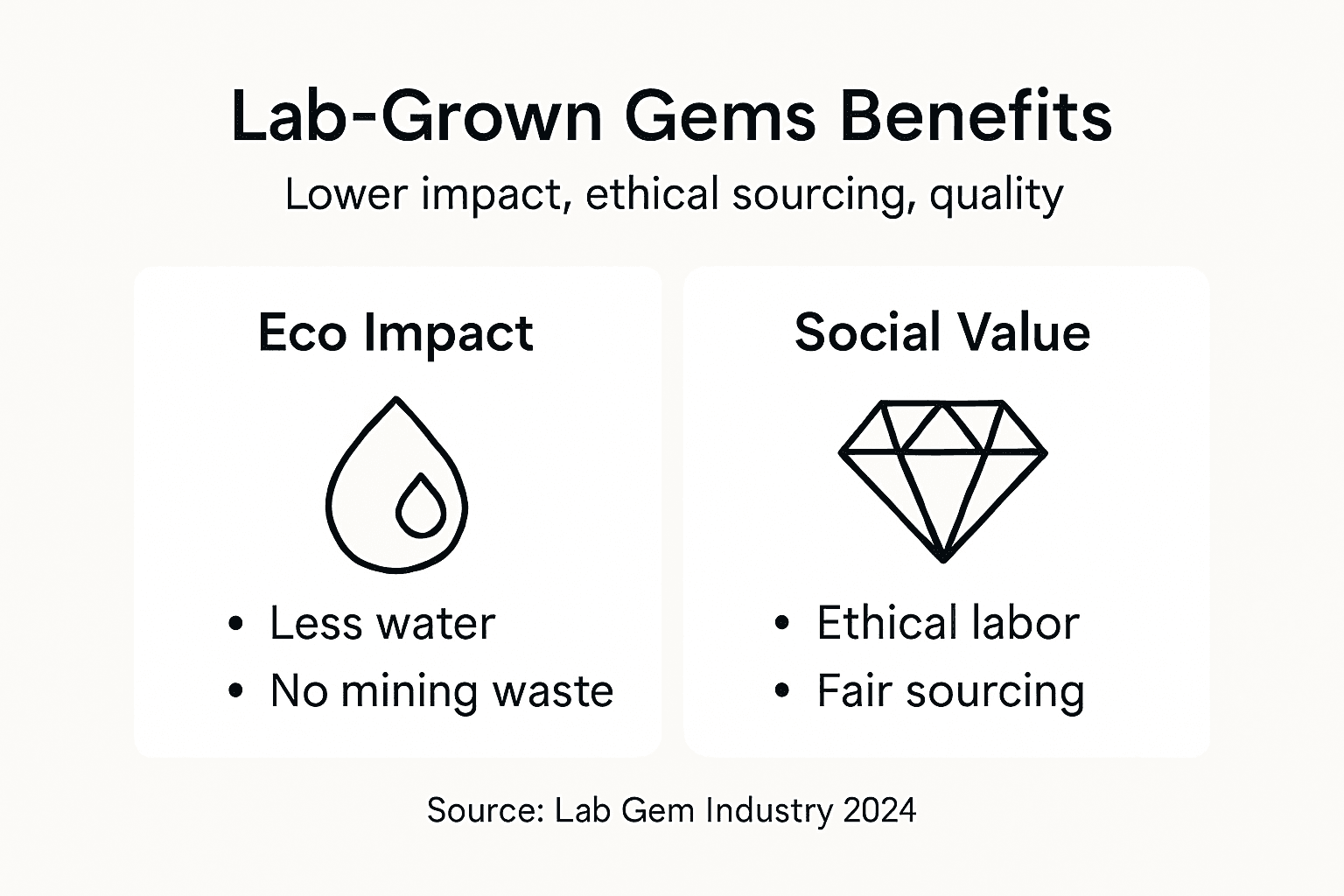
The confusion around lab-grown gems stems from persistent myths that have circulated for years. The biggest one: they’re fake. Not true. Another popular misconception is that lab-grown diamonds are lower quality or inferior to natural stones. Also false. In fact, lab-grown diamonds often offer superior quality control because scientists can monitor and adjust conditions during creation to minimize imperfections. Natural diamonds form randomly underground with whatever impurities happen to be present. A third myth suggests that choosing lab-grown gems causes environmental harm. The reality is the opposite. Mining natural diamonds requires massive excavation operations that disrupt ecosystems, consume enormous amounts of water, and generate significant carbon emissions. Lab-grown production uses substantially less water, creates no mining waste, and carries a dramatically smaller ecological footprint. When you’re choosing between two chemically identical diamonds, the lab-grown option simply makes more sense from an environmental perspective.
Here’s what really matters for your engagement ring decision: lab-grown diamonds are graded using the same standards (the 4Cs of carat weight, clarity, color, and cut) as natural diamonds. You get the exact same certification process, the same durability, and the same visual beauty. The primary difference is your impact. You save money, reduce environmental damage, and avoid the ethical complications tied to mining operations. That’s not settling for less. That’s making a smarter choice.
Pro tip: When comparing lab-grown gems to natural diamonds, request certified grading reports (AGS or GIA certified) for both options, as this ensures you’re comparing apples to apples and can confidently evaluate quality differences based on the 4Cs rather than the origin of the stone.
Types and Creation Processes Explained
Lab-grown gemstones aren’t created through a single method. Scientists have developed multiple approaches, each tailored to produce different types of gems efficiently and affordably. Understanding which process creates which stone helps explain why lab-grown options work so well for engagement rings and everyday jewelry.
The two primary methods for diamonds are HPHT (High-Pressure High-Temperature) and CVD (Chemical Vapor Deposition). HPHT mimics the intense conditions deep within the Earth’s mantle, subjecting carbon to pressures exceeding 50,000 atmospheres and temperatures around 1,500 degrees Celsius. The result appears in weeks instead of billions of years. CVD takes a different approach, slowly depositing carbon atoms layer by layer onto a substrate in a vacuum chamber. This method offers finer control over the diamond’s growth and often produces stones with fewer impurities. For colored gemstones, lab-grown methods like hydrothermal growth and flame fusion create rubies, sapphires, and emeralds by replicating the geological conditions where these stones naturally form. Hydrothermal growth uses water, minerals, and heat to grow crystals in pressurized chambers, while flame fusion melts powdered materials and allows them to crystallize as they cool.
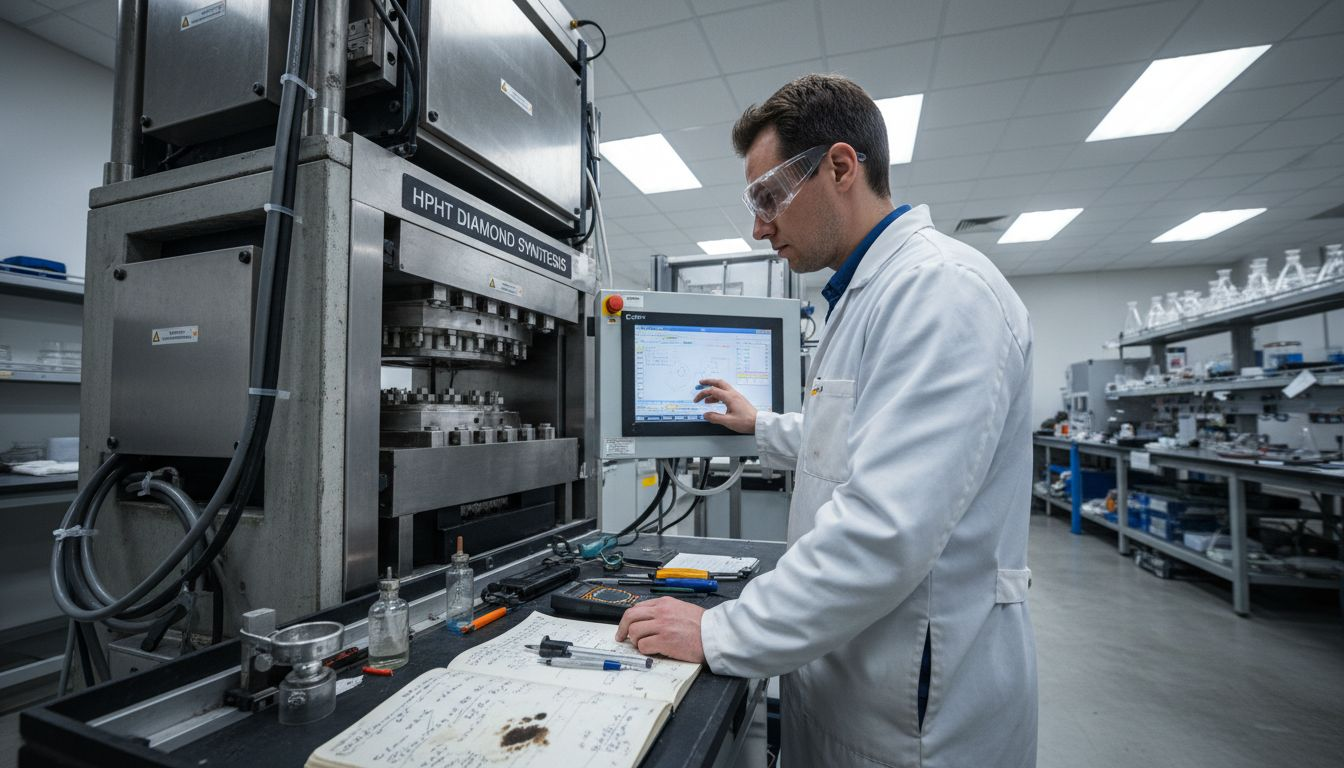
The real advantage? Speed and consistency. A natural diamond takes 1 to 3 billion years to form deep underground. A lab-grown diamond reaches completion in 6 to 10 weeks. More importantly, scientists control every variable during creation, meaning fewer inclusions, more consistent color, and superior optical properties. You’re not getting a rushed product. You’re getting a precisely engineered gem that meets exact specifications. This level of quality control simply isn’t possible with mined diamonds, where nature does the work unpredictably.
For eco-conscious couples choosing engagement rings, these processes eliminate the environmental damage associated with mining. No massive excavation. No displaced ecosystems. No conflict minerals funding harmful operations. The energy required to grow a diamond in a lab is substantially lower than the fuel consumed by mining machinery operating in remote locations worldwide. What takes billions of years in nature takes weeks in a laboratory, and the planet benefits from that acceleration.
Pro tip: Ask your jeweler which creation method was used for your lab-grown diamond or gemstone (HPHT, CVD, hydrothermal, or flame fusion), as this information helps you understand the stone’s specific characteristics and ensures you’re making an informed purchase decision.
Here’s a quick overview of popular lab-grown gem creation methods:
| Method | Gem Types Produced | Time Required | Typical Quality |
|---|---|---|---|
| HPHT | Diamonds | 6–10 weeks | Few impurities |
| CVD | Diamonds | 6–10 weeks | High clarity |
| Hydrothermal | Sapphires, emeralds | Several weeks | Bright colors |
| Flame Fusion | Rubies, sapphires | Days to weeks | Vivid color |
Sustainability and Ethical Sourcing Insights
When you choose a lab-grown gem for your engagement ring, you’re making a decision that ripples far beyond your jewelry box. Traditional diamond mining operates at a staggering environmental cost. A single carat of mined diamond can displace up to 250 tons of earth and rock. Mining operations consume massive quantities of water, generate toxic runoff that contaminates groundwater, and require heavy machinery that burns fuel continuously. The carbon footprint of extracting one diamond can be enormous. Lab-grown diamonds eliminate this destruction entirely. They’re produced in controlled laboratory settings with minimal land use, significantly reduced water consumption, and far lower energy requirements than mining operations spread across remote regions worldwide.
Beyond environmental concerns lies an ethical dimension many couples overlook. Lab-grown gemstones avoid the human rights abuses tied to mining operations, which have been documented in numerous regions for decades. Mining areas are frequently associated with unsafe working conditions, child labor, and conflict funding. Lab-grown production occurs in regulated facilities with monitored labor standards, fair wages, and workplace safety requirements. There’s transparency in the supply chain. You know exactly where your stone came from and under what conditions it was created. With mined diamonds, tracing the true origin and labor practices becomes nearly impossible. Conflict diamonds, despite certification efforts, still enter the market. Lab-grown eliminates that uncertainty entirely.
The sustainability advantage extends to resource conservation. Diamond mines require vast quantities of water in regions where water scarcity affects local communities. Mining also generates significant waste that must be managed and disposed of, often impacting ecosystems for generations. Lab-grown production uses less land, less water, and produces no mining waste. The entire process occurs in a contained environment where every byproduct is managed responsibly. Your engagement ring becomes a statement that you value both beauty and planetary responsibility. This isn’t about compromising on luxury. It’s about refusing to compromise your values.
Pro tip: Request a full sustainability report or impact statement from your jeweler when purchasing lab-grown gems, verifying that the production facility operates under certified environmental and labor standards, which demonstrates genuine commitment to ethical sourcing.
Cost Comparison and Quality Assessment
Here’s where lab-grown diamonds become genuinely attractive for eco-conscious couples planning a wedding: the price difference is substantial. Lab-grown diamonds typically cost 60 to 80 percent less than natural diamonds of identical quality. To put numbers on it, a 1-carat lab-grown diamond might cost around $800, while a natural diamond of the same size and quality could demand $4,200 or more. That’s not a small difference. That’s the difference between affording the ring you actually want versus settling for something smaller to stay within budget. For couples prioritizing both ethics and affordability, this pricing advantage feels like a win on every level.
The cost savings don’t come from cutting corners on quality. Lab-grown and natural diamonds are graded using the exact same standards: the 4Cs of carat weight, color, clarity, and cut. A lab-grown diamond with VS1 clarity and a D color rating possesses identical physical and optical properties to a natural diamond with those same grades. You’re not buying an inferior product. You’re buying the same product created through a more efficient process. The laboratory environment allows scientists to control conditions precisely, which often results in fewer impurities and more consistent color than what mining produces. In many cases, lab-grown diamonds actually exceed natural diamonds in measurable quality metrics.
One factor to understand is resale value. Lab-grown diamonds have lower resale value than natural diamonds, which matters if you plan to sell or trade the ring in the future. However, most couples aren’t purchasing engagement rings as investment assets. You’re buying a ring to wear and treasure for decades. If resale value isn’t your primary concern, this becomes irrelevant to your decision. The cost savings upfront can be redirected toward other priorities: a larger diamond, a more intricate setting, a dream honeymoon, or building financial security as a couple.
Consider the broader value proposition. You save 60 to 80 percent on the stone itself. You gain the knowledge that your purchase supports ethical labor practices and causes minimal environmental harm. You acquire a gem that’s indistinguishable from a natural diamond to the naked eye. That combination of affordability, quality, and conscience makes the financial decision remarkably straightforward.
Below is a comparison of core factors between lab-grown and mined diamonds:
| Factor | Lab-Grown Diamond | Mined Diamond |
|---|---|---|
| Environmental Impact | Minimal land and water use | Displaces land, high water consumption |
| Cost per Carat | $800 (approximate) | $4,200 (approximate) |
| Resale Value | Lower resale market | Higher resale, rare origin |
| Ethical Concerns | Transparent sourcing | Risk of labor abuses |
Pro tip: Request certified grading reports (AGS or GIA) for both the lab-grown and natural diamond options you’re comparing, ensuring you’re evaluating identical quality specifications and can accurately justify the price difference based on origin rather than grade.
Comparing Lab-Grown to Natural Stones
At first glance, lab-grown and natural diamonds appear identical. No wonder. They are identical. A gemologist examining a lab-grown diamond under magnification cannot distinguish it from a natural diamond based on appearance alone. Both are real diamonds composed of carbon atoms arranged in the same crystalline lattice. Both score 10 on the Mohs hardness scale. Both refract light identically. Both will pass a diamond tester. The physical, chemical, and optical properties are genuinely indistinguishable. So where do the differences actually matter?
The origin story separates them. Natural diamonds formed over billions of years under extreme pressure deep within the Earth’s mantle. Geological processes shaped their journey to the surface. Lab-grown diamonds reached completion in 6 to 10 weeks inside a machine. This origin difference creates two meaningful distinctions: resale value and environmental impact. Natural diamonds command higher resale prices because collectors and investors view them as rare and finite. Lab-grown diamonds, being producible on demand, have lower secondary market value. But here’s the reality for most couples: you’re not buying a financial asset. You’re buying a symbol of commitment you’ll wear every day for decades. The environmental impact difference, however, is substantial and permanent. Mining one natural diamond generates approximately 250 tons of earth displacement, significant water consumption, and measurable carbon emissions. Producing one lab-grown diamond in a laboratory requires a fraction of those resources and creates zero mining waste.
When evaluating lab-grown diamonds for your engagement ring, consider what actually matters to your relationship and values. Both stones will perform identically. Both will sparkle on your hand. Both will endure a lifetime of wear. The difference lies in the story behind the stone and the impact of your choice. Lab-grown diamonds offer that rare combination: luxury that aligns with your conscience, quality that matches natural stones exactly, and affordability that lets you invest in other life priorities. Natural diamonds carry history and rarity that some couples find irreplaceable. Neither choice is objectively wrong. The right choice is the one that resonates with who you are as a couple.
Pro tip: Visit a jeweler in person to view both lab-grown and natural diamonds side by side under identical lighting conditions, as seeing them together helps you recognize that the visual difference is nonexistent and reinforces your confidence in whichever option you select.
Choose Ethical Luxury Without Compromise
If you have been inspired by the many benefits of lab-grown gems such as lower environmental impact, guaranteed ethical sourcing, and exceptional quality then you are ready to explore the stunning collections at SuperJeweler.com. Our wide selection of lab-grown diamonds and fine jewelry lets you embrace affordable luxury that aligns with your values. You no longer have to choose between beauty and conscience because here you get both.

Discover engagement rings, wedding bands, and exquisite gemstones with customizable options crafted to your exact preferences. Act now to enjoy free worldwide shipping and warranty protection along with unbeatable prices. Visit SuperJeweler today and make your celebration sparkle with a truly ethical gem. Your perfect ring is waiting to tell your unique story.
Frequently Asked Questions
What are lab-grown gems?
Lab-grown gems, including diamonds, are real gemstones created in controlled laboratory environments using advanced technologies that replicate the natural geological processes over a much shorter timeframe.
How do lab-grown diamonds compare to natural diamonds in terms of quality?
Lab-grown diamonds are graded using the same standards as natural diamonds (the 4Cs: carat, clarity, color, and cut) and often exhibit superior quality due to controlled manufacturing processes that minimize imperfections.
Are lab-grown diamonds more environmentally friendly than mined diamonds?
Yes, lab-grown diamonds have a significantly lower environmental impact. They require less water, produce no mining waste, and do not cause ecological disruption compared to traditional diamond mining operations.
What is the cost difference between lab-grown diamonds and natural diamonds?
Lab-grown diamonds typically cost 60 to 80 percent less than natural diamonds of the same quality. For example, a 1-carat lab-grown diamond may cost around $800, while a natural diamond of the same specifications can cost $4,200 or more.
Recommended
- Lab-Grown Diamonds: Affordable Luxury With Ethics
- Why Choose Lab Diamonds: Sustainable Luxury Explained
- 7 Key Benefits of Lab-Grown Diamonds for Engagement Rings
- Step-by-Step Guide to Buying Lab-Grown Diamonds Online
