TL;DR:
- Proper care preserves the brilliance of diamond earrings, emphasizing gentle cleaning and secure storage. Regular inspections, avoiding harsh chemicals, and storing each earring separately prevent damage and loss over time. Consistent, careful maintenance ensures your jewelry stays stunning for years.
Diamond earrings are one of the most rewarding pieces of jewelry you can own, but even the best pair loses its brilliance without proper attention. Knowing how to care for diamond earrings is not complicated, yet most people skip or rush through the basics. The result is a gradual buildup of oils, lotions, and daily grime that robs your stones of their signature sparkle. Improper storage adds scratches. Missed prong checks lead to lost stones. This guide walks you through every step that matters, from safe cleaning to smart storage, so your earrings stay stunning for years.
Table of Contents
- Key takeaways
- What you actually need for cleaning diamond earrings
- Step-by-step guide to cleaning diamond studs at home
- Storing and handling your earrings the right way
- Common mistakes that damage diamond earrings
- How often to clean your earrings and what to expect
- My take on what most people miss
- Diamond earrings worth caring for, from Superjeweler
- FAQ
Key takeaways
| Point | Details |
|---|---|
| Use gentle cleaning tools | Mild dish soap, warm water, and a soft toothbrush clean diamonds safely without damaging settings. |
| Secure your drain first | Always plug the sink before rinsing to prevent losing earrings down the drain. |
| Store pieces separately | Individual soft-lined pouches or compartments prevent scratches between jewelry pieces. |
| Check settings regularly | Inspect prongs and earring backs every few months to catch looseness before a stone is lost. |
| Schedule professional inspections | A yearly jeweler visit catches wear and damage that at-home care cannot detect. |
What you actually need for cleaning diamond earrings
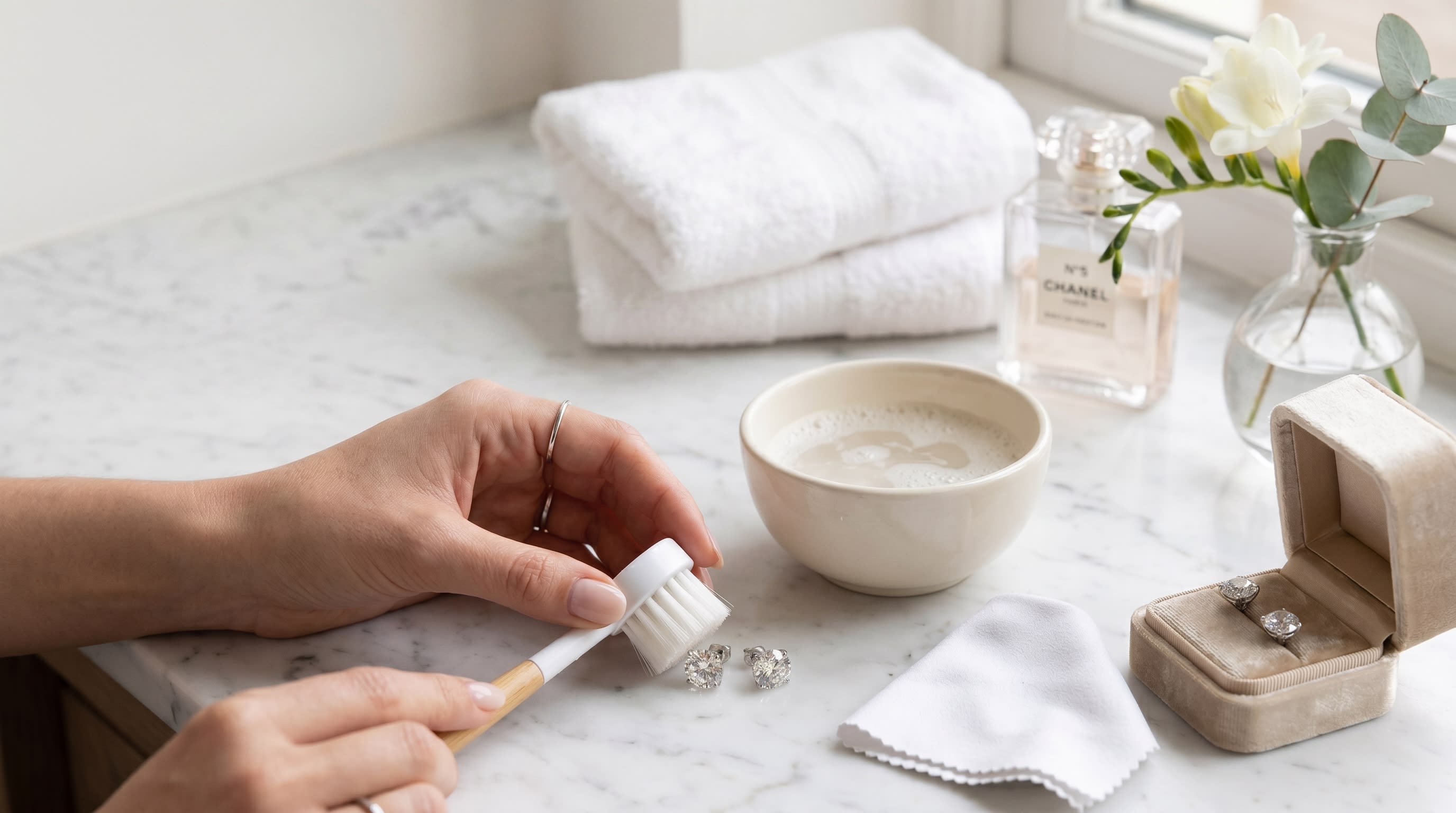
Before you clean anything, you need the right tools on hand. The good news: everything you need is probably already in your home, and nothing on the list is expensive.
What to gather:
- A small bowl or cup
- Mild dish soap (plain, unscented formulas work best)
- Warm water
- A soft-bristled toothbrush (a baby toothbrush is ideal for getting into tight settings)
- A lint-free microfiber cloth
- A fine mesh strainer or a sink stopper for rinsing
That soft toothbrush is doing most of the work here. The bristles are flexible enough to get under the diamond and around prongs without bending or scratching the metal. A regular paper towel, by comparison, can leave fibers in the setting and lacks the control you need for delicate areas.
What to keep away from your earrings
Not everything labeled “cleaning” is safe for diamond jewelry. Bleach, ammonia, and acetone corrode metal alloys and weaken the adhesives and settings that hold your stone in place. Toothpaste is another common mistake. It feels abrasive to your teeth for a reason. That same abrasiveness scratches gold and platinum over time.
| Item to avoid | Why it’s harmful |
|---|---|
| Bleach | Erodes metal alloys, dulls finish |
| Ammonia-based cleaners | Weakens stone settings and adhesives |
| Toothpaste | Micro-abrasive surface scratches metal |
| Acetone (nail polish remover) | Damages adhesives holding pavé stones |
| Harsh-bristle brushes | Scratches metal prongs and girdle of stone |
Pro Tip: If you use a jewelry cleaning solution from a store, read the label carefully. Many are formulated for silver only and will damage gold or platinum settings.
Ultrasonic cleaners deserve special mention. They work by sending vibrations through liquid to dislodge dirt, and they can be effective on simple solitaire settings. But ultrasonic cleaning loosens stones in pavé, halo, or multi-prong designs. Unless you know exactly what setting your earrings have and that it is solid enough to handle the vibration, skip the machine entirely.
Step-by-step guide to cleaning diamond studs at home
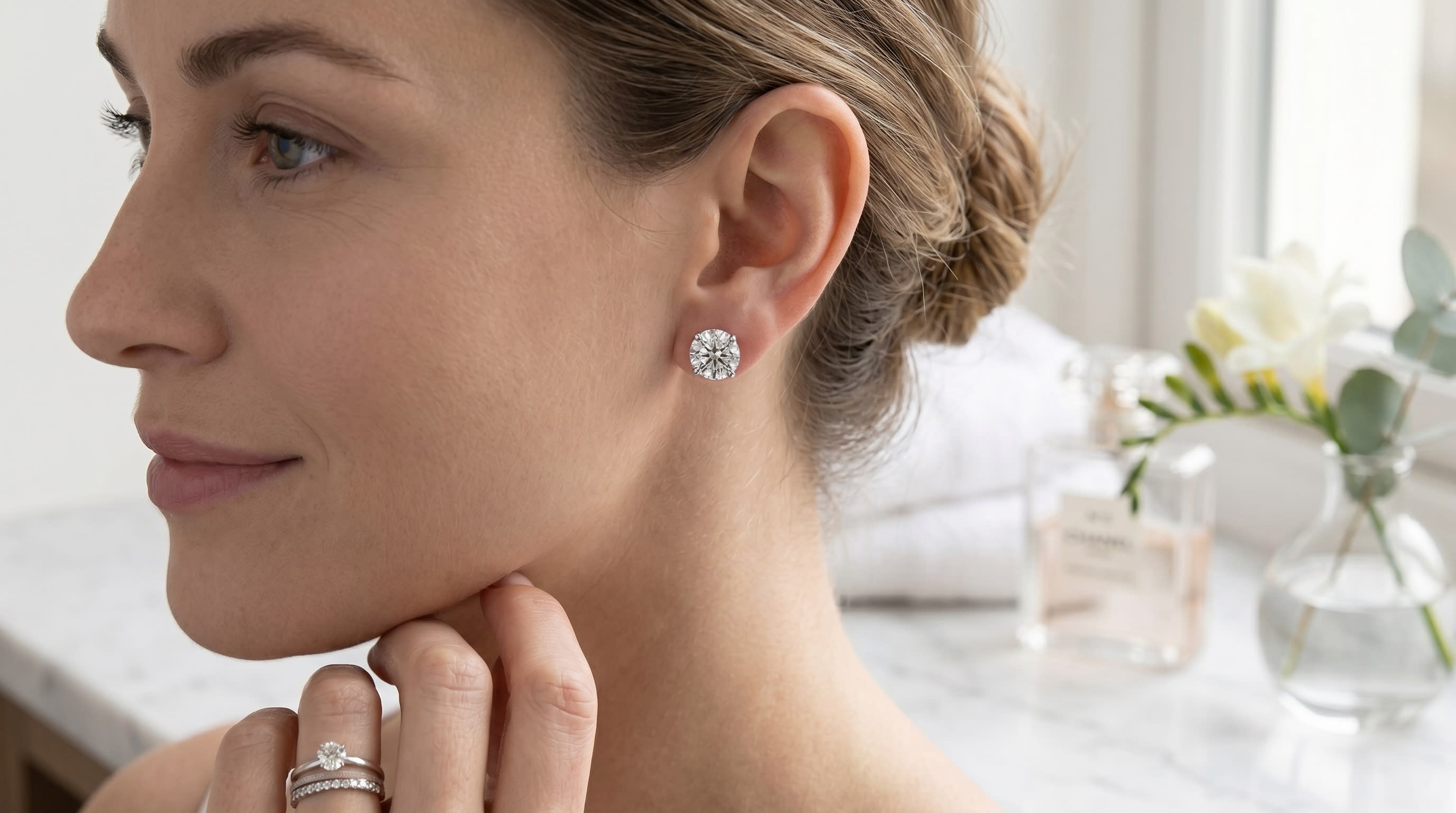
This process takes about 30 minutes and leaves your earrings looking like they just came out of a display case. Follow each step in order.
- Fill your bowl with warm water. Not hot. Extreme heat can stress metal over time. Warm water loosens grime effectively without the risk.
- Add a few drops of mild dish soap. You do not need much. A small amount creates enough soapy solution to break down the oils and product buildup on your earrings.
- Soak the earrings for 15 to 30 minutes. This is the part most people skip, and it matters. Soaking for 15 to 30 minutes softens the buildup behind and beneath the diamond, making scrubbing far more effective and preventing you from having to apply too much pressure.
- Gently scrub with a soft toothbrush. Pay close attention to the back of the diamond and the areas where the prongs meet the stone. That is where oil and lotion accumulate most. Use small, circular strokes and let the bristles do the work.
- Plug the drain or use a fine mesh strainer. This is non-negotiable. Securing the drain before rinsing is one of the most critical, and most overlooked, steps in the entire process. Even experienced jewelry owners have lost a stone or an entire earring to an open drain.
- Rinse gently under lukewarm running water. Hold each earring securely and let clean water flush away the soap and loosened grime.
- Pat dry with a lint-free cloth and air dry completely. Do not rub. Patting prevents microfiber snags in the prongs. Let the earrings sit on a clean cloth for a few minutes before storing them to prevent water spots forming in the setting.
“Proper at-home cleaning requires not only the right materials but also securing drains to prevent accidental loss, a frequently overlooked but critical safety step.”
Pro Tip: Clean your diamond earrings over a white surface like a clean plate or folded towel. If an earring back or small stone does fall, you will see it immediately instead of searching the floor.
Storing and handling your earrings the right way
Cleaning is only half the equation. How you store and handle your earrings between wearings directly affects how long they stay in great condition.
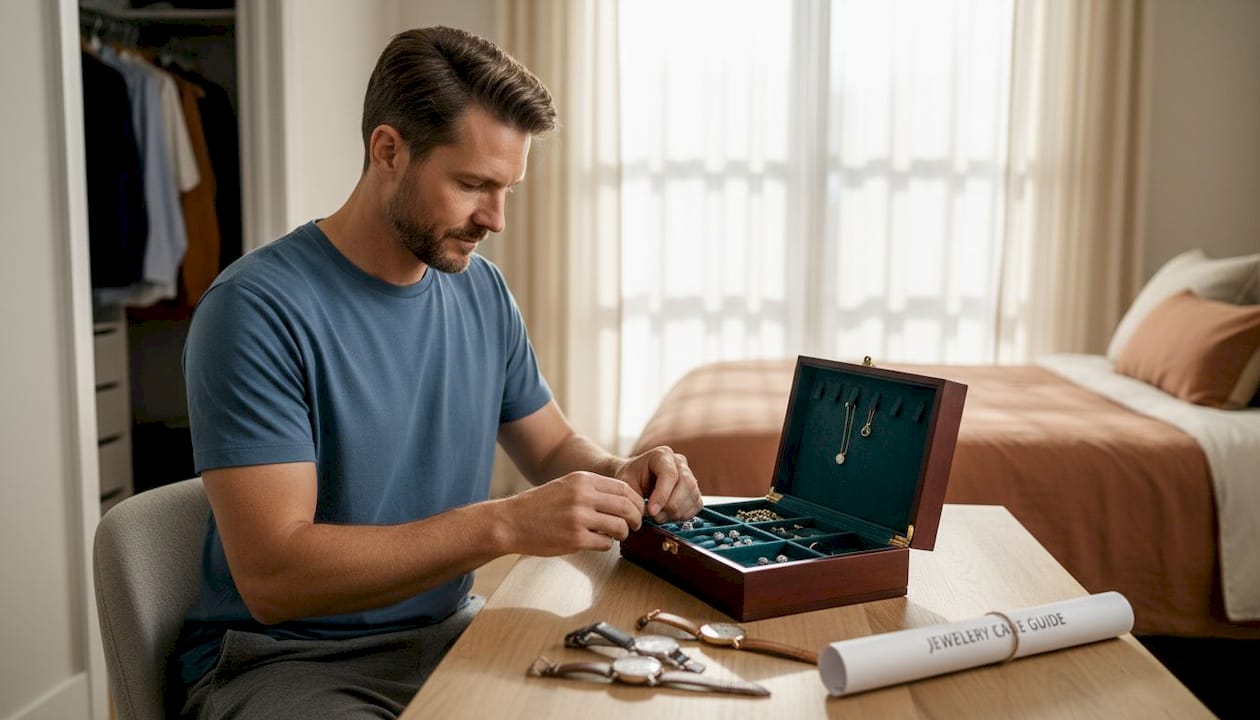
The most important rule for storing diamond earrings: keep each pair separated. Storing earrings in individual soft-lined compartments or pouches prevents diamonds from scratching each other and stops metal-on-metal friction from dulling your finish. Even though diamonds are the hardest natural material, two pieces of jewelry rattling together will wear down the metal settings quickly.
Daily habits that protect your earrings:
- Put earrings on after applying makeup, perfume, and hair products. Products create a film that attracts oil and dirt and coats the diamond, reducing brilliance faster than almost anything else.
- Remove earrings before washing your face, applying skincare creams, or going to sleep.
- Take earrings off before exercising, swimming, or doing any work with your hands. Chlorine in pools degrades metals. Sweat adds chemical stress.
- Keep a small dish or tray on your dresser as a landing spot when you take your earrings off casually. This single habit prevents most accidental losses.
One storage detail worth knowing: storing earrings flat rather than hanging them reduces gravitational stress on the setting over time. Hanging storage puts consistent downward pull on prongs and clasps. Flat storage in a lined box or drawer organizer is the safer long-term choice.
Pro Tip: Label or organize your jewelry box so each earring pair always returns to the same compartment. Searching through a tangled jewelry pile is one of the leading causes of accidental bent prongs.
Inspect your earrings every two to three months. Run a fingernail gently around each prong and check that none feel loose or bent. Wiggle the stone lightly with your finger. If it moves at all, do not wear the earrings until a jeweler checks the setting. A missing stone is far more expensive to replace than a simple prong retip.
Common mistakes that damage diamond earrings
The biggest mistakes in caring for jewelry at home come from two places: overconfidence in the diamond and underestimating the setting.
Many owners assume that because diamonds are exceptionally hard, they are also indestructible. That is partly true. On the hardness scale, diamonds score a 10 and nothing scratches them easily. But diamonds can chip on sharp impacts, particularly near the girdle or a pointed culet. More importantly, the metal settings holding those diamonds score far lower on hardness. Gold, platinum, and silver all wear down. Prongs thin. Clasps weaken. The setting is the vulnerable part, and most people never think to check it.
Mistakes to watch for:
- Cleaning with abrasive cloths or rough paper towels that scratch the metal surface
- Using ultrasonic cleaners on pavé or halo settings without knowing the risks
- Assuming earrings are fine because the diamond still looks bright
- Wearing earrings in the shower daily, which accelerates metal fatigue
- Storing all jewelry together in a single dish or drawer where pieces can tangle
“Diamond earring care is as much about preserving the setting as it is the stones, because a loose or damaged setting risks losing the diamond entirely.”
Neglecting prong checks is the mistake with the most costly consequence. A prong can loosen gradually over months without any visible sign until the stone shifts or falls. Professional jewelry inspection once or twice a year exists specifically to catch this kind of invisible wear before it becomes a loss.
How often to clean your earrings and what to expect
Consistent, gentle maintenance outperforms intensive but infrequent cleaning every time. Routine gentle maintenance keeps buildup from becoming entrenched and protects both the diamond and the setting far better than an occasional deep clean.
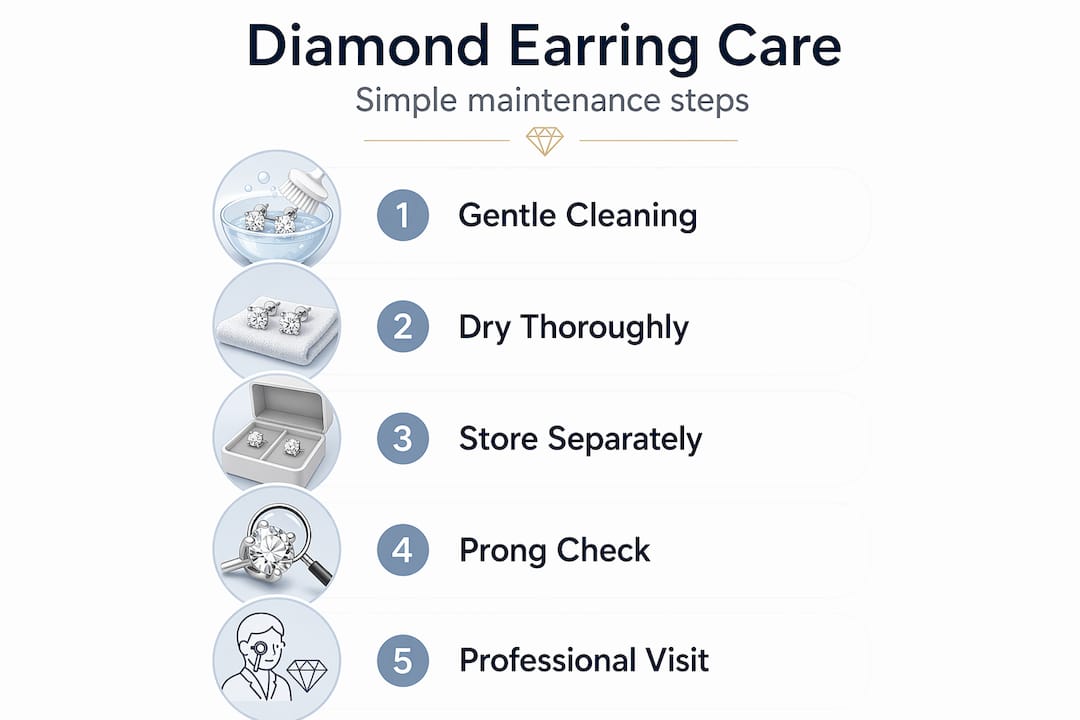
Here is a practical frequency guide based on how often you wear your earrings:
| Wear frequency | At-home cleaning | Professional inspection |
|---|---|---|
| Daily wear | Every 2 to 3 weeks | Twice a year |
| Weekly wear | Once a month | Once a year |
| Occasional wear | Every 3 to 4 months | Once a year |
| Rarely worn | Before and after each use | Every 1 to 2 years |
After cleaning, well-maintained diamond earrings should look noticeably brighter. You should see clean light moving through the stone without any hazy or gray film on the surface. The metal should look polished and even. If the earrings still look dull after a thorough at-home cleaning, that is a sign of deeper buildup or surface scratching on the metal that warrants a professional polish.
Pro Tip: Write your cleaning dates and inspection dates in your phone calendar. Jewelry care is easy to forget. A recurring reminder every three to four weeks keeps you consistent without any effort.
One practical signal that earrings need cleaning before their scheduled date: when they catch the light and do not throw the same bright flashes they usually do. Diamonds are light machines. When they stop performing visually, buildup is almost always the cause. You can find more general jewelry care tips that apply to all your fine pieces, not just diamond earrings.
My take on what most people miss
I’ve worked with jewelry long enough to notice a pattern. Most people who lose diamonds from their earrings are not reckless. They are simply overconfident about the wrong thing. They focus on the stone and forget the setting.
In my experience, the earrings that come in for emergency repairs are almost never damaged by dirt or scratching. They come in because a prong quietly bent over months of daily wear, or because someone cleaned their halo earrings in an ultrasonic cleaner without knowing it wasn’t safe for their setting type. The diamond itself is usually fine. The structure holding it in place is what failed.
What I’ve learned is that the most protective thing you can do does not require any tools or supplies. It’s simply the habit of looking at your earrings closely every few weeks. Pick them up, hold them to the light, and run your finger around the setting. You will feel a loose prong before you see it. You’ll notice when the stone doesn’t move freely in its seat. That physical familiarity with your own jewelry is worth more than any cleaning product.
The rule I always come back to: gentle and consistent beats intense and occasional. The earrings that come back looking best after years of wear belong to people who do a little every few weeks, not the ones who do a lot once a year.
— Andrew
Diamond earrings worth caring for, from Superjeweler

If you have invested in a great pair of diamond earrings, or you are thinking about it, Superjeweler has one of the widest selections available online. From classic diamond stud options to pavé and halo designs in gold and platinum, the catalog covers every setting style this guide has covered. Superjeweler also offers lab grown diamond earrings for shoppers looking for quality and value together. Every purchase comes with free worldwide shipping and a satisfaction guarantee. And if you are shopping for a matching gift or thinking about next steps, explore affordable diamond engagement rings starting under $1,000.
FAQ
How often should I clean my diamond earrings at home?
Clean diamond earrings every two to three weeks if you wear them daily, and once a month for weekly wear. Regular cleaning prevents buildup that dulls brilliance over time.
Can I use toothpaste to clean diamond studs?
No. Toothpaste is mildly abrasive and will scratch the metal in your earring setting. Use mild dish soap and warm water with a soft toothbrush instead.
Is it safe to use an ultrasonic cleaner on diamond earrings?
Ultrasonic cleaners are only safe for simple solitaire settings. They can loosen or dislodge stones in pavé, halo, or multi-prong settings, so avoid them unless you are certain of your setting type.
How should I store diamond earrings when I’m not wearing them?
Store each pair in a separate soft-lined pouch or compartment to prevent scratching and metal-on-metal friction. Keeping earrings flat rather than hanging also reduces stress on prongs and clasps over time.
When should I take diamond earrings to a professional jeweler?
Schedule a professional inspection once or twice a year. If you notice a stone that feels loose, a prong that seems bent, or persistent dullness after cleaning, visit a jeweler before wearing the earrings again.
““json
{
“@context”: “https://schema.org”,
“@graph”: [
{
“@type”: “Article”,
“headline”: “How to Care for Diamond Earrings: the Full Guide”,
“description”: “Learn how to care for diamond earrings with safe cleaning steps, proper storage habits, and maintenance tips that preserve brilliance and protect settings.”,
“author”: {
“@type”: “Person”,
“name”: “Andrew”
},
“publisher”: {
“@type”: “Organization”,
“name”: “Superjeweler”,
“url”: “https://www.superjeweler.com”
},
“mainEntityOfPage”: {
“@type”: “WebPage”,
“@id”: “https://www.superjeweler.com”
}
},
{
“@type”: “FAQPage”,
“mainEntity”: [
{
“@type”: “Question”,
“name”: “How often should I clean my diamond earrings at home?”,
“acceptedAnswer”: {
“@type”: “Answer”,
“text”: “Clean diamond earrings every two to three weeks if you wear them daily, and once a month for weekly wear. Regular cleaning prevents buildup that dulls brilliance over time.”
}
},
{
“@type”: “Question”,
“name”: “Can I use toothpaste to clean diamond studs?”,
“acceptedAnswer”: {
“@type”: “Answer”,
“text”: “No. Toothpaste is mildly abrasive and will scratch the metal in your earring setting. Use mild dish soap and warm water with a soft toothbrush instead.”
}
},
{
“@type”: “Question”,
“name”: “Is it safe to use an ultrasonic cleaner on diamond earrings?”,
“acceptedAnswer”: {
“@type”: “Answer”,
“text”: “Ultrasonic cleaners are only safe for simple solitaire settings. They can loosen or dislodge stones in pavé, halo, or multi-prong settings.”
}
},
{
“@type”: “Question”,
“name”: “How should I store diamond earrings when I’m not wearing them?”,
“acceptedAnswer”: {
“@type”: “Answer”,
“text”: “Store each pair in a separate soft-lined pouch or compartment to prevent scratching and metal friction. Keeping earrings flat rather than hanging also reduces stress on prongs and clasps.”
}
},
{
“@type”: “Question”,
“name”: “When should I take diamond earrings to a professional jeweler?”,
“acceptedAnswer”: {
“@type”: “Answer”,
“text”: “Schedule a professional inspection once or twice a year. Visit sooner if a stone feels loose, a prong seems bent, or cleaning does not restore brilliance.”
}
}
]
}
]
}
## Recommended

- [Diamond Earring Care Tips: Proven Steps to Keep Them Sparkling](https://www.blog.superjeweler.com/diamond-earring-care-tips-proven-steps-sparkling)
- [How to choose diamond earrings: quality & value guide](https://www.blog.superjeweler.com/how-to-choose-diamond-earrings-quality-value-guide)
- [Jewelry Care Tips: Keep Your Pieces Sparkling Longer](https://www.blog.superjeweler.com/jewelry-care-tips-keep-pieces-sparkling-longer)
- [Why Buy Diamond Earrings: Beauty, Value, and Ethics](https://www.blog.superjeweler.com/why-buy-diamond-earrings)