TL;DR:
- Gold plating involves depositing a thin layer of real gold onto a base metal, offering an affordable luxurious appearance. Its durability depends on layer thickness, with professional plating including a strike layer and precise parameters to ensure longevity. Proper care and understanding of plating types help maximize both the lifespan and appearance of gold plated jewelry.
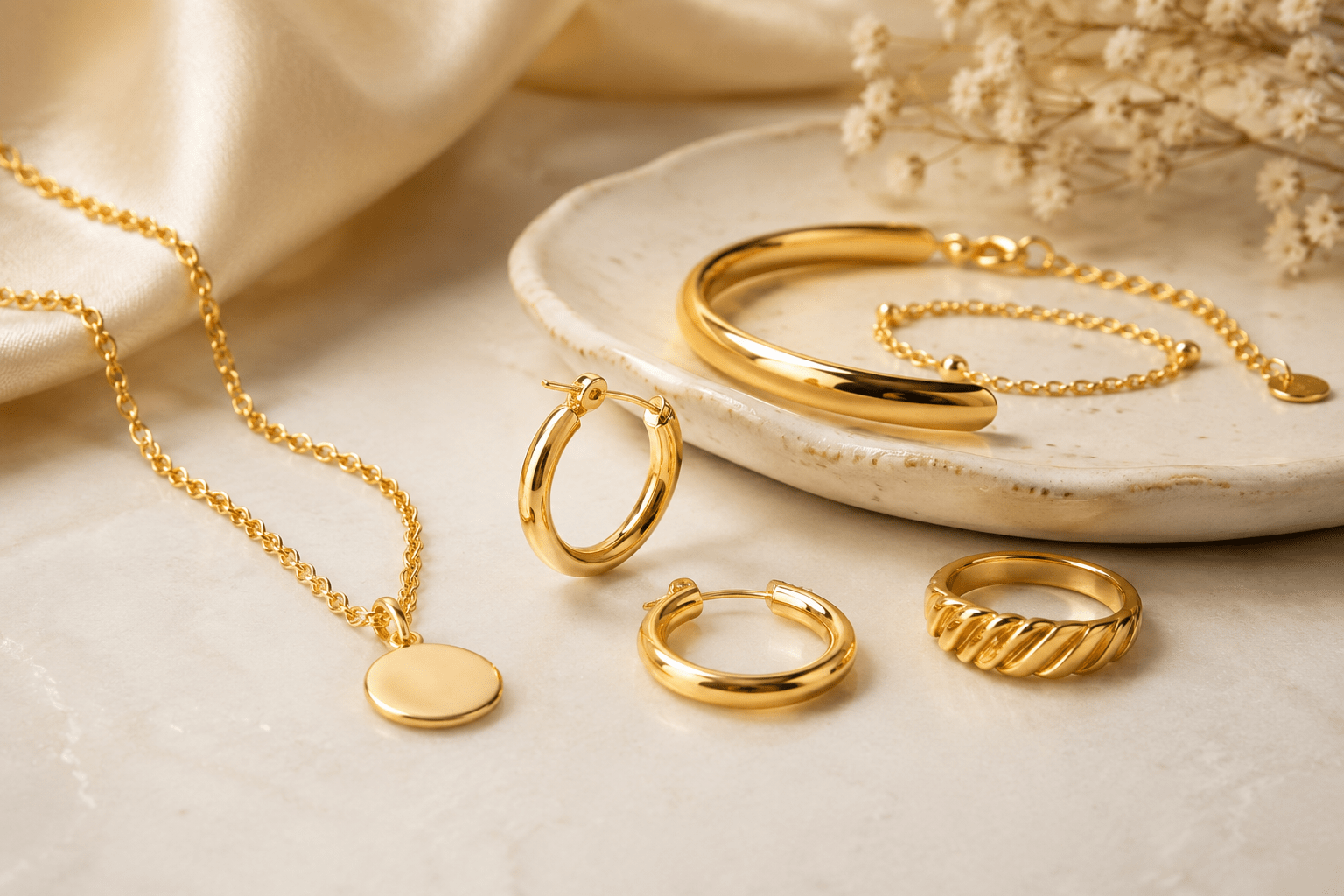
Gold plating is defined as an electrochemical process that deposits a thin layer of real gold onto a base metal, creating a luxurious appearance at a fraction of solid gold’s cost. The gold layer ranges from 0.05 to 30 microns thick, depending on the intended durability and application. Electroplating is the dominant method used in professional jewelry production, with copper and silver serving as the most common base metals. Understanding what gold plating is, how it works, and where it falls short helps you shop smarter and care for your pieces longer.
What is gold plating and how does it work?
Gold plating is a surface treatment, not a structural material. Electroplating deposits gold from a chemical bath onto a prepared base metal using an electrical current. The gold ions in the solution migrate to the negatively charged base metal and bond to its surface, forming a thin, even layer. The result looks and feels like gold without the price of a solid gold piece.

The thickness of that layer determines almost everything about how the piece performs over time. A ring plated at 0.5 microns will show wear within months of daily use, while a piece plated at 2.5 microns or more holds up considerably longer. This is why two gold plated rings at similar prices can behave very differently after a year of wear.
How does the professional gold plating process work?
Professional gold plating follows a standardized five-stage process: surface cleaning, strike layer application, electroplating, rinsing and drying, and quality inspection. Each stage directly affects the final quality of the plating, and skipping or rushing any one of them produces a weaker result.
Here is what each stage involves:
- Surface cleaning. The base metal is degreased and cleaned using chemical or ultrasonic baths to remove oils, oxides, and contaminants. Any residue left on the surface prevents the gold from bonding properly.
- Strike layer application. A thin layer of nickel or copper is applied before the gold. This strike layer improves adhesion and prevents the base metal from reacting with the gold bath. Without it, gold can lift or flake, especially on copper or brass substrates.
- Electroplating in the gold bath. The prepared piece is submerged in a gold electrolyte solution and connected to a power source. Current density, bath temperature, and pH are all controlled precisely. Poor control of these plating parameters produces weak, coarse deposits that fail prematurely.
- Rinsing and drying. The piece is rinsed thoroughly with deionized water and dried with warm air. Residual bath chemicals not removed at this stage cause tarnish and corrosion over time.
- Quality inspection. Professional shops verify thickness using X-ray fluorescence (XRF) technology. This confirms the plating meets the specified micron range before the piece ships.
One notable shift in professional plating is the move toward cyanide-free electrolyte systems, which reduce hazardous waste and health risks in production environments. This matters for shoppers who care about how their jewelry is made.
Pro Tip: When buying gold plated jewelry, ask the seller for the plating thickness in microns. Anything below 0.5 microns is considered flash plating and will wear through quickly. Look for at least 1 to 2.5 microns for everyday jewelry.
What are the benefits and limitations of gold plating in jewelry?
Gold plating delivers the visual appeal of solid gold at a price point accessible to most shoppers. A gold plated piece over a silver or copper base costs a fraction of what a solid 14k or 18k gold item would, while still offering the warm color and luster associated with fine jewelry.
The core benefits include:
- Affordable luxury. Gold plated jewelry gives you the look of gold without the cost of solid gold, making it practical for fashion pieces, gifts, and trend-driven styles.
- Corrosion resistance. Gold does not oxidize or tarnish on its own, so a properly plated piece resists everyday exposure to air and moisture better than uncoated base metals.
- Design flexibility. Plating works on complex shapes and intricate designs that would be cost-prohibitive in solid gold. This opens up more creative options for fashion necklaces and statement pieces.
- Color variety. Rose gold, yellow gold, and white gold finishes are all achievable through plating by adjusting the alloy composition of the gold bath.
The limitations are equally real. Plating thickness determines lifespan, and even well-plated pieces will eventually show wear at friction points like ring shanks and bracelet clasps. Sweat, chlorine, and harsh cleaning products accelerate wear-through. Replating is possible and relatively affordable, but it is an ongoing maintenance cost to factor in.
Pro Tip: Store gold plated jewelry in a soft pouch or lined box, away from other pieces that can scratch the surface. Remove plated rings before washing hands or applying lotion. These habits alone can double the visible lifespan of a plated piece.
Gold plating vs. gilding vs. gold filled: what is the difference?
These three terms describe different methods of applying gold to a surface, and confusing them leads to mismatched expectations about durability and value.
| Technique | Gold content | Bonding method | Typical thickness | Best use |
|---|---|---|---|---|
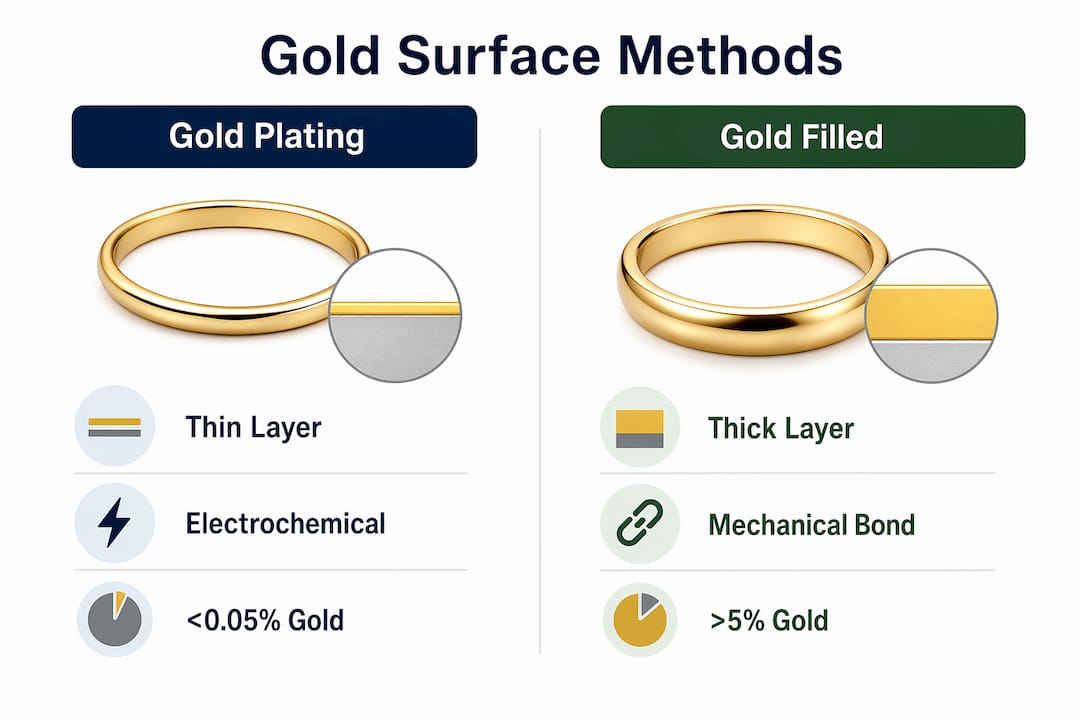
| Gold plating | Less than 0.05% gold by weight | Electrochemical deposit | 0.05 to 30 microns | Fashion jewelry, decorative items |
| Gold filled | At least 5% gold by weight | Mechanical pressure bonding | 50 to 100 microns | Everyday jewelry, longer wear |
| Gilding | Variable, often very thin | Adhesive or mechanical leaf | 0.1 to 0.5 microns | Art, furniture, decorative objects |
Gold plated jewelry contains less than 0.05% gold by weight, while gold filled pieces bond a much thicker gold layer mechanically to the base metal. Gold filled jewelry is more durable and holds up better to daily wear, but it costs more. Gilding, the oldest of the three techniques, uses gold leaf applied with adhesive or burnishing and is primarily used in art, architecture, and decorative objects rather than wearable jewelry.
For jewelry shoppers, the practical takeaway is this: gold plated pieces are ideal for occasional wear, fashion styling, and budget-conscious purchases. Gold filled pieces are worth the extra cost for rings and bracelets worn daily. Gilded items belong on your walls, not your wrists.
What types and methods of gold plating are used in jewelry?
Not all gold plating is the same. The type of gold used, the plating method, and the finish all affect how a piece looks and how long it lasts.
- Soft gold plating uses high-purity gold (99.9%) and produces a rich, warm finish. It is the standard for fine jewelry and decorative applications where appearance matters more than hardness.
- Hard gold plating incorporates cobalt or nickel alloys to increase hardness to 130 to 200 Knoop. This type is engineered for industrial and electronics applications, not jewelry, because the alloys can affect color and skin compatibility.
- Vermeil is a specific type of gold plating where at least 2.5 microns of gold are deposited over sterling silver. The U.S. Federal Trade Commission defines vermeil with specific thickness and purity requirements, making it a regulated and more durable category of plated jewelry.
- Electroless plating deposits gold without an external electrical current, using a chemical reduction reaction instead. It produces very even coatings on complex shapes but is slower and more expensive than standard electroplating.
- Bright, satin, and matte finishes are achieved by adjusting the bath chemistry and post-plating treatment. Specialized plating techniques create these surface variations, giving jewelry designers a wide palette of textures to work with.
For high-volume small items like charms and findings, rotary barrel plating is the standard method. For delicate or large pieces, static rack plating gives more control. The choice of method affects coating uniformity and is one reason why plating methods vary by part size and production volume.
Key takeaways
Gold plating is a surface treatment that bonds a thin real gold layer to a base metal through electroplating, with thickness being the single most important factor in durability and lifespan.
| Point | Details |
|---|---|
| Thickness drives durability | Look for at least 1 to 2.5 microns for jewelry worn regularly; flash plating below 0.5 microns wears through quickly. |
| Strike layer is non-negotiable | A nickel or copper strike layer prevents flaking and is a mark of professional plating quality. |
| Gold plating vs. gold filled | Gold filled has at least 5% gold by weight and lasts significantly longer for daily-wear pieces. |
| Vermeil is the premium tier | Vermeil requires 2.5 microns of gold over sterling silver and is regulated by the FTC. |
| Care extends lifespan | Avoiding moisture, chemicals, and abrasion can double the visible life of a plated piece. |
Why I think most shoppers underestimate gold plating
I have spent years looking at how jewelry performs in real life, and the most consistent mistake I see is treating gold plating as a lesser category rather than a deliberate choice. When you understand what it is, gold plating is not a compromise. It is a tool.
The shoppers who get the most from gold plated jewelry are the ones who match the piece to the occasion. A gold plated personalized necklace worn for special occasions will look flawless for years. The same piece worn daily in the shower will look tired in six months. That is not a flaw in the product. That is a mismatch between the product and the use.
What I tell people is this: check the micron thickness before you buy, ask whether a strike layer was used, and store the piece properly. Those three steps separate a satisfying purchase from a disappointing one. Reputable retailers who know their supply chain can answer those questions. If they cannot, that tells you something too.
The ring metals guide at Superjeweler covers this well for anyone comparing plated options against solid gold or platinum bands. The decision is rarely about which is “better.” It is about which fits your budget, lifestyle, and how often you plan to wear the piece.
— Andrew
Find gold plated jewelry and engagement rings at Superjeweler
Superjeweler carries an extensive selection of gold plated and fine gold jewelry, from fashion pieces to engagement rings designed for real budgets.

If you are looking for the look of gold without the price of solid gold, Superjeweler’s affordable engagement rings under $1,000 include styles with gold plated settings that deliver genuine luxury at accessible prices. For shoppers interested in pairing a gold setting with a modern stone, the lab grown diamond deals section combines ethical sourcing with serious savings. Free worldwide shipping and a satisfaction guarantee make it easy to shop with confidence.
FAQ
What is gold plating in simple terms?
Gold plating is the process of depositing a thin layer of real gold onto a base metal like copper or silver using an electrical current. The result is a piece that looks like gold but costs significantly less than solid gold.
How long does gold plating last on jewelry?
Lifespan depends on plating thickness and how the piece is worn. A piece plated at 1 to 2.5 microns with proper care can last several years, while flash plating below 0.5 microns may wear through within months of regular use.
What materials can be gold plated?
Most metals can be gold plated, including copper, brass, silver, stainless steel, and nickel. A strike layer of nickel or copper is typically applied first to improve adhesion and prevent the base metal from reacting with the gold bath.
Is gold plating the same as gold filled?
No. Gold plated jewelry contains less than 0.05% gold by weight, applied as a thin surface layer. Gold filled jewelry has at least 5% gold by weight, bonded mechanically under heat and pressure, making it significantly more durable for everyday wear.
Can gold plated jewelry be replated?
Yes. A jeweler can strip the worn plating and reapply a fresh gold layer, restoring the original appearance. Replating is a routine service and is generally affordable, making it a practical option for extending the life of a favorite piece.
Recommended
- Gold Chain | Huge Variety, Amazing Prices From SuperJeweler.com
- Affordable Jewelry Shopping Guide for Quality Finds
- 1.4ktgold | SuperJeweler.com
- Why choose platinum rings: enduring value and elegance
