TL;DR:
- White gold is a gold alloy coated with rhodium, requiring periodic replating to maintain its white appearance, while platinum is naturally white and nearly pure, developing a patina over time. Platinum is heavier, more durable in displacement, and costs 30-50% more upfront, offering minimal maintenance, whereas white gold is lighter and less expensive but needs regular replating every 12-18 months. The choice depends on preferences for durability, maintenance, weight, budget, and long-term wear, with platinum suited for low-maintenance, enduring jewelry, and white gold fitting those budget-conscious or design-variety preferences.
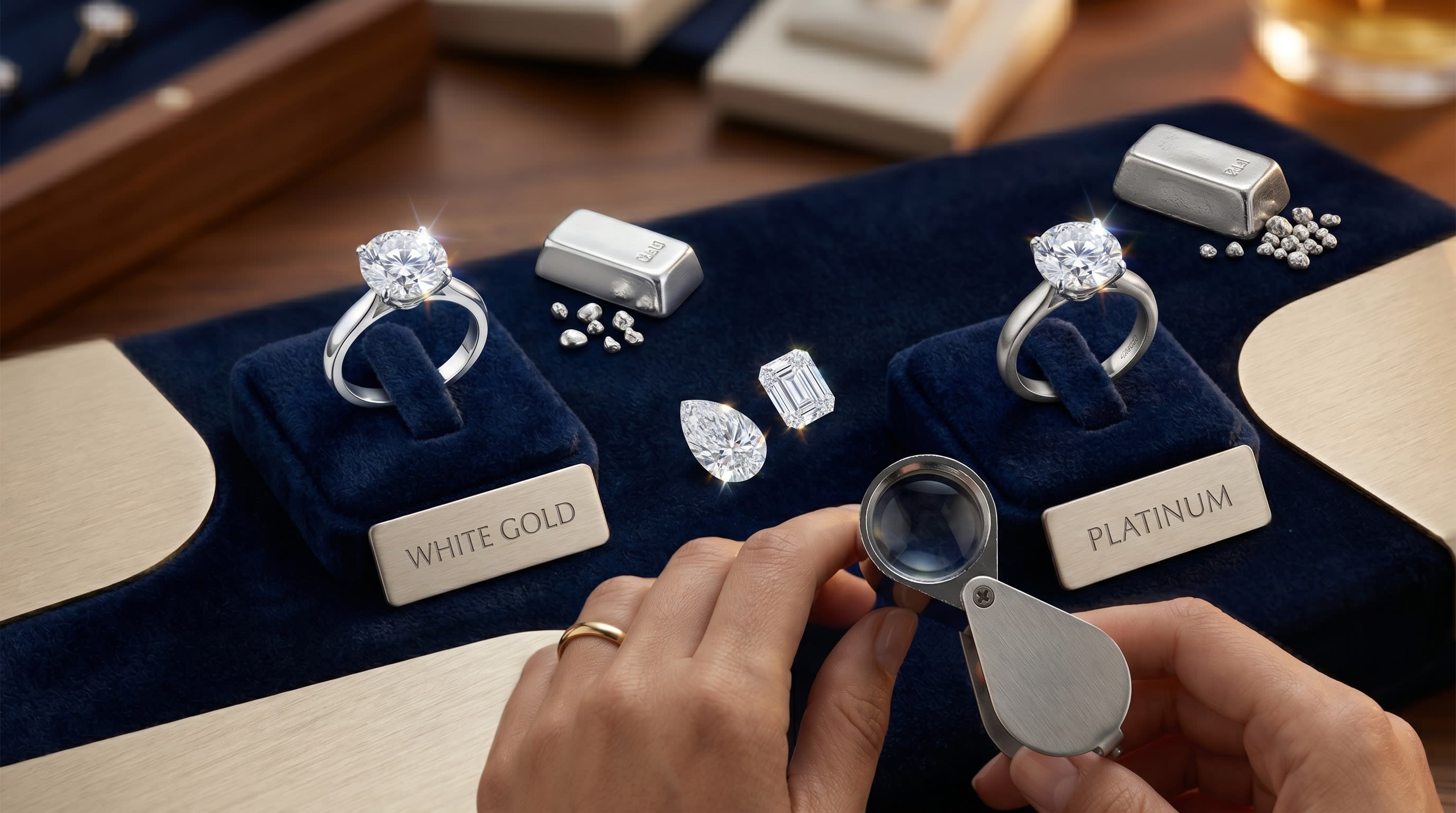
The difference between white gold and platinum is rooted in composition: platinum is a naturally white, dense, pure metal, while white gold is yellow gold alloyed with metals like palladium or nickel and coated with rhodium to achieve its white appearance. These two metals look nearly identical in a jewelry case, yet they perform, age, and cost very differently over a lifetime of wear. Understanding what separates them helps you choose the right metal for your engagement ring, wedding band, or any fine jewelry piece you plan to wear daily.
What is the difference between white gold and platinum?
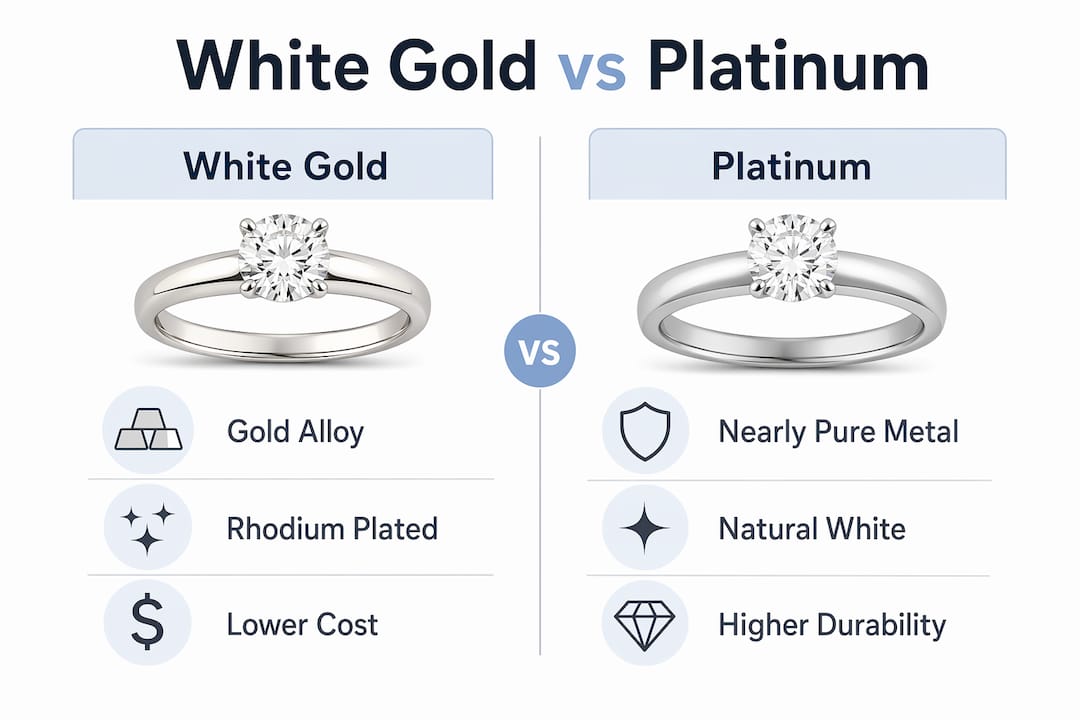
Platinum and white gold are both popular choices for fine jewelry, but their metallurgical identities are completely different. Platinum is 90 to 95% pure metal, meaning the ring on your finger is almost entirely platinum with minimal added alloys. White gold, by contrast, is either 14K (58.3% gold) or 18K (75% gold) mixed with metals such as palladium, silver, or nickel to create a harder, workable alloy.
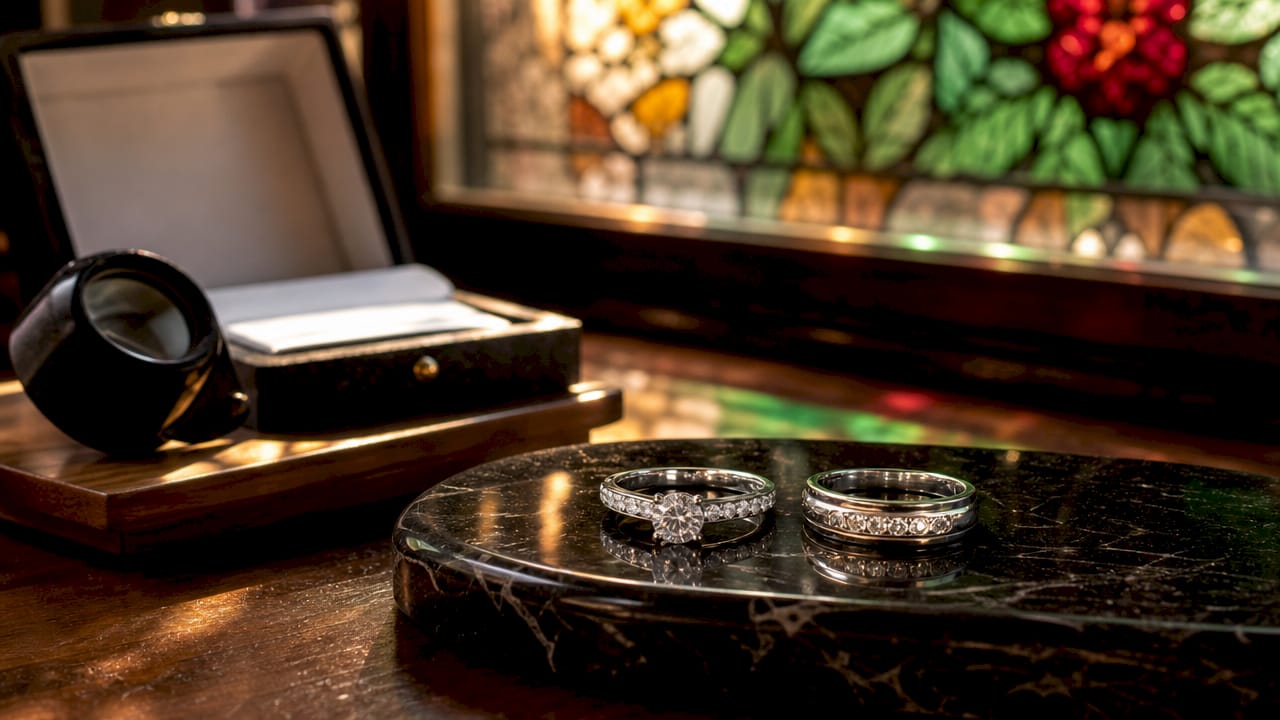
The white color of white gold does not come naturally from the gold itself. Jewelers apply a thin layer of rhodium, a bright, hard platinum-group metal, to give white gold its crisp, mirror-like finish. Platinum, on the other hand, is naturally white without any surface treatment. That single distinction drives most of the practical differences buyers encounter over time.
Here is a quick comparison of the two metals at a glance:
| Property | White Gold | Platinum |
|---|---|---|
| Base composition | 14K or 18K gold alloy | 90–95% pure platinum |
| Natural color | Yellowish (rhodium-plated white) | Naturally white |
| Density | Lighter | ~60% heavier than 14K gold |
| Surface finish | High-gloss (from plating) | Matte patina develops over time |
| Maintenance | Replating every 12–18 months | No plating required |
Weight is another telling difference. A platinum ring weighs roughly 60% more than the same design in 14K white gold. Some buyers love the substantial feel of platinum on their finger. Others find white gold’s lighter weight more comfortable for all-day wear.
How durability and maintenance compare
Durability is where the platinum vs white gold conversation gets genuinely interesting, because the two metals fail in different ways.
Platinum scratches by displacement. When a hard surface grazes platinum, the metal moves rather than flakes away. Over time, this creates a soft, matte surface called a patina. Platinum develops an even patina rather than losing metal volume, which means the ring retains its mass and structural integrity for decades. Many buyers come to love the patina look. Jewelers can also polish it back to a high shine if you prefer.
White gold behaves differently under daily wear. Scratches on white gold cut through the rhodium layer and into the alloy beneath, showing as bright lines against the polished surface. More critically, each polish removes a small amount of metal. The rhodium plating itself wears unevenly over time, eventually revealing the yellowish tint of the underlying gold alloy, particularly around the back of the band where friction is highest.
To maintain white gold’s bright white appearance, professional rhodium replating costs $50 to $100 per service and is typically needed every 12 to 18 months. That is a recurring cost and a scheduling commitment that platinum owners never face. Over ten years of ownership, replating alone can add $500 to $1,000 to the total cost of a white gold ring.
Here is a practical maintenance schedule for white gold owners:
- Inspect the ring every six months under good lighting for yellowish tint near the shank or prongs.
- Clean gently with mild soap and a soft brush to remove buildup that accelerates plating wear.
- Remove the ring before swimming in chlorinated pools, as chlorine degrades rhodium plating faster.
- Schedule professional replating when the yellow tint becomes visible, typically every 12 to 18 months.
- Ask your jeweler to check prong integrity at each replating appointment.
Pro Tip: You can identify plating wear early by examining the inside of the band in natural light. A yellowish or warm tone along the inner shank is the first sign that replating is due, well before it becomes visible from the top of the ring.
For jewelry care tips that apply to both metals, routine cleaning and storage habits make a measurable difference in how long each finish lasts.
Cost and value: which metal fits your budget?
Platinum costs significantly more than white gold, and the gap is wider than most buyers expect. A platinum ring typically costs 30% to 50% more than an identical design in 14K white gold. Two factors drive this premium.
First, platinum is rarer and denser than gold. More raw material by weight is needed to produce the same ring, and platinum commands a higher price per gram on the commodity market. Second, platinum requires higher casting temperatures and longer polishing times, which increases the skilled labor cost at the bench. A jeweler working in platinum spends more time on each piece than they would on the same design in gold, and that time is priced into the final retail cost.
White gold offers a lower upfront price, but the long-term cost picture is more nuanced. Factor in rhodium replating every 12 to 18 months and the total cost of ownership over a decade narrows considerably. Buyers who prioritize a lower initial price and are comfortable with periodic maintenance will find white gold practical and cost-effective. Buyers who want to purchase once and wear without intervention often find platinum’s higher upfront cost justified.
Here is a summary comparison to guide your decision:
| Factor | White Gold | Platinum |
|---|---|---|
| Upfront cost | Lower (30–50% less) | Higher |
| Long-term maintenance cost | $50–$100 every 12–18 months | Minimal |
| Scratch behavior | Loses metal over time | Displaces metal, retains mass |
| Color stability | Requires replating | Naturally stable |
| Best for | Budget-conscious buyers, design variety | Long-term durability, low maintenance |
White gold is better for buyers who prioritize lower upfront cost, lighter weight, and access to more design and color options, since gold is also available in yellow and rose varieties. Platinum suits buyers who want a maintenance-free white metal and are willing to invest more at the outset.
Which metal is better for engagement rings and daily wear?
The right metal depends on how you wear jewelry and what you value most in a piece you plan to keep for life.
For engagement rings, platinum holds a clear structural advantage in one specific area: prong security. Diamond prongs in platinum maintain their grip and shape longer than white gold prongs because platinum does not lose metal volume the way polished gold does. For a solitaire or any ring where prongs hold a center stone, that long-term security matters.
White gold has its own strengths that are often overlooked:
- Hardness advantage: White gold is harder than platinum in the short term, making it more resistant to surface scratches in intricate settings like pavé or channel-set bands.
- Design variety: Gold is available in yellow, white, and rose, giving designers and buyers more creative flexibility.
- Lighter weight: Buyers with smaller hands or those sensitive to ring weight often prefer white gold for comfort.
- Lower entry price: For buyers working within a specific budget, white gold allows for a larger or higher-quality center stone at the same total spend.
Lifestyle matters as much as technical specs. If you work with your hands, exercise frequently, or simply forget to remove your ring, platinum’s displacement-based scratch behavior and structural durability make it the more forgiving choice over years of active wear. If you are disciplined about ring care and prefer a lighter feel, white gold performs well with proper maintenance.
For guidance on choosing platinum rings or understanding the case for white gold engagement rings, both metals have strong advocates among experienced jewelers and buyers alike.
Key takeaways
Platinum is the better long-term investment for buyers who want a naturally white, low-maintenance metal, while white gold offers lower upfront cost and design flexibility with a commitment to periodic replating.
| Point | Details |
|---|---|
| Composition difference | Platinum is 90–95% pure; white gold is a gold alloy coated with rhodium for whiteness. |
| Maintenance commitment | White gold requires rhodium replating every 12–18 months at $50–$100 per service. |
| Durability behavior | Platinum displaces metal when scratched; white gold loses metal and shows plating wear. |
| Cost trade-off | Platinum costs 30–50% more upfront but carries minimal long-term maintenance costs. |
| Best use case | Platinum excels for prong security and daily wear; white gold suits budget-focused buyers and intricate designs. |
What I’ve learned from watching buyers choose between these two metals
The biggest mistake I see first-time fine jewelry buyers make is treating this as a purely technical decision. They read the specs, see that platinum is purer and more durable, and assume it is always the right answer. The reality is more practical than that.
I have watched buyers purchase platinum rings because they wanted the “best” metal, only to be surprised by the weight on their finger every single day. A platinum ring is noticeably heavier than white gold, and for some people, that sensation never becomes comfortable. Comfort is not a minor detail when you are wearing something for the next 30 years.
On the other side, I have seen buyers choose white gold to save money upfront, then feel frustrated two years later when the ring starts showing a yellowish tint and they did not budget for replating. The maintenance cost is predictable and manageable, but only if you know it is coming.
My honest advice: ask yourself one question before you decide. How much time and money are you willing to spend on upkeep over the next decade? If the answer is “as little as possible,” platinum is worth the higher upfront price. If you are comfortable with a simple annual maintenance routine and want to keep more budget for the stone itself, white gold is a smart, practical choice that millions of buyers are happy with for life.
Ask your jeweler to show you both metals side by side under store lighting and natural light. The visual difference is subtle, but the weight difference is immediate. Let your hand tell you something your spreadsheet cannot.
— Andrew
Find your perfect ring at Superjeweler

Superjeweler carries an extensive selection of engagement rings in both white gold and platinum, with options across every budget and style. Whether you are drawn to the low-maintenance appeal of platinum or the lighter feel and value of white gold, the collection includes designs from classic solitaires to intricate pavé settings. For buyers working with a tighter budget, Superjeweler’s affordable engagement rings under $1,000 include real diamond options in white gold without sacrificing quality. Free worldwide shipping and a satisfaction guarantee make it easy to shop with confidence.
FAQ
What is the main difference between white gold and platinum?
Platinum is a naturally white, 90 to 95% pure metal that requires no surface treatment. White gold is a yellow gold alloy coated with rhodium to appear white, and that coating wears off over time and needs periodic replacement.
Does platinum look different from white gold?
New white gold and platinum look nearly identical due to rhodium plating. Over time, white gold may reveal a slight yellow tint as the plating wears, while platinum develops a soft matte patina but retains its white color permanently.
How often does white gold need to be replated?
White gold typically requires professional rhodium replating every 12 to 18 months at a cost of $50 to $100 per service to maintain its bright white finish.
Is platinum worth the extra cost over white gold?
Platinum costs 30 to 50% more than 14K white gold upfront, but it requires no replating and retains its metal mass over time. For buyers who want a low-maintenance ring and plan to wear it daily for decades, the premium is generally justified.
Which metal is better for an engagement ring with diamonds?
Platinum offers superior prong security for diamond settings because it displaces rather than loses metal over time, keeping stones held firmly in place longer than white gold prongs typically do.
Recommended
- Why choose platinum rings: enduring value and elegance
- Ring metals guide: 7 top choices for your perfect band
- Diamond necklace buying tips: quality & value in 2026
- Diamond vs. Moissanite: Key Differences Explained
