TL;DR:
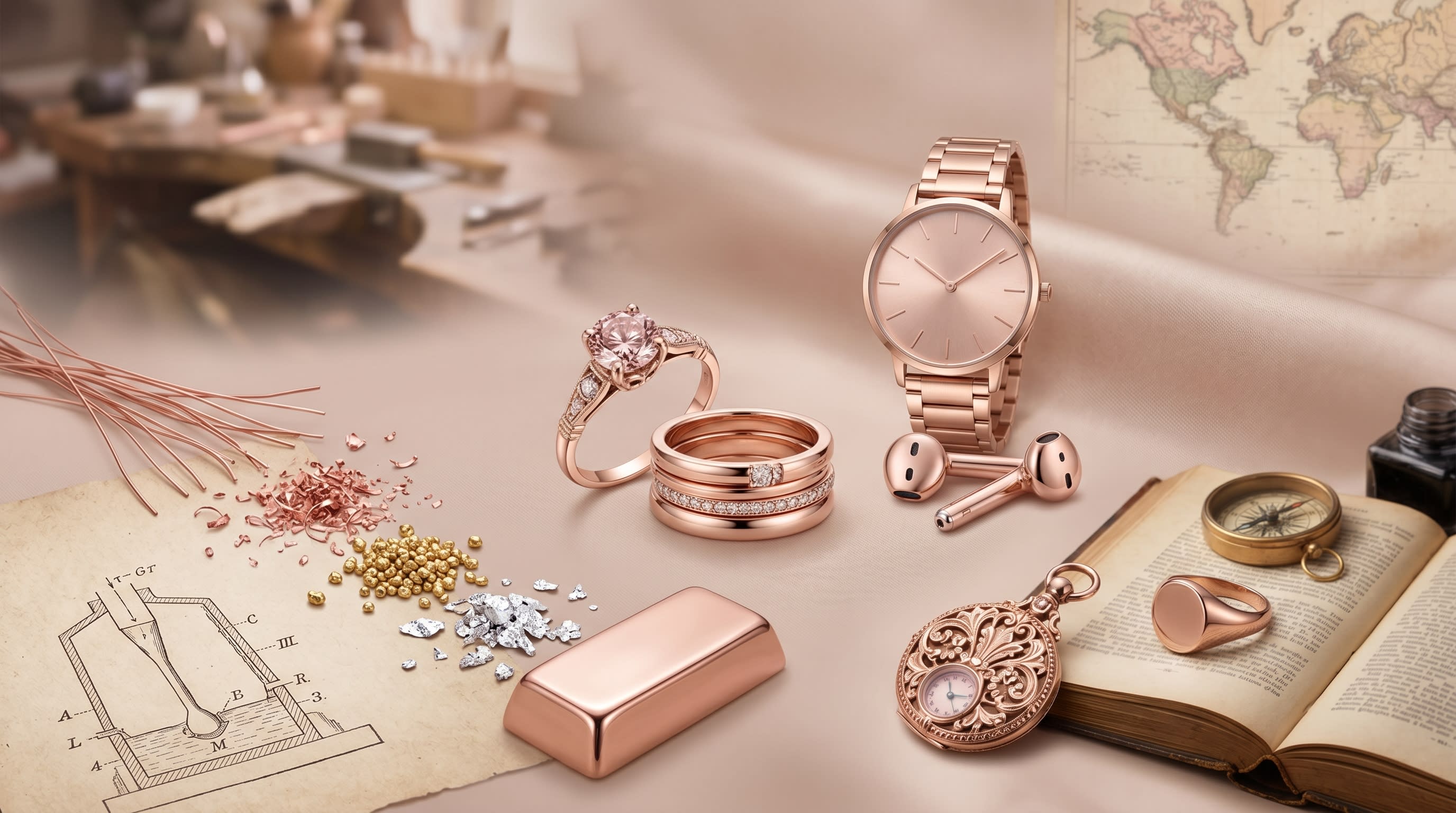
- Rose gold is a durable, genuine gold alloy with a distinctive pink hue created by blending pure gold with copper and silver. Its higher copper content enhances both its color and hardness, making it suitable for everyday jewelry and popular in modern designs. Historically originating in 19th-century Russia, rose gold continues to symbolize elegance, warmth, and personal style across diverse jewelry pieces.
Rose gold is a gold alloy made by blending pure gold with copper, producing its signature warm pink color that sets it apart from every other gold variety. Unlike pure 24K gold, which is too soft for everyday jewelry, rose gold gains both its distinctive hue and practical durability from the copper content in its mix. The exact shade ranges from a pale blush to a deep reddish pink, depending on the karat and metal ratios used. Jewelers most commonly work with 14K and 18K rose gold, and both are considered real gold by any industry standard.
What is rose gold made of?
Rose gold’s composition is straightforward: gold, copper, and silver combined in specific proportions that determine both its color and its physical properties. Standard 18K rose gold contains 75% pure gold, approximately 22.25% copper, and about 2.75% silver. The 14K version contains roughly 58.3% gold, with the remaining percentage made up of a higher copper ratio. That higher copper content in 14K is what pushes the color slightly deeper and also makes the metal harder.
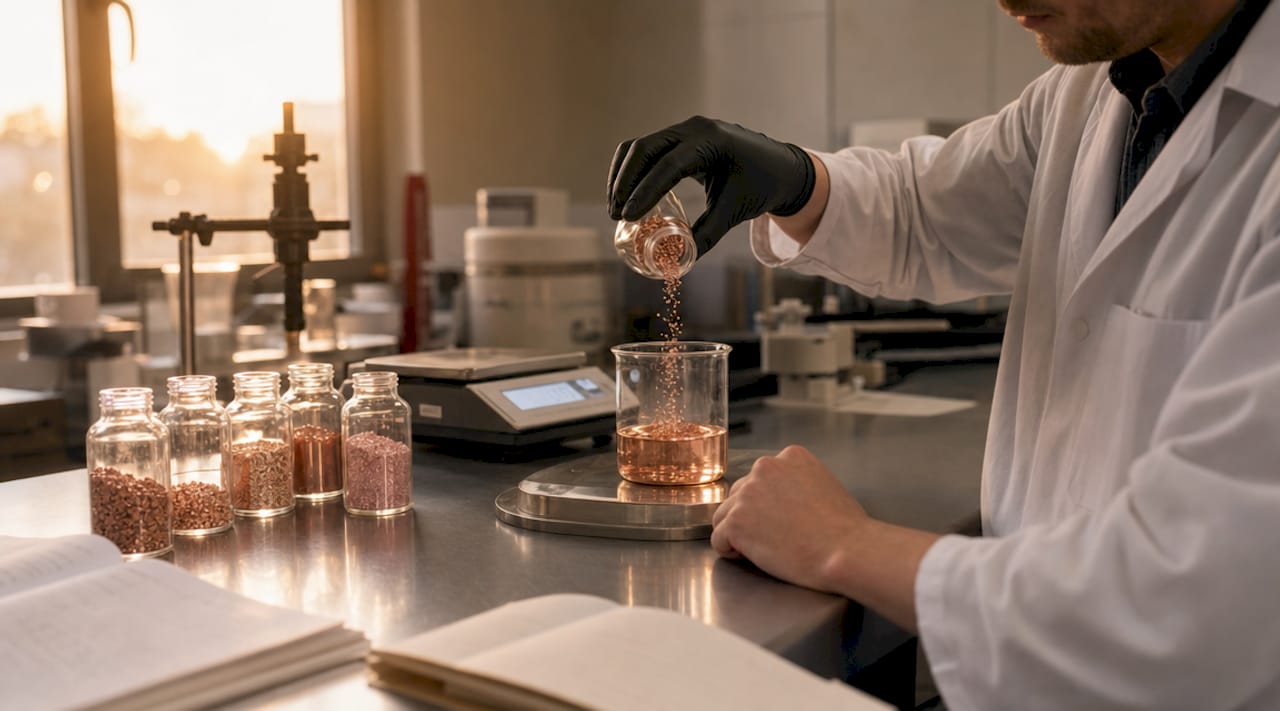
Copper is the ingredient that does the heavy lifting in terms of color. Higher copper content shifts the alloy from yellow toward orange and then into pink, which is why 14K rose gold often looks richer and warmer than 18K. Silver plays a supporting role, softening the tone slightly and improving workability during the manufacturing process. Without silver, the alloy can trend toward a more orange-red shade that many buyers find less appealing.
The table below shows how karat, gold percentage, and copper content interact to produce different shades.
| Karat | Gold content | Copper content | Resulting hue |
|---|---|---|---|
| 18K | 75% | ~22.25% | Soft, warm pink |
| 14K | 58.3% | ~37% | Medium rose pink |
| 10K | 41.7% | ~52% | Deep rose or reddish pink |
Pro Tip: If you want a softer, more delicate pink tone, choose 18K rose gold. If you prefer a bolder, warmer color and need something built for daily wear, 14K is the better pick.
Rose gold vs yellow gold: which is more durable?
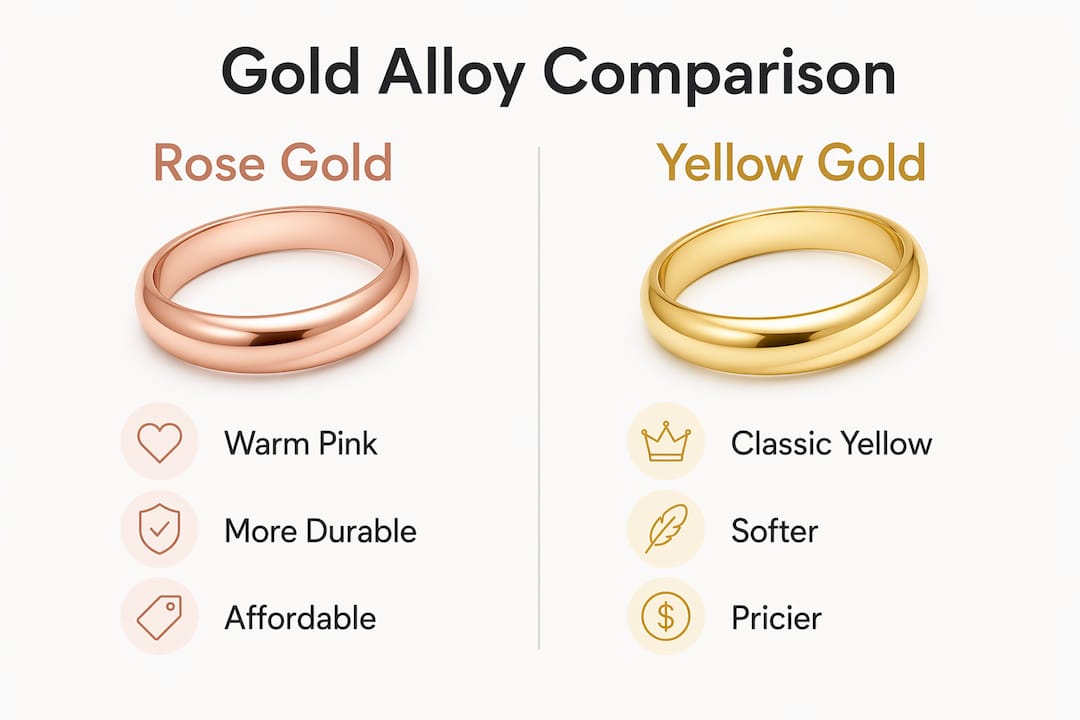
Copper does more than change color. It also hardens the alloy, which is why rose gold is more durable than yellow gold of the same karat. Pure gold is a relatively soft metal, and yellow gold alloys often use zinc or silver to compensate. Rose gold’s copper content provides a natural hardness advantage, making it more scratch resistant over time.
For buyers who wear jewelry every day, this matters. A 14K rose gold ring holds up better under daily friction than an 18K yellow gold ring, simply because 14K contains more copper. Experts at the Gemological Institute of America recommend 14K rose gold for daily wear specifically because of this hardness benefit. The tradeoff is that 18K rose gold carries more actual gold content, which appeals to buyers who prioritize purity over toughness.
The comparison table below summarizes the key differences between rose gold and yellow gold across the most relevant buyer considerations.
| Feature | Rose gold | Yellow gold |
|---|---|---|
| Color | Warm pink to deep rose | Classic yellow |
| Durability | Higher (copper hardens alloy) | Lower at same karat |
| Skin tone suitability | Flatters warm and cool tones | Best for warm tones |
| Pricing | Similar to yellow gold at same karat | Standard market rate |
| Hypoallergenic rating | Lower (copper can irritate sensitive skin) | Varies by alloy |
Pricing is one area where rose gold holds a practical advantage. Rose gold can be more affordable than high-karat yellow gold because copper costs less than the silver or zinc used in yellow gold alloys. The difference is rarely dramatic, but it gives buyers a slight edge when comparing equivalent pieces.
What is the history of rose gold?
Rose gold originated in 19th century Russia, where it earned the name “Russian gold” because of its association with the Russian aristocracy and the jewelers who crafted pieces for the imperial court. The warm, distinctive color made it a status symbol among European nobility, and its reputation for elegance spread westward through the 1800s.
The alloy faded from mainstream fashion during the 20th century but experienced a strong resurgence in the 2000s and 2010s. Several factors drove this comeback:
- Romantic symbolism. Rose gold carries associations with warmth, love, and femininity that yellow and white gold do not share as directly.
- Fashion crossover. Apple’s rose gold iPhone 6S in 2015 introduced the color to a generation that had never considered it in a jewelry context, dramatically expanding its cultural reach.
- Versatility. Unlike white gold, which can look cold against certain skin tones, rose gold flatters diverse complexions from fair to deep.
- Trend longevity. Rose gold has remained a top choice in engagement rings and fashion jewelry well into 2026, proving it is not a passing trend.
The romantic appeal and subtle color variations of rose gold give it a timeless quality that continues to resonate with buyers who want something that feels both classic and personal. That emotional resonance is a real driver of purchasing decisions, not just marketing language.
How should you care for rose gold jewelry?
Rose gold is more forgiving than many buyers expect, largely because its color is consistent throughout the alloy. Unlike gold-plated jewelry, where scratches reveal a different metal underneath, scratches on rose gold expose the same pink alloy all the way through. This means the piece does not lose its appearance over time the way plated items do.
Cleaning rose gold is straightforward. Warm water, a few drops of mild dish soap, and a soft-bristle toothbrush handle most buildup without any risk to the metal. Rinse thoroughly and dry with a lint-free cloth. Avoid ultrasonic cleaners if the piece contains porous gemstones like emeralds or opals, since vibration can loosen settings.
The one thing to watch is copper’s natural tendency to oxidize. Over years of wear, rose gold may develop a subtle patina from copper oxidation, giving the piece a slightly deeper, richer tone. Some buyers love this effect because it adds character. Others prefer to polish it away with a jewelry cloth. Both choices are valid, and neither damages the piece. For a broader approach to keeping all your jewelry in top condition, the jewelry care guide at Superjeweler covers cleaning routines for every metal type.
Pro Tip: Remove rose gold rings before swimming in chlorinated pools or using household cleaners. Chlorine accelerates copper oxidation and can dull the finish faster than normal wear.
What are the most popular uses of rose gold in jewelry today?
Rose gold appears across every major jewelry category, and its popularity in 2026 shows no sign of slowing. Current engagement ring trends consistently rank rose gold among the top three metal choices, alongside white gold and platinum. Its warm tone pairs exceptionally well with round brilliant diamonds, oval cuts, and morganite, a peach-pink gemstone that creates a near-monochromatic look many buyers find striking.
The most common rose gold jewelry pieces include:
- Engagement rings. Solitaire, halo, and pavé settings all translate beautifully in rose gold. The metal’s warmth makes diamonds appear slightly warmer and larger to the eye.
- Stud earrings. Rose gold stud earrings are a wardrobe staple because they complement both casual and formal outfits without competing with other accessories.
- Wedding bands. Stacked rose gold bands, or mixed-metal combinations pairing rose gold with white gold, are a popular choice for couples who want something beyond the traditional plain band.
- Necklaces and pendants. Rose gold chains and pendants work particularly well against warm skin tones, where yellow gold can sometimes blend in rather than stand out.
- Bracelets and bangles. The metal’s durability makes it practical for pieces that take daily friction, such as bangles worn against a watch or stacked with other bracelets.
Rose gold also works across style categories. Minimalist buyers gravitate toward thin bands and simple settings. Buyers who prefer statement pieces find that rose gold in bold, sculptural designs reads as modern rather than traditional. That range is one reason the metal has maintained broad appeal across age groups and personal styles.
Key takeaways
Rose gold is a genuine gold alloy whose pink color, durability, and timeless appeal come directly from its copper content, making it a practical and beautiful choice for everyday fine jewelry.
| Point | Details |
|---|---|
| Composition defines color | 18K rose gold contains 75% gold and ~22.25% copper; more copper means deeper pink. |
| Durability advantage | Copper hardens rose gold, making it more scratch resistant than yellow gold at the same karat. |
| Real gold, not plating | Rose gold color runs throughout the alloy; scratches reveal the same metal, not a base layer. |
| Historical roots | Originated as Russian gold in 19th century Russia before becoming a global fashion staple. |
| Care is simple | Mild soap, warm water, and avoiding chlorine keep rose gold looking its best for decades. |
Why rose gold deserves more credit than it gets
I have spent years watching buyers walk into a jewelry decision with a fixed idea of what they want, usually white gold or platinum, and then pause the moment they see a rose gold piece on their hand. The reaction is almost always the same: surprise at how flattering it is. Rose gold does something that cooler metals cannot. It adds warmth to the skin rather than contrasting against it, and that warmth reads as softness and approachability in a way that platinum simply does not.
What buyers consistently misunderstand is the relationship between karat and color. Many assume that higher karat means better rose gold in every way. It does not. An 18K rose gold ring is purer, but a 14K ring is tougher and often a richer pink. For an engagement ring or a daily-wear piece, 14K is frequently the smarter choice, not a compromise. If you are comparing white gold versus rose gold for an engagement ring, the durability and color arguments for rose gold are stronger than most buyers realize going in.
The patina question also comes up often, and I think it is misunderstood as a flaw. A rose gold piece that develops a slightly deeper tone over ten years of wear is not degrading. It is aging the way quality materials are supposed to age, with character. That is a feature, not a defect, and it is one of the things that makes rose gold feel genuinely personal over time.
— Andrew
Find your perfect rose gold piece at Superjeweler
Superjeweler carries an extensive selection of rose gold jewelry at prices that make fine jewelry accessible without cutting corners on quality.

Whether you are shopping for an affordable rose gold engagement ring under $1,000 or browsing rose gold wedding bands for both partners, Superjeweler offers free worldwide shipping and a satisfaction guarantee on every order. The collection spans solitaire and halo engagement rings, diamond stud earrings, gemstone pendants, and stackable bands, all available in 14K and 18K rose gold. Browse the full engagement ring collection to find a style that fits both your taste and your budget.
FAQ
Is rose gold real gold?
Yes. Rose gold is a genuine gold alloy containing a significant percentage of pure gold, typically 58.3% in 14K and 75% in 18K. The copper and silver added to create its pink color do not diminish its status as real gold.
Does rose gold fade or wear off over time?
Rose gold does not fade or peel because the color runs throughout the entire alloy, not just a surface layer. A natural patina may develop over years due to copper oxidation, but this can be polished away or kept as a sign of authentic aging.
Is rose gold more expensive than yellow gold?
Rose gold is typically priced similarly to yellow gold of the same karat. In some cases, rose gold costs slightly less because copper is less expensive than the metals used in yellow gold alloys.
Can people with sensitive skin wear rose gold?
Rose gold contains copper, which can cause skin reactions in people with copper sensitivities. Buyers with sensitive skin may want to test a piece before committing or consider 18K rose gold, which has a lower copper content than 14K.
What karat of rose gold is best for an engagement ring?
14K rose gold is the most recommended choice for engagement rings because its higher copper content makes it harder and more resistant to scratching during daily wear. 18K rose gold is a good option for those who prioritize gold purity over toughness.
Recommended
- What Is Gold Plating? A Jewelry Shopper’s Guide
- Why choose white gold for engagement and wedding rings
- Ring metals guide: 7 top choices for your perfect band
- Rose Gold Stud Earrings | SuperJeweler Has A Huge Selection of Rose Gold Earrings At Amazing Prices!
