TL;DR:
- Choosing a round brilliant diamond offers maximum sparkle and balanced brilliance, making it the industry standard.
- Elongated shapes like oval, marquise, and pear appear larger and more finger-flattering, providing better value for size.
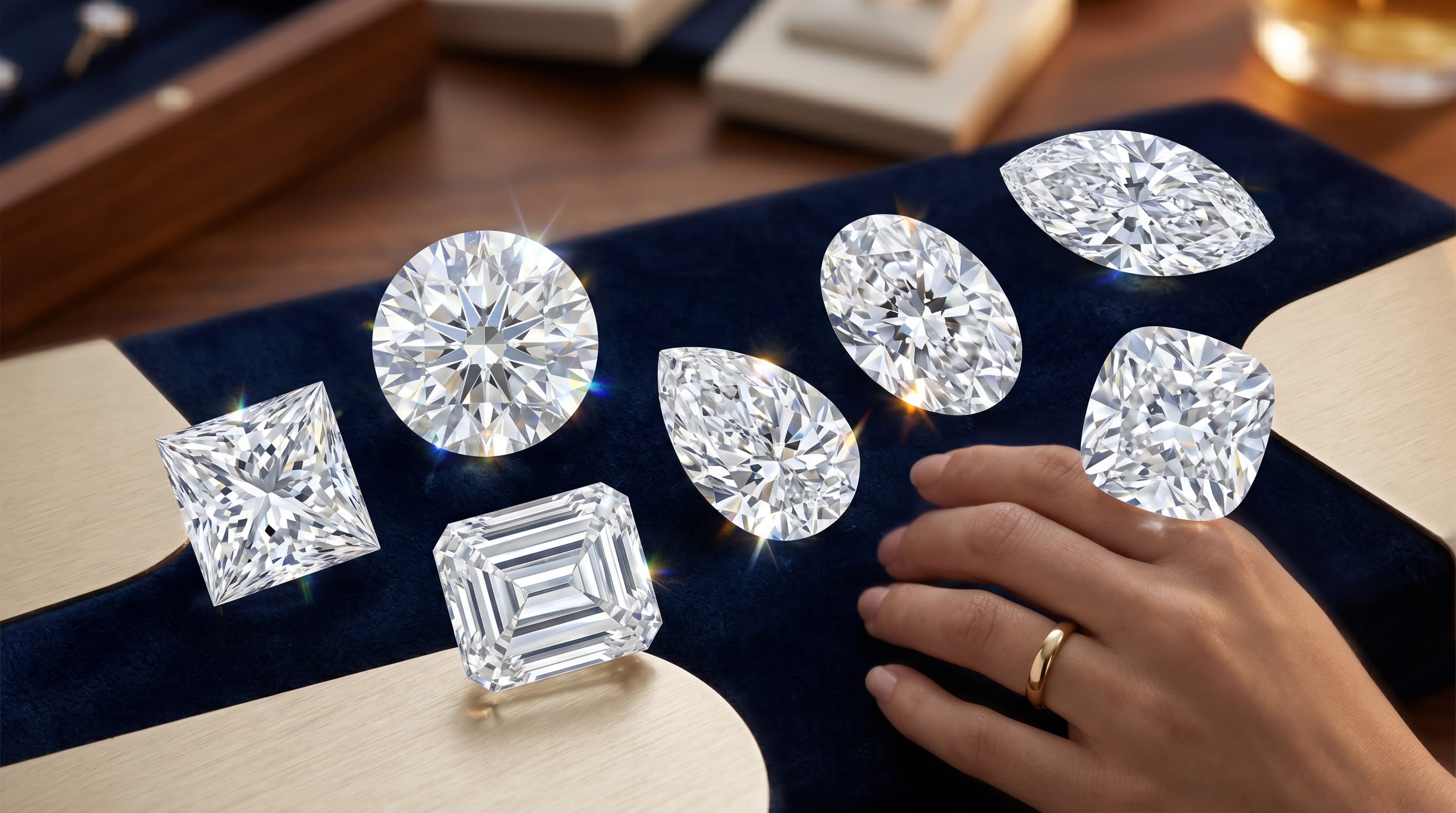
Each diamond shape carries distinct advantages in sparkle, perceived size, durability, and price efficiency, making shape selection one of the most consequential decisions in buying an engagement ring. The advantages of different diamond shapes go far beyond aesthetics. Round brilliant, oval, princess, cushion, emerald, radiant, marquise, pear, Asscher, and heart cuts each perform differently under light, sit differently on the finger, and carry different price tags for the same carat weight. Understanding these differences before you shop saves money and guarantees you get exactly the visual effect you want. This guide breaks down every major shape so you can match your priorities to the right cut.
1. Which diamond shape sparkles the most
The round brilliant cut is engineered with 58 precisely angled facets to maximize light return, typically reflecting about 95% of light that enters the stone. No other shape matches that level of balanced brilliance and fire. This is why round diamonds remain the industry standard for resale value and sparkle versatility.
The princess cut and radiant cut are the closest rivals. Both use brilliant-style faceting that produces intense, lively sparkle. The princess cut delivers sharp, modern fire with a square outline, while the radiant cut adds cropped corners for a softer silhouette with near-round light performance. Neither quite matches the round’s precision, but both offer near-round fire at a meaningfully lower price point.
Cut quality matters more than shape when it comes to sparkle. A poorly cut round diamond will outperform a well-cut princess only in theory. The role of cut quality in light performance applies to every shape. Always prioritize an Excellent or Very Good cut grade regardless of which outline you choose.
- Round brilliant: Maximum, balanced brilliance. Best for buyers who want the most sparkle possible.
- Princess cut: Sharp, geometric fire. Excellent sparkle per dollar.
- Radiant cut: Soft corners, brilliant faceting, strong light return with a rectangular or square outline.
- Cushion cut: Larger facets produce a warm, romantic glow rather than sharp scintillation.
Pro Tip: Expect to pay a 10 to 30% premium for a round diamond over a princess or radiant of identical carat and quality. If maximum sparkle is your goal but budget is a constraint, a well-cut radiant cut delivers exceptional brilliance at a fraction of the round’s price.
2. Diamond shapes that make fingers look longer and rings look bigger
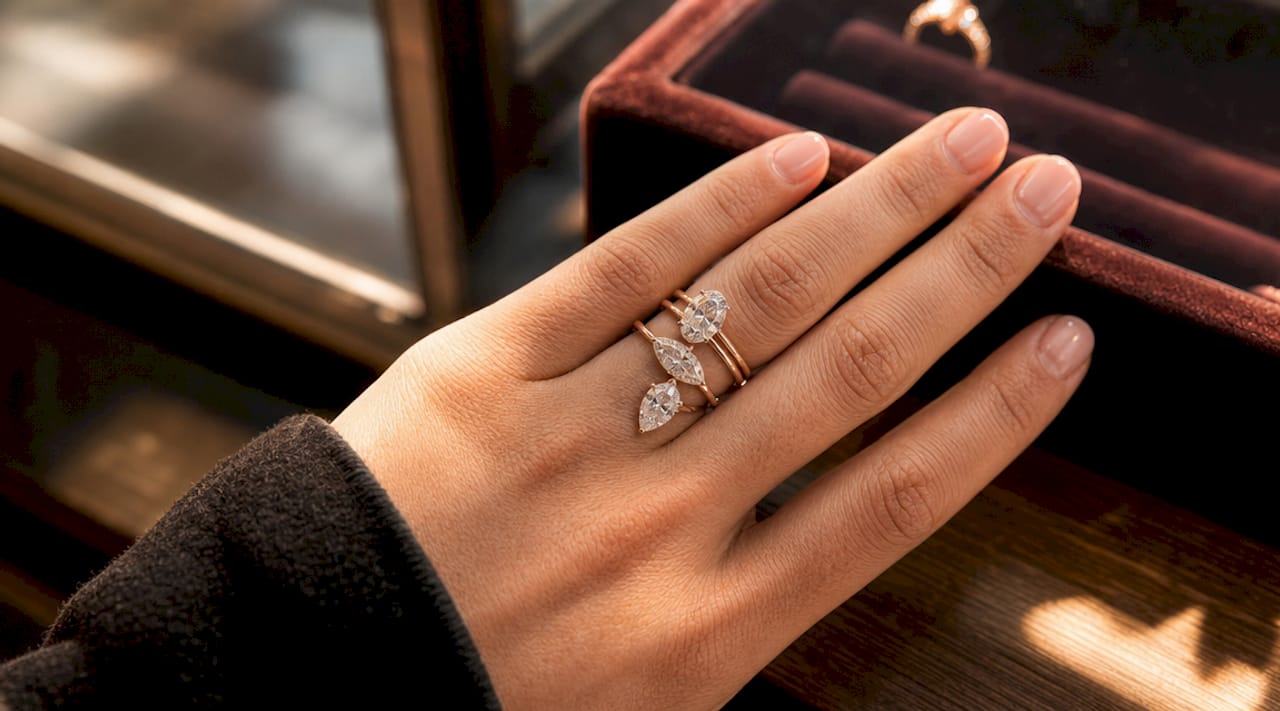
Elongated shapes are the most underrated tool in diamond buying. Oval, marquise, and pear shapes create a visual finger-lengthening effect that makes fingers look slimmer and longer. This is a genuine optical advantage, not just marketing language.
These shapes also appear larger than a round diamond of the same carat weight. Because the surface area is distributed across a longer outline, the face-up size reads bigger to the naked eye. Elongated fancy shapes like oval and cushion are consistently cited as top value choices for buyers who want maximum visual impact without paying round diamond prices.
| Shape | Elongation effect | Perceived size vs. round | Bow-tie risk |
|---|---|---|---|
| Oval | Strong | Larger | Moderate |
| Marquise | Very strong | Largest | Moderate |
| Pear | Strong | Larger | Low to moderate |
| Round | None | Baseline | None |
| Cushion | Minimal | Slightly smaller | None |
The bow-tie effect is the main pitfall with elongated shapes. It appears as a dark shadow across the center of the stone and varies stone by stone, not just by shape. The bow-tie effect is not predictable from a grading report alone. Always inspect the actual stone or request an HD video before purchasing.
Pear-shaped diamonds carry an additional consideration: the pointed tip is vulnerable to chipping if left unprotected. A V-prong setting at the tip is the standard solution.
Pro Tip: For oval diamonds, target a length-to-width ratio between 1.35 and 1.50 for the most flattering proportions. Ratios outside that range tend to look either too round or too narrow, and they amplify the bow-tie shadow.
3. Durability and everyday wearability by shape
Round and cushion cut diamonds are the most durable shapes for daily wear. Their rounded edges distribute impact evenly, reducing the risk of chipping from accidental knocks. For buyers with active lifestyles or physically demanding jobs, these two shapes require the least maintenance.
Shapes with pointed tips or sharp corners carry real vulnerability. Marquise, pear, princess, and heart cuts all require protective settings to prevent chipping at their most exposed points. A bezel setting fully encircles the diamond’s edge for maximum protection. V-prong settings target specific vulnerable tips on marquise, pear, and heart shapes.
Step-cut shapes like emerald and Asscher present a different kind of wearability concern. Their large, open facets act like windows into the stone, making inclusions far more visible than in brilliant cuts. Emerald and Asscher cuts require VS1 clarity or better for an eye-clean appearance, while a brilliant-cut shape can often look flawless at SI1. That clarity premium adds to the total cost.
- Most durable shapes: Round, cushion
- Shapes needing tip or corner protection: Princess, marquise, pear, heart
- Shapes requiring higher clarity investment: Emerald, Asscher
Pro Tip: Before choosing a shape, consider how you use your hands daily. A princess cut in a four-prong setting on a nurse or chef is a recipe for a chipped corner. A bezel-set oval or round on the same person will last decades without incident.
4. Style and personality expressed through diamond shape
Diamond shape is the fastest signal of personal style in a ring. The shape you choose communicates aesthetic preferences before anyone looks at the metal, the setting, or the carat weight.
The round brilliant and cushion cut represent classic, timeless elegance. Round diamonds suit every setting style from solitaire to halo to pavé, and they never read as dated. Cushion cut diamonds carry vintage charm with soft, rounded edges and large facets that produce a warm, romantic glow. Both shapes work beautifully in halo settings where the center stone is surrounded by a ring of smaller diamonds.
Princess and radiant cuts signal a modern, architectural sensibility. Their sharp lines and geometric precision appeal to buyers who prefer contemporary design over vintage softness. Radiant cuts in particular pair well with east-west settings and tension mounts that highlight the stone’s clean outline.
Emerald and Asscher cuts project sophistication and confidence. Their step-cut faceting creates a hall-of-mirrors effect rather than the sparkle of brilliant cuts. These shapes attract buyers who prioritize clarity and elegance over maximum light performance. They read as understated and refined, not flashy.
Marquise and pear shapes make a bold statement. Their dramatic outlines and finger-elongating effects draw attention immediately. Heart-shaped diamonds carry obvious romantic symbolism and work best in sizes above 0.75 carats, where the shape reads clearly. For buyers who want a ring that starts conversations, these shapes deliver.
5. Value and price efficiency across popular shapes
Shape is one of the biggest drivers of price per carat, and most buyers don’t realize it until they start comparing quotes. Round diamonds waste roughly 60% of the rough stone during cutting. That waste is priced into every round diamond you see, which is why rounds consistently cost more than fancy shapes of identical quality.
The princess cut retains about 80% of the rough stone, which translates directly into lower per-carat pricing. Princess cut savings run 20 to 35% compared to round diamonds of comparable quality. Radiant, oval, and marquise cuts offer similar yield advantages, making them the go-to shapes for buyers who want maximum size and quality per dollar.
Elongated shapes like oval, pear, and marquise provide 20 to 30% better value than round brilliants by price and appear larger to the naked eye due to greater surface area. That combination of lower cost and larger appearance is the single strongest argument for choosing a fancy shape over a round.
Step-cut shapes complicate the value calculation. Emerald and Asscher cuts may cost less per carat than rounds, but the requirement for higher clarity grades often closes the price gap. A VS1 emerald cut and a SI1 round brilliant of the same carat weight can end up at similar price points, with the round delivering more sparkle. Understanding this trade-off is part of a solid diamond shapes checklist before you commit to a purchase.
Most buyers focused on value prioritize cut quality first, then look for eye-clean stones in fancy shapes rather than chasing flawless clarity grades. That approach consistently delivers the best combination of size, sparkle, and budget efficiency.
Key takeaways
The most cost-effective diamond buying strategy combines a well-cut fancy shape with eye-clean clarity, delivering more visible size and quality per dollar than a round brilliant at the same budget.
| Point | Details |
|---|---|
| Round brilliant leads in sparkle | Its 58-facet design returns about 95% of light, outperforming all other shapes. |
| Elongated shapes maximize size and value | Oval, marquise, and pear appear larger per carat and cost 20 to 30% less than rounds. |
| Pointed shapes need protective settings | Princess, pear, marquise, and heart cuts require bezel or V-prong settings to prevent chipping. |
| Step cuts demand higher clarity | Emerald and Asscher cuts require VS1 or better for an eye-clean appearance, affecting total cost. |
| Shape signals personal style | From classic round to bold marquise, shape communicates aesthetic identity before any other detail. |
What I’ve learned after years of watching buyers choose shapes
Most buyers walk in fixated on round diamonds because that’s what they’ve seen on everyone else’s hand. I understand the logic. Round is safe, universally flattering, and genuinely the best shape for pure sparkle. But “safe” and “best for you” are not the same thing.
The biggest misconception I see is buyers treating shape and cut as interchangeable. Shape defines the outline while cut refers to faceting quality and light performance. You can have a poorly cut round diamond that sparkles less than a well-cut oval. Prioritizing cut grade within any shape is non-negotiable.
The second mistake is buying without seeing the actual stone. This matters most for elongated shapes. The bow-tie effect in an oval or marquise is invisible on a grading certificate and completely obvious in person. Request HD video from any online retailer before purchasing a fancy shape. Superjeweler offers detailed product imagery that makes this evaluation possible without visiting a store.
In 2026, oval and radiant cuts are the shapes I’d recommend most strongly for buyers balancing budget, style, and visual impact. Oval delivers near-round brilliance with a finger-flattering effect and meaningful price savings. Radiant offers the same price efficiency with a more geometric, modern look. Both are well-supported by current setting trends and look exceptional in both solitaire and halo configurations.
My honest advice: understand the advantages of each shape, then let personal preference make the final call. A diamond you love wearing every day beats a diamond that scores perfectly on paper.
— Andrew
Find your ideal diamond shape at Superjeweler
Superjeweler carries engagement rings across every major diamond shape, from round brilliant solitaires to elongated oval halos and bold radiant cuts. Whether you’re prioritizing sparkle, finger-flattering proportions, or getting the most size for your budget, the selection covers every preference at competitive prices.
Buyers working with tighter budgets will find genuine options among cheap engagement rings under $1,000 that don’t sacrifice diamond quality or setting craftsmanship. For a broader look at the full range of styles and shapes, browse the complete engagement ring collection and filter by shape to compare options side by side. Free worldwide shipping and a satisfaction guarantee make it easy to shop with confidence.
FAQ
Which diamond shape has the most sparkle?
The round brilliant cut produces the most sparkle of any diamond shape, with its 58-facet design returning approximately 95% of light that enters the stone. Princess and radiant cuts are the closest alternatives for buyers seeking high brilliance at a lower price.
What diamond shape looks biggest on the finger?
Marquise, oval, and pear shapes appear largest per carat because their elongated outlines cover more finger surface area than a round diamond of the same weight. Oval is the most popular choice for combining size appearance with near-round brilliance.
Which diamond shapes are most durable for everyday wear?
Round and cushion cut diamonds are the most durable for daily wear due to their rounded edges. Shapes with pointed tips or sharp corners, including princess, marquise, pear, and heart, require protective settings like bezel or V-prong mounts to prevent chipping.
Do fancy shapes cost less than round diamonds?
Yes. Fancy shapes like princess, oval, radiant, and marquise typically cost 20 to 35% less per carat than round diamonds of comparable quality, because they retain more of the rough stone during cutting and face lower market demand premiums.
What clarity grade do I need for an emerald cut diamond?
Emerald and Asscher cut diamonds require VS1 clarity or better for an eye-clean appearance, because their large open facets make inclusions more visible than in brilliant-cut shapes. Brilliant cuts can often look flawless at SI1, making them more forgiving for buyers on a budget.
Recommended
- Advantages of Different Diamond Cuts: Shape-by-Shape Guide
- Diamond shape impact: choosing the ideal engagement ring
- Understand diamond shapes: choose the perfect ring in 2026
- Find the perfect diamond shape: top trends for 2026 rings
