Solid gold is a karat-stamped alloy of pure gold all the way through, marked 10K, 14K, or 18K. If you want something that lasts a lifetime, holds resale value, and can be passed down, buy solid gold. If you want the look of gold for everyday wear at a fraction of the cost, gold filled is a legitimate, durable choice.
Here’s the quick version before you dig into the details:
- Solid gold: pure gold alloy throughout, karat marked, holds scrap and resale value, costs significantly more.
- Gold filled: brass core with a bonded gold layer (minimum 1/20 by weight), lasts years with care, priced far lower than solid gold.
- The rule of thumb: heirloom, engagement, or investment pieces call for solid gold; everyday layering pieces you might lose or bang around are a smart fit for gold filled.
Key Takeaways
Solid gold is a gold alloy running through the entire piece, while gold filled bonds a gold layer of at least 5% by weight to a brass core, and the right choice depends on how long you want the piece to last.
| Point | Details |
|---|---|
| Know the legal definitions | Solid gold is karat marked throughout; gold filled must be at least 1/20 (5%) gold by weight under federal rule. |
| Check the hallmark every time | Look for “14K,” “14K GF,” or “1/20 14K GF” stamps before buying, in person or online. |
| Match material to lifespan needs | Gold filled lasts roughly 10 to 30 years with care; solid gold lasts indefinitely and can be repaired repeatedly. |
| Factor in resale value | Solid gold retains scrap value; gold filled generally does not, which matters for heirloom or investment pieces. |
| Shop stamped, warrantied pieces | Superjeweler lists clear karat marks and offers warranty and return policies across solid gold and budget-friendly jewelry. |
Table of Contents
- Solid Gold vs. Gold Filled at a Glance
- What Solid Gold and Gold Filled Actually Are
- How Long Each One Actually Holds Up
- How to Tell Gold Filled From Solid Gold Before You Buy
- What Your Money Actually Buys
- Everyday Care That Actually Extends the Life of Either
- Which One Fits Your Situation
- Sources
Solid Gold vs. Gold Filled at a Glance
| Feature | Solid Gold | Gold Filled |
|---|---|---|
| Composition | Gold alloy throughout (10K to 24K) | Brass core with ≥5% gold by weight bonded outside |
| Expected lifespan | Decades to generations with care | Often 10 to 30 years with normal wear |
| Typical hallmark | 10K, 14K, 18K | 14K GF, 1/20 14K GF |
| Common uses | Engagement rings, heirlooms, fine settings | Everyday chains, hoops, stacking rings |
| Relative price | High, tracks gold spot price | Substantially lower per gram |
What Solid Gold and Gold Filled Actually Are
Pure gold is 24 karat, but it’s too soft for most jewelry, so manufacturers alloy it with metals like copper, silver, or zinc to add strength. That’s where 10K, 14K, and 18K come from. “Solid” doesn’t mean the piece is one uniform block of pure metal. It means the gold alloy runs consistently through the entire item, not just the surface.
Gold filled works differently. Manufacturers take a sheet of gold alloy and mechanically bond it, using heat and pressure, to a base metal core, typically brass. Under 16 CFR § 23.3, a product can only be labeled “gold filled” if that gold layer makes up at least 1/20th, or 5%, of the item’s total weight, and the karat fineness must appear alongside the term. That’s a meaningfully thicker layer than gold plating or vermeil, which apply a microscopic coating measured in microns rather than a fixed weight fraction.
The FTC requires that any mechanically applied gold layer be marked clearly, whether it’s called gold filled, gold overlay, or rolled gold plate. A seller who omits this or mislabels a plated item as gold filled is misrepresenting the product, and that’s exactly why learning to read a stamp protects your wallet.
How Long Each One Actually Holds Up
Solid gold doesn’t wear away in any practical sense. Scratches and dents happen, but the metal itself stays gold from the surface to the core, so a jeweler can polish, resize, or repair it indefinitely without exposing anything underneath. That’s the real argument for spending more upfront on an engagement ring or a piece you plan to keep for decades.
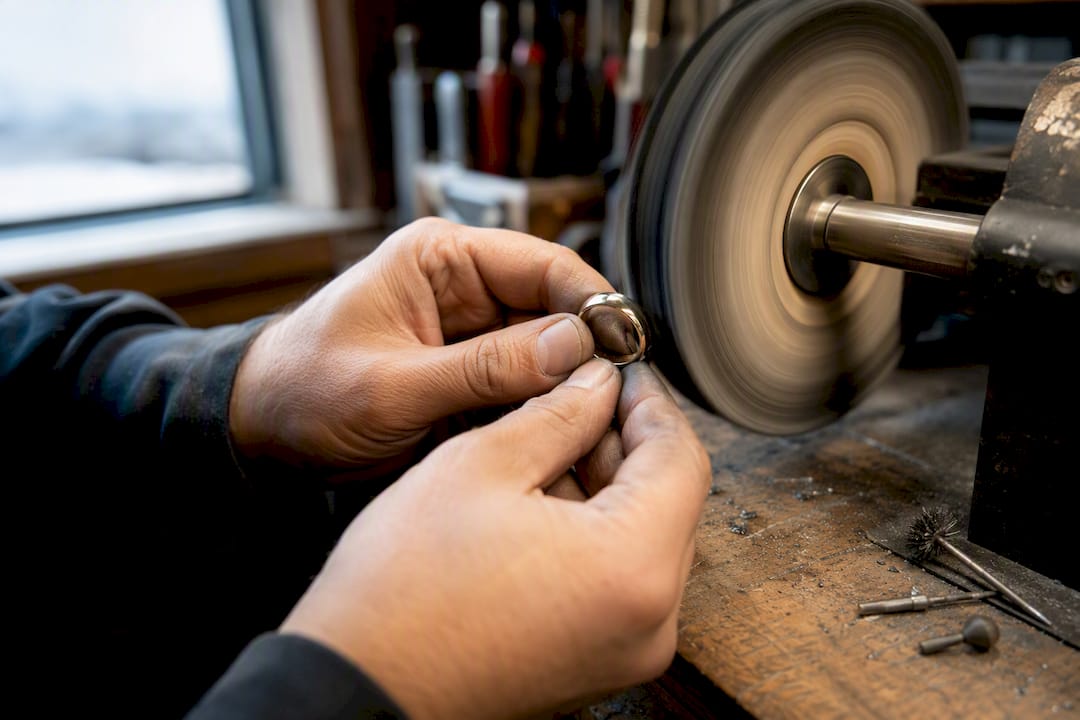
Gold filled holds up far better than plated jewelry, but it isn’t forever. Industry estimates put its usable life at 10 to 30 years with normal care, largely because that bonded layer is many times thicker than electroplating. Wear shows up first at friction points: the backs of rings, clasp attachments, and spots where a chain rubs against skin or clothing. Hoops and everyday chains tend to fare better than rings, since rings take more direct abrasion from hands and surfaces throughout the day.

Pro Tip: Skip permanent, welded-on gold-filled chains if you shower or swim with them daily. The constant moisture and friction at the weld point wears through the gold layer faster than on a clasp piece you can remove.
How to Tell Gold Filled From Solid Gold Before You Buy
Reading the stamp is the fastest way to know what you’re holding, in-store or from a photo listing.
- Check the hallmark first. “14K” or “18K” alone means solid gold. “14K GF” or “1/20 14K GF” means gold filled, with the fraction confirming the legal minimum gold weight.
- Look for “GF,” “GEP,” or “RGP.” These abbreviations stand for gold filled, gold electroplate, and rolled gold plate, respectively, and each carries a different durability profile.
- Ask the seller directly what the base metal is and whether the piece is solid or layered, plus what the return window covers if the stamp turns out to be missing or wrong.
- Do a visual check. Gold filled looks identical to solid gold when new. A jeweler can confirm composition with an acid test or XRF scanner if you want certainty before a big purchase.
What Your Money Actually Buys
Solid gold costs more because you’re paying for gold by weight, and that price tracks the gold vs. platinum market rather than a flat manufacturing cost. Gold filled pieces use a fraction of the gold by weight, so manufacturing costs stay low and retail prices follow.
- Gold filled jewelry commonly runs an order of magnitude cheaper than comparable solid 14K or 18K pieces.
- Solid gold retains real scrap value. A jeweler or refiner will pay you for the gold content if you ever melt it down or trade it in.
- Gold filled has little to no meaningful scrap value, since the recoverable gold layer is too thin to matter once separated from the brass core.
If resale, inheritance, or long-term investment value factors into your decision, that scrap value gap is the deciding fact. A solid gold band you buy today is still worth something in gold weight thirty years from now; a gold-filled piece generally isn’t.
Everyday Care That Actually Extends the Life of Either
Both materials benefit from the same basic habits, though gold filled is less forgiving of neglect.
- Remove jewelry before swimming, showering, or cleaning with household chemicals. Chlorine and harsh cleaners are especially hard on the bonded layer in gold-filled pieces.
- Dry pieces fully after any water exposure and store them separately so they don’t scratch against harder metals or stones.
- Clean gently with a soft cloth and mild soap and water. Skip abrasive polishing cloths on gold-filled jewelry, since aggressive buffing can wear through the gold layer faster than normal use would.
- Bring pieces to a jeweler for professional cleaning or repair rather than attempting DIY fixes on settings, clasps, or resizing.
For a deeper routine, see this guide on caring for gold jewelry.
Which One Fits Your Situation
Match the material to how the piece will actually be used and how long you expect to keep it.
- Engagement rings and wedding bands: choose solid gold. Daily wear over decades, resizing needs, and sentimental value all favor a metal that can be repaired and polished indefinitely.
- Everyday layering necklaces, hoops, and stacking rings: gold filled is a smart, budget-friendly pick. You get the look you want for daily rotation without tying up money in gold weight you’ll rarely think about.
- Statement or investment pieces: lean solid gold if resale or heirloom value matters to you.
- Gifts for someone with sensitive skin: gold filled’s thicker barrier layer generally causes fewer reactions than thin plating, though anyone with a known nickel allergy should confirm the base metal.
Before you check out, run through this: confirm the hallmark matches what the listing claims, ask about the return policy in case the piece doesn’t match its description, and inspect high-friction spots like clasps and ring shanks for any early wear. Walk away from listings with vague labeling, no visible hallmark, or no stated return policy. Those are the three biggest red flags in gold jewelry shopping.
Why You Can Trust This Guide
This guide draws on FTC consumer guidance and the federal labeling rule in 16 CFR § 23.3, not marketing claims. Superjeweler publishes educational resources on metals and plating alongside a catalog that includes both solid gold pieces and accessible alternatives, backed by clear warranty and return policies. For related reading, see our breakdown of gold plating versus gold filled.
— Andrew
Ready to Shop Solid Gold or a Budget-Friendly Alternative?
Once you know what to look for, deciding what to buy gets a lot easier. If you’re leaning toward a lifetime piece, Superjeweler’s engagement ring collection is stamped clearly by karat, so there’s no guessing about what you’re paying for.

If budget is the bigger concern right now, browse cheap engagement rings under $1,000 for real diamonds set in solid gold at accessible price points, backed by warranty and return coverage that takes the risk out of buying online. Every listing states its karat and metal type upfront, so you can apply everything from this guide the moment you start browsing. Check the hallmark, confirm the return window, and pick the piece that matches how you’ll actually wear it.
Sources
- Buying platinum, gold, and silver jewelry | Consumer Advice
- 16 CFR § 23.3 – Misrepresentation as to gold content. | e-CFR | LII
- Solid Gold vs Gold Filled vs Plated vs Vermeil Jewelry Guide
Recommended
- White Gold vs Platinum: Key Differences for Jewelry Buyers
- Gold Chain | Huge Variety, Amazing Prices From SuperJeweler.com
