TL;DR:
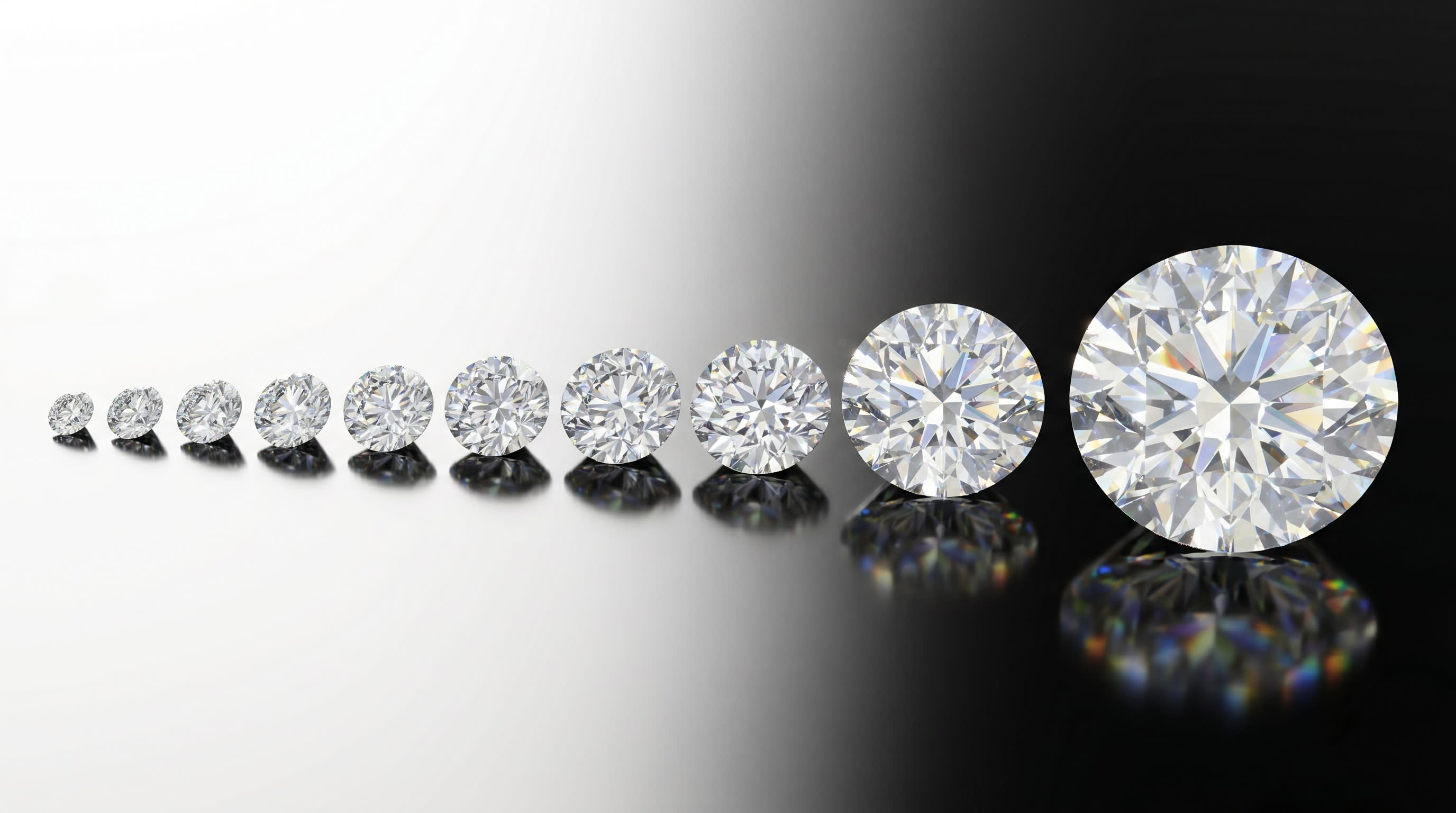
- Carat weight is a standardized measure of diamond and gemstone mass, with one carat equaling 200 milligrams. It influences price and perceived size but does not determine actual diamond face-up dimensions, which depend on cut and shape. Buyers should focus on center-stone weight, cut quality, and milestone weights to maximize value and visual impact efficiently.
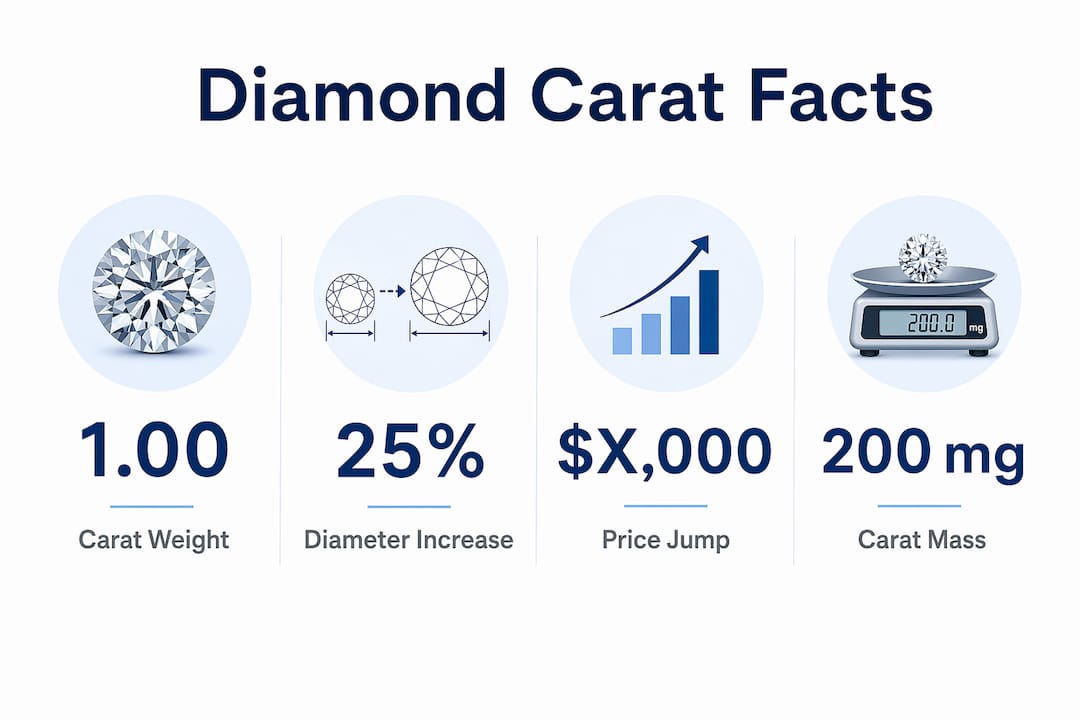
Carat weight is defined as the standardized unit of mass for diamonds and gemstones, where one carat equals exactly 200 milligrams (0.2 grams) worldwide. The role of carat weight extends far beyond a simple number on a grading report. It directly shapes how much you pay, how large a stone appears on the finger, and how your purchase compares to others at the same price point. Most buyers focus on carat as a size indicator, but weight and visible size are not the same thing. Understanding that distinction is the foundation of every smart jewelry purchase.
How is carat weight measured in the jewelry industry?
Jewelers measure carat weight using calibrated digital scales accurate to the thousandth of a carat. That precision matters because even a difference of 0.03 carats can shift a stone into a higher price tier.
The industry communicates fractional weights through the 100-point system, where one full carat equals 100 points. A 0.75-carat stone is described as a “75-pointer,” and a 0.50-carat stone is a “50-pointer.” Jewelers use this system to price diamonds precisely and differentiate stones by hundredths of a carat. It gives buyers a cleaner way to compare stones without converting decimals.
One of the most misunderstood terms in jewelry retail is total carat weight (TCW). TCW is the combined weight of all stones in a piece, not the weight of any single stone. A ring advertised as “2.00 CTW” may feature a 1.00-carat center diamond surrounded by 1.00 carats of smaller accent stones. That is a very different purchase from a ring with a single 2.00-carat diamond at its center.
- Single-stone weight tells you the size and value of the main diamond.
- TCW tells you the total mass of all diamonds combined.
- A high TCW does not guarantee a large or impressive center stone.
- Always ask for the center-stone carat weight separately before comparing prices.
Pro Tip: When shopping online, filter by center-stone carat weight rather than TCW. A ring listed at 2.00 CTW with a 0.50-carat center stone will look nothing like a solitaire of the same total weight.
Lab-grown diamonds follow the same measurement standard. A 1-carat lab-grown diamond weighs exactly the same as a 1-carat natural diamond and shares comparable dimensions. The carat scale applies universally across both categories.
Does carat weight determine how big a diamond looks?
Carat measures weight, not physical diameter or face-up area. Two diamonds with identical carat weight can look noticeably different in size depending on their cut depth and proportions. This is one of the most important distinctions for any buyer to internalize before setting a budget.
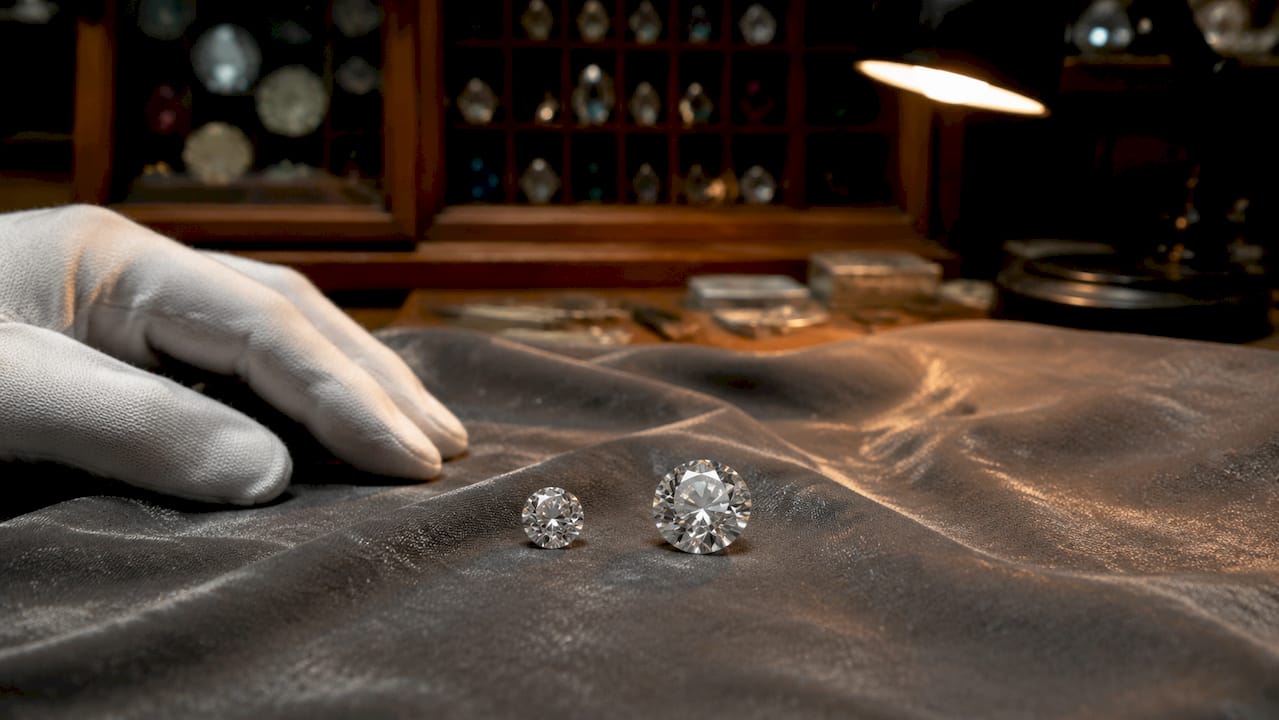
A 2-carat diamond is only about 25% wider in diameter than a 1-carat round diamond. The face-up area is roughly 55% larger, not double. That gap between perceived and actual size growth exists because diamonds grow in three dimensions. Weight increases faster than visible surface area.
Cut quality is the primary driver of how large and brilliant a stone appears. A deeply cut diamond carries more of its weight below the girdle, making it look smaller face-up than its carat weight suggests. A shallow cut spreads weight across the table but sacrifices brilliance. An ideal cut balances both, maximizing the face-up appearance and light return.
| Cut Type | Face-Up Appearance | Brilliance | Carat Efficiency |
|---|---|---|---|
| Ideal / Excellent | Largest for the weight | Highest | Best |
| Deep Cut | Smaller than expected | Reduced | Poor |
| Shallow Cut | Wider than expected | Reduced | Moderate |
Shape also influences perceived size. Elongated shapes like oval, marquise, and pear cuts appear larger than round brilliants of the same carat weight. A 1.00-carat oval diamond can look as large as a 1.20-carat round on the finger. This is a practical way to maximize visual impact without increasing your budget.
Pro Tip: If size matters most to you, consider an oval or elongated cushion cut. You get more visible surface area per carat than with a round brilliant, often at a lower price per carat.
How does carat weight impact diamond pricing?
Diamond pricing increases exponentially, not linearly, with carat weight. A 2-carat diamond costs 4 to 5 times more than a 1-carat stone of similar cut, color, and clarity. That multiplier reflects rarity, not just mass. Larger rough diamonds are exponentially scarcer in nature, and that scarcity drives the premium.
The market applies especially sharp price jumps at what the industry calls “magic” or milestone carat sizes: 0.50, 1.00, and 2.00 carats. Rarity of larger rough diamonds underpins these premiums. A stone weighing exactly 1.00 carat commands a higher price per carat than a stone at 0.98 carats, even though the visual difference is invisible to the naked eye.
“Buying just below a milestone carat weight is one of the most reliable strategies in diamond purchasing. The savings are real. The size difference is not.”
Here is how to apply this knowledge when you shop:
- Target just-under weights. A 0.90-carat stone instead of a 1.00-carat stone can save you 10 to 25% with no visible size difference.
- Compare price per carat. Divide the total price by the carat weight to identify where premiums spike.
- Check the grading report. A certified stone’s exact weight is listed to the hundredth of a carat, so you know exactly where it falls relative to a milestone.
- Factor in other quality variables. A 0.95-carat stone with excellent cut and VS1 clarity may outperform a 1.05-carat stone with a poor cut in both beauty and value.
- Consider lab-grown options. Lab-grown diamond rings offer the same carat weight at significantly lower price points, giving you more stone for your budget.
The interaction between carat weight and the other quality factors (cut, color, and clarity) also shapes final price. A 1.50-carat diamond with D color and IF clarity will cost far more than a 1.50-carat stone with J color and SI2 clarity. Carat weight sets the baseline, but the other attributes determine where within that range the price lands.
How should you balance carat weight with cut, color, and clarity?
Cut is the single most important factor for how a diamond looks in person. Cut quality affects brightness and apparent size more than carat weight does. A well-cut 0.90-carat diamond can look larger and more brilliant than a 1.10-carat stone with a poor cut. Prioritizing cut protects your investment in appearance.
Color and clarity also interact with carat weight in ways that affect your budget. Larger stones show color and inclusions more visibly, so a higher carat weight may require a better color or clarity grade to look clean and white to the eye.
Here is a practical framework for balancing all four factors:
- Cut: Never compromise. Choose Excellent or Ideal cut grades. This is where sparkle lives.
- Color: For stones under 1.00 carat, G or H color appears colorless in most settings. For stones over 1.50 carats, consider F or G to avoid visible warmth.
- Clarity: VS2 or SI1 is eye-clean for most buyers and leaves room in the budget for carat weight or cut quality.
- Carat: Buy just below milestone weights (0.90, 1.90) to capture savings without sacrificing visible size.
Pro Tip: Pair a just-under carat weight with an Excellent cut grade. You get the visual impact of the milestone size with the savings of the lower weight tier. This combination consistently delivers the best value per dollar spent.
When shopping for engagement rings, the diamond shape you choose also affects how carat weight reads on the hand. Narrow fingers make smaller stones look larger. Wider bands can make the same stone look smaller. These visual dynamics mean carat weight significance is always relative to the full design of the piece.
What practical tips help you shop by carat weight?
Applying carat weight knowledge at the point of purchase requires a few specific habits. These steps turn theory into savings.
- Request the center-stone weight in writing. Do not rely on TCW alone. Ask for the individual weight of the main stone before comparing prices across retailers.
- Use the 100-point system for comparisons. When a jeweler says “75 points,” you know the stone is 0.75 carats. This system makes side-by-side comparisons faster and more accurate.
- Compare face-up dimensions alongside carat weight. A round 1.00-carat diamond measures approximately 6.5 mm in diameter. Ask for millimeter measurements to verify that the cut is not hiding weight below the girdle.
- Evaluate prices at milestone boundaries. Compare a 0.98-carat stone and a 1.02-carat stone side by side. The price gap often exceeds $500 for nearly identical visual results.
- Use online size visualization tools. Many retailers offer interactive sliders that show how different carat weights look on a hand model. These tools make the abstract concrete before you commit.
- Verify weight on a certified grading report. GIA, AGS, and IGI reports list exact carat weight to the hundredth. Never purchase a significant diamond without one.
For multi-stone pieces like eternity bands or halo rings, understanding carat weight in necklaces and multi-stone settings follows the same logic. TCW matters for pricing, but the visual impact comes from how the stones are arranged and cut, not the total mass alone.
Key takeaways
Carat weight determines the price baseline for any diamond or gemstone, but cut, shape, and strategic buying around milestone weights determine whether you get real value for that price.
| Point | Details |
|---|---|
| Carat equals weight, not size | One carat is 200 mg; face-up appearance depends on cut and shape, not weight alone. |
| TCW differs from center-stone weight | Always confirm the individual center-stone weight before comparing ring prices. |
| Pricing is exponential | A 2-carat diamond costs 4 to 5 times more than a comparable 1-carat stone. |
| Buy just under milestone weights | Choosing 0.90 ct over 1.00 ct saves 10 to 25% with no visible size difference. |
| Cut outperforms carat for brilliance | An Excellent-cut smaller stone consistently outshines a larger, poorly cut diamond. |
Why i think most buyers overweight the carat number
After years of watching people shop for diamonds, the pattern is consistent. Buyers walk in with a carat target and treat everything else as secondary. That approach costs them money and often leaves them with a stone that looks smaller than expected.
The most striking example I keep coming back to is the 0.90-carat versus 1.10-carat comparison. The 0.90-carat stone with an Ideal cut and G color will look larger, brighter, and more impressive than the 1.10-carat stone with a Good cut and I color. The price difference between those two stones can exceed $1,000. The visual difference favors the smaller stone.
The magic-size premium is real, and it is largely a psychological artifact. Retailers know that “1 carat” sounds better than “0.93 carats,” so they price accordingly. Savvy buyers who understand this save hundreds to thousands of dollars without giving up anything visible.
My honest advice: set your cut grade first, then work backward to the carat weight your budget allows. You will end up with a more beautiful stone than if you had done it the other way around. The relationship between cut and carat is the most underused insight in diamond buying, and it consistently separates informed shoppers from disappointed ones.
— Andrew
Find your perfect diamond at Superjeweler
Superjeweler lists every diamond and gemstone with full carat weight transparency, including center-stone weight separate from TCW. You can filter by carat weight, cut grade, and price to find stones that match your priorities without guesswork.

If you are working with a tighter budget, the affordable engagement rings under $1,000 collection includes real diamonds with clear carat specifications at every weight tier. For buyers who want maximum size per dollar, the lab-grown diamond jewelry selection offers the same carat weight and dimensions as natural diamonds at a fraction of the cost. Every listing includes grading details so you can apply everything you have learned here before you buy.
FAQ
What does carat weight actually measure?
Carat weight measures the mass of a diamond or gemstone. One carat equals exactly 200 milligrams, and the measurement is standardized worldwide across both natural and lab-grown stones.
Is a higher carat weight always better?
Not necessarily. A higher carat weight increases price exponentially but does not guarantee a larger or more brilliant appearance. Cut quality has a greater impact on how impressive a stone looks face-up.
What is the difference between TCW and carat weight?
TCW (total carat weight) is the combined mass of all stones in a piece of jewelry. Center-stone carat weight refers only to the main stone. A ring with 2.00 TCW may have a much smaller center diamond than a solitaire of the same total weight.
How much can i save by buying just under a milestone carat weight?
Buyers who choose a stone just below a milestone weight, such as 0.90 carats instead of 1.00 carat, can save 10 to 25% with no visible size difference to the naked eye.
Do lab-grown diamonds have the same carat weight as natural diamonds?
Yes. Lab-grown diamonds are measured on the same carat scale as natural diamonds. A 1-carat lab-grown diamond weighs exactly 200 milligrams and has comparable physical dimensions to a natural stone of the same weight.
Recommended
- Role of cut in diamond quality: maximize sparkle in 2026
- Diamond Clarity – How It Impacts Ring Value
- Why Diamond Quality Matters for Engagement Rings
- How carat weight influences diamond value in 2026
