TL;DR:
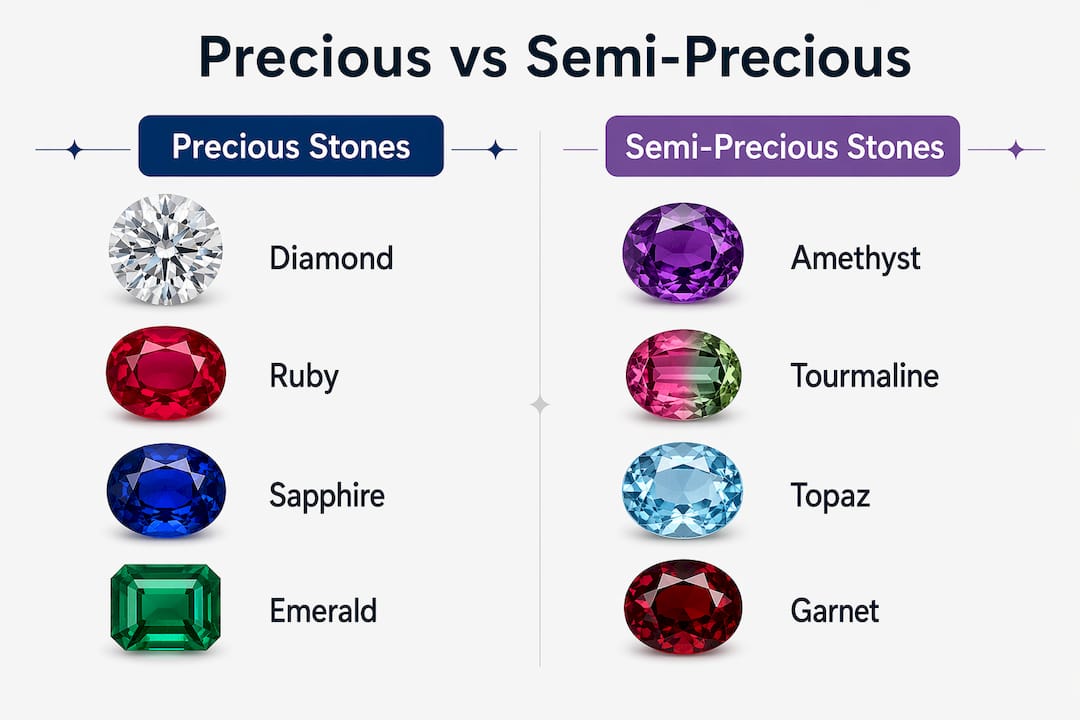
- Semi-precious stones are natural gemstones that are not classified as the four precious stones: diamond, ruby, sapphire, and emerald.
- Their classification is based on historical trade conventions, not scientific standards, and gemologists evaluate stones by physical properties like hardness and crystal structure.
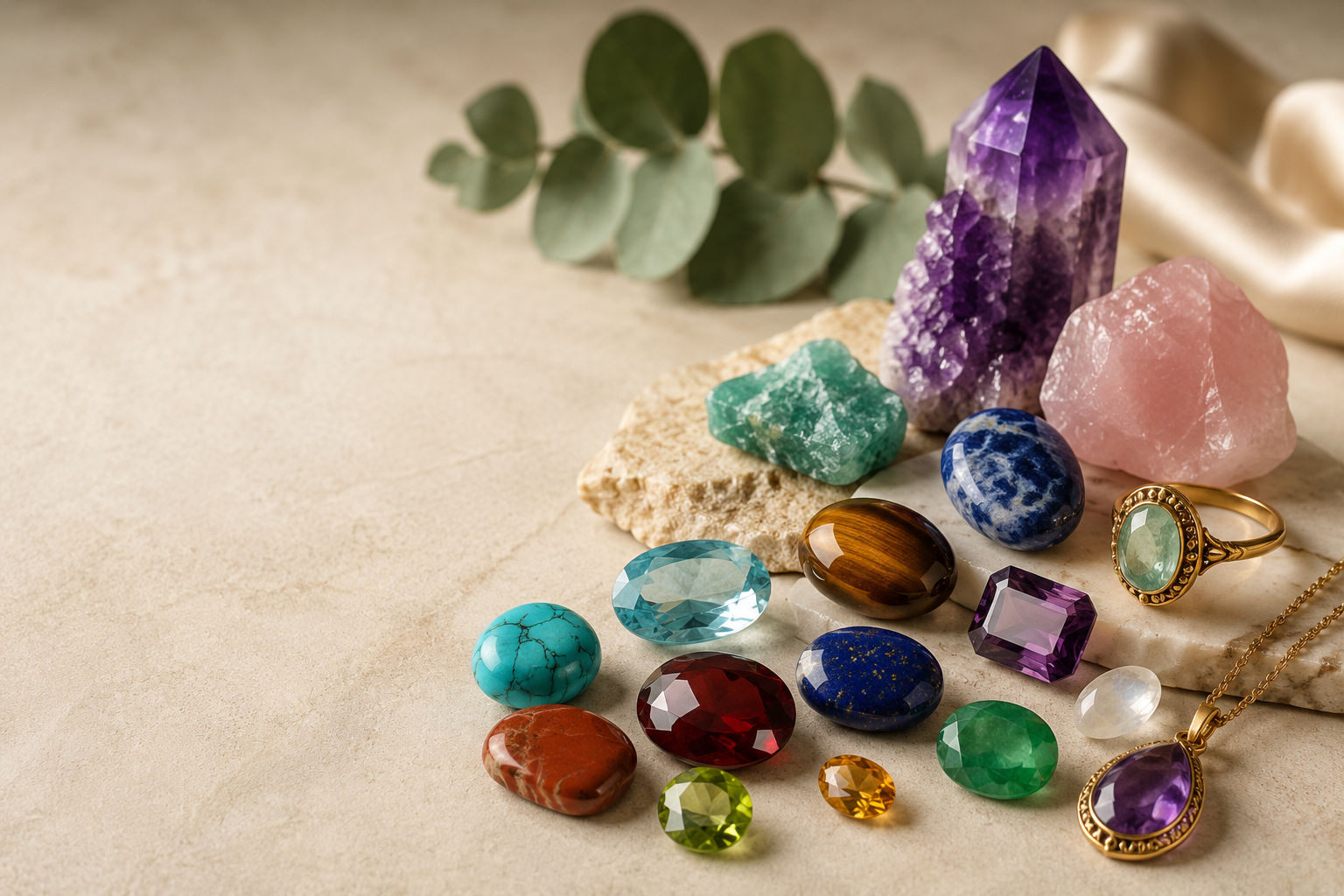
A semi-precious stone is any natural gemstone that falls outside the traditional category of the four precious stones: diamond, ruby, sapphire, and emerald. The term “semi-precious” is the consumer-facing label used across the jewelry industry, though gemologists prefer to evaluate stones by physical properties rather than this classification. The distinction is rooted in ancient Western trade conventions, not strict science. Stones like amethyst, garnet, turquoise, and tourmaline carry genuine beauty, cultural history, and real market value. The Mohs scale of mineral hardness, refractive index, and crystal structure are the tools professionals actually use to assess any gemstone, precious or not.
What is a semi precious stone, and how is it classified?
The traditional Western jewelry trade defines precious stones as exactly four: diamond, ruby, sapphire, and emerald. Every other gemstone falls into the semi-precious category by default. This boundary originated in ancient times based on perceived rarity and cultural prestige, not on any formal scientific standard.
Gemologists do not rely on the precious versus semi-precious label when evaluating a stone. Instead, they apply measurable criteria: hardness on the Mohs scale (1–10), specific gravity, refractive index, and crystal structure. These properties determine how a stone performs in jewelry, how it interacts with light, and how well it resists scratching and wear. A stone’s color, clarity, cut, and any treatments it has received also factor into its quality assessment.
The classification is better understood as a marketing convention than a geological fact. The precious vs. semi-precious distinction does not dictate physical properties or suitability for jewelry use. A consumer who shops by label alone misses the full picture.
Here is a quick comparison of how the two categories differ in practice:
| Feature | Precious stones | Semi-precious stones |
|---|---|---|
| Traditional members | Diamond, ruby, sapphire, emerald | All other gemstones |
| Basis for classification | Historical rarity and cultural value | Default category |
| Hardness range (Mohs) | 9–10 (diamond), 9 (ruby/sapphire), 7.5–8 (emerald) | Varies widely (2–9) |
| Price range | Generally high | Varies from affordable to very high |
| Rarity | Generally rare | Ranges from common to extremely rare |
Pro Tip: When shopping for gemstone jewelry, ask for the stone’s Mohs hardness rating. Anything below 7 needs extra protection in rings worn daily.
What are common examples and properties of semi-precious stones?
Semi-precious stones include amethyst, garnet, citrine, turquoise, spinel, tourmaline, and organic gemstones like pearl, amber, and jet. Each brings a distinct set of physical traits and cultural associations that make it desirable in its own right.
Here is a closer look at the most popular options:
- Amethyst is a purple variety of quartz with a Mohs hardness of 7. It is one of the most widely used gemstones in fine jewelry and carries a long association with calm and clarity. Amethyst ranges from pale lavender to deep violet, and its color saturation directly affects its price.
- Garnet comes in more color varieties than most people realize, including red, orange, green, and colorless. Red almandine garnet is the most familiar, but tsavorite garnet (a vivid green variety) commands prices that rival many precious stones. Garnet rates 6.5–7.5 on the Mohs scale.
- Citrine is a yellow-to-orange quartz with a hardness of 7. It is durable, widely available, and affordable, making it a popular choice for statement rings and pendants. Much of the citrine on the market is heat-treated amethyst.
- Turquoise rates 5–6 on the Mohs scale, making it softer than most ring stones. Its opaque blue-green color has been prized in Native American, Persian, and Egyptian jewelry traditions for thousands of years. Most commercial turquoise is stabilized to improve durability.
- Tourmaline offers one of the broadest color ranges of any gemstone, from pink and green to black and watermelon (pink and green in the same crystal). It rates 7–7.5 on the Mohs scale and is well suited for most jewelry types.
- Spinel is a stone that has been historically mistaken for ruby. The famous “Black Prince’s Ruby” set in the British Imperial State Crown is actually a red spinel. It rates 8 on the Mohs scale, making it one of the most durable semi-precious options available.
- Pearl, amber, and jet are organic gemstones. Organic materials like pearl, amber, and jet lack a crystalline mineral structure but are officially classified as gemstones because of their centuries-long use in decorative arts and jewelry. Pearls rate just 2.5–4.5 on the Mohs scale, so they require careful handling.
Many of these stones carry metaphysical properties or cultural significance that add to their appeal beyond appearance. Amethyst is associated with calm, garnet with love and devotion, and turquoise with protection. These meanings matter to buyers who want jewelry that carries personal significance.
Pro Tip: If you love the look of pink stones, explore options like pink tourmaline, pink spinel, and rose quartz before defaulting to pink sapphire. You may find a more vivid color at a lower price point. Superjeweler’s pink gemstone collection is a good place to compare options side by side.
How do durability and care affect semi-precious stone jewelry?
Hardness, cleavage, and toughness are the three durability factors that determine whether a semi-precious stone is right for a specific jewelry type. Hardness measures scratch resistance. Cleavage describes how a stone breaks along crystal planes. Toughness measures resistance to chipping and fracturing. A stone can score well on one factor and poorly on another.
Here is how to match stones to jewelry types based on durability:
- Rings worn daily require stones rated 7 or higher on the Mohs scale. Spinel (8), tourmaline (7–7.5), and garnet (6.5–7.5) are solid choices. Turquoise and pearl are better reserved for earrings and necklaces where they face less direct impact.
- Necklaces and pendants are lower-impact settings, so softer stones like turquoise, moonstone, and labradorite work well. The stone does not contact hard surfaces the way a ring does.
- Earrings are the most forgiving setting for delicate stones. Amber, pearl, and opal are commonly used in earrings precisely because the setting protects them from abrasion.
- Bracelets sit in a middle ground. Stones rated 6.5 and above generally hold up, but avoid stones with strong cleavage (like moonstone) in bracelets that may knock against hard surfaces.
- Cleaning and storage matter as much as the stone’s hardness. Most semi-precious stones should be cleaned with warm water, mild soap, and a soft brush. Ultrasonic cleaners can fracture stones with inclusions or cleavage planes. Store pieces separately to prevent harder stones from scratching softer ones.
Color stability is another practical concern. Some semi-precious stones fade with prolonged UV exposure. Amethyst can lighten in direct sunlight over time. Kunzite and rose quartz are also light-sensitive. Storing these pieces away from windows extends their color life significantly.
Are semi-precious stones valuable? Comparing value and rarity
The word “semi-precious” implies a lower tier, but that reading is often wrong. Some semi-precious stones, like tsavorite garnet, are rarer and more valuable per carat than mid-quality rubies or sapphires. The label reflects historical convention, not current market reality.
Value in any gemstone is driven by four factors: rarity, color quality, clarity, and demand. A fine alexandrite (a color-changing variety of chrysoberyl) can sell for more per carat than a commercial-grade ruby. Paraiba tourmaline, with its electric neon-blue color caused by copper and manganese, commands prices that exceed many precious stones at equivalent weights.
| Stone | Mohs hardness | Typical price range per carat | Rarity level |
|---|---|---|---|
| Tsavorite garnet | 6.5–7.5 | $500–$7,000+ | Very rare |
| Paraiba tourmaline | 7–7.5 | $2,000–$50,000+ | Extremely rare |
| Fine alexandrite | 8.5 | $5,000–$70,000+ | Extremely rare |
| Amethyst | 7 | $5–$30 | Common |
| Turquoise (natural) | 5–6 | $10–$200 | Moderate |
“The precious vs. semi-precious distinction is largely a legacy marketing term. Focusing on a stone’s hardness and individual quality is more important for jewelry consumers.” — Jewelers Mutual
Consumer misconceptions persist because the marketing legacy of the precious/semi-precious divide is deeply embedded in how jewelry is sold and described. Buyers who understand that the label is a convention, not a quality grade, make better purchasing decisions. A well-cut, vivid amethyst in a quality setting is a finer piece than a pale, heavily included ruby in a poor setting, regardless of which category each stone belongs to.
Key takeaways
Semi-precious stones are defined by historical convention, not inferior quality. Understanding their physical properties leads to smarter, more satisfying jewelry purchases.
| Point | Details |
|---|---|
| Definition by exclusion | A semi-precious stone is any gemstone that is not diamond, ruby, sapphire, or emerald. |
| Classification is not scientific | The precious vs. semi-precious label is a marketing convention based on historical rarity, not gemological fact. |
| Value varies widely | Some semi-precious stones like tsavorite garnet and Paraiba tourmaline exceed precious stones in price and rarity. |
| Hardness guides jewelry choice | Match a stone’s Mohs rating to its jewelry type; stones below 7 are better suited for earrings and necklaces than daily-wear rings. |
| Organic stones count too | Pearl, amber, and jet are classified as gemstones despite lacking a crystalline structure, valued for their history and beauty. |
The label matters less than the stone itself
I have spent years watching shoppers talk themselves out of beautiful pieces because a stone was labeled “semi-precious.” That hesitation is understandable. The word sounds like a consolation prize. But the more time you spend around actual gemstones, the more that label starts to feel like a relic from a different era of jewelry marketing.
The gemology community has largely moved past the precious versus semi-precious framework. Professional appraisers assess color saturation, clarity, cut quality, and treatment history. They do not start with a category label. When I look at a well-cut tsavorite garnet next to a pale, cloudy emerald, the garnet wins on every visual metric. The emerald carries the “precious” label. The garnet does not. That gap between label and reality is where the best value in gemstone jewelry lives.
My honest recommendation: learn the Mohs scale, ask about treatments, and buy the stone that moves you visually. A vivid, well-cut amethyst in a quality setting will outlast and outshine a mediocre precious stone every time. The variety of semi-precious options available today means you are never limited to a small set of choices. You can find a stone that fits your style, your budget, and your meaning without compromising on quality.
The shift happening in the market right now is real. Consumers are choosing tourmaline, spinel, and garnet for engagement rings and heirloom pieces because they understand the stones on their own terms. That is the right approach.
— Andrew
Explore semi-precious gemstone jewelry at Superjeweler
Superjeweler carries a wide selection of jewelry featuring semi-precious stones across every category, from rings and necklaces to earrings and bracelets. Whether you are drawn to the deep purple of amethyst, the vivid green of tsavorite garnet, or the organic elegance of pearl, the collection covers the full range of what these stones can do in fine jewelry settings.

Prices are built to make quality accessible. The gemstone rings collection includes options across a broad price range, and free worldwide shipping applies to every order. If you want to explore color options by hue, Superjeweler’s blue gemstone collection and gemstone necklaces are strong starting points. For shoppers who want a gemstone-set engagement ring at an accessible price, the engagement rings under $1,000 page includes real options worth considering.
FAQ
What is the definition of a semi-precious stone?
A semi-precious stone is any natural gemstone that is not classified as one of the four precious stones: diamond, ruby, sapphire, or emerald. The distinction is based on historical Western trade conventions rather than scientific criteria.
Are semi-precious stones real gemstones?
Yes. Semi-precious stones are genuine natural gemstones with measurable physical properties, cultural histories, and real market value. Some, like Paraiba tourmaline and alexandrite, are rarer and more expensive than many precious stones.
How do I identify a semi-precious stone?
Gemologists identify semi-precious stones using the Mohs hardness scale, refractive index, specific gravity, and crystal structure. For consumers, a certified gemologist or a reputable jeweler can provide a formal identification and quality assessment.
What semi-precious stones are best for everyday rings?
Stones rated 7 or higher on the Mohs scale are best for daily-wear rings. Spinel (8), tourmaline (7–7.5), and garnet (6.5–7.5) offer strong durability. Softer stones like turquoise and pearl are better suited for earrings and necklaces.
Can semi-precious stones be used in engagement rings?
Yes. Garnet, tourmaline, spinel, and amethyst are all used in engagement rings. The key is choosing a stone with sufficient hardness for daily wear and setting it in a protective mounting, such as a bezel or halo setting, to reduce the risk of chipping.
Recommended
- Blue Gemstones: Ocean-Inspired Beauty
- Gemstone Rings | SuperJeweler
- Understand gemstone cuts: Unlock sparkle, value & style
- Pink Gemstones: Discover Your Perfect Hue
