TL;DR:
- Colored gemstones are valued mainly for their vibrant colors resulting from unique chemical compositions, unlike diamonds, which are graded by their colorless qualities. Market trends show increasing consumer interest in diverse, culturally significant, and treated stones, with durability and authenticity influencing value. Evaluating these gems involves assessing hue, tone, saturation, clarity, and treatment disclosures to ensure quality and meaningfulness in jewelry.
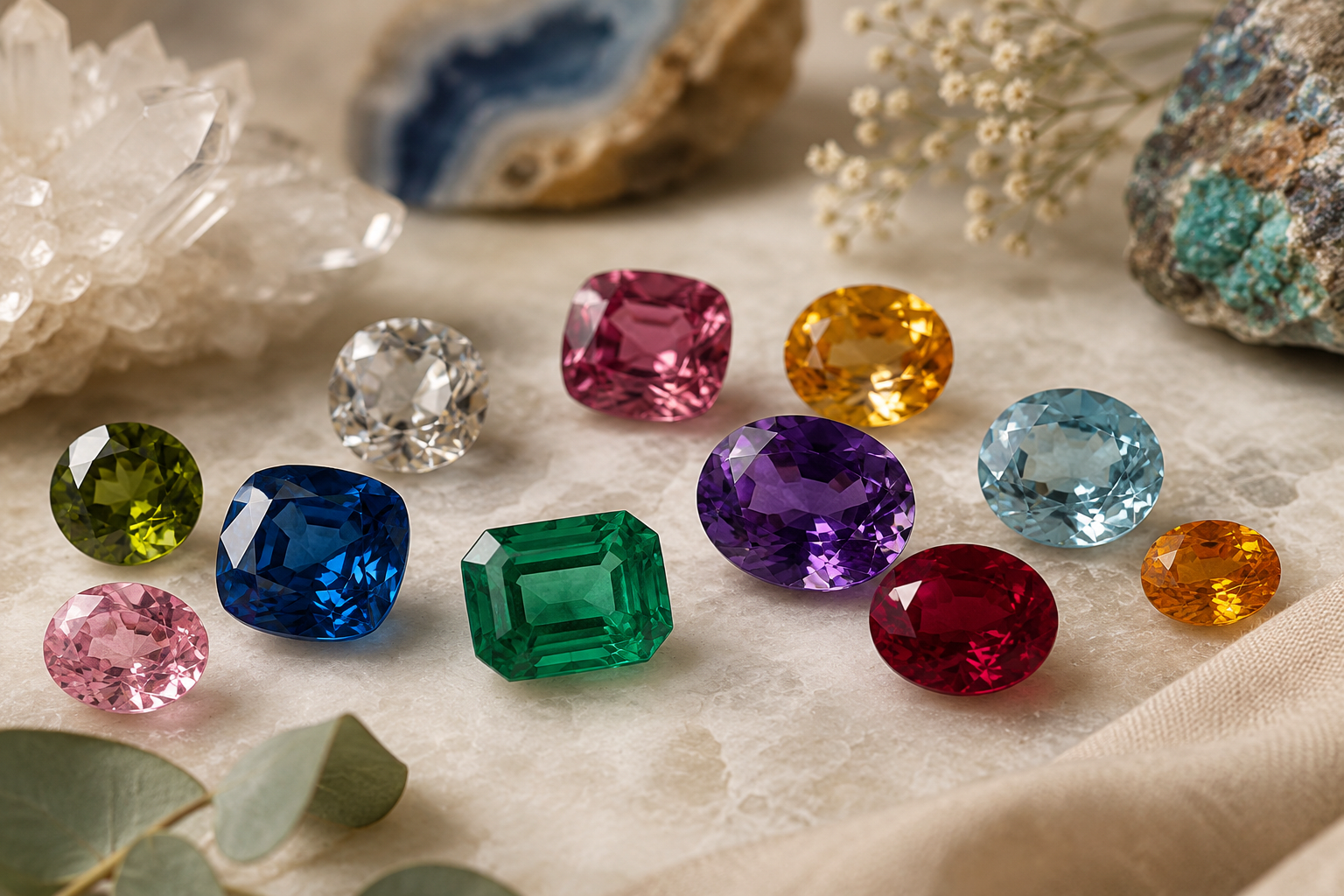
Most people can name a ruby or an emerald, but far fewer understand what actually makes a colored gemstone different from a diamond, or why two visually similar stones can carry wildly different price tags. A colored gemstone is any gem used in jewelry whose primary appeal centers on color rather than colorlessness. That covers hundreds of mineral species and a handful of organic materials, from vivid blue sapphires to warm amber. The colored gemstone market is projected to grow from $1.55 billion in 2023 to $4.46 billion by 2033, which tells you everything about where consumer interest is heading.
Table of Contents
- Key Takeaways
- What is a colored gemstone, exactly?
- Popular types of colored gemstones
- Colored gemstone meanings and cultural significance
- How to identify and evaluate quality
- Colored gemstones in modern jewelry
- My take on what most buyers get wrong
- Explore colored gemstone jewelry at Superjeweler
- FAQ
Key Takeaways
| Point | Details |
|---|---|
| Color comes from chemistry | Trace elements like chromium and iron determine the hue of most colored gemstones. |
| Grading differs from diamonds | Colored stones use descriptive hue, tone, and saturation grading rather than a universal letter scale. |
| Precious vs. semi-precious is outdated | Market value is driven by rarity, origin, and quality rather than traditional category labels. |
| Treatments affect value | Dyeing, heating, and other enhancements must be disclosed because they significantly impact a stone’s price. |
| Symbolism shapes buying decisions | Birthstones and cultural color meanings remain strong drivers in gift-giving and personalized jewelry. |
What is a colored gemstone, exactly?
A gemstone is defined as a material used for jewelry or adornment, prized for its aesthetic and physical qualities. Most gemstones are inorganic mineral crystals formed deep in the earth under extreme pressure and heat. A smaller group is organic, including pearl, amber, and coral, all of which are also classified as gemstones despite coming from living organisms.
What separates colored gemstones from diamonds is fundamentally about the role color plays. Diamonds are graded in part by how little color they show. Colored gemstones are valued precisely because of the color they display. That shift in perspective changes everything about how you evaluate and shop for them.
Color in gemstones comes from the stone’s chemical composition and, more specifically, from trace elements present during crystal formation. Chromium creates ruby’s red hue, while iron and titanium combine to produce the deep blue of sapphire. Emerald gets its green from chromium and vanadium. The same trace element can create different colors in different mineral hosts, which is why chromium produces red in corundum (ruby) but green in beryl (emerald).
Three optical properties define how a colored gemstone actually looks to the eye:
- Hue: The dominant color family (red, blue, green, etc.)
- Tone: How light or dark the color appears, ranging from very pale to nearly black
- Saturation: The intensity or richness of the color, from grayish or brownish to vivid
Pro Tip: When comparing two colored gemstones in a store, view them under both natural daylight and artificial light. Some stones, like alexandrite, shift color dramatically between the two, which directly affects their value.
Popular types of colored gemstones
The range of types of colored gemstones available today is broader than most shoppers realize. Each stone has its own personality, hardness, and ideal use case in jewelry. Here is a quick-reference comparison of the most popular options.
| Gemstone | Color Range | Mohs Hardness | Best Jewelry Use |
|---|---|---|---|
| Ruby | Red to pinkish-red | 9 | Rings, pendants, everyday wear |
| Sapphire | Blue, pink, yellow, white | 9 | Engagement rings, earrings |
| Emerald | Green to bluish-green | 7.5–8 | Necklaces, cocktail rings |
| Amethyst | Light lavender to deep purple | 7 | Earrings, casual rings |
| Tanzanite | Violet-blue | 6.5 | Special occasion pieces |
| Topaz | Blue, pink, orange, colorless | 8 | Rings, pendants |
| Garnet | Red, orange, green, pink | 6.5–7.5 | Everyday and fashion jewelry |
| Aquamarine | Pale to medium blue | 7.5–8 | Rings, bracelets |
Hardness matters more than most buyers expect. A stone rated below 7 on the Mohs scale scratches more easily from everyday dust and contact, making it better suited for earrings or occasional-wear pieces rather than daily rings. Sapphire and ruby, both forms of corundum at Mohs 9, are second only to diamond in hardness, which partly explains their dominance in engagement ring settings.
The old “precious vs. semi-precious” distinction once divided ruby, sapphire, emerald, and diamond into a separate tier from everything else. That framework no longer reflects how the market actually prices stones. A high-quality tanzanite or alexandrite commands more than a low-grade ruby. Rarity, origin, color intensity, and treatment status drive value far more than category labels.
- Blue gemstones like sapphire and aquamarine remain the most popular colored stones in engagement settings.
- Pink stones, including pink sapphire and rose quartz, have surged in demand alongside rose gold settings.
- Green stones like emerald and tsavorite garnet appeal to buyers seeking something genuinely distinctive.
Pro Tip: If you love the color of tanzanite but need something for daily wear, consider blue sapphire instead. You get a similar cool violet-blue at a much higher durability rating.
Colored gemstone meanings and cultural significance
Color has carried symbolic weight in jewelry for thousands of years, and that tradition remains very much alive in modern buying decisions. Gemstone colors carry cultural meanings that have been passed down through civilizations, religious traditions, and personal rituals.
The birthstone system is the most widely practiced form of gemstone symbolism in the United States. Each month corresponds to one or more stones, and gifting someone their birthstone carries a personal resonance that a generic diamond pendant simply cannot replicate. A few examples worth knowing:
- January (Garnet): Represents friendship, trust, and protection during travel
- May (Emerald): Symbolizes renewal, growth, and good fortune. The emerald’s cultural history spans ancient Egypt, where Cleopatra famously favored the stone
- February (Amethyst): Long associated with tranquility and clear thinking
- September (Sapphire): Linked to loyalty and sincerity, which is a large reason why sapphire engagement rings carry such emotional weight
Beyond birthstones, color itself drives symbolism. Red stones signal passion and energy. Green represents growth and healing. Blue suggests calm and trustworthiness. These associations directly influence how people choose stones for anniversary gifts, milestone pieces, and engagement rings meant to carry personal meaning.
Colored gemstone jewelry is also frequently tied to heritage and culture. Many South Asian bridal traditions center on rubies and emeralds as auspicious choices. Latin American jewelry traditions favor bold color combinations that would look striking in gold settings. Understanding the cultural context of a stone can make a gift far more meaningful than price alone would suggest.
How to identify and evaluate quality
This is where many buyers lose confidence, and understandably so. Colored-stone grading is descriptive rather than standardized. Unlike diamonds, which follow the 4Cs on a near-universal scale, colored gemstones are evaluated through hue, tone, saturation, clarity, and cut. Different labs use different methodologies, so two reports on the same stone may use different language.
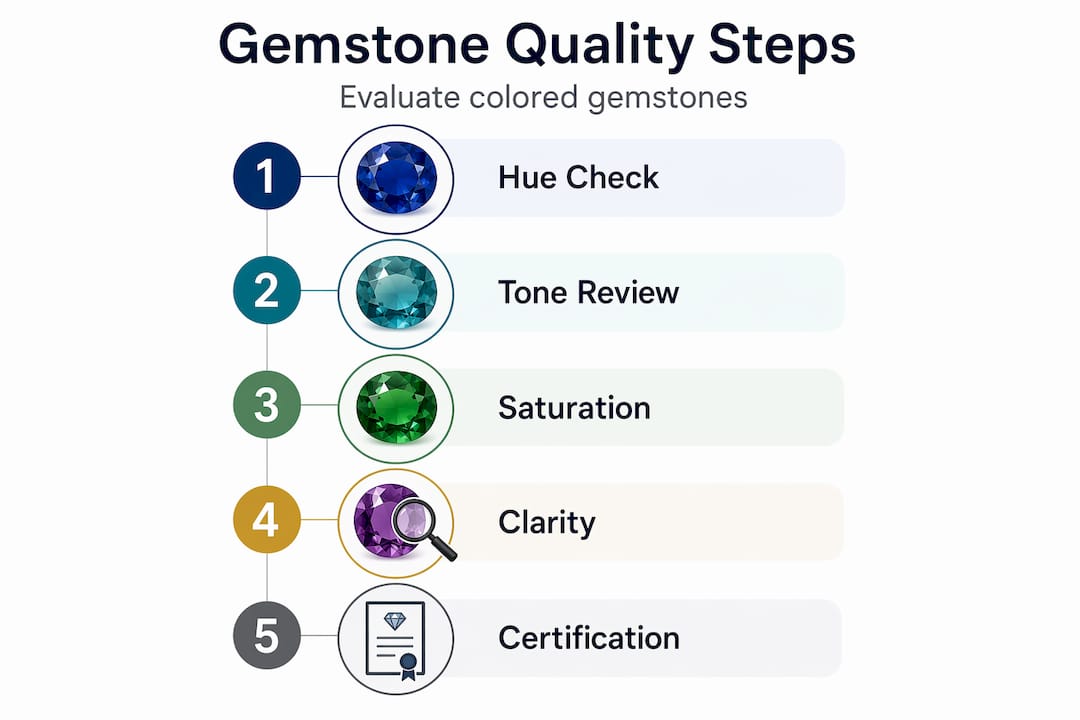
Here is how to approach quality evaluation step by step:
- Assess color first. Color accounts for roughly 50 to 70 percent of a colored gemstone’s value. Look for a hue that is pure and not muddied by gray or brown, a tone that is neither washed out nor too dark to show brilliance, and saturation that is rich without being overwhelming.
- Check clarity with realistic expectations. Most colored stones contain natural inclusions. Emeralds, for example, almost always have what the trade calls a “jardin” (a visible internal garden of inclusions). An emerald with no inclusions is either synthetic or heavily treated. The question is whether inclusions affect the stone’s transparency and light performance.
- Examine the cut. A well-cut colored gemstone maximizes color distribution across the face of the stone. Poor cutting can create dark windows in the center or uneven color concentration.
- Ask about treatments. Dyed gemstones have artificial color added after the fact, which significantly reduces value and durability. Heat treatment is common and widely accepted in stones like sapphire and ruby, but it must be disclosed. Fracture filling and glass filling are more controversial enhancements that devalue a stone considerably.
- Request certification. For significant purchases, ask for a report from a recognized gemological lab. Labs use multi-tool analytical approaches and reference collections to determine origin and treatment status.
Pro Tip: For colored gemstone clarity, refer to a dedicated gemstone clarity guide before buying. Clarity standards differ significantly between stone types, and what counts as “eye-clean” for a ruby is very different from what that means for an aquamarine.
Colored gemstones in modern jewelry
The way colored gemstones are used in jewelry has shifted meaningfully over the past decade. Colored sapphires account for 21% of precious gemstone engagement rings as of 2024, reflecting a real and lasting appetite for color in spaces where diamonds once dominated completely.
Several trends are worth understanding if you are shopping for or designing a colored gemstone piece:
- Engagement rings: Sapphire remains the dominant colored stone choice, largely because its hardness makes it genuinely practical for daily wear. Pink sapphire, teal sapphire, and morganite are all growing alternatives. For a deeper look at how gemstones are reshaping engagement ring culture, the role of gemstones in engagement rings has shifted from accent to centerpiece.
- Metal pairings: Yellow gold intensifies warm-toned stones like ruby, citrine, and garnet. White gold and platinum sharpen the coolness of blue sapphire and aquamarine. Rose gold complements pink and peach-toned stones beautifully.
- Settings: Bezel settings protect softer stones by surrounding the girdle with metal. Prong settings show more of the stone, which works well for harder gems that can handle the exposure.
- Personalized jewelry: Birthstone pieces, initial pendants with accent stones, and custom stacking rings have all driven demand for colored gemstones in everyday jewelry beyond formal occasions.
Pink gemstone rings in particular have become a strong category for engagement alternatives and anniversary gifts, offering a softer yet deeply personal aesthetic.
My take on what most buyers get wrong
I’ve seen the same pattern play out repeatedly with first-time colored gemstone buyers: they walk in expecting simplicity and walk out overwhelmed. The honest truth is that colored gemstones are more complex than diamonds to evaluate, not less. The lack of a universal grading scale is not a flaw in the system. It reflects the genuine diversity of stones, origins, and quality factors that exist across hundreds of species.
What I’ve learned from working with colored stones in a jewelry context is that beauty and value are not the same thing here. A deeply saturated natural ruby with a few visible inclusions often outperforms a flawless-looking treated ruby in terms of long-term value and emotional resonance. Buyers who focus only on the visual “wow” without asking about treatments often feel misled later.
My practical advice: set your color priority first, then let durability narrow your options, and budget last. Most people do it backwards. They set a budget, then get frustrated when the stone they love exceeds it. But knowing that a blue sapphire at $800 will last a lifetime with proper care changes the equation entirely.
Cultural meaning matters more than people admit, too. When I see someone choose their grandmother’s birthstone for an engagement ring, that choice carries more lasting satisfaction than any objectively “better” stone picked on aesthetics alone. Colored gemstones are personal in a way diamonds rarely are. That connection is worth paying attention to.
— Andrew
Explore colored gemstone jewelry at Superjeweler
Whether you are looking for a bold centerpiece ring or a delicate birthstone pendant, Superjeweler carries an extensive selection of colored gemstone jewelry at prices that make quality accessible. From everyday amethyst studs to vivid sapphire engagement rings, the range covers every aesthetic and budget.

Browse the full collection of gemstone rings for options across every color, cut, and stone type. If you are considering a colored gemstone for an engagement ring and want to keep costs in check, the selection of affordable engagement rings includes real gemstone center stones without the premium markup. Superjeweler also offers personalized jewelry featuring birthstones and custom accent stones for meaningful gifts. Free worldwide shipping and a solid return policy mean you can shop with confidence.
FAQ
What is a colored gemstone vs. a diamond?
A colored gemstone is any gem valued primarily for its color, including ruby, sapphire, and emerald, while a diamond is typically prized for its colorlessness and light dispersion. Both can appear in jewelry, but they are evaluated using different grading systems and quality factors.
What are precious gemstones?
The traditional precious gemstones are ruby, sapphire, emerald, and diamond. However, this distinction is largely outdated in the modern market, where rarity, origin, and treatment status determine value more accurately than category labels.
How do I identify a quality colored gemstone?
Evaluate hue, tone, and saturation for color quality, examine clarity for inclusions that impact transparency, and always ask the seller about treatments. For high-value purchases, request a lab certification that verifies origin and treatment status.
Why do two similar-looking gemstones have different prices?
Two visually similar gemstones can differ significantly in chemical composition, origin, and treatment history. A natural, untreated sapphire from Kashmir commands a far higher price than a heat-treated sapphire of identical color from another source.
Are colored gemstones suitable for engagement rings?
Yes, and their popularity is growing. Sapphire and ruby are both rated Mohs 9, making them durable enough for daily wear. Softer stones like emerald and tanzanite require more protective settings and careful maintenance, but they remain popular choices for people who prioritize personal meaning and color.
Recommended
- Blue Gemstones: Ocean-Inspired Beauty
- Green Gemstones: Fresh and Fabulous
- Gemstone Clarity Explained: How to Choose Flawless Jewelry
