TL;DR:
- Effective fashion jewelry styling emphasizes choosing one focal point to avoid visual clutter. Layer jewelry using specific chain lengths and mix metals intentionally to enhance your outfit. Matching metals and accessories to skin undertones and occasions creates a cohesive, polished look.
Fashion jewelry styling is the practice of selecting, layering, and coordinating accessories to complement your outfit, skin tone, and occasion without creating visual clutter. Whether you’re reaching for a bold statement necklace or a delicate chain stack, knowing how to style fashion jewelry separates a polished look from an overwhelming one. The industry term for this category is “costume jewelry” or “fashion jewelry,” and it covers everything from gold-plated hoops to resin pendants. Brands like Tiffany & Co. and Cartier have long demonstrated that restraint and hierarchy, not volume, define a great jewelry look. This guide gives you the formulas to do the same.
How to style fashion jewelry: choosing your focal piece
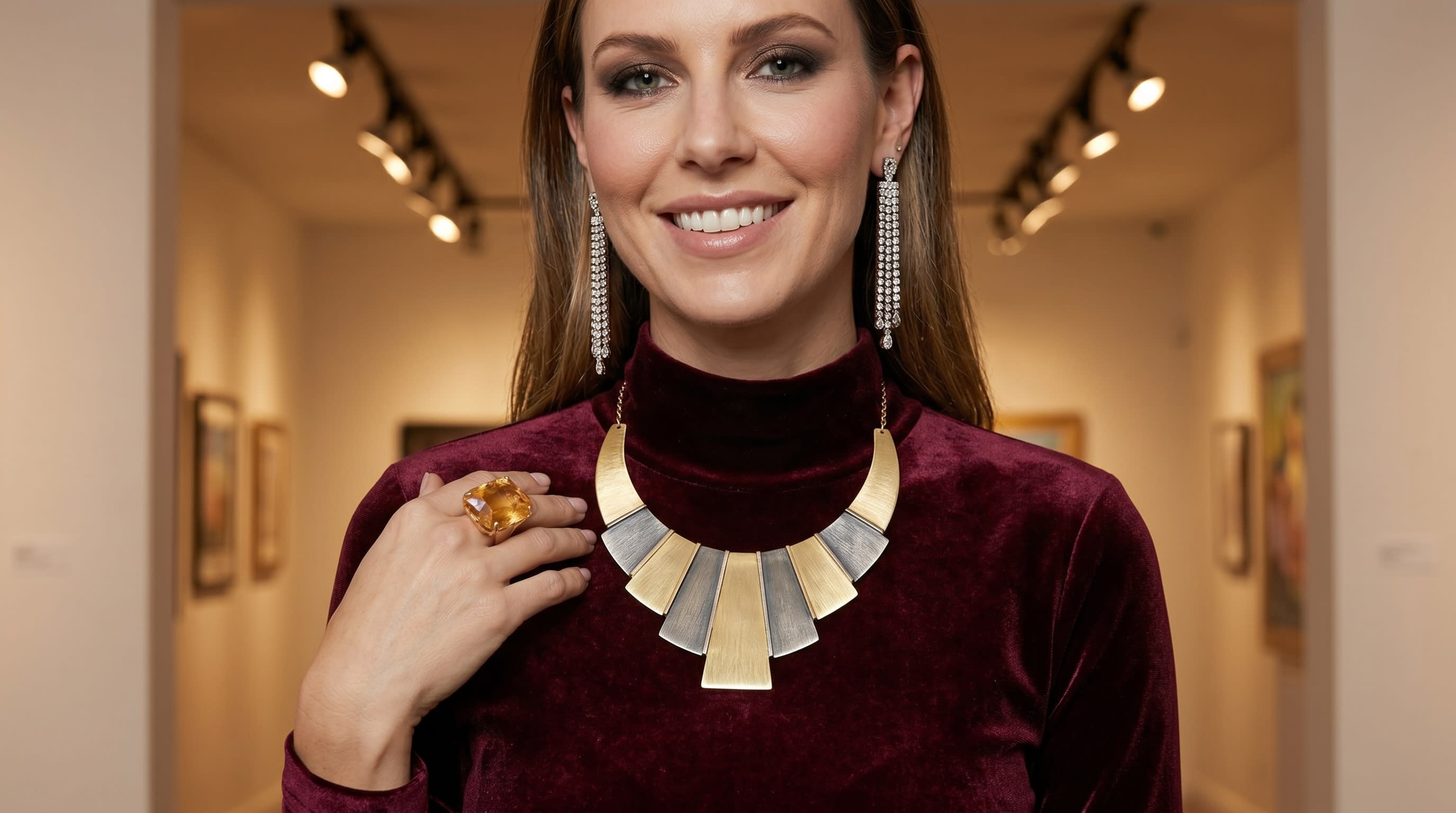
The single most important rule in fashion jewelry styling is this: pick one focal point and let everything else support it. Vogue advises to “choose either my ears or my neck” rather than loading both zones with bold pieces simultaneously. That one principle eliminates the most common mistake people make when accessorizing.
What counts as a focal piece
A focal piece is the item that draws the eye first. It can be a chunky statement necklace, a pair of chandelier earrings, a wide cuff bracelet, or even a stack of rings. The key is that only one zone carries the visual weight at a time. If your necklace is the star, your earrings should be studs or small hoops. If your earrings are dramatic, skip the necklace or wear a thin chain that barely registers.
How to build around your focal piece
Once you identify your lead piece, the supporting accessories should be smaller, simpler, and quieter. Daily.jewelry recommends letting the necklace pendant lead while keeping earrings smaller, or doing the reverse, to avoid the “too matchy” effect that makes a look feel costume-like rather than curated. This hierarchy principle applies to bracelets and rings too. A bold cocktail ring pairs best with a bare wrist or a single thin band, not a stack of bangles competing for attention.
Pro Tip: Before leaving the house, stand in front of a mirror and identify which piece your eye lands on first. If you can’t answer immediately, you have too many competing elements. Remove one piece and reassess.
- Choose one zone (neck, ears, wrists, or hands) as the statement zone
- Keep all other zones minimal and secondary
- Avoid pairing bold earrings with a bold necklace at the same time
- Let one piece tell the story; let the others whisper
How to layer jewelry correctly for a cohesive look
Layering is the most requested styling technique in fashion jewelry, and it has a clear formula. Stylists recommend starting with three pieces built around specific chain lengths: a dominant foundational chain at 14 to 16 inches sitting at the collarbone, a second chain at 18 to 20 inches falling just below the collar, and a delicate accent piece at 22 to 24 inches reaching mid-chest. That spacing creates visual rhythm without crowding.
The three-step layering formula
- Start with your foundation chain. Choose a chain with some visual weight at 14 to 16 inches. This anchors the entire stack and sets the tone for the look.
- Add a mid-length chain. Place a second chain 3 to 4 inches longer than the first. This creates separation and prevents the chains from tangling or merging visually.
- Finish with a delicate accent. A thin chain with a small pendant at 22 to 24 inches adds texture and depth without competing with the two layers above it.
Odd numbers of layers create more dynamic rhythm than even numbers. Three chains feel intentional. Two chains can look accidental. Four chains can feel cluttered unless you have significant experience with the technique.
Mixing metals the right way
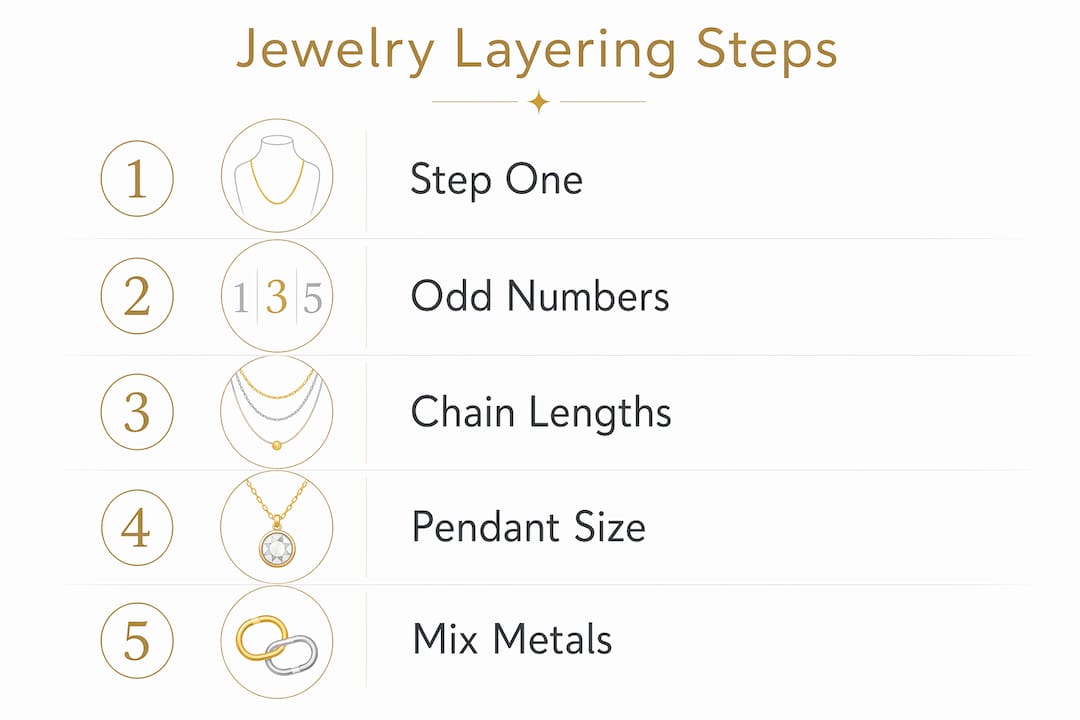
The 2026 stylist trend embraces what designers call “intentional discord”, which means deliberately mixing metals while maintaining finish consistency. You can wear yellow gold and silver together as long as both are polished, or both are matte. Mixing a polished gold chain with a brushed silver pendant creates friction that reads as careless rather than creative. Rose gold works particularly well as a connector between warm and cool tones because it contains both.
| Necklace length | Placement | Best use |
|---|---|---|
| 14 to 16 inches | Collarbone | Foundation layer, chokers |
| 18 to 20 inches | Below collar | Mid layer, pendants |
| 22 to 24 inches | Mid-chest | Accent layer, delicate chains |
Pro Tip: When layering pendants, respect pendant size hierarchy by pairing one substantial pendant with smaller, minimal pieces. Multiple statement pendants at similar sizes create visual confusion, not style.
You can find excellent layering starter chains in Superjeweler’s fashion necklaces collection, which includes a wide range of lengths and finishes suited to building a stack from scratch.
How to match jewelry metals and colors to your skin tone
Skin undertone is the foundation of every good metal pairing decision. The two most reliable tests are the vein test and the white paper test. Hold your wrist under natural light and look at your veins. Blue or purple veins indicate cool undertones. Green veins indicate warm undertones. A mix of both suggests neutral undertones. The white paper test works by holding a white sheet next to your bare face: if your skin looks pink or rosy, you’re cool-toned; if it looks yellow or peachy, you’re warm-toned.
Matching metals to undertones
Cool undertones look freshest with silver, platinum, and white gold. These metals reflect the blue and pink tones in cool skin and create a clean, modern contrast. Warm undertones glow with yellow gold, which harmonizes with the golden and olive hues in the skin. Neutral undertones have the most flexibility and can wear both, which makes rose gold a particularly flattering choice since it bridges the two families.
Coordinating metals with outfit colors
Your outfit color also influences which metal reads best. Jewel tones like sapphire blue, emerald green, and deep purple pair naturally with silver and white gold because both share cool, high-contrast qualities. Earth tones like camel, rust, olive, and cream work beautifully with yellow gold. Black outfits are the most versatile and support any metal, which is why a simple black dress with a gold chain is a perennial styling formula.
- Cool undertones: silver, platinum, white gold
- Warm undertones: yellow gold, brass-toned pieces
- Neutral undertones: rose gold, mixed metals
- Jewel-tone outfits: silver or white gold
- Earth-tone outfits: yellow gold
- Black outfits: any metal works
Fabric texture matters too. Heavy embellishments on a dress, like beading or lace, already carry visual weight. In those cases, skip the necklace entirely and let the fabric do the work. A pair of pearl drop earrings or simple gold studs keeps the look balanced without competing with the garment.
How to choose jewelry for different occasions
Occasion dressing is where most people either over-accessorize or under-accessorize. The rule is simple: match the weight of your jewelry to the formality and energy of the event.
For daily wear, comfort and practicality lead the decision. Thin chains, small studs, and lightweight hoops are the workhorses of a jewelry wardrobe. Gold stud earrings and a single delicate chain require zero thought in the morning and work with almost any outfit. The goal is jewelry you forget you’re wearing.
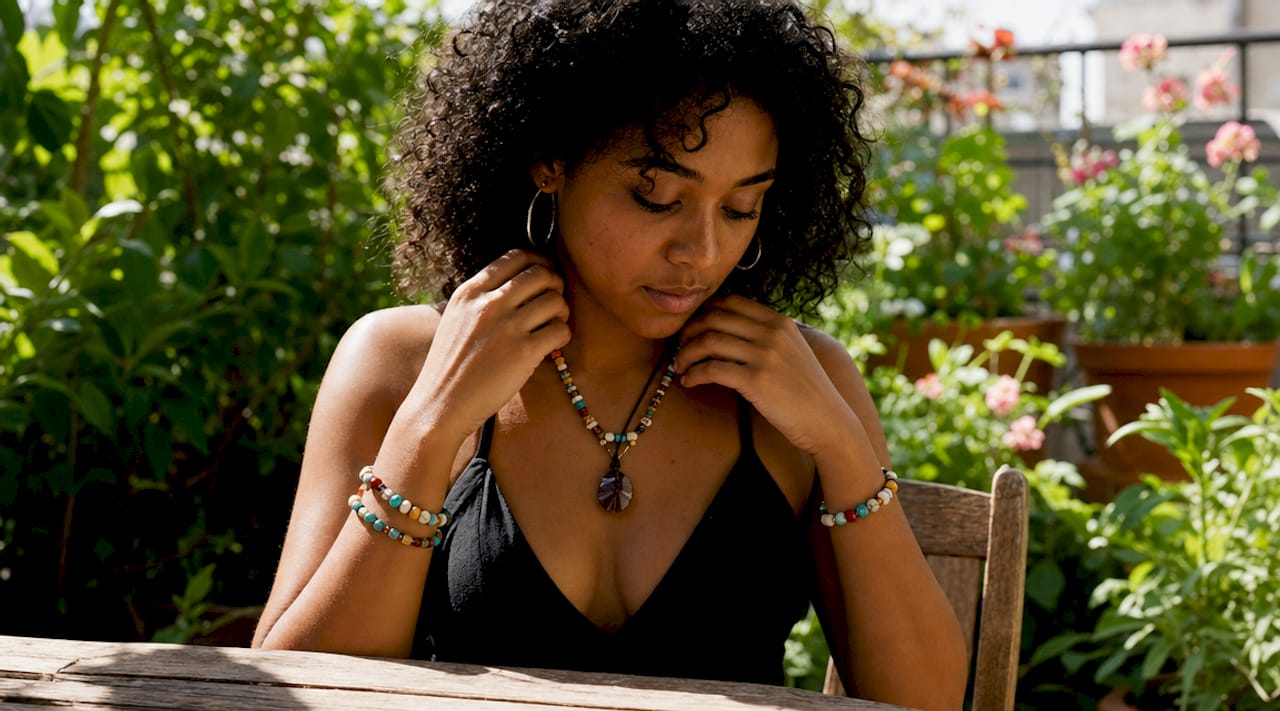
For office environments, the standard shifts slightly toward clean, professional designs. Avoid oversized or loud pieces that distract in meetings. A structured pendant necklace or small hoop earrings reads as polished without being overdressed. Moissanite earrings from Superjeweler offer the sparkle of a diamond at a fraction of the cost, making them a smart choice for professional settings where you want presence without excess.
For festivals, family functions, and social events, bolder jewelry works well because the environment supports more visual energy. This is where layered necklaces, statement earrings, and stacked bracelets earn their place. Fashion jewelry’s affordability means you can experiment with bold or minimal looks without long-term commitment or regret, which makes it ideal for trend-driven occasions.
For weddings and formal events, heavier looks are appropriate, but balance still applies. Combining fashion jewelry with one fine piece, such as a diamond pendant or a pearl bracelet, grounds the look and adds credibility. High or complex necklines, like turtlenecks or heavily embellished bodices, call for skipping necklaces entirely and focusing on earrings or bracelets instead. That shift creates a more editorial, intentional result.
Key takeaways
Effective fashion jewelry styling comes down to one principle: choose a single focal point and let every other piece support it, not compete with it.
| Point | Details |
|---|---|
| Focal piece first | Pick one statement zone (neck, ears, or wrists) and keep all other pieces minimal. |
| Layer by length | Use 14 to 16 inch, 18 to 20 inch, and 22 to 24 inch chains to build a clean, spaced stack. |
| Match metals to undertones | Cool undertones suit silver and white gold; warm undertones suit yellow gold. |
| Dress for the occasion | Match jewelry weight to event formality, from thin studs for daily wear to bold layers for events. |
| Neckline drives the choice | Complex or high necklines call for earrings or bracelets instead of necklaces. |
Why I stopped trying to wear everything at once
I spent years thinking more jewelry meant more style. A statement necklace, bold earrings, stacked rings, and three bracelets on one wrist. The result was never the editorial maximalism I was going for. It was noise.
The shift happened when I started thinking about a “dominant zone.” Every outfit gets one zone where the jewelry speaks loudly. Everything else stays quiet. That single habit changed how I get dressed more than any trend or purchase ever did.
What I’ve also found is that mixing one vintage piece with modern jewelry creates more personality than a perfectly matched set ever could. A 1970s gold chain layered under a contemporary geometric pendant tells a story. A full matching set from the same collection tells you someone bought a set.
The other thing worth saying: maximalism in jewelry is not about wearing everything. It’s about knowing where your personal visual limit is and choosing where emphasis lands. Some people can carry a full ear of climbers and a layered neck stack. Most people look better with one of those, done well.
Comfort matters too. If you’re adjusting your necklace every ten minutes or your earrings are pulling, you won’t wear the look confidently. Confidence is the actual accessory. The jewelry just frames it.
— Andrew
Build your jewelry wardrobe with Superjeweler

Superjeweler carries an extensive selection of fashion jewelry designed for exactly the styling principles covered in this guide. From delicate layering chains and bold statement earrings to coordinating sets and personalized jewelry pieces that add a personal signature to any look, the catalog covers every occasion and price point. The Martha Stewart Jewelry Collection at Superjeweler offers timeless, elegant pieces that work as strong focal points or refined supporting accessories. For those building a complete jewelry wardrobe, Superjeweler’s affordable fine jewelry options mean you can invest in quality pieces without sacrificing the flexibility to experiment with trends.
FAQ
What is the easiest way to start layering necklaces?
Start with three chains at different lengths: 14 to 16 inches, 18 to 20 inches, and 22 to 24 inches. Keeping them spaced 3 to 4 inches apart prevents tangling and creates clear visual separation.
Can you mix gold and silver jewelry in one look?
Yes, mixing metals works when you maintain consistent finishes across pieces. Pairing polished gold with polished silver reads as intentional; mixing polished with matte finishes looks accidental.
How do you choose jewelry for a high neckline?
Skip the necklace entirely with high or heavily detailed necklines. Focus on earrings or bracelets instead, which creates a more balanced and editorial result.
What jewelry works best for the office?
Clean, structured pieces like small hoops, simple pendants, and stud earrings work best in professional settings. Avoid oversized or loud pieces that draw attention away from your presence.
How do you know which metal suits your skin tone?
Use the vein test: blue or purple veins indicate cool undertones that suit silver and white gold, while green veins indicate warm undertones that suit yellow gold. Neutral undertones work well with rose gold.
Recommended
- Diamond necklace styling guide: elevate every look
- Affordable Jewelry Shopping Guide for Quality Finds
- 7 Affordable Jewelry Gift Ideas for Stylish Occasions
- Fashion Necklaces | SuperJeweler
