Most custom engagement rings cost between $2,500 and $8,000, with the center stone eating up roughly 50% to 75% of that total. Entry-level builds with lab-grown stones can land under $1,500. Premium builds with large natural diamonds routinely clear $10,000. The center stone is the single biggest lever in almost every quote you’ll get, which means it’s also the fastest place to cut cost without gutting the ring’s presence.
The 2026 average engagement ring spend sits around $5,500, though plenty of couples spend well below that and still walk away with a ring that photographs beautifully. If your budget is the constraint, not the design, the quickest move is swapping a natural diamond for a lab-grown one or dropping a fraction of a carat in size.
- Entry-level custom: under $1,500, typically lab-grown center stone, simple solitaire, sterling silver or 10k gold
- Mid-range custom: $2,500 to $8,000, natural or lab-grown diamond, more setting detail, 14k gold or platinum
- Premium custom: $10,000+, larger natural diamond, intricate metalwork, hand-finishing
Quick fact: The center stone alone can represent 50% to 75% of a custom ring’s total cost, so that single decision shapes your entire budget more than metal, setting, or labor combined.
Table of Contents
- How Much Does a Custom Engagement Ring Cost at Each Budget Level?
- What Determines the Price on a Custom Ring Quote?
- What Can You Actually Get for $1,000, $3,000, $5,000, or $10,000?
- Which Choices Save the Most Without Hurting Appearance?
- How Long Does a Custom Ring Take, and What Extra Fees Should You Expect?
- What Should You Ask a Jeweler Before Approving a Custom Quote?
- How SuperJeweler Helps You Budget for a Custom-Style Ring
- What matters most when pricing out a custom ring is knowing your center stone choice before anything else.
- Why the “Save on Everything Equally” Advice Misses the Point
- Start Your Custom-Style Ring Search With a Clear Budget
- Sources
How Much Does a Custom Engagement Ring Cost at Each Budget Level?
Knowing the range is one thing. Knowing what that range actually buys you is what lets you shop with confidence instead of guessing.
At the low end, under $1,500, you’re generally looking at a lab-grown diamond or a colored gemstone center stone under a carat, set in a simple prong or bezel setting. Metal is usually sterling silver, gold vermeil, or 10k gold to keep costs down. You won’t get elaborate filigree or a wide halo of accent stones at this level, but you can still get a genuine diamond ring that looks sharp in person and in photos.
The mid-range is where many custom orders fall, featuring moderate stone sizes, good cut quality, and a variety of setting styles such as halos or pavé bands. Metal typically moves up to 14k gold or platinum here. This is also the range where the difference between lab-grown and natural diamonds becomes most visible in your quote, since a natural stone of comparable size and clarity can cost several times more.
Premium custom rings often include larger natural diamonds with high-quality grades, set in precious metals with intricate hand craftsmanship, making labor and design complexity more significant contributors to the total cost.
A few things push any of these ranges around:
- Stone quality — two one-carat diamonds can differ in price by thousands of dollars depending on cut grade and clarity.
- Design complexity — hand-engraving, milgrain detail, and multi-stone settings all add labor hours.
- Regional pricing — jewelers in major metro markets often quote higher labor rates than smaller workshops.
Keep in mind that there’s no fixed spending rule that applies to every buyer. The old “three months’ salary” guideline was an advertising invention, not a financial principle, and it’s worth ignoring entirely when you’re building a budget that fits your actual life.
- Under $1,500: lab-grown stone, simple setting, silver or 10k gold
- $2,000 to $7,000: 0.75 to 1.5 carat stone, halo or pavé detail, 14k gold or platinum
- $10,000+: 1.5+ carat natural diamond, platinum, hand-finished detailing
What Determines the Price on a Custom Ring Quote?
A custom ring quote is really several smaller costs stacked together, and the center stone almost always sits at the top of that stack.
Center stone: the biggest line item by far
Carat weight, cut quality, color grade, and clarity together determine what you pay for the stone itself, and this line item commonly makes up 50% to 75% of your total cost. Cut quality matters more than most buyers expect. A well-cut diamond a size smaller can look bigger and brighter than a poorly cut stone with more carat weight, because cut governs how light moves through the stone.
Lab-grown versus natural is the other major fork in this line item. A lab-grown diamond can cost 60% to 80% less than a natural stone of comparable size and grade, since lab-grown stones skip the mining, scarcity premium, and distribution markup baked into natural diamond pricing. Chemically and optically, the two are extremely close. Value-wise, they’re not close at all.
Accent stones, setting, and metal
Once the center stone is chosen, accent stones (melee diamonds in a halo or pavé band) and metal weight are the next biggest variables. A simple solitaire in 14k gold might use half a gram of accent stones and a modest metal weight. A wide halo with a diamond-set band can add dozens of small stones and noticeably more metal, both of which show up as separate charges on a detailed quote.
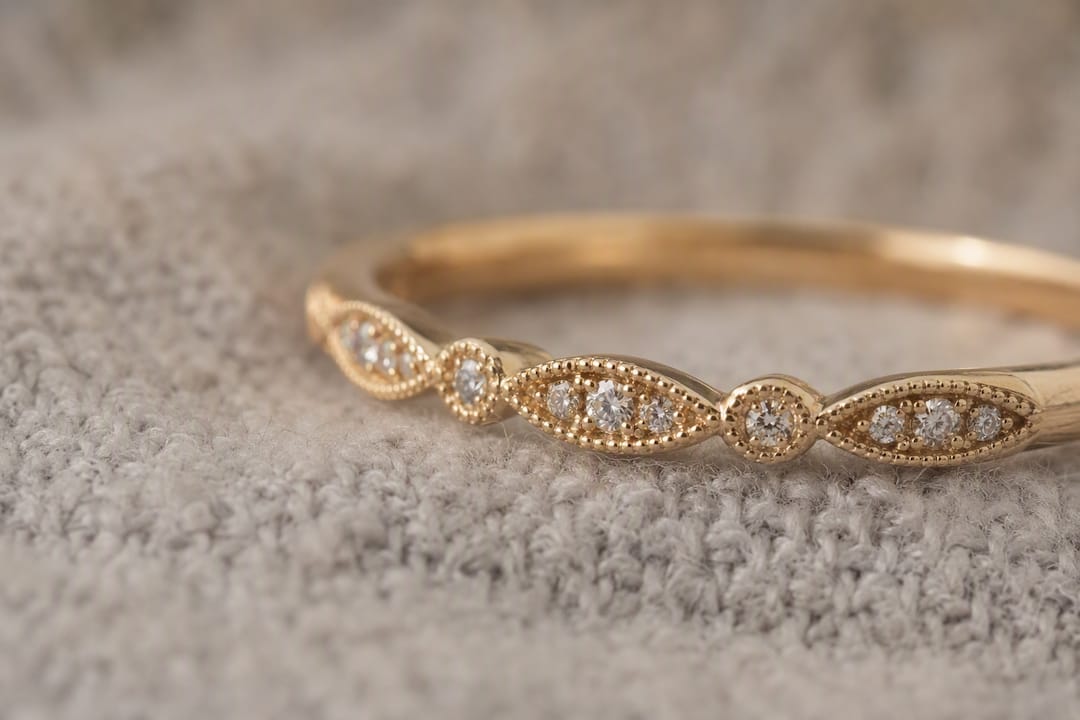
Platinum costs more per gram than gold, and 18k gold costs more than 14k, so metal choice alone can shift your total by several hundred dollars depending on ring size and band width.
Fixed costs that show up on almost every quote
Beyond the visible design choices, most custom orders carry a set of costs that don’t change much no matter what ring you’re building:
- Labor and casting fees — the physical work of turning a design into a finished ring
- CAD design fee — often $50 to $150, and many workshops credit this fee toward your final price if you move forward with the order
- Certification — a GIA or equivalent grading report for the center stone, typically $50 to $300 depending on carat size
- Appraisal — a separate document for insurance purposes, usually $50 to $100
- Insured shipping — often $30 to $75 for a ring of meaningful value
None of these fixed costs move dramatically between a $1,500 ring and a $10,000 ring. What moves is the stone and the metal, which is exactly why workshop-level cost breakdowns consistently show labor holding steady while stone and metal choices explain almost all the price variance between quotes. If a jeweler can’t tell you how much of your quote is stone versus labor versus fixed fees, that’s worth asking about directly before you commit.
What Can You Actually Get for $1,000, $3,000, $5,000, or $10,000?
Numbers on a page don’t mean much until you attach them to a real ring. Here’s what each budget tier realistically buys.
- Around $1,000: a 0.5 to 0.75 carat lab-grown diamond in a classic solitaire or three-stone setting, 10k or 14k gold band. This is the sweet spot for buyers who want a genuine diamond ring without stretching their budget, and SuperJeweler’s cheap engagement ring category has real inventory in this exact range if you want to compare ready-made options against a custom quote.
- Around $2,500 to $3,000: a 1 carat lab-grown diamond with a modest halo, or a natural diamond closer to 0.5 carat with strong cut quality. This is also where an emerald cut or oval shape starts paying off, since fancy shapes can save 15% to 35% compared to a round stone of the same carat weight while often reading larger across the top of the stone.
- Around $5,000: a 1 to 1.5 carat natural diamond in platinum, or a 1.5 to 2 carat lab-grown stone with a fuller pavé band. Right around this price point is also where a 1 carat lab-grown diamond ring with a nicer setting starts to feel like real headroom instead of a stretch.
- $10,000 and up: a 2 carat or larger natural diamond, excellent cut grade, platinum setting, and often custom engraving or a design that would be difficult to source ready-made.
Pro Tip: If you want a stone to look bigger without paying for more carat weight, choose an elongated shape like oval, marquise, or pear, and pair it with a thin band. The stone reads larger against a narrower shank, and elongated cuts already show more visible surface area per carat than a round brilliant.
Where should you avoid overspending? Accent stones are usually the least noticed detail on a ring at arm’s length, so a smaller halo or a plain band often saves money with almost no visual cost. Where should you spend? Cut quality on the center stone, every time. It’s the one variable that affects sparkle more than any other single choice.
Custom is worth the premium when you want a specific stone shape, a family heirloom stone reset, or a design that simply doesn’t exist ready-made. If you’d be happy with a widely available solitaire or halo style, a ready-made ring will usually get you there faster and sometimes cheaper, since custom work in CAD form can run 10% to 30% less than a comparable branded ring, but hand-fabrication from scratch typically costs more than either option.
Which Choices Save the Most Without Hurting Appearance?
Not every savings tactic is worth the trade-off. Some cut cost with zero visual downside. Others quietly hurt resale value or long-term satisfaction.
Lab-grown diamonds are the clearest win on this list. You get 60% to 80% lower cost for a stone that’s optically and chemically identical to a natural diamond. The trade-off shows up mainly at resale, where lab-grown stones tend to hold less value on the secondary market than natural ones, largely because natural diamond scarcity supports higher resale demand. For a ring you’re planning to wear for decades rather than sell, that trade-off usually doesn’t matter much.
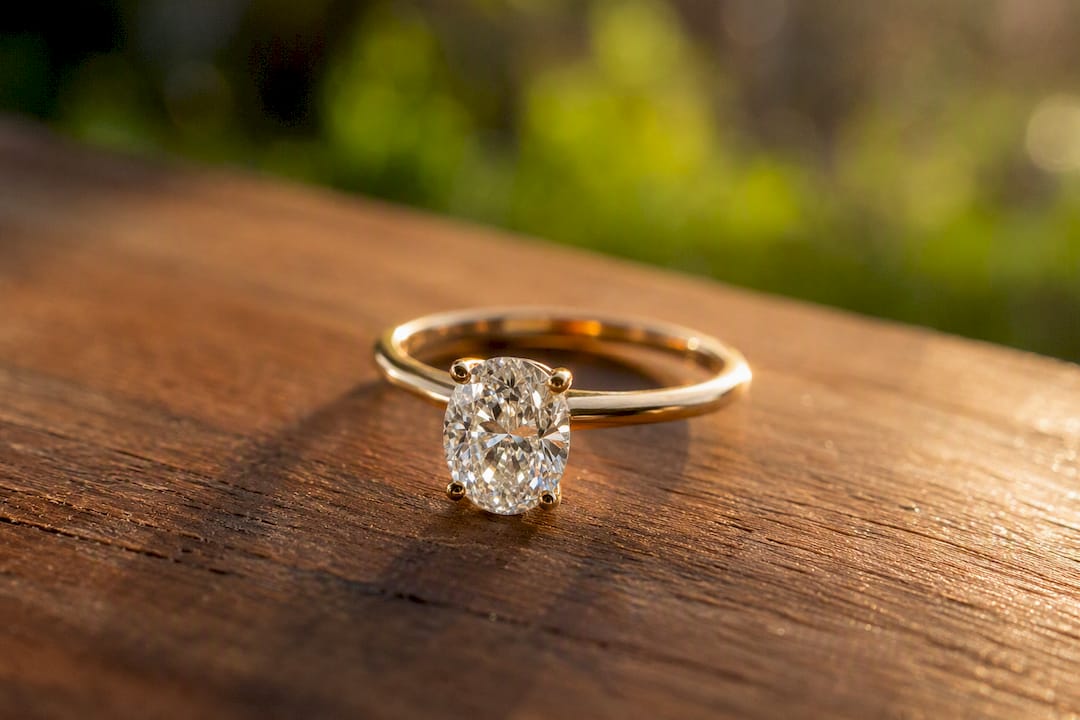
Shape selection is the second-biggest lever. Oval, cushion, and emerald cuts consistently cost less than round brilliants of the same carat weight, partly because round cuts waste more of the rough stone during cutting and partly because round is simply the most requested shape. Choosing a fancy shape is one of the few decisions that saves money and increases perceived size at the same time.
Setting choice matters more than people expect:
- A halo setting can make a smaller center stone look a full size category larger.
- Pavé bands add sparkle across the whole ring, not just the center, for relatively modest cost.
- A plain solitaire keeps labor cost low but puts all the visual weight on the center stone.
Buying direct from a custom workshop instead of a branded retail showroom also tends to lower cost, since you’re not paying for retail overhead or brand markup baked into the price of a comparable big-name ring.
Pro Tip: Ask whether your CAD design fee gets credited toward the final ring price if you move forward. Many workshops do this automatically, but it’s not always stated up front, so it’s worth asking before you approve the design.
How Long Does a Custom Ring Take, and What Extra Fees Should You Expect?
Most CAD-based custom rings take 5 to 8 weeks from consultation to delivery. Hand-fabricated rings, where a bench jeweler builds the piece manually rather than casting from a digital model, typically take longer, often 8 to 12 weeks depending on design complexity.
A few things stretch that timeline or add cost:
- Peak seasons — November through Valentine’s Day sees higher order volume, which can push production time toward the longer end of the range.
- Rush orders — if you need a ring faster than the standard timeline, budget an extra $400 to $600 as a realistic rush fee on top of the base quote.
- Resizing — a simple resize (one size up or down on a plain band) might run $30 to $75, but rings with pavé detail or eternity bands can cost significantly more to resize since stones near the shank have to be reset.
Beyond production, plan for an appraisal (usually $50 to $100) for insurance documentation, and factor in a jewelry insurance policy or rider on your homeowner’s or renter’s policy. Insurance typically runs a small percentage of the ring’s appraised value annually, and it’s worth having in place before the ring leaves the jeweler’s hands, not after.
What Should You Ask a Jeweler Before Approving a Custom Quote?
The custom process generally moves through six stages: consultation, stone sourcing, CAD design, prototype approval, casting, and final setting and finishing. Knowing this sequence helps you understand where in the process a quote is being generated and what’s still negotiable.
Before you approve any quote, ask these questions directly:
- What are the exact specs of the center stone (carat, cut grade, color, clarity, and lab-grown versus natural)?
- Is a grading certificate included, and from which lab?
- What’s included in the quoted price, and what’s billed separately (CAD fee, casting, setting, shipping)?
- What’s the resizing policy, and does it change if the ring has stone-set detailing near the band?
- What’s the warranty coverage, and is it in writing?
- What’s the estimated total ring weight, since metal weight affects final price?
Watch for a few red flags while you’re comparing quotes. Vague stone descriptions without specific grading language (“eye clean,” “near white”) instead of actual grade numbers are a sign to ask harder questions. A jeweler who won’t put a warranty in writing, or who resists breaking a quote into line items, is worth being cautious about. A transparent quote should let you see roughly what you’re paying for the stone versus the metal versus the labor, similar to the line-item breakdowns workshops commonly provide when asked directly.
How SuperJeweler Helps You Budget for a Custom-Style Ring
If the numbers above have you leaning toward a lab-grown center stone or a leaner budget tier, Superjeweler’s catalog is built around exactly that decision. The lab-grown diamond engagement ring collection covers the carat sizes and settings discussed throughout this guide, and it’s worth browsing before you finalize a custom quote, just to see what a comparable ring costs ready-made.
A few resources worth checking as you plan:
- The Superjeweler blog’s budgeting workflow guide for a step-by-step approach to setting your number before you shop.
Comparing a ready-made ring against a custom quote takes ten minutes and often reveals whether custom is genuinely worth the premium for your specific design, or whether a comparable piece already exists at a lower total cost.
What matters most when pricing out a custom ring is knowing your center stone choice before anything else.
| Point | Details |
|---|---|
| Center stone dominates cost | Expect the stone to represent 50% to 75% of your total quote, more than metal or labor combined. |
| Lab-grown cuts cost sharply | A lab-grown diamond can run 60% to 80% less than a natural stone of similar size and grade. |
| Shape affects both price and size | Oval, cushion, and emerald cuts often cost 15% to 35% less than round while looking larger. |
| Get itemized quotes | Ask for stone specs, CAD fees, and labor broken out separately before approving any custom order. |
| Compare before you commit | Superjeweler’s lab-grown and budget engagement ring categories offer a direct price comparison against any custom quote you receive. |
Why the “Save on Everything Equally” Advice Misses the Point
Most pricing guides tell you to trim costs across the board: smaller stone, simpler setting, cheaper metal. That advice treats every line item as equally important, and it isn’t. The center stone carries most of the cost and almost all of the visual impact, so it deserves almost all of your budgeting attention.
The overrated advice, in my view, is chasing carat weight above everything else. A well-cut 0.9 carat stone will out-sparkle a poorly cut 1.2 carat stone nearly every time, and buyers who fixate on hitting a round carat number often pay a premium for size they can’t actually see in the final piece. Cut quality and shape choice deserve the attention that carat weight usually gets.
What I’d prioritize first: decide lab-grown or natural before anything else. That single choice reshapes your entire budget more than every other decision combined, and it determines what kind of setting and metal you can afford without stretching. Everything downstream, shape, setting, metal, gets easier once that one call is made.
— Andrew
Start Your Custom-Style Ring Search With a Clear Budget
Superjeweler gives you a direct path to the exact price points covered in this guide, without the guesswork of waiting weeks on a custom quote to find out if it fits your budget. If you’ve landed on lab-grown as your savings lever, the lab-grown diamond engagement ring collection covers the same carat ranges and settings discussed above, already priced and ready to compare side by side.
For entry-level budgets, the cheap engagement rings under $1,000 category shows real inventory at the price point most custom workshops can’t touch once you factor in CAD fees and labor. And if you’re set on a specific carat size, the 1 carat lab-grown diamond deals page lets you see exactly what that size costs today, no consultation required. Browse either category now and compare the total against any custom quote in hand before you commit.
This article is general information, not a substitute for advice from a qualified financial advisor. Consult a qualified financial professional about your own circumstances before acting on anything here.
Sources
- How much does a diamond engagement ring cost in 2026?
- How much should a diamond engagement ring cost | GIA 4Cs
- Custom engagement rings: cost, timeline and process
- Custom engagement ring cost, line by line – STRUGA DESIGN
Recommended
- Trends in Engagement Rings 2026: Style, Stone, and Savings
- Why 50% of couples choose custom engagement rings in 2026
- Engagement Ring Shopping Timeline: Your 2026 Guide
- Engagement Ring Budgeting Workflow for Smart Shopping
