TL;DR:
- Birthstones are gemstones assigned to each birth month and symbolize personal identity and tradition. The modern list was standardized in 1912, but the tradition has ancient roots connecting gemstones to the zodiac and folklore. Choosing a birthstone based on personal meaning enhances its significance and cultural connection.
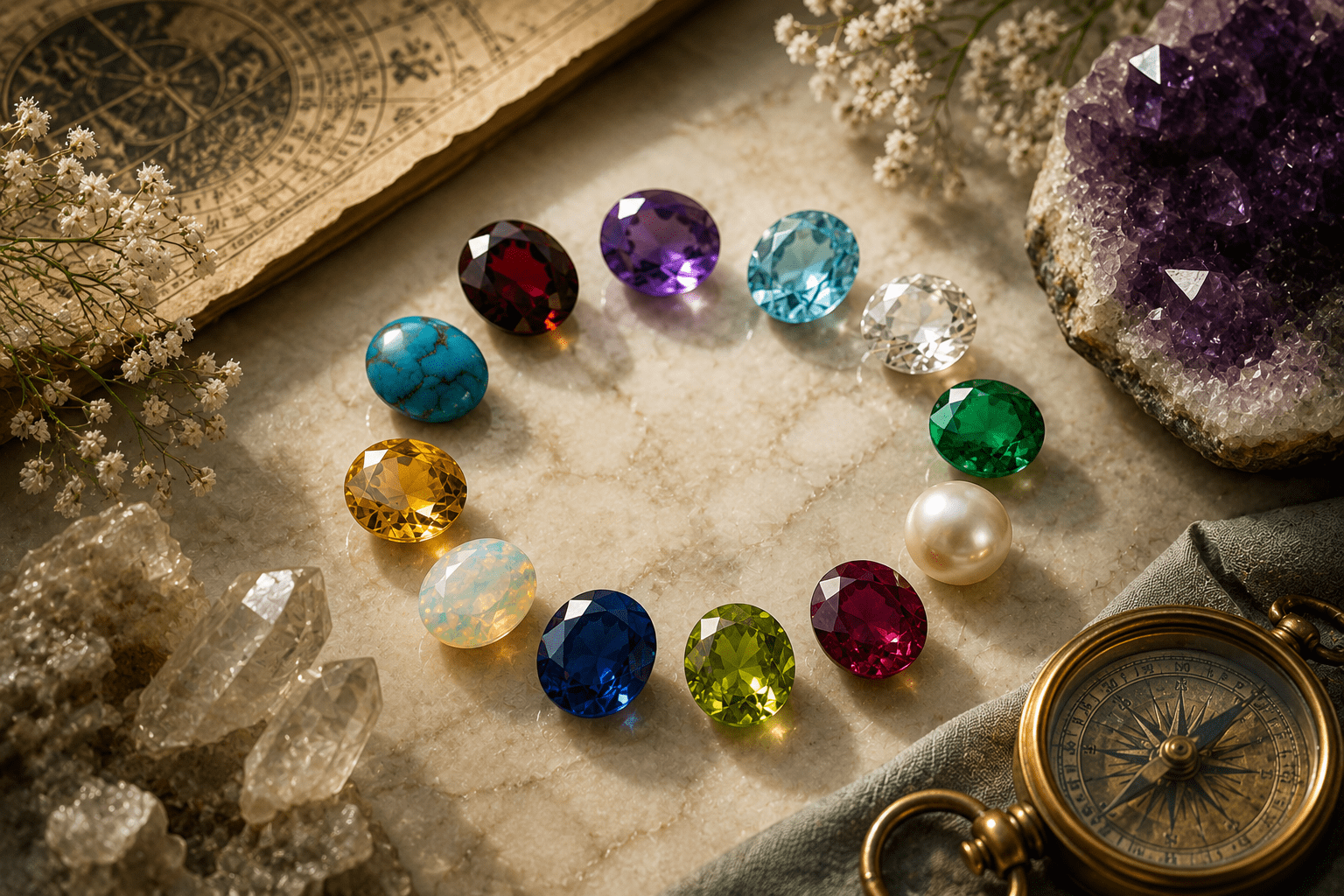
A birthstone is a gemstone assigned to a specific birth month, serving as a personal symbol of identity, tradition, and meaning. The concept spans thousands of years, connecting ancient ritual to modern jewelry gifting. Whether you’re shopping for yourself or choosing a meaningful gift, understanding birthstones adds real depth to the selection process.
What is a birthstone and where did the tradition begin?
Birthstones trace their roots to the ancient world, long before the standardized monthly charts most people recognize today. The earliest known connection between gemstones and human identity appears in the Hebrew Bible, where the breastplate of Aaron, the high priest, held twelve stones representing the twelve tribes of Israel. Each stone carried distinct symbolic weight for its tribe.
The link between gems and calendar months developed gradually. In the first century, historian Flavius Josephus drew an explicit connection between the twelve breastplate stones, the twelve months of the year, and the twelve signs of the zodiac. That observation planted the seed for what would eventually become the birthstone tradition as most people know it.
“Birthstones bridge ancient folklore and modern personal expression, merging myth and geological reality.” — mybirthstoneguide.com
For centuries, the tradition varied widely by culture and region. Different countries assigned different stones to the same month, and the rules shifted depending on whether a system followed the zodiac, the calendar, or local folklore. The lack of consistency made the tradition confusing for consumers and jewelers alike.
The modern solution came in 1912, when the National Association of Jewelers standardized the monthly birthstone list into a single official chart. That codification created the globally recognized system used today. The list has been updated a handful of times since, most notably in 2002 when tanzanite was added as a december stone.
- January: Garnet
- February: Amethyst
- March: Aquamarine
- April: Diamond
- May: Emerald
- June: Pearl or alexandrite
- July: Ruby
- August: Peridot
- September: Sapphire
- October: Opal or tourmaline
- November: Topaz or citrine
- December: Turquoise, tanzanite, or blue zircon
The standardized birthstone list is a 20th-century commercial convention rather than an ancient fixed tradition. That context matters because it frees you to choose stones based on personal meaning rather than rigid rules.
How do birthstones actually form?
Every birthstone starts deep inside the Earth, shaped by extreme heat and pressure over millions of years. The geological process behind each gem is as fascinating as the folklore surrounding it.
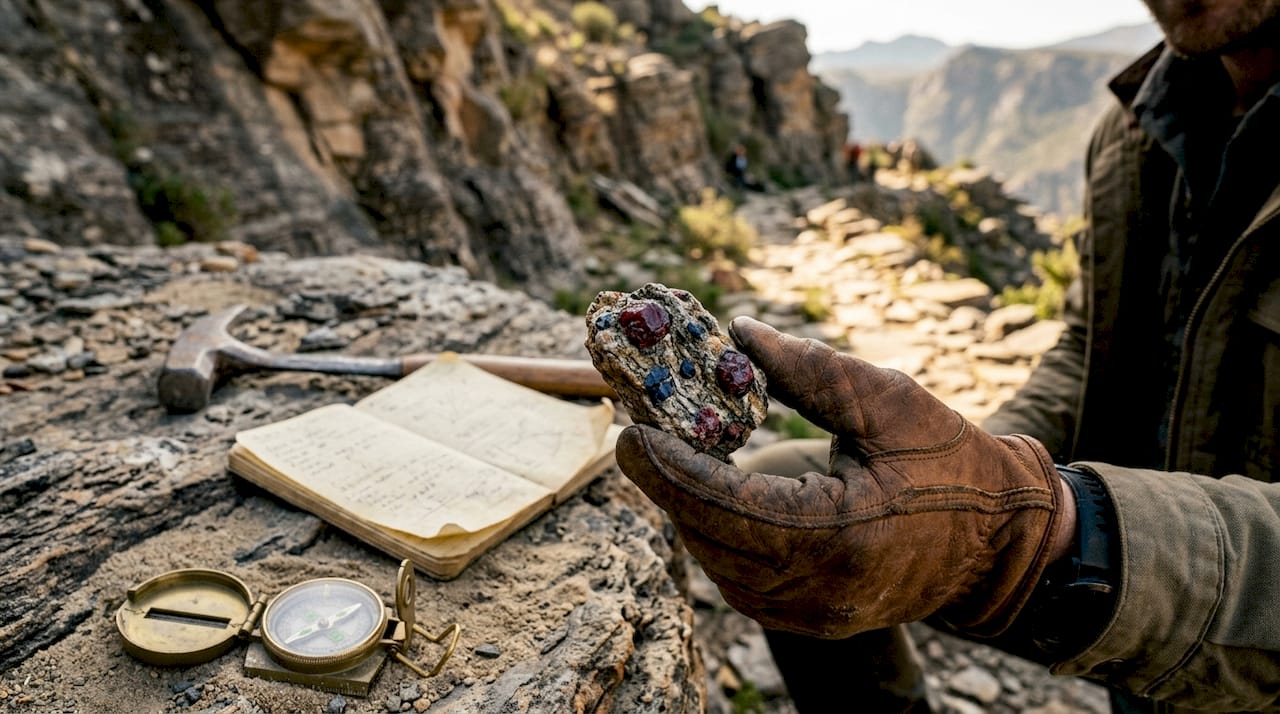
Garnet, the january stone, grows in aluminum-rich metamorphic rocks that have been subjected to intense heat. Sapphire, the september stone, forms in corundum deposits where trace amounts of iron and titanium create its signature blue color. Change those impurities and you get a different color entirely. The same mineral, corundum, produces ruby when chromium replaces iron and titanium.
| Birthstone | Month | Key Mineral | Color Source |
|---|---|---|---|
| Garnet | January | Silicate mineral group | Iron and manganese |
| Amethyst | February | Quartz | Iron impurities |
| Emerald | May | Beryl | Chromium and vanadium |
| Sapphire | September | Corundum | Iron and titanium |
| Ruby | July | Corundum | Chromium |
| Diamond | April | Carbon | Structural perfection |
Emeralds form in hydrothermal veins where beryllium-rich fluids cool slowly under pressure. Their characteristic green color comes from chromium and vanadium. The same process that creates an emerald also creates flaws called inclusions. Gemologists actually use those inclusions to confirm a stone is natural rather than synthetic.
Birthstones form under extreme pressure and temperature, which directly influences their color and rarity. That geological reality gives every stone a story that predates human history by millions of years.
Pro Tip: When buying a colored gemstone, ask for the country of origin. Colombian emeralds, Burmese rubies, and Kashmir sapphires are considered the finest examples of their type and command premium prices for good reason.
What do birthstone meanings actually represent?
Birthstone meanings come from a mix of ancient belief, cultural tradition, and personal interpretation. The meanings were never fixed by a single authority. They evolved across civilizations, each adding its own layer of symbolism.
Ancient peoples believed gemstones held real power. Soldiers wore garnet into battle believing it protected travelers from harm during long journeys. Amethyst, derived from the Greek word meaning “not intoxicated,” was believed to guard against drunkenness and promote mental clarity. Ruby was associated with passion, courage, and the life force of blood itself.
Modern birthstone meanings have shifted toward personal connection rather than supernatural protection. The symbolism that resonates most today includes:
- Garnet (January): Loyalty, friendship, and safe travel
- Amethyst (February): Clarity of mind, calm, and spiritual protection
- Aquamarine (March): Courage, communication, and serenity
- Diamond (April): Strength, eternal love, and clarity
- Emerald (May): Rebirth, growth, and good fortune
- Ruby (July): Passion, vitality, and protection
- Sapphire (September): Wisdom, loyalty, and truth
- Opal (October): Creativity, hope, and emotional expression
Modern consumers value birthstones for personal connection and family symbolism rather than strict adherence to traditional charts. That shift is significant. It means the “right” birthstone is the one that carries meaning for you, not necessarily the one assigned to your birth month.
Experts recommend that personal meaning and lifestyle fit often outweigh strict adherence to traditional birthstone charts. Choosing a stone because its color moves you or because it represents someone you love is entirely valid.
What are the most popular types of birthstone jewelry?
Birthstone jewelry covers a wide range of styles, from simple everyday pieces to elaborate custom designs. The format you choose shapes how the stone is worn and what story it tells.
Solitaire pendants are the most common starting point. A single stone set in gold or silver sits close to the heart, making it a natural gift for birthdays, anniversaries, or new mothers. Gemstone necklaces in this format are clean, versatile, and work across casual and formal settings.
Multi-stone rings and family pieces represent a more personal category. These designs incorporate the birthstones of multiple family members into a single piece. A mother’s ring, for example, might hold the stones of three children set side by side in rose gold. Birthstone jewelry can incorporate multiple stones to represent family members, creating a wearable record of the people who matter most.
| Jewelry Type | Best For | Common Metal Settings |
|---|---|---|
| Solitaire pendant | Personal wear, birthdays | Yellow gold, white gold, silver |
| Multi-stone ring | Family gifts, milestones | Rose gold, yellow gold |
| Charm bracelet | Collectors, layered looks | Sterling silver, gold fill |
| Stud earrings | Everyday wear | White gold, platinum |
| Birthstone bangle | Stackable gifting | Rose gold, yellow gold |
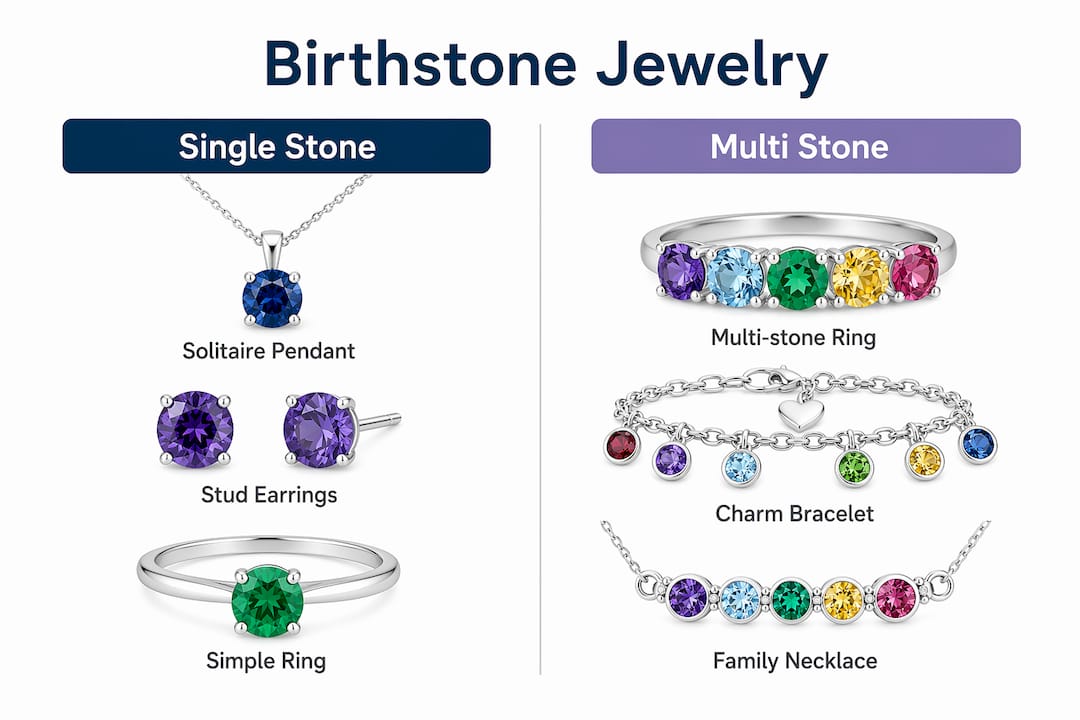
Charm bracelets offer a different kind of flexibility. Each charm can represent a different person, month, or memory. The bracelet grows over time, making it a living piece of jewelry rather than a static one. Personalized birthstone pieces in this format are among the most requested custom jewelry gifts.
Pro Tip: Rose gold settings warm up cooler-toned stones like aquamarine and amethyst beautifully. Yellow gold complements warmer stones like garnet, citrine, and ruby. Matching metal tone to stone color creates a more cohesive look.
How to choose and care for birthstone jewelry
Choosing birthstone jewelry well requires matching the stone’s properties to how you actually live. Not every gem is equally durable, and that matters for daily wear.
- Check the hardness rating. Gemstone hardness is measured on the Mohs scale from 1 to 10. Diamonds score a 10 and resist scratching from almost anything. Opals score around 5.5 to 6.5 and scratch easily. If you work with your hands, choose a harder stone like sapphire, ruby, or diamond for rings.
- Match the stone to the setting. Prong settings expose more of the stone, which looks beautiful but leaves it vulnerable to chips. Bezel settings wrap the stone in metal, offering better protection for softer gems like opal or turquoise.
- Consider your lifestyle and budget together. Rarer stones like alexandrite and tanzanite carry higher price tags. Amethyst, garnet, and citrine offer rich color at accessible prices. Choosing a less rare stone does not reduce the personal meaning of the piece.
- Clean gently and consistently. Most birthstones respond well to warm water, mild dish soap, and a soft brush. Avoid ultrasonic cleaners for stones with inclusions, fractures, or treatments. Emeralds, opals, and pearls are particularly sensitive to heat and chemicals.
- Store stones separately. Harder stones scratch softer ones when stored together. Keep each piece in its own pouch or compartment. Proper birthstone care extends the life and brilliance of any gemstone piece significantly.
- Schedule professional cleaning once a year. A jeweler can check prong integrity, re-polish the stone, and catch any damage before it becomes a costly repair.
Key Takeaways
Birthstones connect personal identity to geological history, and choosing one with intention makes the piece far more meaningful than following a chart alone.
| Point | Details |
|---|---|
| Ancient and modern roots | The birthstone tradition spans from Aaron’s breastplate to the 1912 National Association of Jewelers standardization. |
| Geology shapes meaning | Each stone’s color, rarity, and formation process adds real depth to its symbolic value. |
| Meanings are personal | Ancient beliefs in protection and power have evolved into modern expressions of family and identity. |
| Jewelry formats vary widely | Solitaire pendants, multi-stone rings, and charm bracelets each serve different gifting and personal wear needs. |
| Care determines longevity | Matching hardness to lifestyle and cleaning gently preserves a birthstone’s beauty for decades. |
Why birthstones still matter more than most people realize
I’ve spent years watching people walk into jewelry stores with a birth month in mind and walk out with a stone they don’t fully understand. That gap between tradition and knowledge is where most of the magic gets lost.
The part that surprises most people is how recent the “official” list actually is. The 1912 standardization was a commercial decision, not a discovery of ancient truth. Knowing that should feel freeing. It means the tradition is yours to interpret. I’ve seen customers choose alexandrite over pearl for june simply because the color-change phenomenon spoke to them personally. That choice is more meaningful than defaulting to the chart.
What I find most compelling is how birthstones sit at the intersection of Earth science and human storytelling. A sapphire that formed 150 million years ago in a metamorphic rock in Sri Lanka now sits on someone’s finger as a symbol of wisdom and loyalty. That layering of geological time and personal meaning is genuinely rare in any object you can hold.
My practical advice: start with the meaning, then work backward to the stone. If the symbolism of garnet for loyalty resonates with you, wear it regardless of your birth month. The personal connection to birthstone jewelry is what makes it worth wearing every day.
— Andrew
Birthstone jewelry at Superjeweler
Superjeweler carries an extensive selection of birthstone and gemstone jewelry across every major style and price point. From solitaire pendants to custom multi-stone family rings, the collection covers both classic and contemporary designs in yellow gold, white gold, rose gold, and sterling silver.

For shoppers who want to pair a birthstone piece with a milestone gift, Superjeweler also offers engagement rings under $1,000 with options for gemstone accents alongside center diamonds. The combination of a diamond ring with a birthstone accent is one of the most personal ways to mark an engagement. Free worldwide shipping and a satisfaction guarantee make it easy to shop with confidence.
FAQ
What is a birthstone, exactly?
A birthstone is a gemstone traditionally assigned to a person’s birth month, used as a personal symbol in jewelry and gifts. The modern monthly list was standardized in 1912 by the National Association of Jewelers.
Can I wear a birthstone that isn’t mine?
Yes. Personal meaning and aesthetic preference are valid reasons to wear any gemstone. Many people wear the birthstones of family members or choose stones based on color and symbolism rather than birth month.
Which birthstone is the rarest?
Alexandrite, the june alternative stone, is considered one of the rarest birthstones due to its color-change phenomenon and limited global supply. Tanzanite, the december stone, is also exceptionally rare and found only near Mount Kilimanjaro in Tanzania.
What birthstone jewelry is best for everyday wear?
Sapphire, ruby, and diamond rank among the hardest gemstones and hold up well to daily wear. Softer stones like opal, pearl, and turquoise are better suited to occasional wear or protective settings like bezels.
How do I find out my birthstone by month?
Match your birth month to the standardized chart: january is garnet, february is amethyst, march is aquamarine, april is diamond, may is emerald, june is pearl or alexandrite, july is ruby, august is peridot, september is sapphire, october is opal, november is topaz or citrine, and december is turquoise, tanzanite, or blue zircon.
Recommended
- What is birthstone jewelry? A 2026 guide to meaning
- Emerald Ring | May Birthstone | SuperJeweler.com
- May Birthstone
