TL;DR:
- Starting at least three months before your proposal allows enough time for research, customization, and resizing.
- Budget at least 70% for the center stone, prioritize cut quality, and only buy certified diamonds from reputable sources.
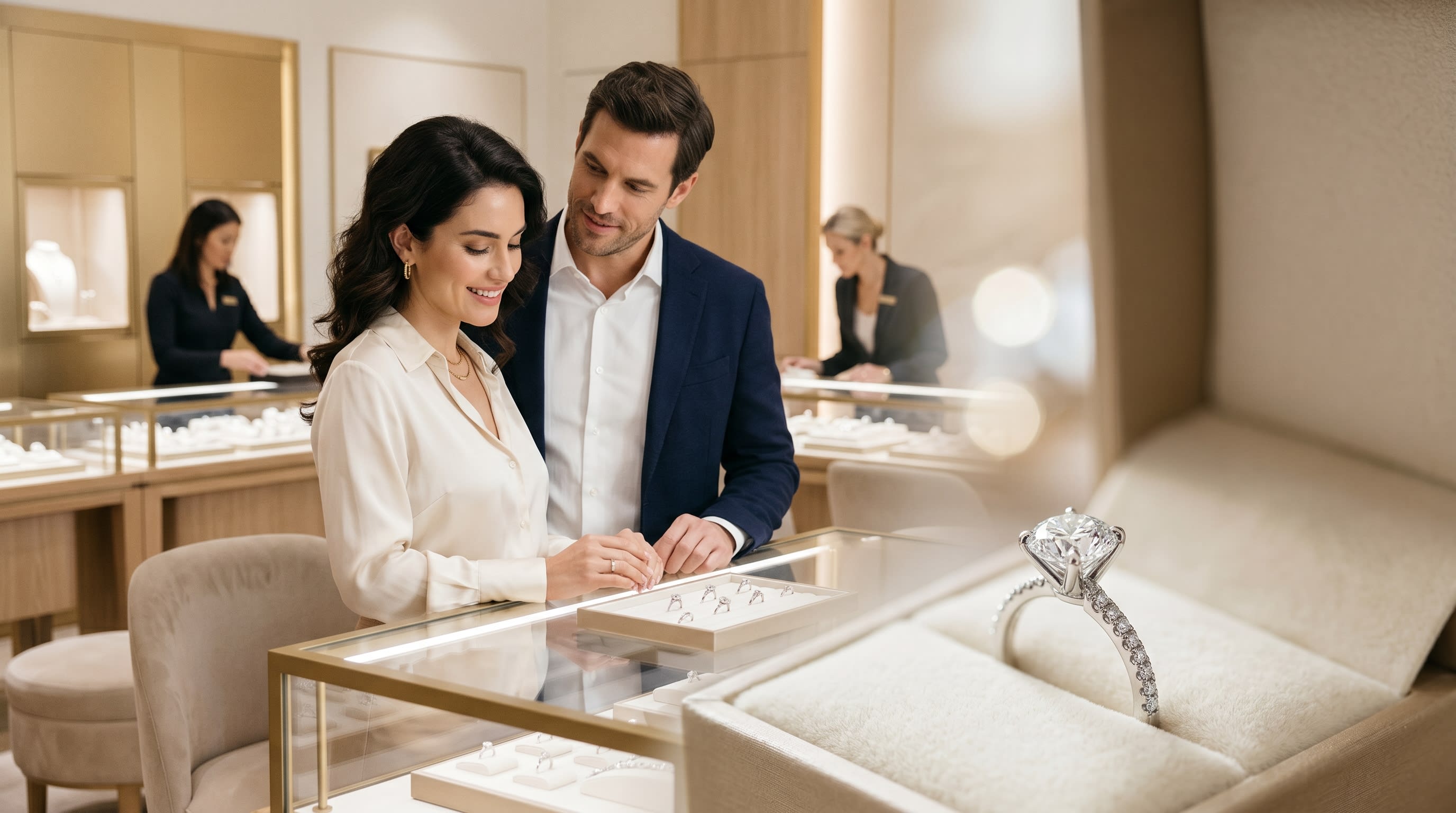
The engagement ring shopping timeline is the step-by-step schedule you follow from setting your budget to holding the finished ring in your hand. Start at least three months before your planned proposal date. That window gives you enough time to research styles, source a certified diamond, handle customization, and manage resizing without rushing any decision. Couples who plan ahead make better choices and spend less money. This guide breaks down every stage of the process so you can move through it with confidence.
1. How to set your budget before the engagement ring shopping timeline begins
Budget first. Every other decision flows from this number. The outdated “two months’ salary” rule has no basis in modern financial planning. Skip it entirely.
Most couples in 2026 spend between $3,000 and $8,000 on an engagement ring. That range covers a wide variety of styles, metals, and stone sizes. Where you land within it depends on your priorities, not a salary formula.
A proven budget allocation framework puts roughly 70% toward the center stone, 20% toward the setting, and 10% toward extras like resizing and engraving. That split keeps the most visible element of the ring as the focal point while leaving room for the details that make it personal.
Prices for the same ring can vary 20–40% between retailers. That gap is large enough to fund an upgrade in stone quality or setting style. Comparison shopping is not optional. It is one of the highest-return actions you can take in this process.
- Set a firm maximum before you visit any store or website
- Allocate 70% to the center stone, 20% to the setting, 10% to extras
- Compare at least three retailers before committing
- Factor in hidden costs: taxes, engraving, resizing, and insurance
Pro Tip: A smart budgeting workflow before you start shopping can reduce your total shopping time by 30% and increase your satisfaction with the final choice. Write your budget down before you look at a single ring.
2. How to research ring styles and diamond quality
Style research takes longer than most people expect. Plan four to six weeks for this phase alone if you want a custom ring or a specific stone. Use that time to study the four Cs: cut, color, clarity, and carat.
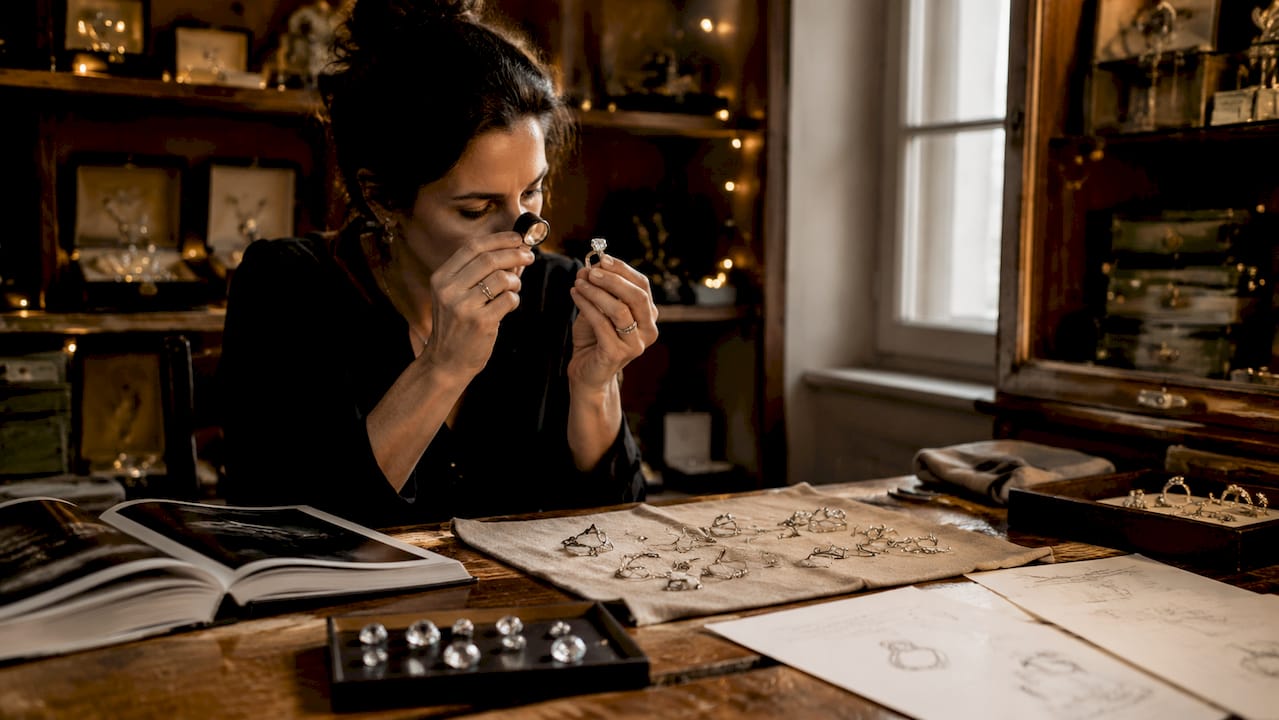
Cut quality is the most important of the four Cs because it is the only one fully controlled by human craftsmanship. A well-cut diamond reflects light brilliantly regardless of its size. A poorly cut stone looks dull even at a large carat weight. Prioritize cut above all else.
Certification is non-negotiable. Only buy a diamond that comes with a grading report from GIA (Gemological Institute of America), AGS (American Gem Society), or IGI (International Gemological Institute). Without one of those certificates, you have no verified information about what you are buying. Walk away from any seller who cannot provide one.
- Research solitaire, halo, pavé, and three-stone settings to identify what fits your partner’s style
- Prioritize cut grade: Excellent or Ideal ratings deliver the most brilliance
- Confirm the diamond’s certificate number matches the stone before purchasing
- Check the step-by-step buying guide for a full breakdown of grading criteria
Pro Tip: Determining your partner’s ring size discreetly is one of the trickiest parts of this process. Borrowing a ring they already wear on their ring finger works well, but finger sizes can vary by half a size or more between hands. When in doubt, size up. Resizing down is easier than sizing up.
3. Buying options and how each one affects your timeline
The method you choose to buy the ring changes your timeline significantly. Each path has real trade-offs in price, speed, and personalization.
| Buying option | Typical lead time | Price range | Best for |
|---|---|---|---|
| Ready-made, in-store | Same day to 1 week | Standard retail | Fast proposals, simple styles |
| Ready-made, online | 3–7 days shipping | 15–30% below retail | Budget-focused buyers |
| Semi-custom (setting + stone) | 2–4 weeks | Varies | Specific stone preferences |
| Fully custom design | 4–8+ weeks | Premium | Unique, one-of-a-kind rings |
Ready-made rings are the fastest option. You can walk out of a store the same day or receive a ring within a week from an online retailer. The trade-off is limited personalization. You choose from existing inventory rather than designing something original.
Custom rings require the most lead time. A standard custom piece takes 4–6 weeks to complete, and complex designs can push past eight weeks. The good news is that a 6–8 week window is genuinely sufficient for most custom work. You do not need to start a year in advance for a custom ring. You do need to start at least three months before the proposal to leave room for revisions and resizing.
Online retailers typically price rings 15–30% below traditional brick-and-mortar stores. That savings is real, but factor in shipping time and the return policy before you commit. A retailer with a generous return window and free resizing removes most of the risk from buying online.
4. How to customize your ring and what to expect
Customization is the stage where most timelines slip. Couples underestimate how many decisions are involved and how long each one takes to execute. Build this phase into your schedule deliberately.
The customization process typically involves choosing a metal (platinum, white gold, yellow gold, or rose gold), selecting a setting style, picking the center stone, and deciding on any accent stones or engravings. Each choice affects the others. A yellow gold setting, for example, pairs differently with near-colorless diamonds than a platinum setting does.
Lab-grown diamonds are worth serious consideration at this stage. They are chemically identical to mined diamonds and carry the same GIA and IGI certifications. They also cost significantly less per carat, which means your customization budget stretches further. If your priority is size and brilliance at a given price point, lab-grown stones deliver more of both.
Engraving adds one to three days to production time in most cases. It is a small addition to the timeline but a meaningful one to the ring. Decide on the inscription early so it does not delay your delivery date.
5. Final purchase steps before the proposal
The last phase of your ring shopping timeline covers verification, ordering, and preparation. Do not skip any of these steps, even when you are excited and ready to propose.
- Verify the certificate. Match the diamond’s grading report number to the stone physically or through the certifying lab’s online database. GIA and IGI both offer free certificate verification on their websites.
- Read the return policy. Understand the return window, condition requirements, and whether resizing voids the return option. Know this before you pay.
- Order with a buffer. Place your order at least two weeks before the proposal date. That window covers shipping delays, quality checks, and any last-minute adjustments.
- Plan for resizing. Resizing takes 1–2 weeks at most jewelers. If you are not certain of the size, build that time into your schedule rather than hoping the ring fits perfectly on proposal day.
- Confirm the warranty. A reputable retailer offers a warranty covering manufacturing defects. Get the terms in writing before the purchase is final.
Pro Tip: Eternity bands are difficult or impossible to resize because of the stones set all the way around the band. If you are pairing an engagement ring with an eternity-style band, get the size right the first time. Use a professional ring sizer, not a paper strip.
6. Proposal day preparation and the surprise factor
The ring is ready. Now make sure the proposal goes as planned. If you are planning a surprise, the logistics matter as much as the ring itself.
Keep the ring in its box and in a secure location until the day of the proposal. Extreme heat, humidity, and physical pressure can damage settings and loosen stones. A safe or a locked drawer works well. Avoid storing it in a car glove compartment or a coat pocket for extended periods.
If you are proposing in a specific location, confirm all logistics at least one week in advance. Venue reservations, photographers, and travel arrangements all need to be locked in before you finalize the proposal date. A surprise proposal in a destination location requires even more lead time for permits, vendor bookings, and travel coordination.
Have a plan for the ring if it does not fit. A simple “we will get it sized together” takes the pressure off the moment and turns resizing into a shared experience rather than a disappointment.
Key takeaways
A successful engagement ring purchase requires starting at least three months early, setting a firm budget, prioritizing cut quality, and verifying every diamond certificate before you pay.
| Point | Details |
|---|---|
| Start three months early | Three months covers budgeting, sourcing, customization, and resizing without rushing. |
| Budget before you browse | Allocate 70% to the center stone, 20% to the setting, and 10% to extras. |
| Prioritize cut quality | Cut affects brilliance more than carat weight and should be your top grading priority. |
| Demand certification | Only buy diamonds certified by GIA, AGS, or IGI. No certificate means no verified quality. |
| Build in resizing time | Resizing takes 1–2 weeks. Order at least two weeks before the proposal date. |
What I’ve learned about engagement ring timelines after years in the industry
Most people who stress out during ring shopping share one trait: they started too late. Three months feels like a long time when you first decide to propose. It disappears fast once you start making real decisions.
The couples I have seen make the best purchases are the ones who wrote down their priorities before they looked at a single ring. Not a vague list. A specific one. Stone shape, metal color, maximum budget, and whether customization matters more than speed. That clarity cuts through the noise of showrooms and product pages faster than any amount of browsing.
The certification rule is the one I feel most strongly about. Jewelers who push back when you ask for a GIA or IGI certificate are telling you something important about the stone they are selling. Walk away. The diamond quality verification process takes ten minutes and protects a purchase that costs thousands of dollars. There is no good reason to skip it.
One more thing: do not let the surprise proposal pressure you into cutting corners on the timeline. A ring that arrives two days before the proposal with no time for resizing or inspection is a liability, not a gift. Start early. The proposal will be better for it.
— Andrew
Start your ring search at Superjeweler

Superjeweler carries a wide selection of certified engagement rings across every budget, style, and stone type. Every diamond comes with verified certification, and the site offers free shipping worldwide with clear return policies so you can shop with confidence. If you are working with a tighter budget, the affordable diamond rings section features real diamonds under $1,000. For buyers interested in maximizing size and brilliance per dollar, Superjeweler’s lab-grown diamond rings offer certified stones at a fraction of the cost of mined equivalents. Start browsing early and give yourself the time to choose well.
FAQ
How far in advance should I shop for an engagement ring?
Start at least three months before your planned proposal date. That window covers budgeting, style research, customization, and resizing without any last-minute pressure.
How long does a custom engagement ring take to make?
Most custom rings take 4–6 weeks to complete. Complex designs can take 8 weeks or more, so factor that into your overall timeline.
What certification should my diamond have?
Only purchase diamonds certified by GIA, AGS, or IGI. These are the recognized grading authorities, and their certificates verify the stone’s cut, color, clarity, and carat weight independently.
How much should I spend on an engagement ring?
Most couples spend between $3,000 and $8,000 in 2026. Allocate roughly 70% to the center stone, 20% to the setting, and 10% to extras like resizing and engraving.
How do I find out my partner’s ring size without spoiling the surprise?
Borrow a ring your partner already wears on their ring finger and have a jeweler measure it. Keep in mind that finger sizes can differ by half a size or more between hands, so when uncertain, size up slightly.
Recommended
- Step-by-step engagement ring buying guide for couples
- Engagement Ring Budgeting Workflow for Smart Shopping
- Trends in Engagement Rings 2026: Style, Stone, and Savings
- How to Choose an Engagement Ring Step by Step Easily
