TL;DR:
- A pavé setting securely places small diamonds tightly together across a metal surface using tiny metal beads, creating a continuous sparkle. The process involves precise handwork, drilling tiny holes, and securing each stone with individual beads, making it highly labor-intensive. High-quality pavé enhances brilliance, makes center stones appear larger, and requires regular professional maintenance to preserve its beauty.
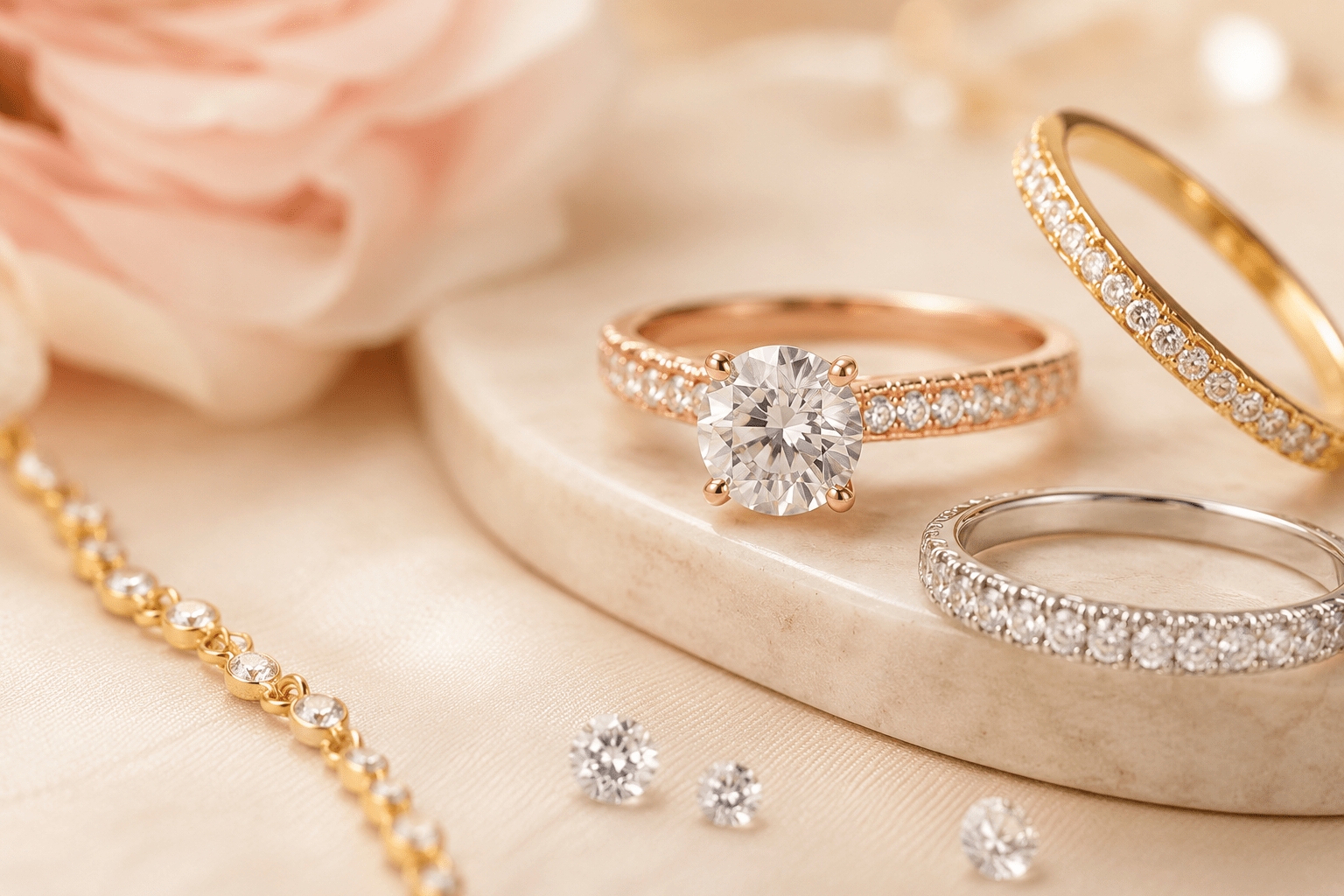
A pavé setting is defined as a jewelry technique where small diamonds are set flush and tightly together across a metal surface, secured by tiny raised metal beads, creating the illusion of a continuous, unbroken field of sparkle. The term comes from French, where “pavé” means “paved,” describing how the stones cover the metal like cobblestones on a road. This technique is one of the most labor-intensive in fine jewelry, requiring a jeweler to drill individual holes and hand-form each securing bead with sub-millimeter accuracy. Pavé settings appear across engagement rings, wedding bands, halos, and accent pieces, and they remain a top choice for buyers who want maximum brilliance without a heavy, bulky look.
What is pavé setting and how does the craftsmanship work?
The pavé setting process starts with the jeweler drilling a series of tiny, precisely spaced holes into the metal band. Each hole is sized to accept a small melee diamond, typically under 0.02 carats, so the stones sit nearly flush with the metal surface. The jeweler then places each stone individually and uses a graver tool to push up tiny beads of metal from the surrounding surface to lock every diamond in place. This is entirely done by hand, and each stone requires individual securing with no shortcuts available.
Precision is the defining factor in pavé quality. According to 2025–2026 industry standards, even slight inconsistencies in stone placement disrupt the surface and reduce the overall sparkle. A single stone set even a fraction of a millimeter too high or too low creates a visible break in the uniform shimmer that defines a well-executed pavé band.
Metal choice plays a direct role in the outcome. Platinum allows smaller, stronger prongs than softer gold alloys, which means the securing beads can be finer and less visible while still holding stones securely. Gold alloys, particularly 14k or 18k yellow or rose gold, are also used but require slightly larger beads to achieve the same holding strength.
Compared to a prong or bezel setting, pavé demands far more time and skill. A standard solitaire ring with a single prong-set stone takes a fraction of the bench time that a full pavé band requires. That labor investment is reflected directly in the price.
- The jeweler drills individual holes for each stone across the metal surface.
- Each melee diamond is placed into its hole and checked for height consistency.
- A graver tool raises tiny metal beads from the surrounding metal to grip each stone.
- The jeweler polishes the beads and smooths the surface for a finished look.
- A final inspection checks every stone for security and uniform height.
Pro Tip: Ask your jeweler or retailer how many stones are set per millimeter on the band. A higher stone count per millimeter signals finer craftsmanship and a more continuous sparkle effect.
What are the main types of pavé settings?
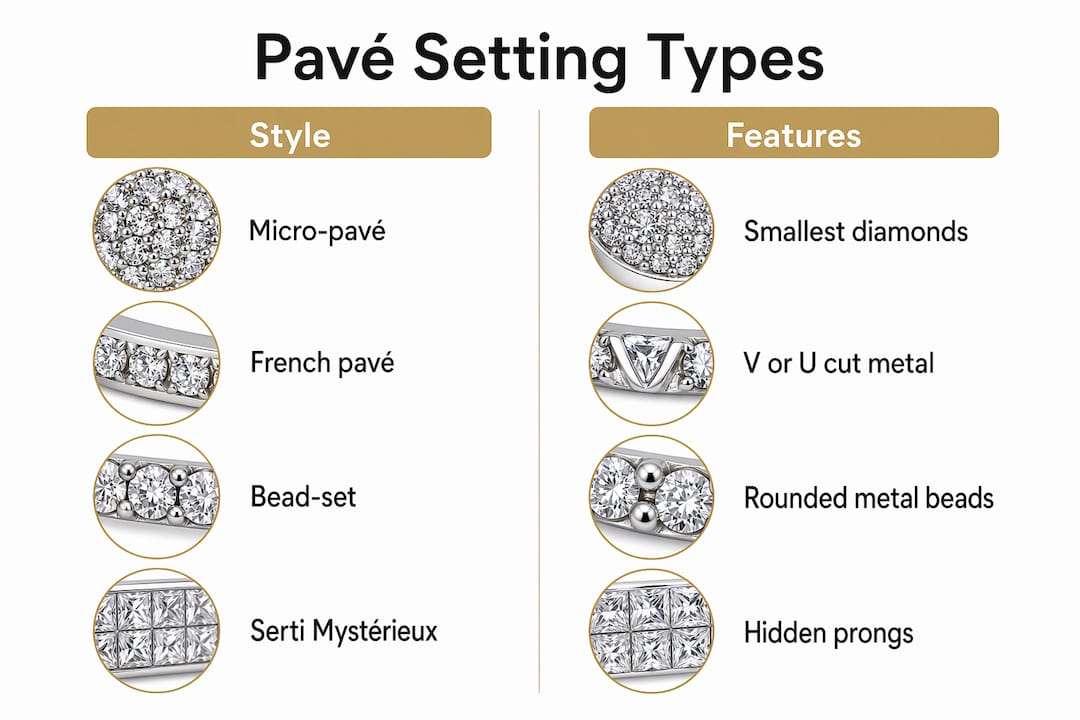
Four primary pavé variations exist in the fine jewelry market, each with distinct visual characteristics, crafting demands, and price points. Understanding these differences helps you match a style to your budget and aesthetic goals.
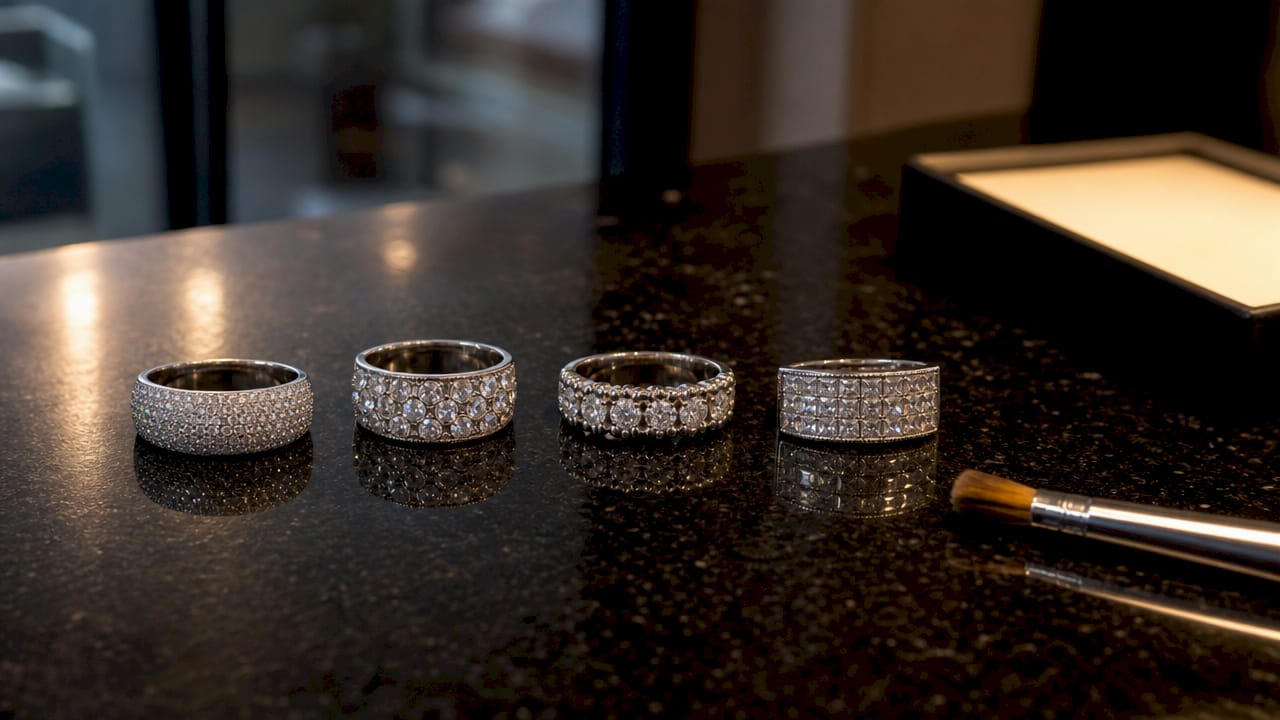
Micro-pavé uses the smallest possible melee diamonds and extremely fine metal beads. The result is a delicate, almost lace-like surface that works well on thin bands and halo settings. It requires the highest level of hand skill and commands a premium price.
French pavé (also called U-cut pavé) features small V-shaped or U-shaped cuts in the metal between stones. This allows more light to enter from the sides, increasing brilliance. The visual effect is slightly more open than standard bead-set pavé.
Bead-set pavé is the classic and most widely used form. Rounded metal beads grip each stone from multiple sides. It is durable, versatile, and appears on everything from engagement ring shanks to eternity bands.
Serti Mystérieux is an advanced technique where the prongs are hidden beneath the stones, leaving no visible metal between diamonds. This creates the most seamless surface of all pavé styles and is associated with high-end fine jewelry houses. The crafting complexity and cost are significantly higher than standard pavé.
| Style | Visual effect | Typical use | Crafting complexity |
|---|---|---|---|
| Micro-pavé | Ultra-delicate, fine sparkle | Thin bands, halos | Very high |
| French pavé | Open, brilliant, light-filled | Engagement shanks | High |
| Bead-set pavé | Classic, uniform sparkle | Bands, accents | Moderate |
| Serti Mystérieux | Seamless, no visible metal | Luxury fine jewelry | Extremely high |
Price tracks directly with complexity. Micro-pavé and Serti Mystérieux pieces cost more because they require more bench time and a higher rejection rate for stones that do not meet the tight size tolerances.
What are the benefits of pavé settings?
Pavé settings deliver a specific visual result that no other technique replicates. The small diamonds reflect light collectively, producing an intense, all-over sparkle that makes the entire ring surface appear to glow. This effect is distinct from a single large diamond, which concentrates brilliance in one focal point.
The setting also enhances the center stone in an engagement ring. When a pavé band surrounds a solitaire or halo diamond, the continuous sparkle of the band draws the eye toward the center while adding perceived size and visual weight to the overall piece. The result is a ring that looks significantly larger and more elaborate than its carat weight alone would suggest.
High-quality pavé settings achieve near invisibility of metal, which is the defining mark of superior craftsmanship. When the metal beads are small and well-formed, the eye sees only diamonds. That seamless appearance is what buyers are paying for when they choose pavé over a simpler channel or prong-set band.
Key benefits of choosing a pavé setting:
- Maximum brilliance: The collective light reflection from dozens of small stones creates continuous sparkle across the entire band.
- Center stone enhancement: Pavé bands make the center diamond appear larger and more prominent without increasing its actual carat weight.
- Design versatility: Pavé works as a full band, a halo accent, a partial shank, or a standalone eternity ring.
- Reduced snagging risk: When stones sit low and beads are smoothed, pavé is practical for active wearers with proper maintenance.
- Elegant appearance: The absence of visible prongs gives pavé a cleaner, more refined look than traditional multi-prong settings.
Pro Tip: When evaluating a pavé ring in person or in photos, look at the band from the side. A quality pavé setting shows a nearly flat, uniform surface with no stones sitting higher or lower than their neighbors. Uneven stone height is the clearest sign of poor craftsmanship.
How do you care for and maintain pavé jewelry?
Pavé settings require more maintenance attention than simpler settings because of the number of stones and the small spaces between them. Dirt, lotion, and soap accumulate in the gaps between stones faster than in a prong or bezel setting. Professional cleaning preserves sparkle and prevents stone loss by removing buildup that can weaken the metal beads over time.
A professional jeweler should inspect a pavé ring at least once a year. The inspection checks for loose beads, stones that have shifted, and any metal wear that could compromise the setting. Catching a loose stone early costs far less than replacing a lost diamond after the fact.
Metal choice affects long-term maintenance needs. Platinum work-hardens over time, which actually strengthens the prongs with wear. Gold alloys, by contrast, can soften slightly with repeated impact, making the beads more susceptible to loosening. Buyers who wear their rings daily should factor this into their metal selection.
Care practices that extend pavé ring life:
- Remove pavé rings before activities involving impact, chemicals, or abrasive surfaces, including gym workouts, gardening, and cleaning with household products.
- Clean at home with a soft brush, warm water, and mild dish soap, then rinse thoroughly and pat dry. Avoid ultrasonic cleaners unless a professional confirms the setting is secure.
- Store pavé rings separately from other jewelry to prevent scratching the metal beads or dislodging stones.
- Schedule a professional inspection and cleaning every 12 months, or immediately if a stone appears loose or the ring catches on fabric.
Verifying diamond quality before purchase also matters for pavé buyers. Consistent melee diamond sizes are critical because sub-millimeter size differences disturb the uniform sparkle and surface evenness that define a quality pavé piece. Ask for confirmation that the melee stones are matched in size and cut grade.
Key Takeaways
A pavé setting delivers maximum brilliance through hand-set melee diamonds secured by tiny metal beads, and its quality depends entirely on the consistency of stone placement and the skill of the jeweler.
| Point | Details |
|---|---|
| Craftsmanship defines quality | Each stone is hand-set individually; even sub-millimeter inconsistencies reduce sparkle and surface uniformity. |
| Four main style variations | Micro-pavé, French pavé, bead-set pavé, and Serti Mystérieux differ in complexity, cost, and visual effect. |
| Metal choice matters | Platinum allows finer, stronger beads than gold alloys, improving durability and the seamless look. |
| Maintenance is non-negotiable | Annual professional inspections and regular gentle cleaning prevent stone loss and preserve brilliance. |
| Benefits go beyond looks | Pavé enhances center stone size perception and reduces snagging risk when stones sit low and beads are smooth. |
Why pavé craftsmanship deserves more credit than it gets
Most buyers focus on the center diamond when shopping for an engagement ring. The pavé band is treated as a background detail. That framing gets the value equation completely wrong.
The pavé setting is where the majority of the jeweler’s bench time goes. A skilled setter can spend hours on a single band, placing dozens of stones by hand, forming each bead, and checking uniformity under magnification. The center stone, by contrast, is simply dropped into a pre-made prong head. The craftsmanship story of a pavé ring lives in the band, not the solitaire.
I’ve seen buyers choose a pavé ring based on photos alone, then feel disappointed when the ring arrives and the band looks uneven or dull. That outcome almost always traces back to inconsistent melee stone sizing or rushed bead formation. The fix is simple: look at the band under magnification before you buy, or buy from a retailer with a clear return policy and quality standards you can verify.
The other misconception I hear regularly is that pavé is fragile. A well-made pavé ring with platinum or 18k gold, properly maintained, holds up to daily wear for decades. The fragility reputation comes from poorly made pieces where beads were not fully formed or stones were set too high. Quality pavé is not delicate. It just requires a jeweler who takes the time to do it right.
My honest advice: prioritize the band quality as much as the center stone. Ask about the melee stone cut grade, the metal type, and whether the setting was done by hand or by machine-assisted methods. Those three questions will tell you more about a pavé ring’s long-term value than the center stone’s carat weight alone.
— Andrew
Pavé rings and fine jewelry at Superjeweler
Superjeweler carries a wide selection of pavé engagement rings across multiple styles, metals, and price points, from classic bead-set bands to micro-pavé halo designs. Every piece ships free worldwide, and the site’s return policy gives you room to evaluate your ring at home before committing.

For buyers working with a specific budget, Superjeweler’s real diamond rings under $1,000 include pavé-accented styles that deliver genuine sparkle without the luxury markup. The site also links directly to diamond quality guides and jewelry care resources, so you can shop with the same knowledge a jeweler would bring to the conversation. Browse the full collection and find a pavé ring that matches both your aesthetic and your budget.
FAQ
What does pavé setting mean in jewelry?
A pavé setting is a technique where small diamonds are set tightly together across a metal surface and secured by tiny raised metal beads, creating a continuous, shimmering appearance. The word “pavé” comes from French and means “paved,” describing how the stones cover the metal like a paved road.
How does a pavé setting differ from a channel setting?
A channel setting holds diamonds in a straight row between two parallel metal walls with no visible prongs or beads, while a pavé setting uses individual metal beads to secure each stone across a broader surface. Pavé creates more all-over sparkle; channel settings produce a cleaner, more linear look.
Is a pavé setting durable enough for everyday wear?
Yes, a quality pavé setting in platinum or 18k gold holds up well with daily wear when maintained properly. Annual professional inspections and regular gentle cleaning prevent stone loss and keep the beads secure over time.
What is micro-pavé and how does it differ from standard pavé?
Micro-pavé uses smaller melee diamonds and finer metal beads than standard bead-set pavé, producing a more delicate and refined surface. It requires a higher level of hand skill and typically costs more than classic pavé styles.
How do I know if a pavé ring is high quality?
Look for uniform stone height across the entire band, with no individual stones sitting higher or lower than their neighbors. Superior pavé quality also shows near-invisible metal between stones and consistent sparkle from every angle.
Recommended
- What Is Ring Setting and Why It Matters
- Why Necklace Setting Matters for Beauty and Durability
- Unique examples of ring settings for engagement rings
- How to Pick Diamond Shape: Your Complete Ring Guide
