TL;DR:
- Precious metals like gold, silver, platinum, and palladium are valuable due to their rarity, durability, and industrial uses across technology and jewelry. Their prices are influenced by global economic, geopolitical, and supply chain factors, with gold serving as a stable portfolio hedge and silver linked to industrial demand. Understanding each metal’s distinct supply risks, market behavior, and applications is essential for making informed investments and purchases.
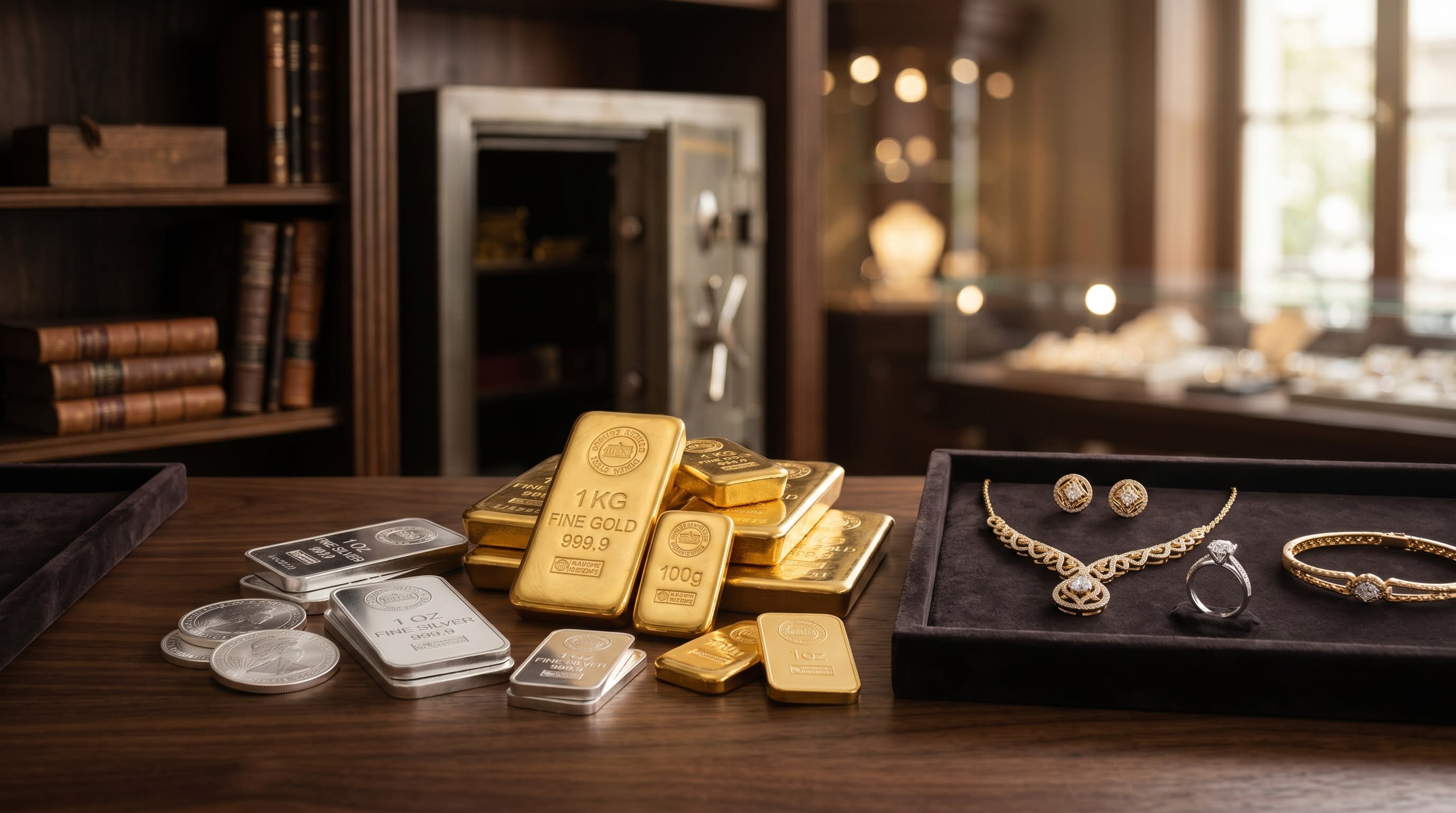
Precious metals are defined as rare, naturally occurring metallic elements, including gold, silver, platinum, and palladium, that hold significant economic value across investment markets, fine jewelry, and industrial manufacturing. Their importance spans centuries and continents, from ancient coinage to modern solar panels and AI data centers. Gold alone commands an annual market of roughly $460 billion, dwarfing silver’s $66 billion and platinum and palladium’s combined $12 to $13 billion. Understanding the role of precious metals means understanding three distinct but interconnected economies: financial markets, consumer goods, and advanced technology supply chains….
What defines precious metals and sets them apart?
Precious metals earn their classification through four shared properties: rarity, malleability, resistance to corrosion, and electrical conductivity. These traits make them useful across radically different industries, which is precisely why their prices respond to such a wide range of global forces.
Gold is the benchmark. It does not tarnish, it conducts electricity reliably, and its total above-ground supply is finite enough that central banks hold it as a reserve asset. Silver is far more abundant. Silver production runs approximately eight times higher than gold, with annual output exceeding 800 million ounces compared to roughly 100 million ounces for gold. Yet silver’s price sits at about one-fiftieth of gold’s, reflecting its dual identity as both a monetary metal and an industrial commodity.
Platinum and palladium occupy a different tier entirely. Annual mining of each metal runs around 6 million ounces, concentrated almost entirely in South Africa, Russia, and Zimbabwe. That geographic concentration means a single mine strike or export restriction can move global prices sharply. Despite lower production volumes, their rarity makes prices more prone to sharp swings from small supply or demand shifts.
| Metal | Annual Production | Market Size | Primary Use |
|---|---|---|---|
| Gold | ~100 million oz | ~$460 billion | Investment, jewelry, electronics |
| Silver | ~800 million oz | ~$66 billion | Industrial, investment, jewelry |
| Platinum | ~6 million oz | ~$6 billion | Catalytic converters, jewelry |
| Palladium | ~6 million oz | ~$6 billion | Catalytic converters, electronics |
Pro Tip: When comparing precious metals for purchase, look at the gold-to-silver ratio, which historically averages around 60:1. When the ratio climbs well above that level, silver is statistically cheap relative to gold, which has historically preceded silver outperformance.
How do precious metals function as investments?
Precious metals in investment portfolios serve a specific structural purpose: they reduce correlation risk. Gold shows 18% annualized volatility compared to over 30% for silver and oil, making it one of the least volatile commodity assets over a 50-year period. That lower volatility is exactly why portfolio managers treat gold differently from silver.
BlackRock frames this distinction clearly: gold acts as strategic ballast during equity drawdowns, while silver functions as a higher-volatility asset tied to industrial growth cycles. Investors who want stability during market stress reach for gold. Investors who want exposure to manufacturing and technology growth cycles reach for silver. These are not interchangeable positions.
The practical ways to access precious metals as investments include:
- Physical bullion: Coins and bars from mints like the U.S. Mint or Royal Canadian Mint offer direct ownership but require secure storage.
- ETFs: Funds like SPDR Gold Shares (GLD) or iShares Silver Trust (SLV) provide liquid, low-cost exposure without storage costs.
- Mining equities: Shares in companies like Newmont or Barrick Gold offer leveraged exposure to metal prices, with added company-specific risk.
- Byproduct exposure: Precious metals exposure through copper or iron ore mining companies offers a more stable avenue than independent small-scale mining ventures.
Fidelity’s guidance is direct: treat precious metals as long-term diversification, not short-term speculation. Investors who chase price momentum in gold or silver typically underperform those who hold a fixed allocation of 5% to 10% through full market cycles. The benefits of precious metals in a portfolio come from patience, not timing.
What role do precious metals play in jewelry?
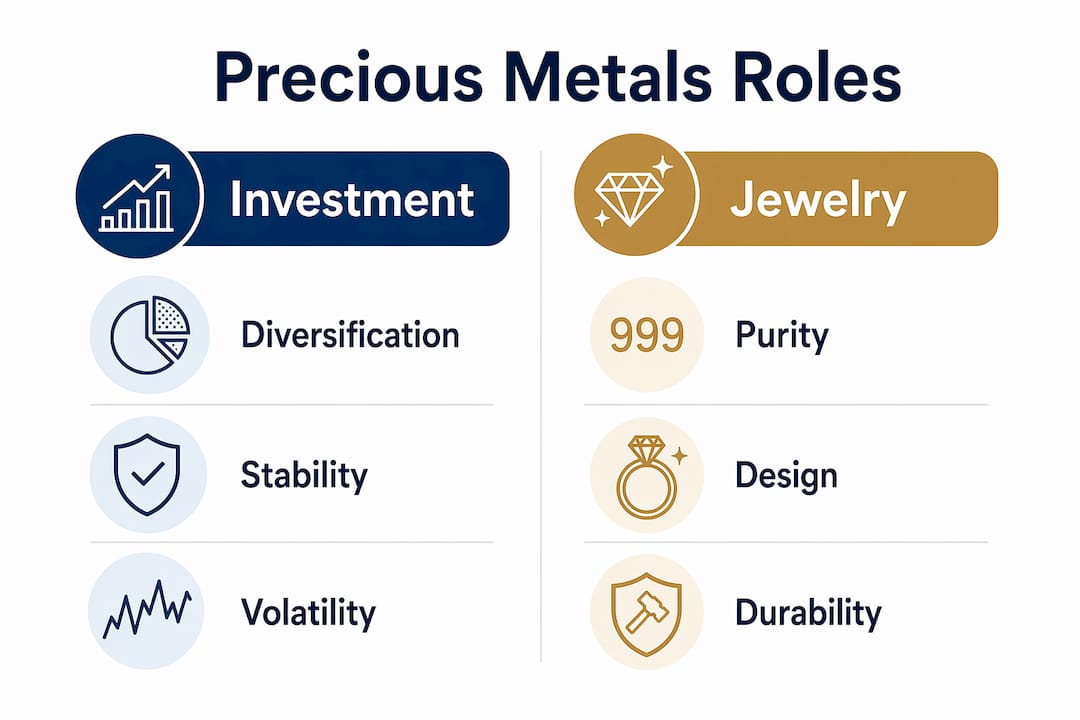
Gold and silver have defined fine jewelry for thousands of years, and their appeal has not weakened. The fine jewelry market continues to grow, driven by both luxury demand and the expanding affordable luxury segment. If you want to understand why, look at what these metals actually offer a jewelry buyer: durability, workability, and a visual quality that synthetic materials cannot replicate.

Gold’s value in jewelry comes from its purity grades. 24-karat gold is pure but too soft for daily wear. 14-karat and 18-karat gold alloys balance durability with color richness, which is why they dominate engagement rings and wedding bands. White gold, yellow gold, and rose gold each use different alloy compositions to achieve distinct looks, giving designers and consumers real creative range. You can explore the full spectrum of ring metal options to see how each alloy performs in practice.
Silver’s role in jewelry is different. Sterling silver (92.5% pure) is more affordable than gold, which makes it the dominant metal in fashion jewelry and everyday pieces. Its brightness appeals to consumers who want a clean, modern look at an accessible price point. The affordable luxury jewelry segment has grown significantly in 2026 as consumers seek quality without premium pricing.
Key considerations when buying precious metal jewelry:
- Hallmarks matter: Look for stamps like “14K,” “925,” or “PT950” to confirm metal purity before purchase.
- Alloy composition affects durability: Rose gold’s copper content makes it harder than yellow gold; white gold’s rhodium plating requires periodic re-plating.
- Resale value varies: Gold jewelry retains more intrinsic metal value than silver, making it a stronger long-term asset.
Pro Tip: Gold-plated jewelry looks similar to solid gold but contains only a thin layer of gold over a base metal. Understanding what gold plating means before you buy protects you from overpaying for pieces that will wear through quickly.
What industrial and technological applications depend on precious metals?
The uses of precious metals in industry are expanding faster than most consumers realize. Silver is the clearest example. 60% of annual silver consumption ties directly to electronics and related industries, including solar panels, AI data centers, and consumer electronics. Every photovoltaic solar cell requires silver paste for its electrical contacts. Every smartphone contains trace amounts of silver in its circuit board. As solar capacity and AI infrastructure scale globally, structural silver demand grows with them.
Platinum and palladium dominate automotive catalytic converter manufacturing, where they convert toxic exhaust gases into less harmful emissions. The shift toward electric vehicles creates a long-term demand question for both metals, since battery-electric vehicles do not use catalytic converters. However, hydrogen fuel cell vehicles, which are gaining traction in commercial transport, require platinum as a catalyst. The net industrial demand picture for platinum remains positive through the decade.
Gold’s industrial role is smaller in volume but critical in precision. Medical implants, aerospace connectors, and semiconductor bonding wires all use gold because it does not oxidize and maintains conductivity under extreme conditions. The quantities involved are small, but the applications are non-negotiable. No substitute exists for gold in certain high-reliability electronic connections.
Industrial metals benefit from the global electrification trend and technological advancement, which means precious metals are not just legacy assets. They are critical minerals in the infrastructure of the modern economy. Supply chain analysts now track platinum, palladium, and silver alongside lithium and cobalt as materials whose scarcity could constrain clean energy deployment.
How do global market dynamics shape precious metal prices?
Precious metal prices respond to a specific set of macroeconomic and geopolitical forces, and understanding those forces helps both investors and jewelry buyers make better decisions.
- Monetary policy: When central banks cut interest rates, the opportunity cost of holding non-yielding gold falls, which typically pushes gold prices higher. The Federal Reserve’s rate decisions in 2026 have directly influenced gold’s price trajectory.
- Geopolitical tension: Gold maintains its status as a geopolitical hedge during periods of fiscal and political uncertainty. Conflict, sanctions, and trade disputes all increase demand for gold as a safe-haven asset.
- Inflation expectations: Gold has historically preserved purchasing power during inflationary periods, which is why institutional investors increase gold allocations when inflation forecasts rise.
- Climate risk and supply chains: Climate-policy uncertainty strengthens the predictive linkage between critical minerals and precious metals, affecting price return predictability. Flooding, drought, and regulatory changes at major mining sites in South Africa and Chile create supply shocks that ripple through global prices.
- Industrial demand cycles: Silver and platinum prices track manufacturing and technology investment cycles more closely than gold does, making them more sensitive to economic slowdowns.
“Gold serves not only as a store of value but also provides portfolio stability during periods when traditional safe havens like U.S. Treasuries underperform.” — Aviva Investors, 2026
The practical implication for consumers is straightforward. If you are buying gold jewelry or gold-backed investments, you are buying into a market shaped by central bank policy and geopolitical risk. If you are buying silver, you are also buying exposure to solar energy and semiconductor manufacturing. Knowing which forces drive each metal helps you set realistic expectations for both price and long-term value.
Key takeaways
Precious metals serve three distinct and equally important roles: portfolio diversification assets, fine jewelry materials, and critical industrial inputs, and each role demands a different evaluation framework.
| Point | Details |
|---|---|
| Gold as portfolio anchor | Gold’s 18% volatility makes it the lowest-risk commodity for long-term diversification. |
| Silver’s dual identity | Silver functions as both a monetary metal and an industrial commodity, with 60% of demand tied to electronics. |
| Platinum and palladium supply risk | Geographic concentration in South Africa and Russia makes these metals highly sensitive to disruptions. |
| Jewelry metal selection | Karat grade and alloy composition determine both durability and resale value in precious metal jewelry. |
| Long-term investment approach | Precious metals deliver diversification benefits over full market cycles, not short-term price speculation. |
Why I think most people misread the precious metals market
People tend to treat precious metals as a single category, which is the most common and costly mistake I see. Gold, silver, platinum, and palladium behave like four completely different assets that happen to share a label. Lumping them together leads to poor decisions in both investing and buying jewelry.
The part that surprises most people is silver’s industrial exposure. When someone buys silver as a “safe haven,” they are actually buying significant exposure to solar panel manufacturing and AI data center construction. That is not a criticism of silver. It is a genuinely interesting dual-role asset. But it means silver does not behave like gold during a financial crisis. It often drops alongside equities because industrial demand falls when economies contract.
For jewelry buyers, the lesson is different. Gold jewelry is not just beautiful. It is a durable store of value with a 5,000-year track record. The investment value of fine jewelry is real, particularly in 14-karat and 18-karat gold pieces that hold intrinsic metal content. Silver jewelry is a different proposition: it is about style and accessibility, not long-term value retention.
My honest view is that the most underappreciated aspect of precious metals is their supply constraint. The geographic concentration of platinum and palladium mining is a structural risk that most retail investors and consumers never consider. A single regulatory change in South Africa or a production disruption in Russia can move those markets by double digits in days. That kind of sensitivity deserves more attention than it gets.
— Andrew
Explore precious metal jewelry at Superjeweler

Superjeweler offers an extensive selection of fine jewelry in gold and silver, from engagement rings under $1,000 to wedding bands in white gold, yellow gold, and rose gold. Every piece is crafted with verified metal purity, so you know exactly what you are buying. Whether you are drawn to the enduring value of 14-karat gold or the clean brightness of sterling silver, Superjeweler’s catalog covers the full range at competitive prices. Free worldwide shipping and a solid return policy make it easy to shop with confidence. Browse the collections and find a piece that reflects both your style and your understanding of what makes these metals worth owning.
FAQ
What are the main uses of precious metals?
Precious metals serve three primary roles: investment assets (gold, silver), fine jewelry materials (gold, silver, platinum), and industrial components (silver in electronics and solar panels, platinum and palladium in catalytic converters and fuel cells).
Is silver a good investment compared to gold?
Silver offers higher growth potential but carries more than 30% annualized volatility compared to gold’s 18%, making it a higher-risk, higher-reward option. BlackRock recommends treating silver as an industrial growth play and gold as a portfolio stabilizer.
How does gold protect against inflation?
Gold maintains purchasing power during inflationary periods because its supply cannot be expanded by central banks, unlike fiat currency. Institutional investors increase gold allocations when inflation forecasts rise precisely for this reason.
Why are platinum and palladium prices so volatile?
Platinum and palladium are mined almost entirely in South Africa, Russia, and Zimbabwe, with annual production of roughly 6 million ounces each. That geographic concentration means small supply disruptions create outsized price movements.
What should I look for when buying precious metal jewelry?
Check for hallmarks confirming metal purity, such as “14K” for gold or “925” for sterling silver. Alloy composition affects both durability and color, and solid gold pieces retain far more resale value than gold-plated alternatives.
Recommended
- Why Invest in Fine Jewelry: 15% Market Growth & Value
- Why Invest in Diamond Jewelry: Value, Beauty, and Security
- Why jewelry makes great gifts: meaningful & timeless
- Protect Your Jewelry Investment: The True Value of a Warranty
