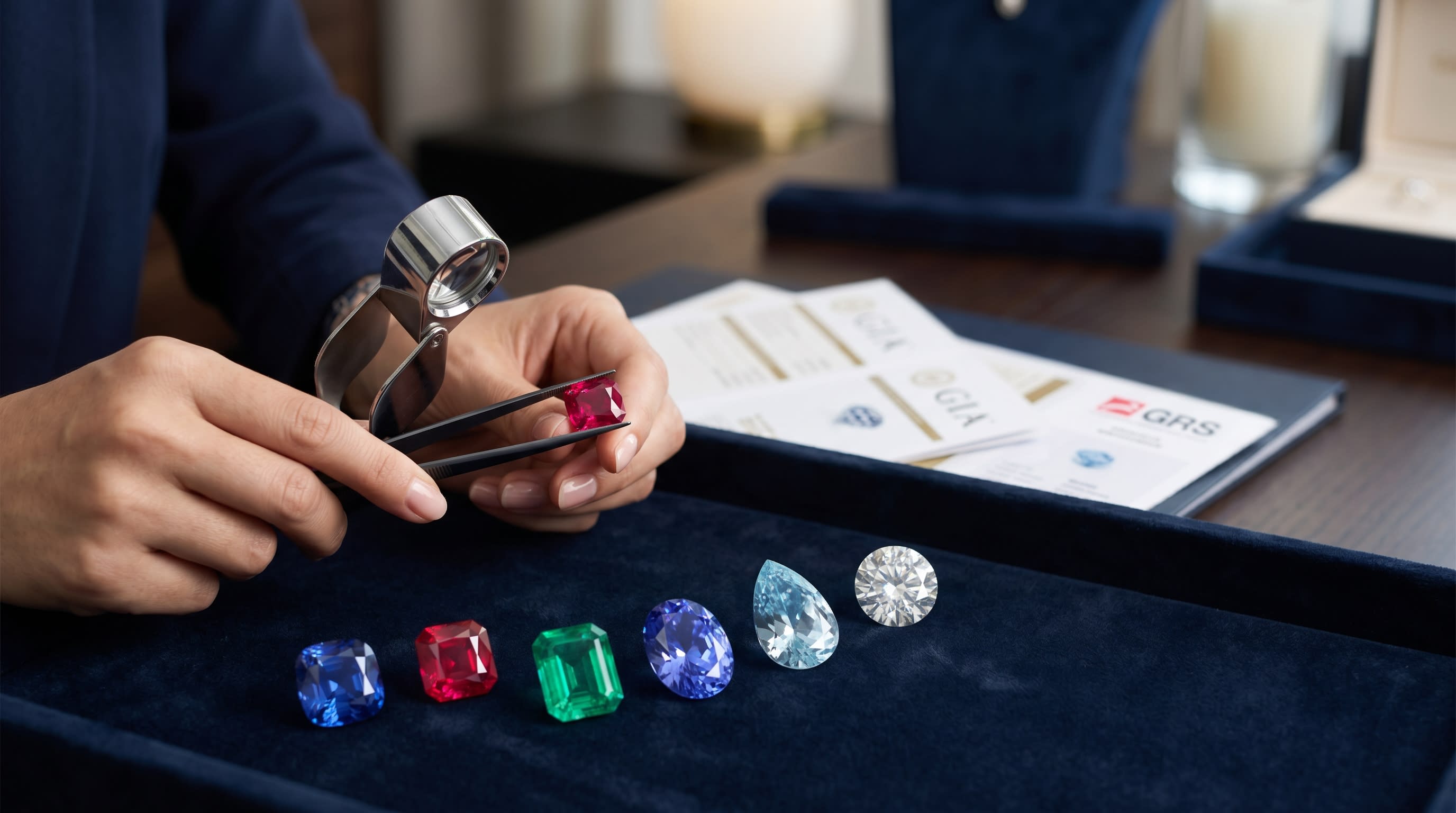
TL;DR:
- The gemstone buying process involves assessing quality factors such as color, clarity, cut, and certification to ensure value and authenticity. Prioritizing color saturation and transparency over size and carat weight leads to better long-term satisfaction and investment. Buying from reputable, certified dealers with thorough inspection procedures reduces the risk of misrepresentation and costly mistakes.
The gemstone buying process is defined as evaluating a stone’s quality, authenticity, and value through a structured assessment of color, clarity, cut, carat weight, treatments, and certification before purchase. Industry professionals call this framework “gemstone grading and acquisition,” and understanding it separates confident buyers from those who overpay or get misled. Whether you are selecting a sapphire for an engagement ring or building a small collection, the same core principles apply. This guide covers every stage, from setting your budget to inspecting a lab report, so you can buy with clarity and confidence.
What are the key gemstone quality factors?
Color accounts for 60–80% of a colored gemstone’s total value, outweighing clarity and carat weight combined. That means a vivid, well-saturated ruby with minor inclusions will almost always outperform a pale, flawless stone of the same size in both beauty and resale value.
Color is assessed across three dimensions: hue (the base color, such as blue or red), tone (how light or dark the stone appears), and saturation (the intensity of the color). The most prized stones sit in the medium to medium-dark tone range with strong, pure saturation and no gray or brown masking the primary hue.
Clarity: what “eye-clean” actually means
Eye-clean clarity is the industry standard for investment-grade stones. A stone is considered eye-clean when no inclusions are visible to the naked eye at normal viewing distance. Visible inclusions reduce price by 20–50%, so this threshold matters enormously when comparing options at the same budget.
Type II gemstones, including sapphire and ruby, naturally form with inclusions visible under 10x magnification. Those inclusions only hurt value when they break the surface or are visible without magnification.
Cut quality and its effect on brilliance
Cut quality is often overlooked by buyers, but a poorly cut stone loses light through the bottom and sides, making even a vivid color look flat and lifeless. Cut-related discounts range from 15–30% on otherwise equivalent stones. That is a significant price gap for something most buyers never think to check.
For colored gemstones, the goal of cutting is to maximize color display, not just sparkle. A well-cut gemstone shape returns light evenly across the face of the stone and shows the richest color in standard lighting conditions.
Carat weight, treatments, and durability
Carat weight affects price on a per-carat basis, and prices scale non-linearly. A 2-carat sapphire costs significantly more than two 1-carat sapphires of equal quality because larger stones are rarer. Treatments such as heat enhancement are common and fully acceptable when disclosed. Treated stones are priced lower than untreated equivalents of similar appearance, so always ask for treatment disclosure before agreeing on a price.
Durability matters for how you plan to wear the stone. Gemstones with a Mohs hardness below 7 are better suited for earrings and pendants than daily-wear rings. Sapphire, ruby, and spinel score 8–9 on the Mohs scale and are the top choices for rings worn every day.
Pro Tip: When comparing two stones at the same price, prioritize the one with better color saturation over the one with higher carat weight. Size is visible from across the room; color is what makes people stop and stare.
How to prepare and budget for your first gemstone purchase
A realistic budget sets the foundation for a successful purchase. Jumping in without one leads to either overspending on a stone that does not suit your needs or underspending on something that disappoints.
- Set a starting range. Beginners should budget between $300 and $2,000 for their first gemstone. Buying below $300 significantly increases the risk of receiving a low-quality or heavily treated stone with poor resale value.
- Understand price-per-carat math. Prices are quoted per carat, then multiplied by weight. A $500-per-carat stone at 1.5 carats costs $750 total. Always confirm whether the listed price is per carat or for the whole stone.
- Identify your value sweet spot. Stones just below popular weight thresholds (0.9 carats instead of 1.0 carats, for example) often sell at a notable discount with no visible size difference.
- Prioritize color and clarity within your budget. If you have to trade off, choose better color over larger size. A smaller stone with exceptional color will always look more impressive than a larger stone with a washed-out hue.
- Factor in certification costs. A GIA or AGL report adds $50–$150 to the purchase but is non-negotiable for stones over $500. Treat it as part of the stone’s price, not an optional add-on.
Watch out for sellers offering “investment-grade” stones at unusually low prices without documentation. Untreated stones command significant premiums, and any claim of exceptional quality without a lab report is unverifiable.
Where to source gemstones safely and with confidence
The source you buy from matters as much as the stone itself. A beautiful ruby from an unverified seller is a liability. The same stone from a reputable dealer with full documentation is an asset.
- Buy from dealers who offer certified stones. Certification from GIA, IGI, or AGL is non-negotiable for stones over $500. These reports verify authenticity, disclose treatments, and confirm origin when relevant.
- Consider buying loose stones. Buying loose gemstones saves 20–40% compared to stones already set in jewelry. Metal settings can hide inclusions and make it harder to assess color accurately.
- Inspect in optimal lighting. View stones under daylight-equivalent lighting and incandescent light. Some stones look stunning under one light source and dull under another. Fluorescent-only lighting is a red flag in a showroom.
- Request videos and photos online. When buying remotely, ask for a short video showing the stone rotating under different light sources. Still photos alone do not reveal windowing, extinction, or uneven color distribution.
- Walk away from pressure tactics. Pressure sales on high-priced stones are a clear warning sign. Reputable sellers allow you time to review lab reports, compare options, and consult an independent appraiser if needed.
For online purchases, verifying authenticity before committing to a purchase protects you from misrepresented stones. Superjeweler offers certified gemstone options with transparent product details, making it straightforward to compare quality and pricing without pressure.
Step-by-step guide to evaluating and purchasing a gemstone
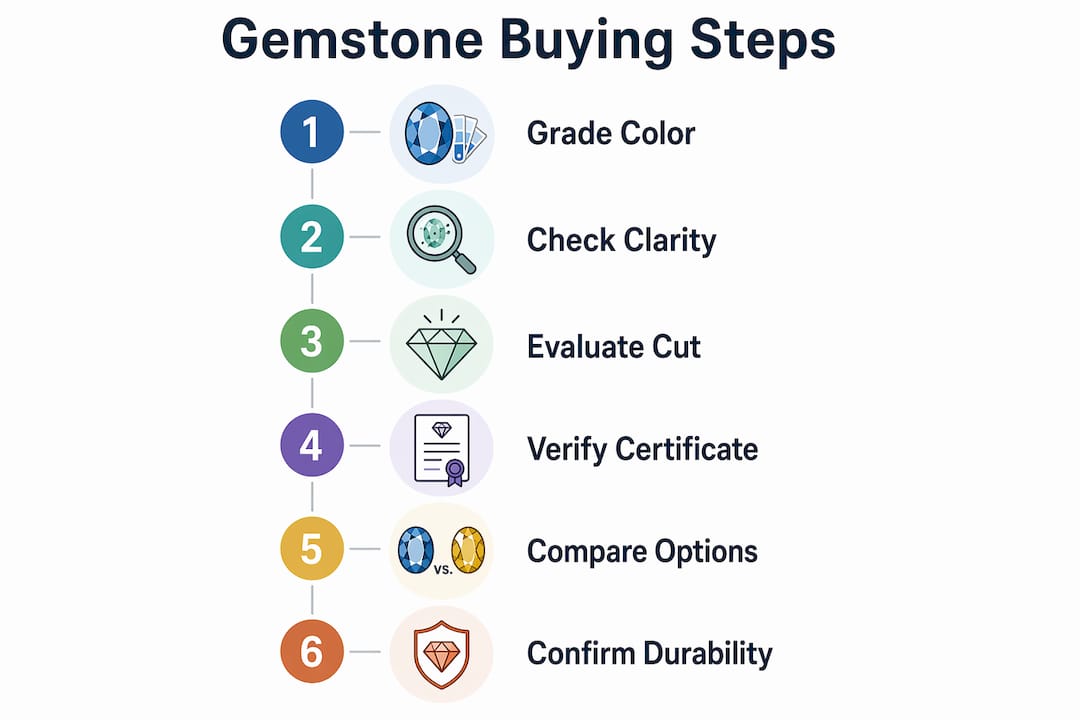
Walking through a structured evaluation process prevents the most common buying mistakes. Use this sequence every time, whether you are shopping in person or online.
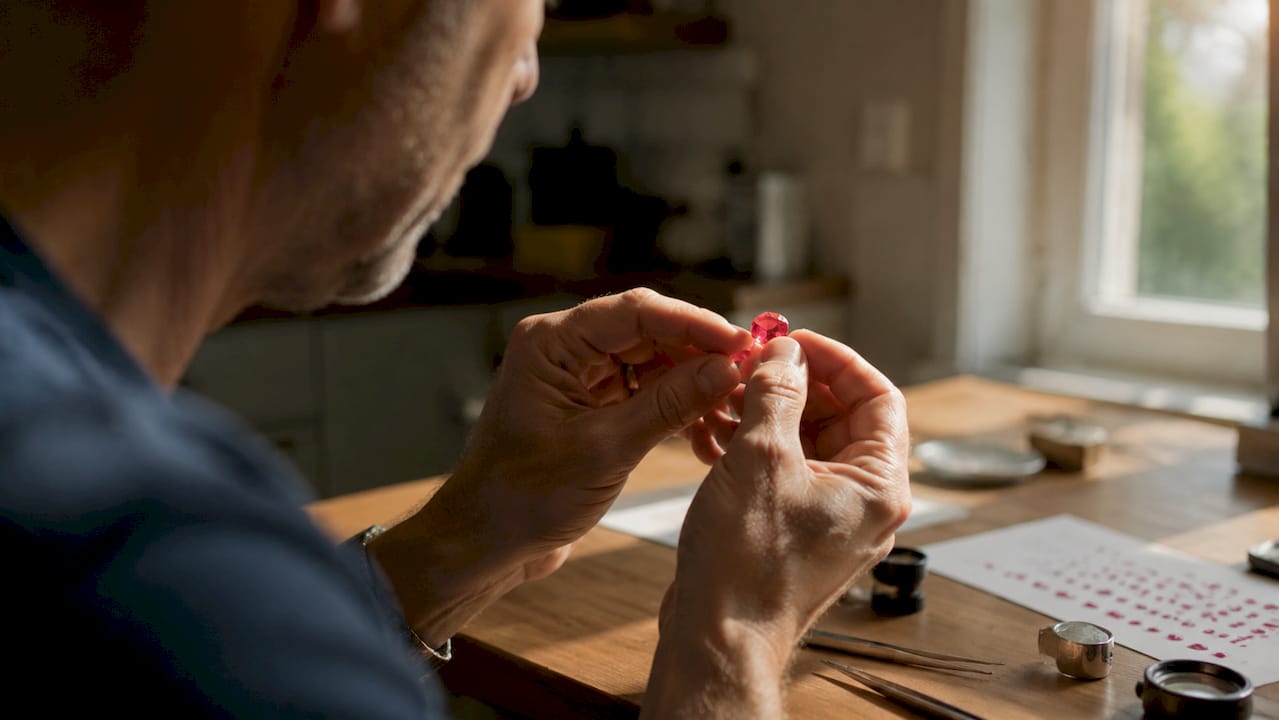
Step 1: Grade the color first. Assess hue, tone, and saturation before looking at anything else. Color drives the most value, so if the color does not impress you, move on regardless of other qualities.
Step 2: Check clarity under magnification and with the naked eye. Ask to view the stone under a loupe or jeweler’s microscope. Then step back and look at it without magnification. If inclusions are visible to your naked eye, factor that into your price negotiation.
Step 3: Evaluate the cut. Look at the stone face-up under a light source. A well-cut stone shows even color across the table with minimal dark or washed-out areas. Use the gemstone cut guide to understand what to look for in specific shapes.
Step 4: Read the certification report. Match the report number to the stone using the lab’s online verification tool. Confirm that all treatments are disclosed. For stones over $5,000, labs like Gübelin or SSEF are the gold standard. For stones in the $1,000–$5,000 range, GIA or AGL reports are appropriate. For stones under $1,000, a basic AGTA-level report is acceptable.
Step 5: Compare at least three options. Never buy the first stone you see. Comparing three stones at a similar price point trains your eye and reveals the actual quality range available at your budget.
Step 6: Confirm durability for intended use. If the stone is for a ring worn daily, confirm it scores 8 or higher on the Mohs scale. For earrings or occasional-wear pieces, softer stones like tanzanite or opal are perfectly appropriate.
| Quality Factor | What to check | Why it matters |
|---|---|---|
| Color | Hue, tone, saturation | Drives 60–80% of value |
| Clarity | Eye-clean, no surface breaks | Visible inclusions cut price 20–50% |
| Cut | Even color, no extinction | Poor cut reduces light return by 15–30% |
| Certification | Lab report matches stone | Confirms authenticity and treatment status |
| Durability | Mohs hardness for intended use | Prevents damage in daily wear |
Pro Tip: Ask the seller to place the stone next to a comparable stone at a higher price point. Seeing the difference in person calibrates your eye faster than any written description.
How to care for your newly purchased gemstone
Protecting your stone after purchase preserves both its beauty and its value. The right care routine depends on the stone’s hardness, treatment history, and how it is set.
- Clean gently and regularly. Most gemstones can be cleaned with warm water, a drop of mild dish soap, and a soft toothbrush. Avoid ultrasonic cleaners for emeralds, opals, tanzanite, and any stone with surface-reaching fractures, as vibration can worsen existing cracks.
- Avoid heat and chemicals. Chlorine, bleach, and harsh household cleaners can damage surface treatments and affect color in some stones. Remove gemstone jewelry before swimming, cleaning, or applying lotions and perfumes.
- Store stones separately. Harder stones like diamonds and sapphires will scratch softer ones if stored together. Use individual pouches or a lined jewelry box with separate compartments.
- Protect against impact. Even hard stones like sapphire and ruby can chip along the girdle if struck at the right angle. Remove rings before heavy manual work or sports.
- Schedule periodic professional inspections. Have a jeweler check prong integrity and stone security once a year. A loose prong caught early costs far less to fix than a lost stone.
Key takeaways
The gemstone buying process requires evaluating color, clarity, cut, and certification together, because no single factor determines value in isolation.
| Point | Details |
|---|---|
| Color drives value | Color accounts for 60–80% of a colored gemstone’s value; prioritize saturation over size. |
| Certification is non-negotiable | For stones over $500, always require a GIA, AGL, or equivalent lab report before purchase. |
| Buy loose when possible | Purchasing loose stones saves 20–40% and allows full inspection without settings masking flaws. |
| Budget realistically | First-time buyers should plan to spend $300–$2,000 to access quality stones with proper documentation. |
| Durability determines use | Stones scoring below 7 on the Mohs scale belong in earrings or pendants, not daily-wear rings. |
Why I always tell buyers to start with color, not carats
Most first-time buyers walk into a gemstone purchase focused on size. They want the biggest stone their budget allows. I understand the instinct, but it is almost always the wrong priority.
Color is what makes a gemstone alive. A 0.8-carat sapphire with deep, saturated blue that shifts beautifully under different lights will outperform a 1.5-carat stone with a pale, washed-out hue in every way that matters: visual impact, compliments received, and long-term satisfaction. I have seen buyers regret going large and dull within months. I have never seen someone regret choosing exceptional color.
The second thing I tell buyers: slow down. The gemstone market has no shortage of “limited time” deals and sellers who create urgency. Avoiding rushed purchases is not just good advice; it is the single most reliable way to avoid a bad purchase. A stone worth buying today will still be worth buying tomorrow. If a seller disagrees, that tells you everything you need to know.
Finally, invest in your own education before you invest in a stone. Read lab reports. Handle stones in person whenever possible. Compare options at different price points. The buyers who get the best value are not the ones with the biggest budgets. They are the ones who know what they are looking at.
— Andrew
Shop certified gemstones at Superjeweler
Ready to put this knowledge to work? Superjeweler offers a curated selection of certified gemstone jewelry across a range of budgets, from everyday pieces to investment-quality stones.

Browse gemstone rings featuring sapphires, rubies, emeralds, and more, each with transparent quality details so you can apply everything you have learned here. If you prefer earrings or necklaces, the gemstone earrings and gemstone necklaces collections offer certified options at competitive prices. Every purchase comes with free worldwide shipping and a satisfaction guarantee, so you can shop with confidence and take your time making the right choice.
FAQ
What is the most important factor in the gemstone buying process?
Color is the single most important quality factor, accounting for 60–80% of a colored gemstone’s total value. Prioritize saturation and hue before evaluating clarity or carat weight.
Do I need a certification report for every gemstone I buy?
Certification is required for any stone over $500 to verify authenticity and treatment status. GIA and AGL are the most trusted labs for stones in the $1,000–$5,000 range.
Are treated gemstones worth buying?
Treated gemstones are fully acceptable for jewelry when treatments are properly disclosed. They are priced lower than untreated equivalents of similar appearance, making them a practical choice for buyers focused on beauty over investment potential.
What gemstones are best for everyday rings?
Sapphire, ruby, and spinel score 8–9 on the Mohs hardness scale and are the most durable choices for rings worn daily. Avoid softer stones like tanzanite or opal in ring settings for everyday wear.
How do I avoid scams when buying gemstones online?
Always request a current lab report with a verifiable report number, ask for video footage of the stone under multiple light sources, and walk away from any seller who applies time pressure or refuses to allow independent verification.
Recommended
- Green Gemstones: Fresh and Fabulous
- What Is a Colored Gemstone? Your Complete Buyer’s Guide
- Gemstone Clarity Explained: How to Choose Flawless Jewelry
- Blue Gemstones: Ocean-Inspired Beauty
