TL;DR:
- Birthstones are gemstones linked to each month, symbolizing qualities like protection, passion, and growth. They hold cultural and spiritual importance, with modern practices emphasizing personal meaning over traditional assignments. Proper care depends on the stone’s hardness, with many options available for personalized jewelry and meaningful gifts.
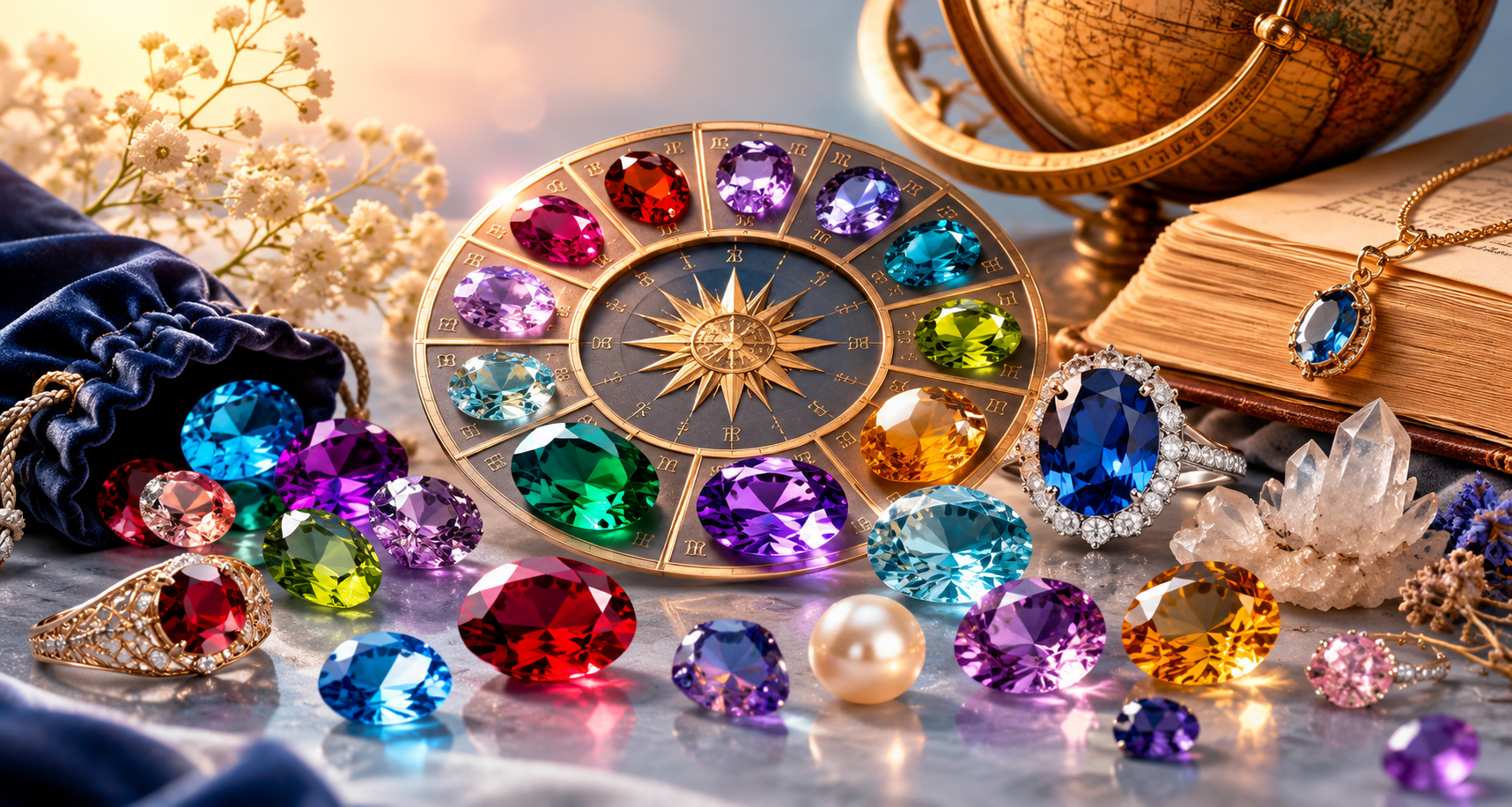
Birthstones are gemstones assigned to each month of the year, believed to carry symbolic qualities tied to the wearer’s birth date. The role of birthstones extends far beyond decoration. These stones serve as personal identifiers, cultural symbols, and spiritual tools used across centuries and continents. From the ruby’s association with passion and protection to the emerald’s link to growth and renewal, each stone carries a meaning that resonates with the person who wears it. This guide covers the history of birthstones, their symbolic roles across traditions, and how to choose a stone that reflects your identity today.
What is the role of birthstones in history and culture?
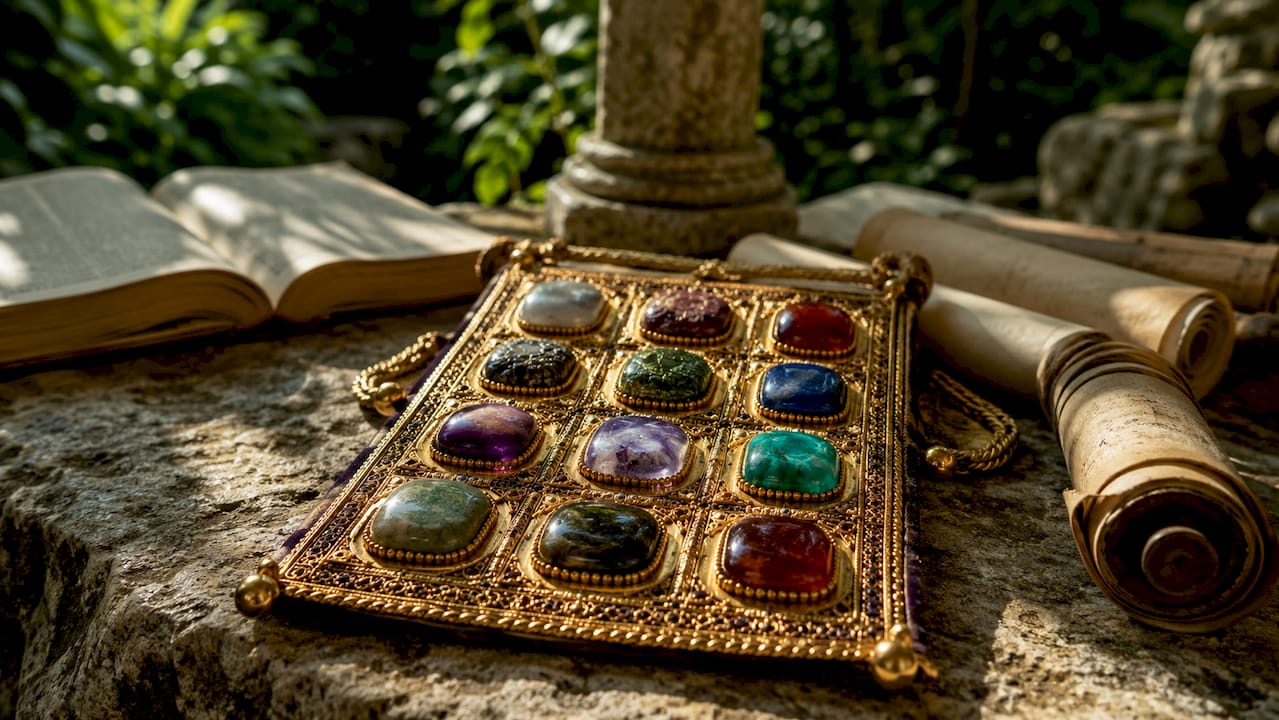
Birthstone significance traces back to ancient religious texts. The most widely cited origin is the Breastplate of Aaron, a ceremonial garment described in the Book of Exodus, set with twelve stones representing the twelve tribes of Israel. Early scholars, including the first-century historian Josephus, connected those twelve stones to the twelve months of the year and the twelve signs of the zodiac. That connection planted the seed for what would eventually become the modern birthstone calendar.
The path from ancient breastplate to modern jewelry counter was not direct. Different cultures assigned different stones to different months for centuries, creating a patchwork of competing traditions. Polish and German communities in the 15th and 16th centuries are credited with popularizing the practice of wearing the stone associated with your birth month rather than collecting all twelve. That shift made birthstones personal rather than ceremonial.
The defining moment in American birthstone history came in 1912. The 1912 Jewelers of America list brought commercial standardization that replaced the diverse traditional lists and shaped the modern birthstone market. That list established one or two stones per month and became the foundation for U.S. jewelry retail. It is worth understanding that modern birthstone lists are commercial adaptations that evolved from ancient traditions but do not directly continue original spiritual practices.
Pro Tip: If you want to explore the full range of stones associated with your birth month, look beyond the 1912 list. Many months have historical alternates, such as the may birthstone emerald alongside older associations with agate and chrysoprase.
- The Breastplate of Aaron is the earliest documented source linking specific gems to symbolic roles
- The 1912 Jewelers of America standardization created the list most American jewelers use today
- Earlier traditions varied widely by region and religious practice
- Modern lists reflect commercial consensus, not unbroken ancient lineage
What symbolic meanings do birthstones carry?
Birthstone symbolism draws on color, cultural history, and centuries of folklore. Color psychology plays a direct role. Red stones like the ruby trigger associations with energy, passion, and urgency. Green stones like the emerald connect to nature, growth, and calm. Clear stones like the diamond read as pure, strong, and eternal. These are not arbitrary associations. They reflect how human perception of color has remained consistent across cultures.
Emeralds symbolize growth, renewal, and fertility. Rubies stand for passion, protection, and wealth. Diamonds represent strength, clarity, and eternal love. These meanings have stayed consistent for centuries, reinforced by storytelling, royal use, and religious tradition.
The ruby offers one of the richest examples. Rubies, called the “King of Gems,” carry historical significance as symbols of passion and protection and were historically used by warriors who believed the stone made them invincible in battle. Burmese warriors embedded rubies into their skin before combat. Medieval Europeans believed rubies darkened in color to warn their owner of approaching danger. That kind of folklore builds a stone’s symbolic weight over generations.
“The meaning of birthstones evolves as wearers choose what significance the stone holds for them, beyond historical or commercial definitions.” — Birthstone, Wikipedia
Astrological traditions add another layer. In Western astrology, birthstones often align with zodiac signs rather than calendar months, creating slight differences in stone assignments. A person born in late july under Leo may find different stone recommendations depending on whether they follow the monthly Western list or a zodiac-based guide. Astrological and cultural variations add layers of meaning to birthstones, allowing individuals to connect with their stones on spiritual or energetic levels.
- Ruby (july): Passion, protection, courage. Associated with the sun and vital energy.
- Emerald (may): Growth, fertility, wisdom. Linked to Venus and natural abundance.
- Diamond (april): Strength, clarity, eternal love. Considered the hardest and most enduring stone.
- Sapphire (september): Loyalty, truth, and mental clarity. Historically worn by clergy and royalty.
- Amethyst (february): Calm, balance, and spiritual awareness. Once considered as precious as rubies.
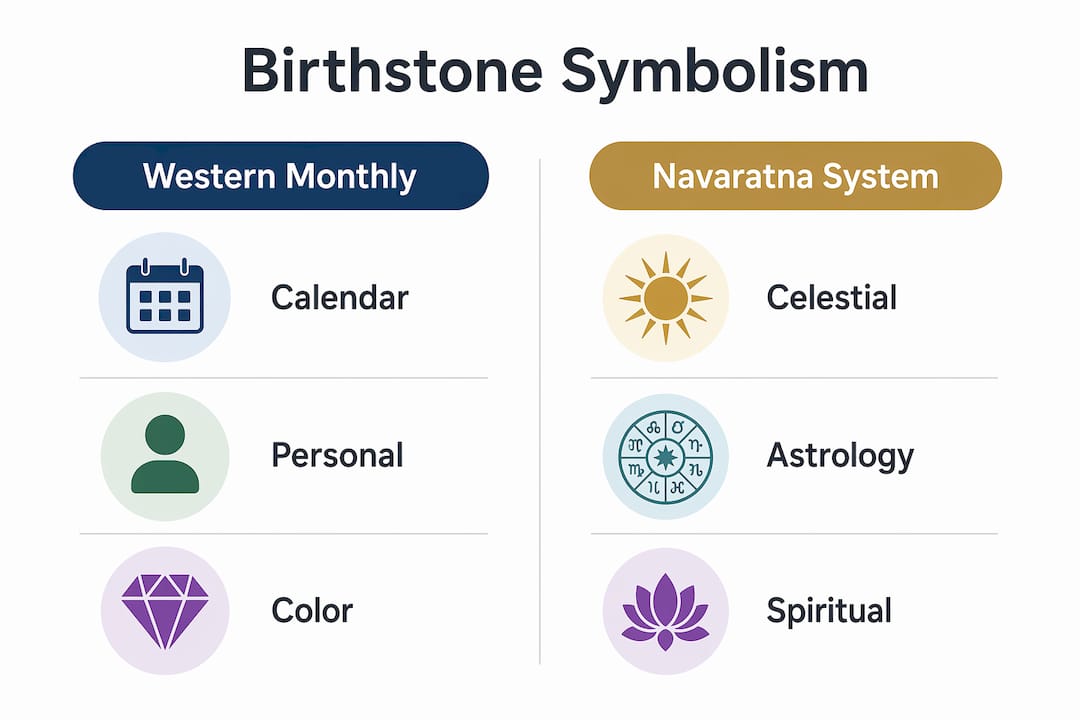
Western monthly vs. Navaratna: how do the systems compare?
The Western monthly system is the most familiar framework for birthstone significance in the United States. Each of the twelve calendar months has one or two assigned stones, standardized in 1912 and updated occasionally since. This system is straightforward: your birth month determines your stone.
The Hindu Navaratna system works on entirely different logic. The Hindu Navaratna system associates gemstones with celestial bodies rather than months, using astrological charts to determine which stones are beneficial for a specific individual. Navaratna means “nine gems” in Sanskrit. The nine stones, including ruby, pearl, red coral, emerald, yellow sapphire, diamond, blue sapphire, hessonite, and cat’s eye, each correspond to a planet. A practitioner calculates which planet governs your birth chart and recommends the corresponding stone to strengthen or balance that planetary influence.
A third, less discussed system assigns stones to days of the week or specific calendar dates rather than birth months. Birthday stones relate to specific days or weekdays, distinct from monthly birthstones and offering alternate gemstone assignments. This system is older than the modern monthly list and was common in European folk tradition.
| System | Basis | Primary use |
|---|---|---|
| Western monthly | Calendar birth month | Personal jewelry, gifting |
| Navaratna | Planetary chart at birth | Spiritual and astrological guidance |
| Birthday stones | Day of the week or date | Folk tradition, alternate symbolism |
Pro Tip: If you are drawn to the Navaratna tradition, consult a Vedic astrologer before purchasing a stone. Wearing the wrong planetary gem is believed in that tradition to have adverse effects, so the assignment is taken seriously.
Understanding these distinctions matters when you are choosing a stone for spiritual reasons rather than aesthetic ones. The Western system gives you a starting point. The Navaratna and birthday stone systems give you depth.
How are birthstones used in personal identity and gifting today?
Birthstones function today as tools for self-expression as much as tradition. Modern jewelry markets emphasize customization, letting consumers select birthstones that reflect personal stories beyond traditional month assignments. A mother might wear a ring set with the birthstones of all her children. A person might choose a stone based on its color or meaning rather than their birth month. The stone becomes a statement about who you are, not just when you were born.
Personalized birthstone jewelry spans every category. Rings, necklaces, bracelets, and earrings all serve as vehicles for birthstone expression. Stacking rings set with family birthstones have become a popular trend. Pendant necklaces with a single stone in a bezel setting offer a clean, modern look. Charm bracelets with multiple birthstone charms let wearers build a collection over time.
Gifting is one of the strongest drivers of birthstone jewelry sales. A birthstone piece signals that the giver paid attention to the recipient’s identity. It is specific in a way that generic jewelry is not. For milestone birthdays, anniversaries, and new baby gifts, a birthstone jewelry piece carries a personal weight that a plain gold band does not.
Care is a practical consideration that affects which stone you choose and how you wear it. Proper care of birthstone jewelry depends on the gem’s hardness. Rubies score 9.0 on the Mohs scale and can be cleaned safely with warm soapy water. Softer stones like opal (5.5–6.5 Mohs) or pearl (2.5–4.5 Mohs) require gentler handling and should not be exposed to ultrasonic cleaners or harsh chemicals. The Mohs hardness scale determines how tough a gemstone is, affecting its suitability for various jewelry types and care routines.
- Rings: Choose stones with a Mohs hardness of 7 or above for daily wear. Diamonds, rubies, and sapphires hold up well.
- Necklaces and earrings: Softer stones like opal and pearl work better here since they face less abrasion.
- Storage: Keep each piece in a separate pouch to prevent harder stones from scratching softer ones.
- Cleaning: Use a soft brush and mild soap for most stones. Avoid steam cleaning for emeralds, which are often treated with oils.
Pro Tip: When buying birthstone jewelry as a gift, include a short note explaining the stone’s meaning. That context transforms a beautiful object into a meaningful one.
Key Takeaways
Birthstones carry centuries of symbolic weight and serve as personal identifiers, cultural markers, and spiritual tools that go far beyond their role as decorative gems.
| Point | Details |
|---|---|
| Historical origin | The 1912 Jewelers of America list standardized monthly birthstones and remains the primary modern reference. |
| Symbolic meaning | Rubies represent passion and protection; emeralds signal growth; diamonds stand for strength and eternal love. |
| Multiple systems exist | Western monthly, Hindu Navaratna, and birthday stone traditions each assign gems using different criteria. |
| Modern personalization | Wearers increasingly choose stones for personal meaning rather than strict birth month assignment. |
| Care matters | Gem hardness on the Mohs scale determines cleaning methods and which jewelry types suit each stone. |
Why I think birthstones deserve more credit than they get
Most people treat birthstones as a convenient gift category. Pick the right month, buy the ring, done. That approach misses what makes these stones genuinely interesting.
What strikes me after years of working with gemstone jewelry is how the meaning of a birthstone shifts the moment someone claims it as their own. A ruby is a ruby until someone tells you their grandmother wore one every day for fifty years and believed it kept her safe. Then it becomes something else entirely. The stone does not change. The story does.
The Navaratna tradition gets this right in a way the Western system does not. It asks you to understand your own chart before choosing a stone. That process forces a kind of self-reflection that buying a birthstone necklace off a shelf does not. I am not suggesting everyone needs a Vedic astrologer. But the idea that a stone should fit your specific energy, not just your birth month, is worth taking seriously.
My practical advice: do not limit yourself to the 1912 list. If you are drawn to aquamarine but were born in october, wear aquamarine. The history of birthstones shows that the “official” list is a commercial construct, not a spiritual law. Choose the stone that resonates with you, care for it properly, and let it mean what you need it to mean.
— Andrew
Find your perfect birthstone piece at Superjeweler
Superjeweler carries an extensive selection of personalized birthstone jewelry including rings, necklaces, and bracelets designed to reflect your personal story. Whether you are shopping for yourself or choosing a meaningful gift, the collection spans every birth month and a wide range of gemstone styles.

For those who want to incorporate a birthstone into a milestone piece, Superjeweler’s engagement ring collection includes options featuring real diamonds and colored gemstones at prices that make personalization accessible. Free shipping worldwide and a satisfaction guarantee mean you can shop with confidence.
FAQ
What is the primary role of birthstones?
Birthstones serve as symbolic gemstones linked to a person’s birth month, representing qualities like protection, love, and identity. They function as personal identifiers in jewelry and as cultural or spiritual talismans across many traditions.
How were birthstones standardized?
The 1912 Jewelers of America list established the modern monthly birthstone calendar used in U.S. jewelry retail today. That list consolidated earlier diverse traditions into a single commercial standard.
Do birthstones have real powers?
Birthstones do not have scientifically verified powers, but their symbolic and psychological significance is real for many wearers. Traditions like the Hindu Navaratna system assign specific spiritual benefits to stones based on planetary associations.
Can I wear a birthstone that is not my birth month?
Yes. Modern jewelry practice encourages choosing stones based on personal meaning, aesthetic preference, or spiritual resonance rather than strict birth month assignment. The meaning of a birthstone is ultimately defined by the wearer.
How do I care for birthstone jewelry?
Care depends on the stone’s hardness. Hard stones like rubies (9.0 Mohs) and diamonds (10 Mohs) tolerate warm soapy water and light scrubbing. Softer stones like opal and pearl require gentle handling and should be kept away from chemicals and ultrasonic cleaners.
Recommended
- What is birthstone jewelry? A 2026 guide to meaning
- May Birthstone
- Emerald Ring | May Birthstone | SuperJeweler.com
- Why choose birthstone jewelry: gifts with personal touch
