Screw backs and locking styles like La Pousette or Alpa are the most secure earring back types for studs, while flat-back labret posts and threadless systems win for comfort during sleep or cartilage healing. Push or butterfly backs remain the most common option because they’re fast and cheap, but they’re also the easiest to lose. Superjeweler stocks pieces designed to work with either priority, so the real decision comes down to matching the back to how you actually wear your earrings.
TL;DR:
- Screw backs and locking styles like La Pousette or Alpa provide the highest security for valuable earrings, but are less convenient to put on and take off.
- Flat-back labret posts and threadless systems are ideal for cartilage healing and sleeping, especially for titanium earrings, due to their flush fit and gentle removal.
- Push backs are the most common but have moderate security and can loosen over time, requiring frequent replacement to prevent loss.
- Heavier earrings benefit from wider disc or jumbo backs to evenly distribute weight and prevent drooping or irritation.
- Matching the earring back to your activity, earring weight, and skin sensitivity, along with having a variety of backs for different situations, optimizes security, comfort, and ease.
Table of Contents
- Common Earring Back Types Compared at a Glance
- How Each Earring Back Actually Works
- Closures Built Into Hoops and Dangle Earrings
- How to Choose the Right Earring Back for You
- Materials and Trust Signals Behind This Guide
- What Actually Matters When You’re Picking a Back
- Shop Secure and Comfortable Earring Backs at Superjeweler
- Sources
Common Earring Back Types Compared at a Glance
Not every back does the same job, and picking the wrong one is usually why an earring goes missing or an ear starts to hurt. The table below lines up the most common styles by how well they hold, how they feel over time, and how fast you can get them on and off.
| Back Type | Security | Comfort | Ease of Use | Best For |
|---|---|---|---|---|
| Butterfly / push | Moderate | Moderate | Very easy | Everyday studs, quick changes |
| Screw back | Very high | Moderate | Less easy | Valuable studs, active kids |
| Flat-back / labret | High | Very high | Moderate | Cartilage, sleeping, healing piercings |
| Locking (La Pousette / Alpa) | Very high | Moderate | Less easy | High-value gemstones, travel |
| Threadless | High | Very high | Moderate | Fresh piercings, long-term wear |
| Silicone / comfort clutch | Moderate | Very high | Very easy | Sensitive skin, nighttime |
| Disc / jumbo backs | Moderate | Moderate | Easy | Heavy studs, larger gauges |
| Leverback | High | High | Easy | Dangle earrings, drops |
| Latch / omega | High | High | Easy | Hoops, vintage clip-style pieces |
| Clicker / huggie | High | High | Moderate | Small hoops, sport wear |
A quick way to read this: if the “security” number is low, don’t pair that back with a piece you’d hate to lose down a drain. If “comfort” is low, don’t sleep in it.
How Each Earring Back Actually Works
Push or butterfly backs rely on simple friction, a metal clutch that slides onto the post and grips through tension. They’re everywhere because they’re cheap to manufacture and take about two seconds to attach. The catch: that grip loosens with repeated wear, which is exactly why these are the backs people find on the carpet. If yours feels loose, replace it rather than bending it back into shape.
Screw backs thread onto the post like a tiny bolt, and that mechanical lock is why they outperform friction backs on security ratings across jewelry and piercing guides. The tradeoff is speed. Screwing a back on and off takes real dexterity, which makes them a poor choice if you’re changing earrings daily but a smart one for pieces you rarely remove.
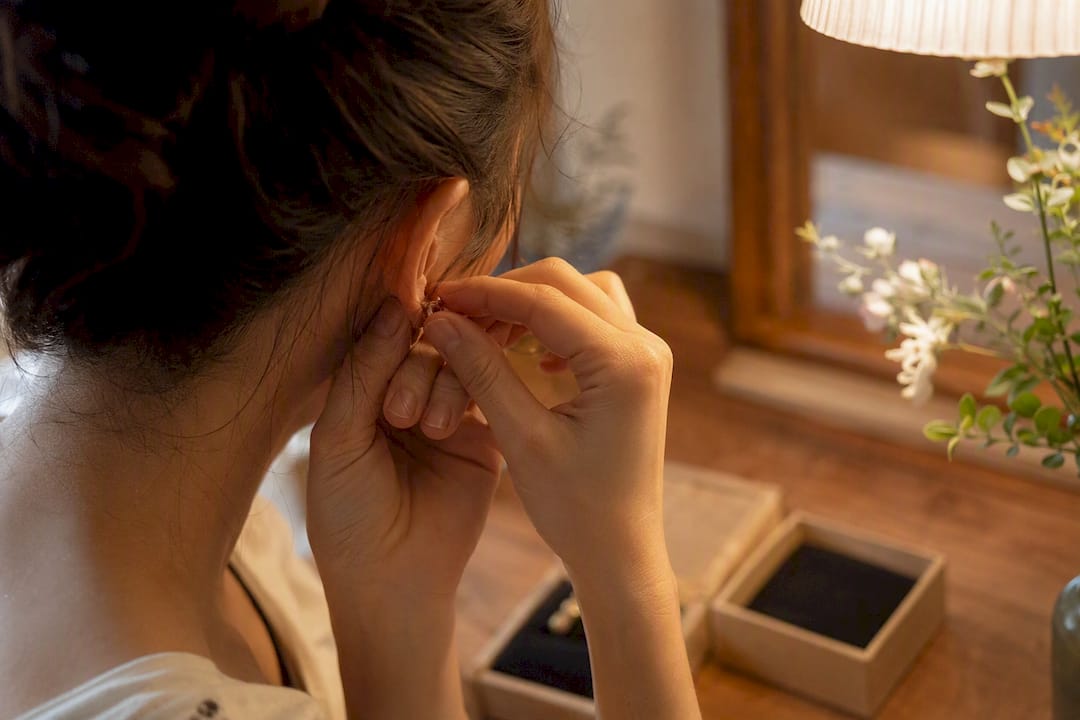
Flat-back labret posts and threadless systems sit flush against the skin instead of protruding, which is why piercers routinely recommend them for cartilage piercings and for sleeping. There’s no bulky clutch pressing into your pillow at 2 a.m. Threadless designs use a bend-fit pin rather than screw threads, so they insert and remove with a gentle push and pull, no twisting required. Both styles show up most often in implant-grade titanium, which matters for anyone prone to reactions.
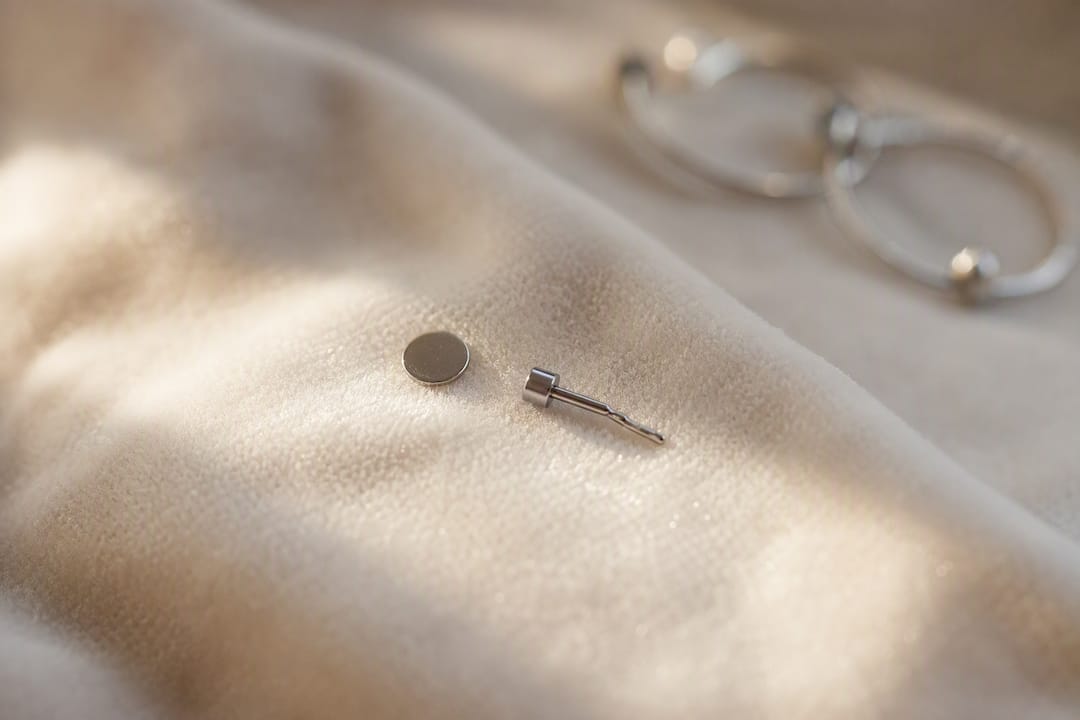
Locking backs, including the La Pousette and Alpa styles, use a small lever or latch that snaps shut and won’t budge without deliberate release. Parents put these on kids’ earrings for exactly that reason, and jewelers recommend them for gemstone studs you plan to wear for years without a second thought.
Silicone and rubber comfort clutches cushion the back of the ear and won’t dig in the way metal clutches can. They’re a solid pick for sensitive skin or overnight wear, though they’re not built to compete with screw or locking backs on holding power, and silicone should be swapped out periodically since it absorbs oils and sweat.
Disc, monster, or jumbo backs spread the earring’s weight over a wider surface, which keeps heavier studs from tilting forward or stretching the piercing over time. If a stud constantly droops, the earring probably isn’t the problem. The back is.
Pro Tip: If a stud feels wobbly or tilts forward during the day, don’t assume it’s a bad piercing. Try a larger disc back first. If the post itself feels loose in the hole or the area looks irritated, that’s your cue to see a piercer rather than a jewelry counter.
Closures Built Into Hoops and Dangle Earrings
Hoops and drops use their own closure systems since a simple back post doesn’t make sense on a curved or hanging design. Leverbacks, latch backs, and clicker or huggie mechanisms integrate the closure directly into the earring, which cuts down on accidental loss during movement.
- Leverbacks use a hinged lever that snaps shut against the earlobe, a standard choice for drop earrings with real weight behind them.
- Latch backs and omega clips close with a small hook or French clip, common on vintage-style hoops and clip-adjacent designs.
- Clicker and huggie closures snap the hoop closed with a hidden hinge, popular for small hoops worn during workouts or travel.
Heavier gemstone drops do best with leverbacks since the hinge distributes weight evenly instead of relying on tension alone.
How to Choose the Right Earring Back for You
Match the back to the situation, not just the earring style. Run through this order:
- Decide your priority. Security or comfort? You rarely get maximum amounts of both from the same back.
- Check the piercing. Fresh or healing piercings need a flat, low-profile back; older, fully healed lobes have more flexibility.
- Weigh the earring. Anything heavier than a small stud may need a disc or jumbo back to prevent drooping.
- Match the material to your skin. If you’ve reacted to metal before, look for implant-grade titanium or solid gold.
- Pick the backing last, once the first four answers are clear.
Watch for red flags: a clutch that spins freely without gripping, rough or bent threading, or backs so small they’re a choking hazard around young kids. If a family member is prone to losing earrings during sports, a locking back solves that problem faster than any amount of careful handling.
Pro Tip: For everyday studs, push backs are fine. For sleeping or cartilage, go flat-back or threadless. For sports, choose locking or screw. For gifts and gemstone pieces you want to keep for decades, locking backs are worth the extra few seconds it takes to close them.
Materials and Trust Signals Behind This Guide
Piercers and jewelers consistently point to implant-grade titanium and solid gold, 14K or 18K, as the safest bets for anyone with sensitive ears or a piercing still healing, since these metals carry a lower risk of the irritation that cheaper alloys cause. Superjeweler’s gold stud earrings and gemstone earrings collections are built with these materials in mind, backed by a standard warranty and return policy so a back that doesn’t fit right isn’t a dead end. Recommendations throughout this guide reflect what practicing piercers and jewelry professionals advise for security and skin tolerance, not just what’s convenient to manufacture.
What Actually Matters When You’re Picking a Back
Most advice on this topic treats “best earring back” like it has one universal answer. It doesn’t, and pretending otherwise is where a lot of guides go wrong. A screw back that’s perfect for a diamond stud you wear once a month is a genuine hassle if you’re someone who changes earrings every morning before work.
The bigger blind spot is comfort during sleep. People obsess over security and completely ignore that a bulky clutch pressed into a pillow for eight hours is what actually causes cartilage irritation and bent posts, not weak security. If you sleep in your earrings, prioritize a flat, low-profile back over a locking one every time.
If there’s one thing worth doing differently, it’s this: stop buying one back style for every earring you own. Keep a locking or screw back on hand for anything valuable, a flat-back for sleeping and healing piercings, and let push backs handle the everyday rotation. That’s not indecision. That’s just matching the tool to the job.
— Andrew
Shop Secure and Comfortable Earring Backs at Superjeweler
Once you know which back fits your life, finding the right earring gets a lot easier. Superjeweler carries pieces built around the materials and closures covered here, from everyday gold studs to gemstone pieces worth locking down for good.

If you’re replacing a stud that keeps loosening, browse gold stud earrings for options in 14K and 18K gold. Shopping for something with more presence, check out gemstone earrings or moissanite earrings for a secure, everyday-wearable alternative to traditional diamonds. Every piece ships with Superjeweler’s standard warranty and return policy, so if a back doesn’t sit right once it arrives, you’re not stuck with it. For pieces you plan to keep as heirlooms, pairing a locking back with a proper home safe rounds out the security picture beyond just the earring itself. Start browsing Superjeweler’s earring collections today and find a back that actually fits how you live.
Sources
- Types of Earring Backs: Complete Guide to Choosing the Right Closure
- Earring Backs Explained: Butterfly vs Flat Back vs Screw-On
- Earring Backs Explained: Butterfly, Screw Back, Leverback and Huggie Closures
