For most shoppers, a VS clarity diamond looks identical to a VVS once it’s mounted and viewed face-up, and it costs meaningfully less. Buy VS unless you’re choosing a step cut like an emerald or Asscher, going above 2 carats, or you specifically want the rarity and paperwork bragging rights of VVS. Whatever grade you pick, insist on a GIA report and look at the actual stone (not just a magnified photo) before you buy.
TL;DR:
- A VS diamond typically looks identical to a VVS in face-up view and offers better value unless size, cut, or rarity demands VVS grades.
- Both VVS and VS grades are determined under magnification, with VVS inclusions being extremely difficult to detect without tools; VS inclusions may be visible under magnification but rarely to the naked eye.
- Bright-cut shapes like round or oval hide small flaws better, while step cuts such as emerald or Asscher reveal inclusions more easily, especially for larger stones over 1.5 carats.
- Upgrading from VS2 to VVS1 can cost significantly more, but usually offers no visible difference for smaller brilliant-cut diamonds under 2 carats.
- Prioritize examining the stone at normal viewing distance, insist on GIA certification, and focus on cut quality and size above microscopic clarity differences for best value.
Table of Contents
- VVS vs VS: What the Grades Actually Mean
- How GIA Grades Clarity (and Why “Eye-Clean” Is the Term That Actually Matters)
- When VVS Actually Looks Different From VS
- The VVS Premium: Where That Extra Money Actually Goes
- Your Step-by-Step Checklist for Choosing Between VVS and VS
- How to Verify Clarity Before You Buy
- How Superjeweler Makes VVS and VS Comparisons Easier
- My Take: Buy the Grade That Matches Your Ring, Not Your Ego
- Sources
VVS vs VS: What the Grades Actually Mean
VVS and VS sit right next to each other on the GIA clarity scale, and the gap between them is smaller than most shoppers assume. Neither term describes what you’ll see with your own eyes at arm’s length.
Here’s how the grades break down:
- VVS1 and VVS2 (Very, Very Slightly Included): inclusions so minute that even a skilled grader struggles to find them at 10x magnification.
- VS1 and VS2 (Very Slightly Included): inclusions that range from difficult to somewhat easy to spot at 10x, but still minor.
- Both tiers sit above SI (Slightly Included) and below Flawless/Internally Flawless on the full 11-grade scale.
The grading always happens under magnification, using a jeweler’s loupe or microscope, not under normal store lighting or on your finger. According to GIA, the inclusions in VVS diamonds are extremely difficult to detect even for professionals, while VS diamonds range from difficult to somewhat easy to see at that same 10x power. In practice, that means both grades are typically invisible without magnification. The distinction is real on paper and matters for certification and resale documentation, but it rarely changes what the diamond looks like in a ring.
How GIA Grades Clarity (and Why “Eye-Clean” Is the Term That Actually Matters)
A grader isolates the stone, examines it from multiple angles under controlled lighting, and plots every inclusion by type, size, and position on a clarity diagram. That level of scrutiny is why two diamonds that look the same to you can land in different grade buckets.
“Eye-clean” isn’t an official GIA term. It’s shorthand the trade uses to describe a diamond with no inclusions visible to an unaided eye at a normal viewing distance, typically 6 to 12 inches. It’s a genuinely useful concept for buyers because it answers the question you actually care about: will anyone, including me, ever notice a flaw looking at this ring?
Pro Tip: Ask a jeweler to show you a stone under the same magnification GIA used to grade it, then hold it at arm’s length. The contrast will teach you more about “eye-clean” in thirty seconds than any chart.
A few habits protect you here:
- Never judge clarity from a magnified photo alone; ask to see the stone at normal viewing distance too.
- Treat “eye-clean” claims in a listing as a starting point, not proof, since VS clarity stones will not have eye-visible inclusions in most cases and are frequently indistinguishable from VVS to the naked eye.
- Rely on the certified GIA report over marketing language every time the two disagree.
When VVS Actually Looks Different From VS
Cut shape changes everything here. Brilliant cuts, round, oval, pear, cushion, cut inclusions into a hall of mirrors, scattering light in a way that camouflages small flaws. Step cuts like emerald and Asscher do the opposite: their long, open facets act like windows straight into the stone, so anything sitting inside becomes far easier to spot.
That’s why Diamond Ateliers notes that VS1 and VS2 are frequently eye-clean in brilliant cuts, but step cuts often call for VS1 or higher, sometimes VVS, to guarantee the same clean look. If you’ve fallen for an emerald-cut solitaire, clarity deserves more of your budget than it would for a round brilliant of the same carat weight.
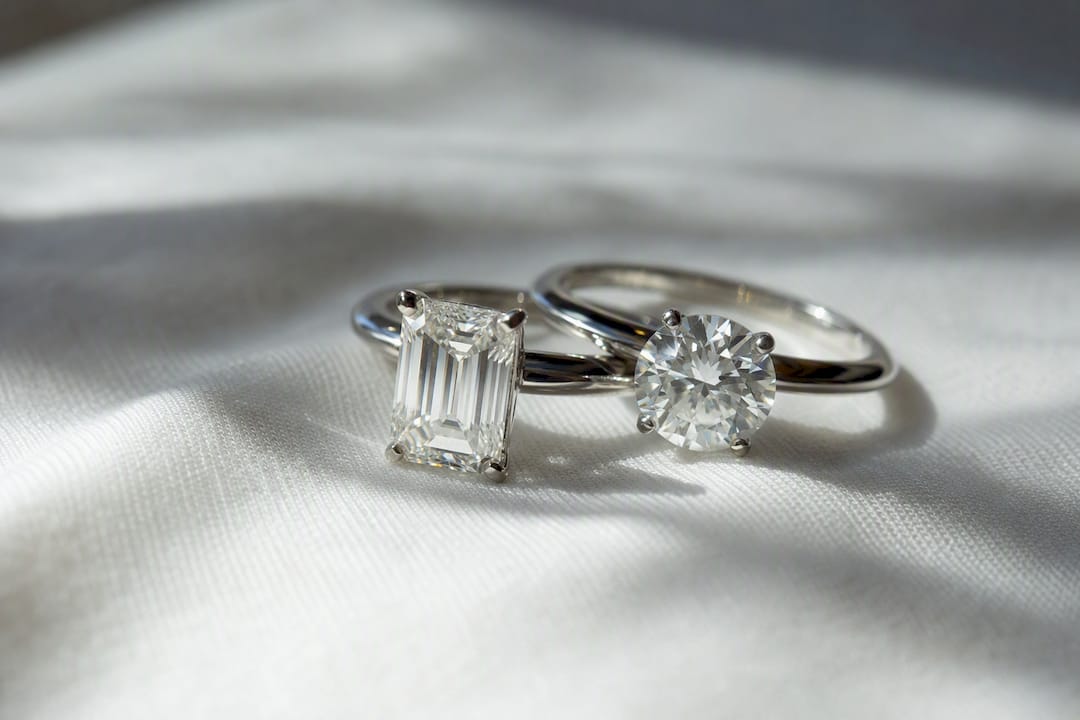
Size matters too. A 0.50 carat VS2 and a 2.50 carat VS2 are not the same buying decision. Inclusions don’t grow with the diamond exactly, but the facets do, and larger facets on bigger stones make internal features easier to catch even at a glance. Position matters as much as size: an inclusion tucked under the table (the flat top facet) is far more visible than one hiding near the edge under a prong.
A few scenarios where upgrading from VS to VVS is likely to change what you actually see:
- An emerald or Asscher cut above roughly 1.5 carats, where the open facets leave nowhere for inclusions to hide.
- Any stone over 2.5 carats in a step cut or a very clean brilliant cut with large, open facets.
- A VS2 stone whose inclusion plot shows a feature centered directly under the table facet.
- Collectors or buyers who want the paperwork and rarity of VVS regardless of visual impact.
Outside those situations, a well-cut VS diamond in a brilliant shape will almost never reveal itself as anything less than VVS to a casual observer, or even to you, six months after the proposal.
The VVS Premium: Where That Extra Money Actually Goes
VVS diamonds cost more, sometimes dramatically more, for a difference you may never see. GIA’s own comparison found that a 1.00 carat, D color VVS1 diamond can run roughly 40% more than a comparable VS1 stone with the same color and cut. That’s real money for a distinction that shows up on a certificate, not on your hand.
The VS tier has its own internal pricing quirk worth knowing. Because VS1 is technically cleaner than VS2, per GIA’s clarity standards, jewelers can charge more for it, and that gap widens sharply at larger carat weights. Diamond Critics calls this the “VS split”: at 2 carats and up, the price jump from VS2 to VS1 can be substantial, even though both grades typically look identical face-up.
- Move budget into cut quality first; a well-cut VS2 outshines a poorly cut VVS1 in almost every lighting condition.
- Consider a larger carat weight in a strong VS grade instead of a smaller VVS stone.
- Put savings toward the setting or band metal, where quality differences are far more visible day to day.
- Reserve the VVS premium for cases where shape or size actually demands it (see the section above).
Vertu’s clarity guide echoes this: prioritize cut and an eye-clean grade, and if the face-up view is already clean, redirect clarity dollars toward size or cut instead.
Your Step-by-Step Checklist for Choosing Between VVS and VS
Comparing two certificates side by side is confusing if you don’t have a process. Work through these four steps in order, and the decision gets a lot simpler.
- Pick your shape and carat target first. Your shape determines how much clarity actually matters. Step cuts need a higher floor; round and oval brilliants give you more room to save.
- Inspect candidate stones face-up, in person or on video, at normal viewing distance. This is the single most important step and the one most buyers skip. A magnified certificate photo tells you nothing about how the ring looks across a dinner table.
- Prioritize cut and setting over microscopic clarity gains once you’ve confirmed a stone is eye-clean. Cut quality affects brilliance and fire far more than the difference between VS1 and VVS2 ever will.
- Reserve VVS for step cuts, large stones, or documented rarity. If none of those apply to your purchase, a well-selected VS diamond gives you the same look for less money.
Pro Tip: If you’re torn between a smaller VVS stone and a larger VS stone at the same price, go bigger. Carat size is far more noticeable to the eye than a clarity grade one step up on a certificate nobody but you will ever read.
VS1 vs. VS2 deserves one more note. GIA confirms VS1 is technically superior, but both are functionally eye-clean in most brilliant cuts under 2 carats. Below that size, the choice is often simply budget.
How to Verify Clarity Before You Buy
Don’t take a listing’s word for it. A few concrete checks separate a confident purchase from a gamble.
- Demand the GIA report. Confirm the certificate number matches the physical stone and review the clarity plot, which shows exactly where each inclusion sits.
- Ask for face-up photos and video at normal scale, not only magnified close-ups. Magnified images alone can make a perfectly eye-clean stone look alarming, and vice versa.
- Ask directly where inclusions are located and whether they sit near the table, the girdle, or under a prong, since position affects visibility more than the grade label alone.
- Confirm return and warranty terms before you commit, especially for online purchases where you can’t inspect the stone in person first.
A retailer’s return policy is your safety net if a stone doesn’t look the way photos suggested once it arrives.
How Superjeweler Makes VVS and VS Comparisons Easier
Comparing clarity grades gets a lot less stressful when you can filter by grade, carat, and shape in one place instead of chasing certificates across multiple sellers. Superjeweler’s engagement ring catalog lets you narrow results by clarity and shape side by side, so you can put a VS2 round brilliant next to a VVS1 of similar specs and see the price gap for yourself.

Every diamond sold carries certification you can request before checkout, along with a warranty and return policy that protects you if a stone doesn’t match its listing once it’s in hand. If you’re weighing a shape switch or a size upgrade instead of chasing clarity, Superjeweler’s lab-grown diamond collection stretches your budget further, letting you land a noticeably bigger stone for what a smaller VVS natural diamond would cost. Browse candidate rings, request magnified images or video of any specific stone, and compare grades directly before you commit. If you’re starting your search on a budget, the engagement rings under $1,000 category is a solid place to see how far a well-chosen VS diamond stretches.
My Take: Buy the Grade That Matches Your Ring, Not Your Ego
Chasing VVS because it sounds more impressive than VS is the most common mistake I see diamond shoppers make. Spend the difference on cut quality or size instead. Pull a GIA report, look at the stone face-up, and lean on Superjeweler’s warranty and return policy as your backstop if something doesn’t match expectations once it arrives.
— Andrew
Sources
- Diamond clarity — The 4Cs | GIA
- VVS Diamond versus VS Diamond: What’s the Difference in Diamond Clarity? | GIA 4Cs blog
- Diamond Clarity Explained: VVS, VS, SI | Diamond Ateliers
- Round Diamond VS1 vs VS2: The VS Split (2026) | Diamond Critics
- VVS vs VS Diamond Clarity: Value Guide | Vertu
Recommended
- Why Upgrade Engagement Ring: Enhancing Love and Value
- Your Complete Upgrading Wedding Ring Guide for 2026
- Diamond Upgrade Ring Options: Your 2026 Buyer’s Guide
- Step-by-step engagement ring buying guide for couples
