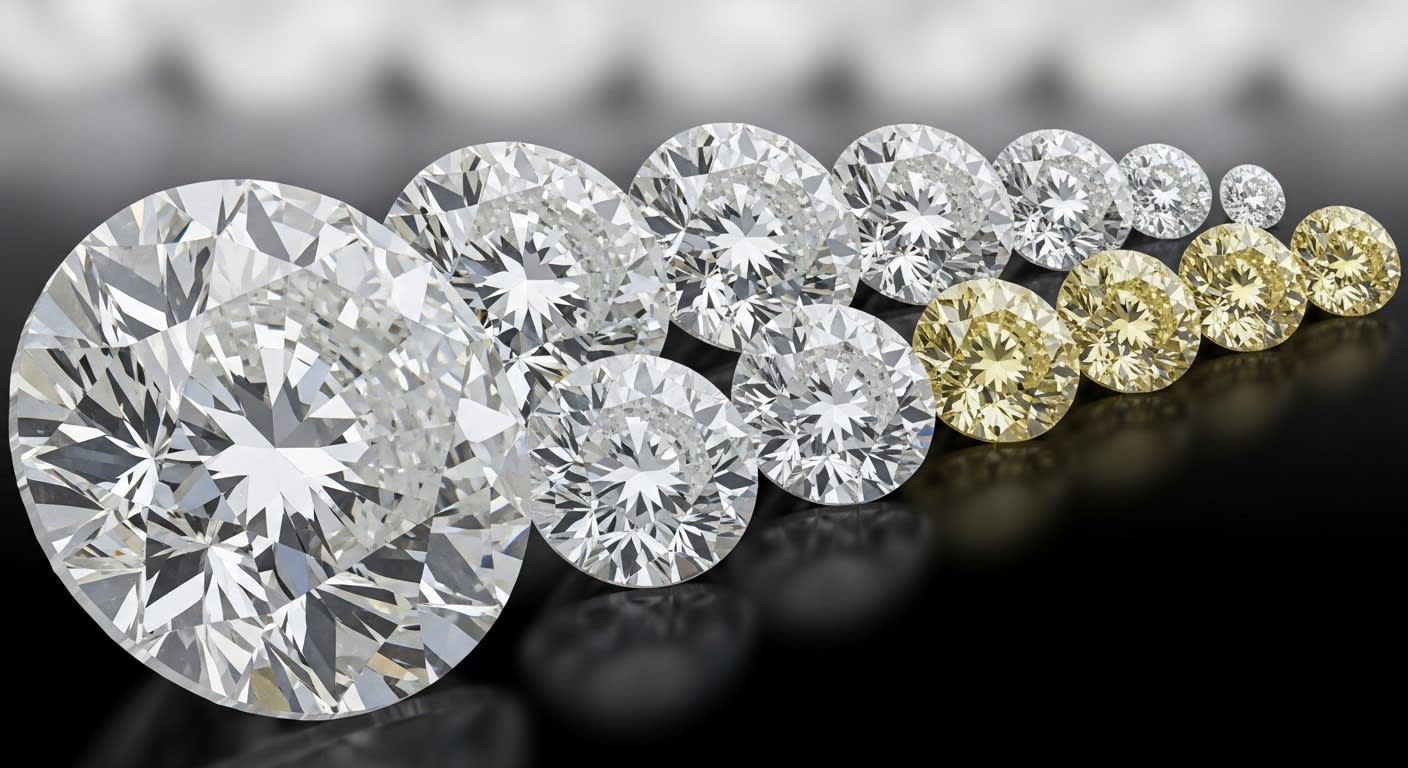
Believing only D color diamonds look beautiful can cost you 50% more without a visible difference. Diamond color grades determine both appearance and price, yet most buyers misunderstand how these grades work in real-world settings. This guide clarifies the grading scale, reveals how color affects cost and look, debunks common myths, and helps you choose a stunning diamond that fits your budget.
Table of Contents
- What Is Diamond Color Grade?
- How Diamond Color Is Graded
- How Color Grade Affects Price and Appearance
- Common Misconceptions About Diamond Color Grade
- How Context Influences Perception of Diamond Color
- Practical Framework for Choosing Diamond Color Grade
- Find Affordable Beautiful Engagement Rings at SuperJeweler
- What Is Diamond Color Grade? Common Questions Answered
Key Takeaways
| Point | Details |
|---|---|
| Diamond color scale | GIA grades diamonds from D (colorless) to Z (light yellow or brown) with precise categories. |
| Near-colorless value | G through J grades appear colorless to most buyers while costing significantly less than D through F. |
| Setting matters | Yellow gold and rose gold settings mask diamond color, allowing lower grades to look beautiful. |
| Price impact | D color diamonds cost up to 50% more than G or H grades with nearly identical appearance. |
| Smart choice | Balance color grade with cut quality, setting metal, and budget for maximum visual impact. |
What Is Diamond Color Grade?
Diamond color grade measures how colorless a diamond appears on a standardized scale. The Gemological Institute of America (GIA) created the universal grading system that runs from D (completely colorless) to Z (light yellow or brown tint). This scale provides consistent language for buyers and sellers worldwide.
The scale divides into three main categories:
- Colorless (D, E, F): No detectable color even under magnification by trained graders
- Near-Colorless (G, H, I, J): Minimal color visible only when compared directly to colorless diamonds
- Faint Color (K-Z): Increasingly visible yellow or brown tones apparent to the naked eye
Color grade directly impacts both diamond appearance and market value. Understanding these classifications helps you set realistic expectations and make informed purchasing decisions. The terminology reflects precise technical standards rather than subjective preferences, ensuring consistency across the jewelry industry.
Most engagement ring buyers focus on the D through J range because these grades deliver the colorless or near-colorless appearance couples desire. Grades beyond J show progressively more visible color that many find less desirable for traditional engagement rings, though personal taste varies.
How Diamond Color Is Graded
Professional gemological laboratories follow strict protocols to assign color grades accurately. Understanding this process builds confidence in certified diamond reports and helps you trust the grades you see.
- Controlled Environment: Graders examine diamonds in specially designed lighting that mimics natural daylight at noon. This eliminates color temperature variations that could skew perception.
- Master Stone Comparison: Labs use reference diamonds with known grades as benchmarks for direct visual comparison. Graders place the test diamond alongside master stones to determine its exact position on the scale.
- Face-Down Viewing: Professionals grade diamonds table-down (upside down) to eliminate brilliance and focus purely on body color. This viewing angle reveals subtle tints invisible when looking through the crown.
- Multiple Graders: Reputable labs like GIA employ several independent graders who evaluate each diamond separately. The final grade represents consensus among experts, ensuring accuracy.
- Identical Standards: The same grading process applies to both natural and lab-grown diamonds, maintaining consistency across diamond types.
Pro Tip: Always request a grading report from GIA, AGS, or another respected laboratory. These certificates provide independent verification of color grade and protect your investment.
Buyers can rely on certified reports because the standardized grading methodology eliminates subjective interpretation. When you see a G color grade on a GIA certificate, that diamond underwent the exact same evaluation process as every other G grade diamond worldwide.
How Color Grade Affects Price and Appearance
Color grade creates dramatic price differences while often producing minimal visual impact. Understanding this disconnect helps you maximize value.
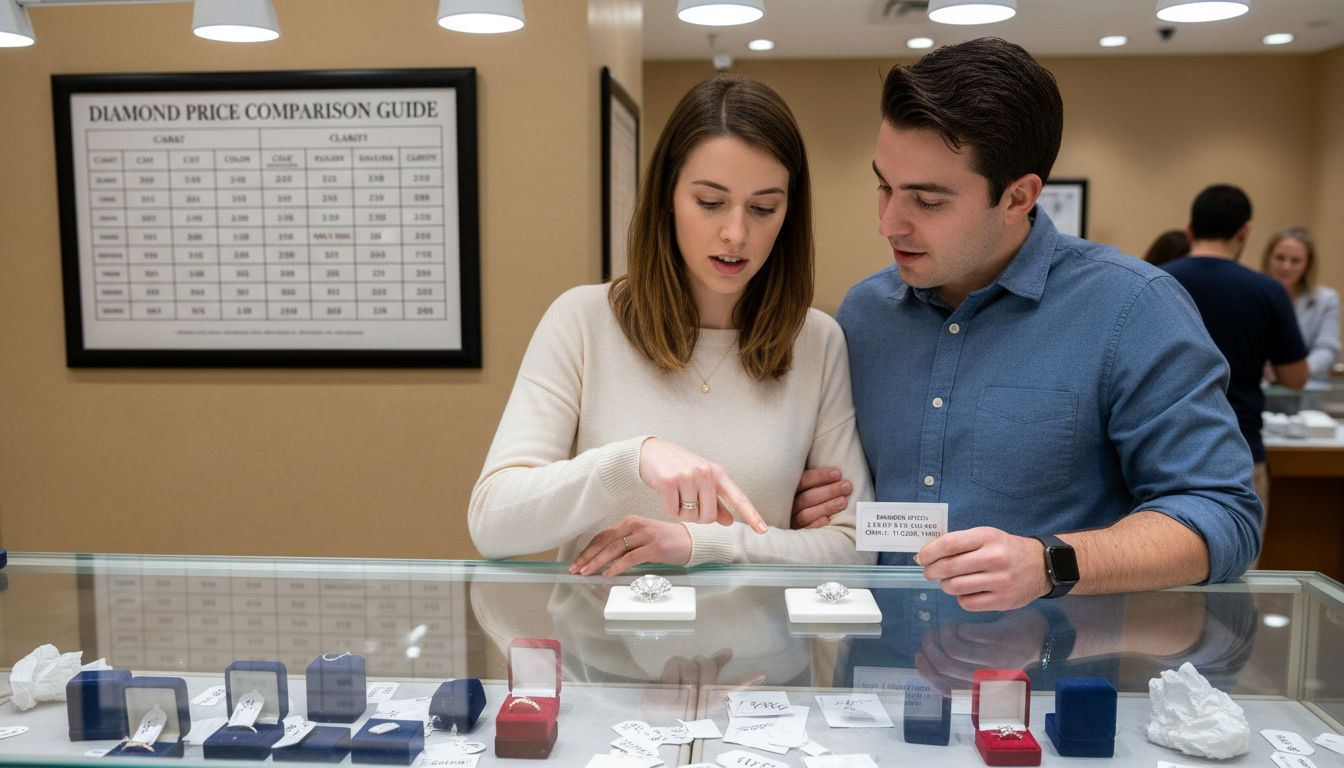
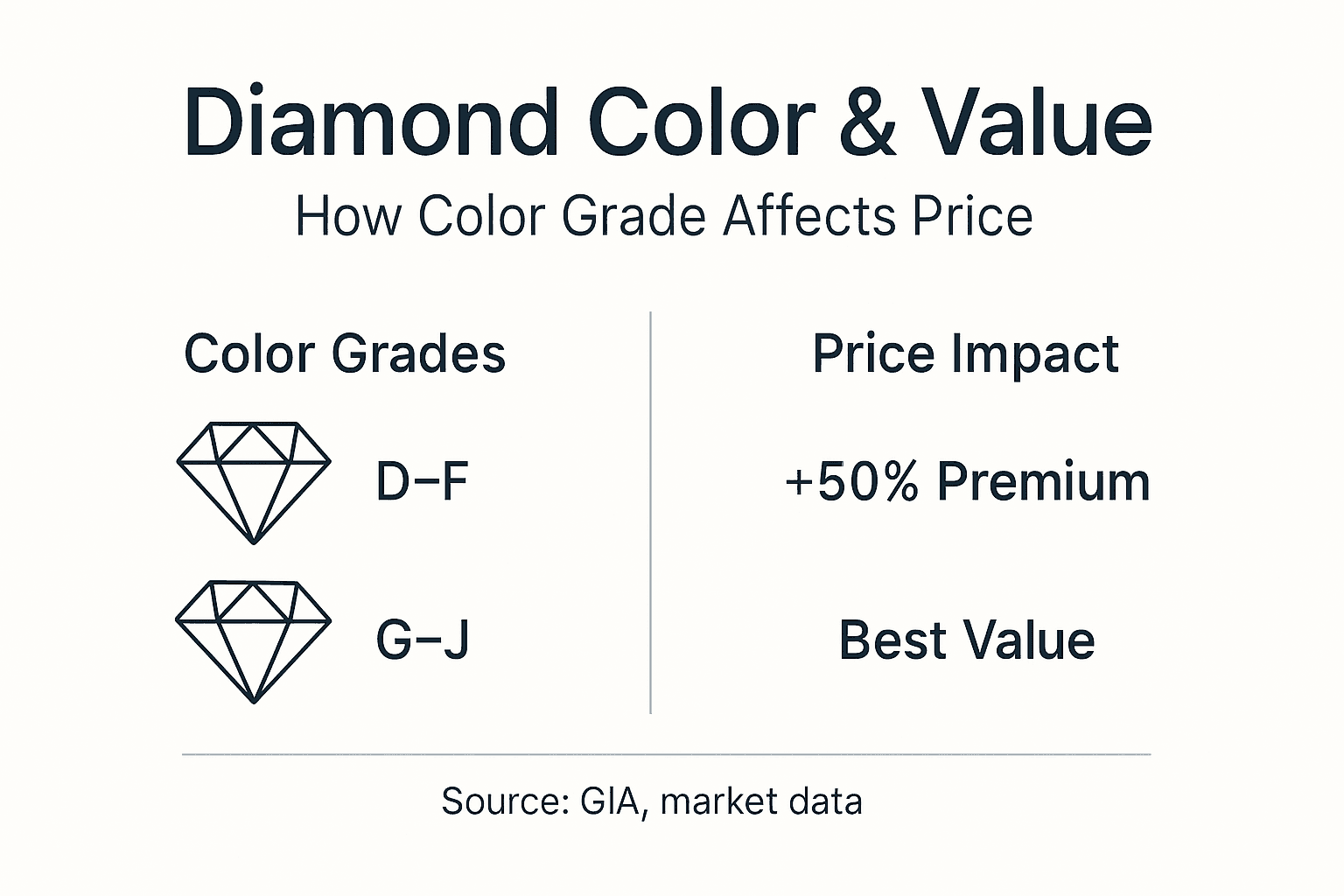
Price increases exponentially as you move up the color scale. A one-carat D color diamond typically costs 40-50% more than a G color diamond of identical cut, clarity, and carat weight. Each grade step from G to D adds roughly 10-15% to the price, yet most people cannot distinguish adjacent grades when diamonds are set in rings.
D color diamonds can command premiums up to 50% over G or H grades despite appearing virtually identical to most observers. This pricing reflects rarity rather than visible beauty. Only about 1% of diamonds receive D grades, creating scarcity that drives collector demand.
Visual differences between adjacent grades remain subtle or imperceptible:
- D vs E vs F: Indistinguishable to untrained eyes, even side by side
- G vs H: Nearly impossible to detect once set in jewelry
- I vs J: Slight warmth visible only in large diamonds (over 1.5 carats) under close inspection
- K and below: Color becomes noticeable, especially in larger stones
Near-colorless grades (G through J) offer exceptional value for visual appearance. These diamonds look colorless when viewed from above in typical lighting conditions. The minor warmth present becomes virtually invisible once the diamond is mounted in a ring setting.
Common buyer trade-offs when balancing price and color:
| Color Grade | Price Range | Visual Impact | Best For |
|---|---|---|---|
| D-F | Highest (premium 40-50%) | Colorless even unmounted | Platinum settings, investment pieces |
| G-H | Moderate (baseline pricing) | Appears colorless in all settings | Most engagement rings, best value |
| I-J | Lower (15-25% discount) | Warm tone in white metals, colorless in yellow gold | Yellow gold settings, budget-conscious buyers |
| K-M | Lowest (40%+ discount) | Visible warmth, vintage appearance | Yellow/rose gold, unique preferences |
Pro Tip: View diamonds in the actual setting and lighting where you’ll wear the ring. Store lighting differs dramatically from natural daylight, and ring metal choice significantly affects perceived diamond color.
Common Misconceptions About Diamond Color Grade
Several persistent myths mislead buyers and cause unnecessary spending. Separating fact from fiction helps you make confident choices.
Myth: Only D through F grades look beautiful
Reality: G through J grades appear colorless to most people once set in rings. The difference exists primarily in laboratory conditions using master stone comparisons. Your friends and family will not notice color variations in this range.
Myth: Ring metal color doesn’t affect diamond appearance
Reality: Yellow gold and rose gold settings mask diamond body color effectively. An I or J grade diamond in yellow gold often looks whiter than an E grade in platinum because the warm metal tone cancels the diamond’s slight warmth.
Myth: Higher color grade always means better appearance
Reality: Cut quality impacts brilliance and fire far more than color grade affects beauty. A well-cut G color diamond sparkles more beautifully than a poorly cut D color stone. Prioritize excellent cut before obsessing over color.
Myth: Lab-grown diamonds use different color grading standards
Reality: GIA and other labs grade lab-grown diamonds using the identical D-Z scale and methodology as natural diamonds. A G grade lab-grown diamond matches a G grade natural diamond in color appearance.
Myth: You can accurately judge color grade by looking at a diamond
Reality: Even experienced jewelers cannot consistently determine exact grades without master stones and controlled lighting. Color perception varies based on lighting conditions, surrounding colors, and individual eyesight differences.
These misconceptions often lead buyers to overspend on higher color grades that provide no visible benefit in their chosen setting. Understanding the truth helps you allocate budget toward factors that actually enhance appearance.
How Context Influences Perception of Diamond Color
External factors significantly modify how you perceive diamond color in real-world wearing conditions. Smart buyers optimize these variables to maximize visual appeal while minimizing cost.
Ring metal creates the most dramatic contextual effect. Warm metals like yellow gold and rose gold contain strong yellow or pink tones that optically blend with slight diamond warmth. This interaction makes lower color grades appear whiter than they would in white metal settings.
Yellow gold settings allow I through J color grades to look nearly colorless to approximately 85% of viewers. The metal’s warm reflection bounces into the diamond, canceling its subtle yellow cast. This phenomenon lets you save 20-30% on diamond cost without sacrificing beauty.
Lighting conditions alter color perception substantially:
- Natural daylight: Reveals true diamond color most accurately, shows subtle warmth in lower grades
- Indoor incandescent: Warm yellow tones mask diamond color, makes everything appear warmer
- Fluorescent lighting: Cool blue tones can make diamonds appear whiter or create strange color casts
- Jewelry store spotlighting: Intense focused light maximizes brilliance while minimizing visible color
The interaction between diamond color grade and setting influences long-term satisfaction. A platinum solitaire showcases a diamond’s true color because the bright white metal provides maximum contrast. The same diamond in yellow gold appears whiter because the setting itself contains color.
Pro Tip: If you love the look of white metals but want to save on color grade, choose a halo setting or side stones. The surrounding diamonds create a bright white frame that makes the center stone appear whiter than it would in a simple solitaire.
Your personal color sensitivity matters too. Some people naturally notice subtle color variations while others focus primarily on sparkle and brilliance. Consider your own preferences and priorities rather than following arbitrary rules about minimum color grades.
Practical Framework for Choosing Diamond Color Grade
Use this systematic approach to select the optimal color grade for your specific situation, balancing budget constraints with visual preferences.
- Define Your Budget Range: Determine total ring budget and allocate roughly 60-70% to the diamond. This percentage leaves room for setting costs while prioritizing the center stone.
- Choose Your Setting Style and Metal: Select platinum, white gold, yellow gold, or rose gold first. This decision directly impacts which color grades will look best and deliver maximum value.
- Assess Your Color Sensitivity: Visit jewelry stores and compare G, H, I, and J grades side by side in your chosen metal. Note which differences you actually notice versus theoretical grade distinctions.
- Apply Metal-Specific Recommendations: Use setting choice to guide color grade selection for optimal visual impact and budget efficiency.
- Prioritize Cut Quality: Ensure excellent or ideal cut grade before stretching budget for higher color. Superior cut proportions create brilliance that outweighs minor color differences.
- Balance All Four Cs: Make strategic trade-offs across color, clarity, cut, and carat based on what matters most in your situation.
Recommended color grade ranges by setting metal:
| Setting Metal | Optimal Color Range | Visual Result | Budget Impact |
|---|---|---|---|
| Platinum / White Gold | G-H | Colorless appearance, excellent value | Moderate pricing |
| Yellow Gold (14K/18K) | I-J | Appears colorless, metal masks warmth | 20-30% savings vs G |
| Rose Gold | I-K | Warm tones complement each other | 25-35% savings vs G |
| Mixed Metal / Halo | H-I | Surrounding elements create white context | Balanced approach |
Example scenarios illustrating how choices shift:
Scenario 1: $3,000 budget, platinum solitaire, values traditional colorless look
Recommendation: 0.75ct G/H color, excellent cut, VS2 clarity. Prioritizes near-colorless appearance in white metal.
Scenario 2: $3,000 budget, yellow gold vintage-style setting, wants larger diamond
Recommendation: 1.0ct I/J color, excellent cut, SI1 clarity. Metal choice enables larger stone without visible color compromise.
Strategic color grade selection within a comprehensive engagement ring framework lets you maximize both size and beauty. A practical approach balances budget, setting preference, and personal color sensitivity when recommending G through J grades for near-colorless appearance and value.
Find Affordable Beautiful Engagement Rings at SuperJeweler
You now understand how diamond color grades work and which choices deliver the best value for your situation. Put this knowledge into action by exploring engagement rings designed to maximize beauty while respecting your budget.

SuperJeweler offers an extensive selection of engagement rings across all price points, featuring diamonds in the G through J near-colorless range that provides optimal visual appeal without premium pricing. Every diamond comes with certification from respected gemological laboratories, ensuring the color grade you see matches the quality you receive.
Whether you prefer platinum solitaires that showcase colorless brilliance or yellow gold settings that let you maximize carat weight, you’ll find styles matching your vision. Browse affordable engagement rings under $1,000 featuring carefully selected diamonds that prove beautiful rings don’t require breaking the bank. Expert guidance and transparent grading information help you choose confidently, applying everything you’ve learned about color grades to find your perfect ring.
What Is Diamond Color Grade? Common Questions Answered
Does diamond color grade affect sparkle and brilliance?
Color grade does not directly affect sparkle or brilliance, which come entirely from cut quality and proportions. A well-cut J color diamond sparkles more than a poorly cut D color diamond. However, color can slightly reduce contrast in a diamond’s facet pattern, which is why you should prioritize excellent cut before stretching budget for higher color grades.
Is there any difference in color grading between natural and lab-grown diamonds?
No difference exists in color grading standards between natural and lab-grown diamonds. GIA and other laboratories use identical D through Z scales and evaluation methods for both diamond types. A G color lab-grown diamond matches a G color natural diamond in appearance, though lab-grown stones typically cost 60-80% less at the same grade.
Does color grade matter more than cut quality for engagement rings?
Cut quality matters significantly more than color grade for overall beauty and visual impact. Excellent cut creates the brilliance, fire, and scintillation that make diamonds captivating. Most people cannot distinguish between G and D color once set, but everyone notices the difference between excellent and poor cut quality.
How can I test diamond color when shopping in jewelry stores?
Ask to view diamonds against a white background in natural daylight near a window, not under intense store spotlights. Compare adjacent color grades (like G vs H) side by side to see if you actually notice differences. View diamonds in the actual setting style and metal color you plan to purchase, as context dramatically affects color perception.
How does my choice of ring metal affect which diamond color grade I should buy?
Yellow gold and rose gold allow you to choose I or J color grades that appear colorless because the warm metal masks diamond warmth, saving 20-30% compared to G grades. Platinum and white gold provide maximum contrast, making G or H grades the better choice for maintaining a colorless appearance in bright white settings.
Recommended
- Diamond Clarity – How It Impacts Ring Value
- What Is a Certified Diamond and Why It Matters
- Why Diamonds Are Valuable – Insights for Couples
- Why Diamond Quality Matters for Engagement Rings
