TL;DR:
- Proper gold jewelry care involves regular cleaning, careful storage, and professional inspections to maintain its appearance and value. Home cleaning with a mild soap soak and gentle brushing is safe if done correctly, but rough handling or abrasive cleaners can cause damage. Storing pieces separately in fabric-lined compartments and avoiding chemicals helps prevent tarnish, scratches, and deterioration over time.
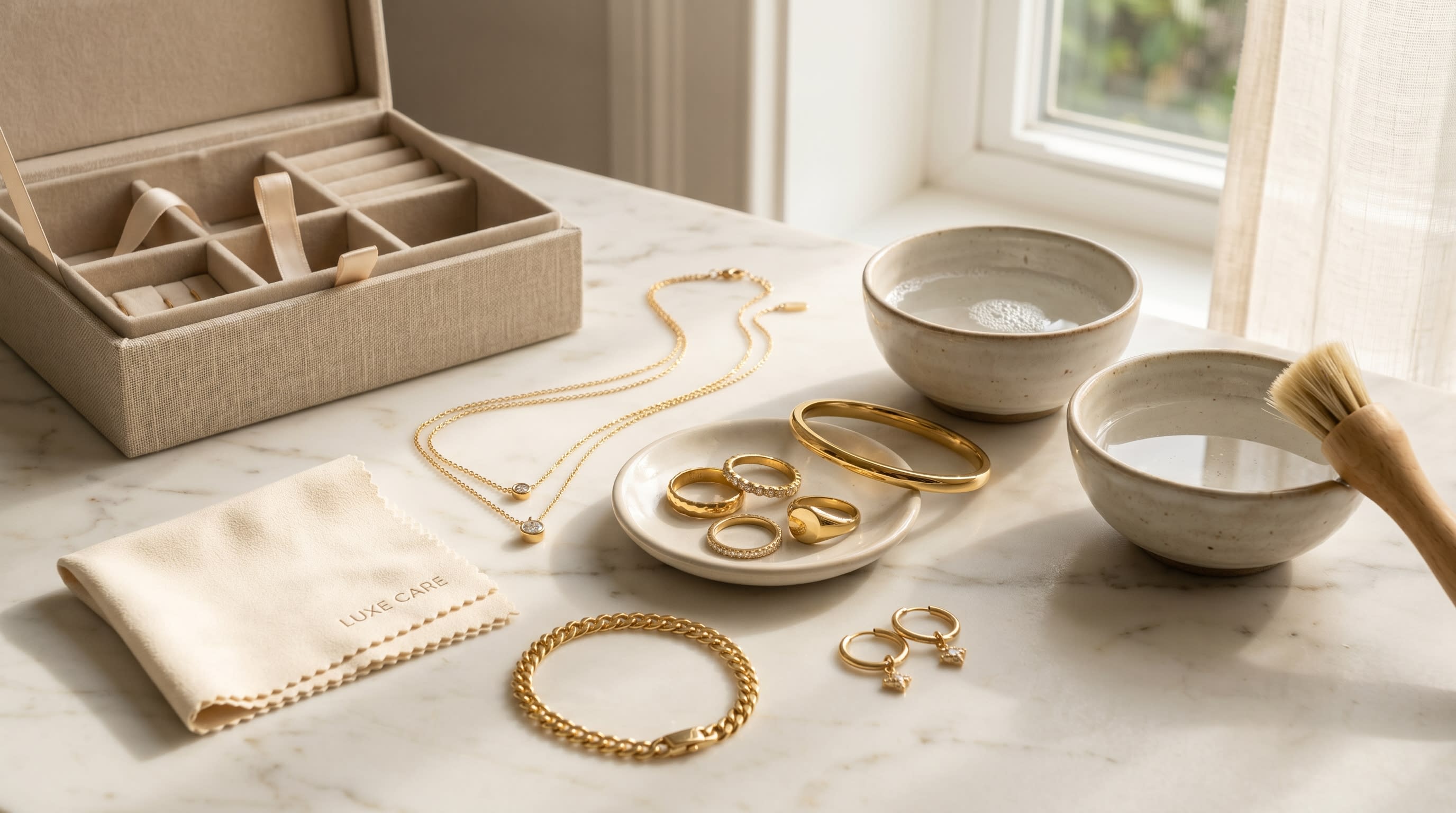
Gold jewelry care is defined as the regular practice of cleaning, storing, and maintaining gold pieces to preserve their luster, structural integrity, and long-term value. Without consistent care, even solid 14K or 18K gold can dull, scratch, and suffer damage from everyday exposure to chemicals, moisture, and improper handling. The good news is that proper gold jewelry maintenance requires no special equipment. A soft toothbrush, mild dish soap, and a fabric-lined box are the foundation of any effective routine. This guide covers every step, from safe home cleaning to professional inspections, so your pieces stay beautiful for years.
How to care for gold jewelry: safe home cleaning
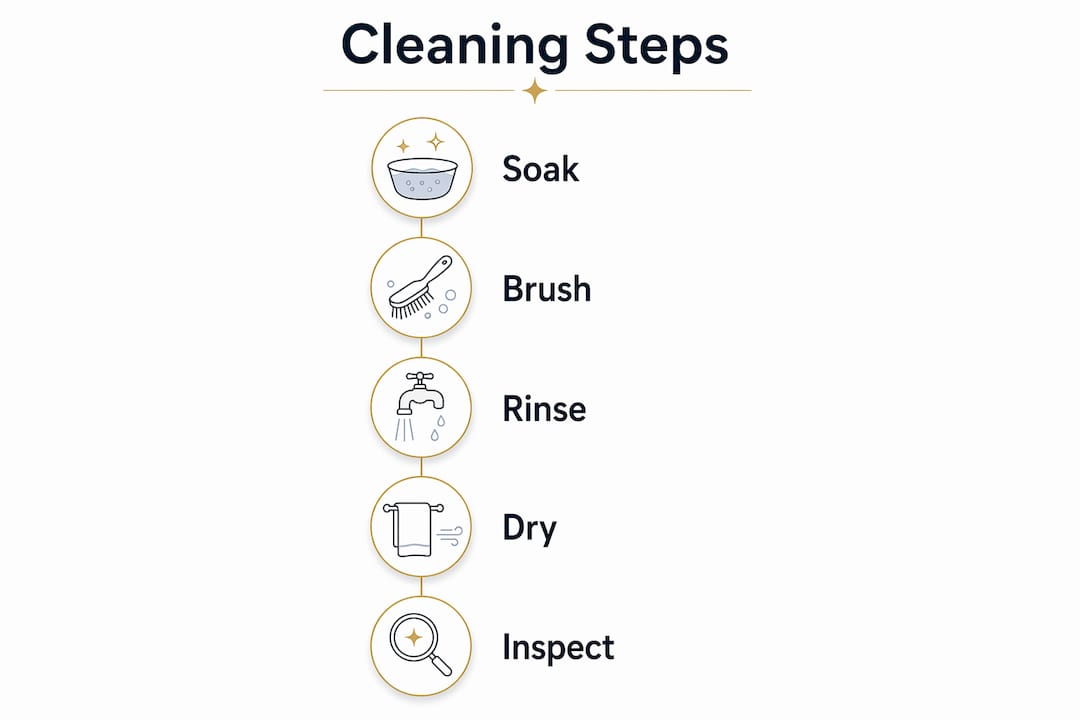
Cleaning gold jewelry at home is safe, effective, and takes less than 30 minutes when done correctly. The method jewelers recommend most is a warm water soak with a few drops of mild dish soap, followed by gentle brushing.
Step-by-step cleaning method
- Fill a small bowl with warm (not hot) water and add 3–4 drops of mild dish soap.
- Soak your gold pieces for 15–30 minutes. This loosens dirt and oils from settings and surface grooves without harming the metal.
- Brush gently with a soft-bristle toothbrush, paying close attention to prong settings, chain links, and engraved areas where grime collects.
- Rinse thoroughly under warm running water. Place a strainer over the drain first. A lost ring is not worth skipping this step.
- Pat dry with a lint-free cloth, then let pieces air dry completely before storing or wearing.
Toothpaste is one of the most common home cleaning mistakes. Abrasive agents scratch gold alloys and can damage softer gemstones like opals, pearls, and emeralds. Stick to mild soap and water for every karat weight.
When should you skip home cleaning? If a stone looks loose, a prong is bent, or a clasp feels weak, stop and take the piece to a jeweler. Cleaning a structurally compromised piece can make damage worse.
Pro Tip: Use a dedicated soft toothbrush labeled for jewelry only. Bathroom toothbrushes carry toothpaste residue that can scratch gold over time.
What are the best practices for storing gold jewelry?
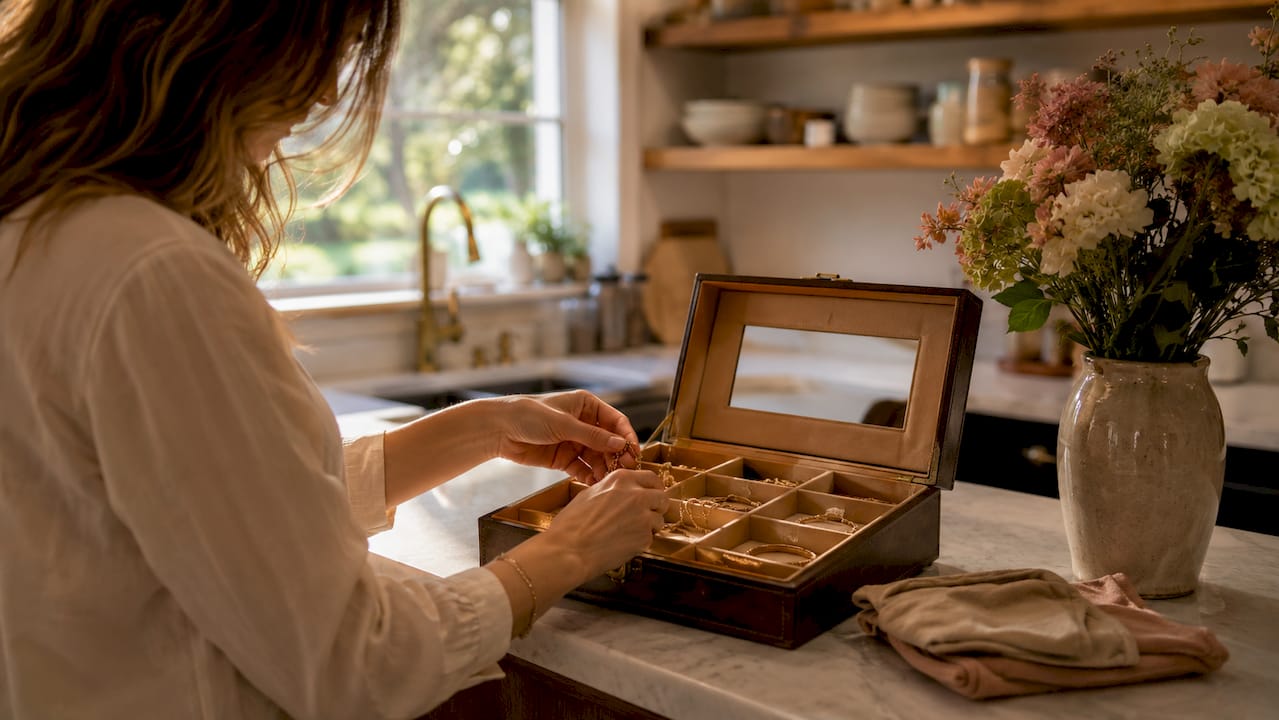
Proper storage is the single most underrated part of gold jewelry maintenance. Most scratches, tangles, and tarnish happen not during wear but during storage.
The right environment
Store gold jewelry in individual fabric-lined compartments at a temperature of 65–75°F and a relative humidity of 35–55%. Bathrooms are the worst place to keep jewelry. Steam from showers creates a humid environment that accelerates tarnish and loosens adhesives in certain settings.
Use anti-tarnish strips and silica gel packets inside your jewelry box to absorb moisture and sulfur compounds. Replace these packets every 2–3 months to keep them effective.
Storage habits that prevent damage
- Store each piece in its own soft pouch or compartment. Gold scratches gold when pieces touch.
- Clasp necklaces and bracelets before putting them away. This prevents tangling and reduces mechanical stress on chain links.
- Never mix gold with silver or other metals in the same drawer. Different metals react with each other and cause surface oxidation.
- Check stored pieces every 3–6 months for early signs of tarnish, loose stones, or worn clasps.
- Keep jewelry away from windowsills. UV light and heat fluctuations degrade certain gemstone settings over time.
Pro Tip: A small hanging jewelry organizer with individual clear pockets keeps pieces separated, visible, and tangle-free without taking up drawer space.
| Storage method | Best for | Risk if skipped |
|---|---|---|
| Fabric-lined compartments | All gold types | Scratches from contact |
| Anti-tarnish strips | All gold types | Sulfur tarnish buildup |
| Silica gel packets | Humid climates | Moisture damage |
| Clasped storage | Necklaces, bracelets | Tangling and chain stress |
| Individual soft pouches | Travel storage | Surface scratches |
How often should you get gold jewelry professionally inspected?
Home cleaning handles surface dirt, but professional inspection every 6–12 months catches problems that the naked eye misses. Jewelers use magnification tools to check prong integrity, clasp strength, and stone security. Catching a loose prong early costs far less than replacing a lost diamond.
Professional cleanings also go deeper than home methods. Ultrasonic cleaners and steam equipment remove buildup from areas a toothbrush cannot reach. That said, ultrasonic cleaning is not safe for all stones. Emeralds, opals, and pearls can crack under ultrasonic vibration, so always tell your jeweler what stones are set in the piece.
White gold requires one additional step: rhodium plating. White gold is naturally a light gray color. Jewelers coat it with rhodium to create the bright white finish most buyers expect. That coating wears off over time, typically within 1–3 years depending on wear frequency. Re-plating restores the original look and is a routine part of white gold maintenance.
Professional cleanings are not just cosmetic. They are safety checks for loose fittings and structural integrity that protect the long-term value of your jewelry.
- Inspect prongs on ring settings at every professional visit.
- Ask about rhodium re-plating if white gold looks yellowish or dull.
- Request an updated appraisal every few years for insurance purposes.
- Never ignore a rattling stone. That sound means a prong has failed.
What daily habits help prevent damage to gold jewelry?
Prevention is more effective than repair. The right daily habits protect gold pieces from the most common sources of damage: chemicals, moisture, and physical impact.
Remove gold jewelry before swimming, showering, or any activity involving chlorine or bleach. Chlorine weakens the metal structure of gold alloys and accelerates wear on prong settings. Even a single pool session can begin to degrade a ring’s structural integrity over time.
Follow these daily precautions to protect your pieces:
- Take off jewelry before applying lotions, perfumes, or hairspray. These products leave a film on gold that dulls its surface and traps bacteria in settings.
- Remove rings and bracelets before manual labor, gardening, or gym workouts. Physical impact bends prongs and scratches metal.
- Put jewelry on last when getting dressed. Cosmetics, hair products, and sprays should be fully dry before any piece touches your skin.
- Wash your hands before handling fine jewelry. Skin oils transfer to metal and accelerate surface dullness.
- Keep a small dish near your bathroom sink as a designated spot for rings. A consistent removal habit prevents accidental drain losses.
Pro Tip: Set a phone reminder to remove your rings before your evening shower. One consistent habit prevents the majority of chemical exposure damage.
How do different types of gold jewelry require different care?
Not all gold jewelry is the same. Solid gold, gold-plated, vermeil, and white gold each have distinct properties that change how you should clean and store them.
| Gold type | Composition | Care level needed |
|---|---|---|
| Solid 24K gold | Pure gold, very soft | Gentle cleaning, careful storage |
| Solid 14K or 18K gold | Gold alloy, more durable | Standard home cleaning safe |
| Gold-plated | Thin gold layer over base metal | Minimal cleaning, no soaking |
| Vermeil | Thick gold over sterling silver | Gentle cleaning, dry storage |
| White gold | Gold alloy with rhodium coating | Periodic re-plating required |
Gold-plated and vermeil pieces require the most careful handling. Over-cleaning strips the thin gold layer and exposes the base metal underneath, turning pieces dull or discolored. For plated jewelry, skip soaking entirely. Wipe with a damp soft cloth and dry immediately. Learn more about the differences in a gold plating guide before cleaning any plated piece.
Solid gold durability varies by karat. 24K gold is the purest but the softest, making it prone to scratches and bending. 14K and 18K gold contain alloy metals that add hardness, making them better choices for everyday rings and bracelets. For 14K gold pieces, the standard warm water and soap method is safe and effective.
Gemstone settings add another layer of consideration. Hard stones like diamonds and sapphires tolerate gentle brushing well. Softer or porous stones like turquoise, coral, and pearls absorb water and cleaning agents. For any piece with mixed materials, consult a jeweler before using any cleaning method beyond a dry soft cloth. The jewelry care tips at Superjeweler’s blog cover stone-specific guidance in detail.
Key Takeaways
Consistent, gentle care is the most effective way to preserve gold jewelry’s appearance and structural integrity over time.
| Point | Details |
|---|---|
| Clean with soap and water | Soak in warm water with mild dish soap for 15–30 minutes, then brush gently. |
| Store pieces separately | Use fabric-lined compartments or soft pouches to prevent scratches and tarnish. |
| Inspect professionally | Visit a jeweler every 6–12 months to check prongs, clasps, and stone security. |
| Avoid chemicals daily | Remove jewelry before swimming, showering, or applying lotions and sprays. |
| Match care to gold type | Gold-plated and vermeil pieces need minimal cleaning; solid gold tolerates more. |
What I’ve learned from years of watching people care for gold wrong
The most common mistake I see is not neglect. It is over-cleaning. People scrub their gold rings daily with whatever is under the sink, thinking more cleaning means more shine. For solid gold, that habit dulls the surface finish faster than normal wear would. For plated pieces, it strips the gold layer within months.
The second mistake is treating storage as an afterthought. A tangled pile of necklaces in a bathroom drawer is one of the fastest ways to scratch, tarnish, and damage pieces that could otherwise last decades. I have seen beautiful 18K pieces lose their finish entirely from nothing more than sitting loose in a humid drawer for a year.
What actually works is boring but reliable: a weekly wipe with a soft cloth, a monthly gentle soap soak for pieces worn often, and a professional checkup once a year. That routine costs almost nothing and prevents the repairs that do. The jewelers who see the most damage are not seeing pieces worn hard. They are seeing pieces stored carelessly and cleaned with the wrong products.
My honest advice is to spend five minutes setting up a proper storage system before worrying about any cleaning product. A fabric-lined box with individual compartments solves more problems than any solution in a bottle.
— Andrew
Fine gold jewelry worth caring for, from Superjeweler
Caring for your gold jewelry starts with owning pieces built to last. Superjeweler offers a wide selection of fine gold jewelry, from affordable engagement rings under $1,000 to lab-grown diamond rings crafted in 14K and 18K gold settings.

Every piece from Superjeweler ships with care guidance and is backed by warranty options and a straightforward return policy. Whether you are looking for a classic solitaire, a gemstone ring, or personalized jewelry, Superjeweler’s catalog covers every style at competitive prices. Visit Superjeweler.com to find your next piece, knowing exactly how to keep it looking its best.
FAQ
How do you clean gold jewelry at home safely?
Soak gold jewelry in warm water with 3–4 drops of mild dish soap for 15–30 minutes, then gently brush with a soft toothbrush and rinse thoroughly. Pat dry with a lint-free cloth and allow to air dry before storing.
Does gold jewelry tarnish?
Pure 24K gold does not tarnish, but 14K and 18K gold alloys can develop a dull film from exposure to chemicals, sweat, and moisture. Regular cleaning and proper storage prevent most tarnish buildup.
How should you store gold jewelry to prevent scratches?
Store each piece in an individual fabric-lined compartment or soft pouch at 65–75°F with 35–55% humidity. Avoid bathroom storage and keep pieces separated to prevent metal-on-metal scratching.
How often should gold jewelry be professionally cleaned?
A professional cleaning and inspection every 6–12 months is the standard recommendation. Jewelers check for loose stones, worn prongs, and weak clasps that home cleaning cannot detect.
Can you use toothpaste to clean gold jewelry?
Toothpaste is abrasive and scratches gold surfaces, especially on higher-karat pieces. Use mild dish soap and warm water instead for safe, effective cleaning at home.
Recommended
- What Is Gold Plating? A Jewelry Shopper’s Guide
- Gemstone Buying Process: A Complete Guide for 2026
- Affordable Jewelry Shopping Guide for Quality Finds
- White Gold vs Platinum: Key Differences for Jewelry Buyers
