Gold vermeil beats standard gold plating on nearly every measure that matters: it lasts longer, treats sensitive skin better, and holds its value better over time, provided it actually meets the federal standard for vermeil. That standard requires a sterling silver base, a gold layer of at least 2.5 microns, and gold purity of at least 10K. Gold plating skips all three of those thresholds, which is exactly why it costs less and wears out faster. The exception: a heavily plated piece with a disclosed base metal can sometimes outlast a mislabeled “vermeil” item that never met the standard in the first place.
TL;DR:
- Vermeil must have a gold layer of at least 2.5 microns and a sterling silver base with a 925 mark to meet federal standards, unlike gold plating.
- Gold plating commonly uses base metals like brass or copper with layers thinner than 0.5 microns, causing faster wear and potential skin reactions.
- Vermeil typically lasts several years with careful wear due to its thicker gold layer, while plated jewelry may show wear within months to a few years.
- Proper jewelry care, such as avoiding water and chemicals and requesting replatting, can extend the lifespan of vermeil and plated pieces.
- Always check for detailed documentation on gold thickness and ask about the base metal before purchasing to avoid mislabeled or low-quality jewelry.
Table of Contents
- What Gold Vermeil Actually Is
- What Gold Plating Actually Means
- Vermeil vs. Gold Plated: The Numbers That Matter
- How to Make Vermeil and Plated Jewelry Last Longer
- How to Tell Vermeil From Plated Before You Buy
- Which One Should You Actually Buy?
- Andrew’s Take: What Actually Matters When You’re Buying
- Shop Vermeil and Fine Gold Jewelry at The retailer
- Sources
What Gold Vermeil Actually Is
Gold vermeil is not a marketing term. It is a regulated category defined by the FTC Jewelry Guides, which set three requirements a piece must meet before a seller can legally call it vermeil.
- The base metal has to be sterling silver, marked 925.
- The gold layer has to measure at least a few microns thick.
- The gold itself has to be at least 10K purity, though most brands use 14K or 18K for a richer color.
That 925 stamp tells you the base is sterling silver, but it does not tell you anything about the gold on top. A piece can carry a 925 mark and still fall short of the vermeil threshold if the gold layer is thinner than 2.5 microns or the karat is too low. Reputable sellers back up the 925 stamp with a separate “vermeil” designation or product documentation stating the exact micron thickness and karat, since the 925 mark alone only confirms the silver.
What Gold Plating Actually Means
Gold plating uses the same basic electroplating process as vermeil: a thin layer of gold is bonded to a base metal using an electric current. The difference is what sits underneath and how thick that gold layer ends up being.
- Base metals are typically brass, copper, or other low-cost alloys rather than sterling silver.
- Gold layers usually run somewhere between roughly 0.175 and 0.5 microns, a fraction of vermeil’s minimum. Some brands offer “heavy” plating or HGE (heavy gold electroplate) that runs thicker, but there is no legal floor the way there is for vermeil.
- Because the layer is so thin, normal wear exposes the base metal underneath fairly quickly, and brass or copper touching skin is a common trigger for discoloration and irritation.
That combination of thin gold and reactive base metal is why plated jewelry is priced for trend pieces, not heirlooms.
Vermeil vs. Gold Plated: The Numbers That Matter
The gap between these two finishes comes down to three factors: how thick the gold layer is, what metal sits underneath it, and how much friction the piece takes in daily wear.
- Thickness. Vermeil starts at 2.5 microns and often goes higher. Standard plating runs much thinner, which is the single biggest reason vermeil holds its color longer.
- Base metal. Sterling silver under vermeil resists tarnish reasonably well and rarely causes skin reactions. Brass or copper under plating tarnishes faster and is a frequent cause of green or black skin discoloration once the gold wears through.
- Resale and scrap value. Vermeil’s resale value comes almost entirely from the silver base, since the gold layer is too thin to recover meaningfully at melt. Plated jewelry has essentially no scrap value at all, because the base metals carry little to none.
A vermeil ring at the 2.5 micron minimum can realistically hold up for several years with careful wear, according to industry guidance on vermeil lifespan, while plated jewelry often shows wear within months to a couple of years depending on thickness and how often it’s worn.
Rings and bracelets wear out fastest on either finish, since they take constant friction from hands, countertops, and fabric. Necklaces and earrings, which see far less contact, tend to hold their gold layer noticeably longer.
How to Make Vermeil and Plated Jewelry Last Longer
Most of the damage to a gold finish, vermeil or plated, comes from habits rather than bad luck. Water, body chemistry, and everyday products are the real enemies of a thin gold layer.
- Take jewelry off before you shower, swim, work out, or clean the house, since chlorine, soap, and lotion all speed up wear on plated surfaces.
- Put jewelry on last, after lotion, perfume, and hairspray have dried, so those chemicals never touch the gold directly.
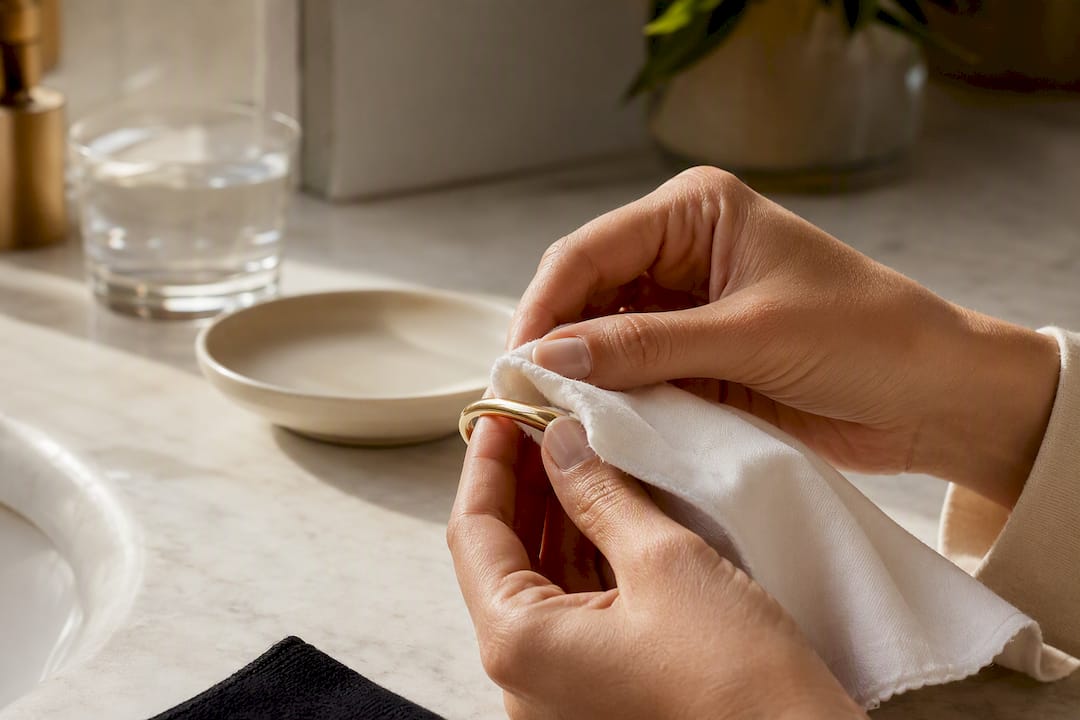
- Store pieces dry, ideally in a soft pouch or lined box, and wipe them with a soft cloth after wearing rather than a paper towel or anything abrasive.
- Skip ultrasonic cleaners and harsh jewelry dips on plated or vermeil pieces. They can strip a thin gold layer in seconds.
Pro Tip: If a favorite vermeil piece starts showing silver through the gold, ask a jeweler about replating before you assume it’s beyond saving. Replating a vermeil piece is usually cheap and quick since the sterling silver base underneath is still solid. Plated jewelry over brass is rarely worth replating, since the base metal itself has little value once the gold wears through.
For more detail on daily care habits that apply across gold finishes, see this guide on caring for gold jewelry.
How to Tell Vermeil From Plated Before You Buy
The fastest way to avoid disappointment is to check the marks and ask direct questions before you pay.
- Look for a 925 stamp paired with a “vermeil” designation, not just 925 alone, which only confirms the silver base.
- Ask the seller for the exact micron thickness of the gold layer and the karat. A seller who won’t confirm both is a red flag, since disclosure is standard practice among reputable brands.
- Treat vague language like “gold tone” or “gold finish” as a signal the piece is plated, not vermeil, regardless of how the listing photos look.
- If verification really matters, a jeweler can run an acid test or XRF scan to confirm the base metal and gold content on the spot.
Which One Should You Actually Buy?
Match the finish to how you’ll actually wear the piece, not just the price tag.
- Daily wear or sensitive skin: Choose verified vermeil with documented micron thickness, or step up to gold filled or solid gold if you want to skip the guesswork entirely. Compare solid gold against gold filled if you’re deciding between those two.
- Trend pieces or a tight budget: Plated jewelry is a reasonable call here, as long as you go in knowing it’s a short-term piece, not a long-term one.
- Resale or long-term value: Neither vermeil nor plating is built for that. Solid gold or gold filled pieces hold value far better over years of wear.
Andrew’s Take: What Actually Matters When You’re Buying
Most people don’t get burned by choosing plated jewelry. They get burned by buying plated jewelry labeled as vermeil, which is more common than it should be. My honest advice: ask for the micron number every time, and treat a vague answer as your cue to walk away. A clear return policy matters almost as much as the specs, since even a well-documented piece can look different in hand than it did online. Some retailers back their jewelry with straightforward guarantees and support for exactly that reason.
— Andrew
Shop Vermeil and Fine Gold Jewelry at The retailer
Some online retailers carry fine jewelry across gold, gemstone, and diamond categories, backed by customer support teams ready to answer questions about metals, plating, or care before you buy. If you’re leaning toward something with more staying power than plated jewelry, engagement rings and gemstone rings built on solid metals are worth a look.
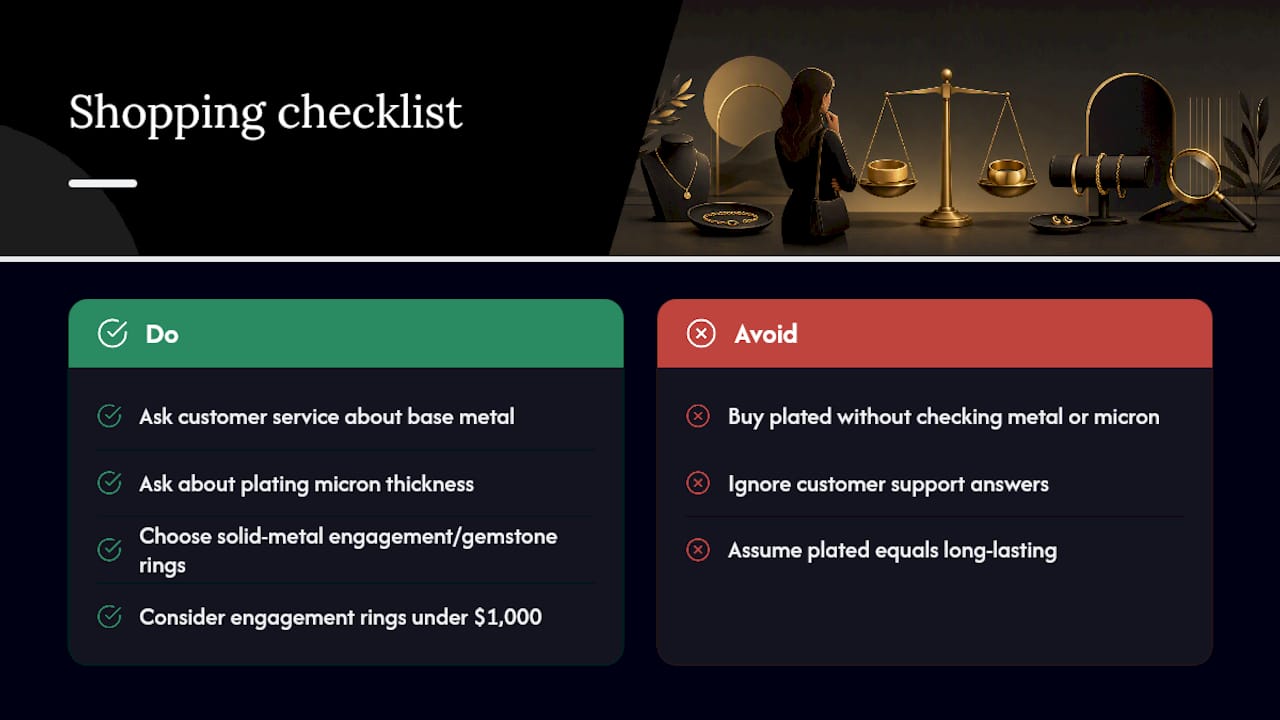
Not sure whether a piece you’re eyeing is vermeil, plated, or solid gold? Reach out to customer service with the product listing in hand and ask about base metal and micron thickness before you check out. If you’re shopping on a budget but still want real diamonds and durable metals, start with engagement rings under $1,000 and compare what you get for the price against any plated alternative.
Sources
- What Is Gold Vermeil? Real Gold, 925 Stamp & Value
- Gold Plated vs. Vermeil vs. Solid Gold: A Primer | The Strategist
Recommended
- What Is Gold Plating? A Jewelry Shopper’s Guide
- Gold vs Platinum: Key Differences for Jewelry and Investing
