TL;DR:
- Carat weight measures a diamond’s mass, influencing its price, rarity, and visual size. Larger diamonds are rarer and cost more per carat, with demand increasing at milestone weights like 1.0 and 2.0 carats. Proper cut and shape can make a smaller diamond appear larger, emphasizing quality over weight for a better appearance.
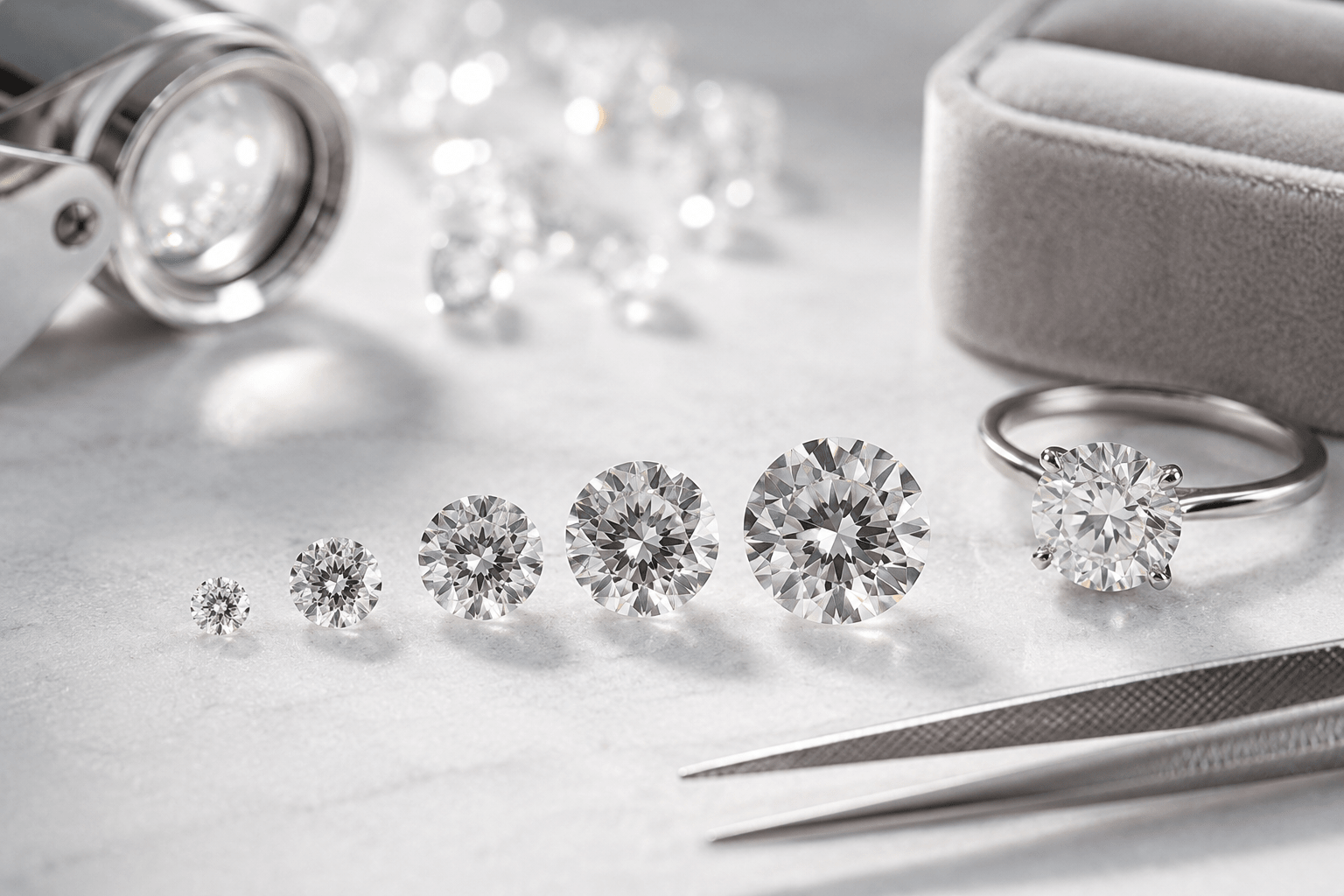
Carat weight is defined as the unit of measurement for a diamond’s mass, where one carat equals 0.2 grams, roughly the weight of a small paper clip. That single number shapes a diamond’s price, rarity, and how large it looks on your finger. The Gemological Institute of America (GIA) established carat as one of the 4Cs — alongside cut, color, and clarity — because it directly drives market value. Understanding why carat weight matters helps you spend smarter, avoid common traps, and choose a diamond that looks exactly the way you want it to.
Why does carat weight matter for diamond pricing?
Carat weight is the single biggest driver of diamond price. Larger diamonds occur less frequently in nature, so rarity pushes the cost up fast as weight increases. The relationship is not linear. Price per carat rises sharply as the stone gets heavier, meaning a 2-carat diamond costs far more than twice the price of a 1-carat diamond of equal quality.
The diamond industry recognizes specific weight thresholds called “magic sizes.” These are milestone weights at 0.5, 1.0, and 2.0 carats where demand spikes and prices jump noticeably. A diamond sitting right at 1.00 carat commands a premium simply because buyers want that round number. The stone just below it, at 0.95 carats, looks nearly identical but costs meaningfully less.
Two diamonds at the same carat weight can still carry very different price tags. Cut, color, and clarity grades all influence final price, sometimes dramatically. A 1-carat diamond with excellent cut and VS1 clarity will cost more than a 1-carat stone with a poor cut and SI2 clarity. Carat weight sets the baseline, but the other 4Cs determine where within that range the price lands.
Key pricing factors tied to carat weight:
- Rarity premium: Larger stones are exponentially rarer, so price per carat accelerates with size.
- Magic size surcharge: Diamonds at 0.5, 1.0, and 2.0 carats carry a built-in demand premium.
- Quality interaction: The same carat weight produces a wide price range depending on cut, color, and clarity.
- Market demand: Popular carat weights for engagement rings, typically 1.0 to 1.5 carats, see the highest buyer competition.
Does carat weight determine how big a diamond looks?
Carat measures weight, not physical dimensions. That distinction matters more than most buyers realize. A deeper cut diamond can appear smaller face-up than a shallower cut stone of the same carat weight, because more of its mass sits below the girdle rather than across the top.
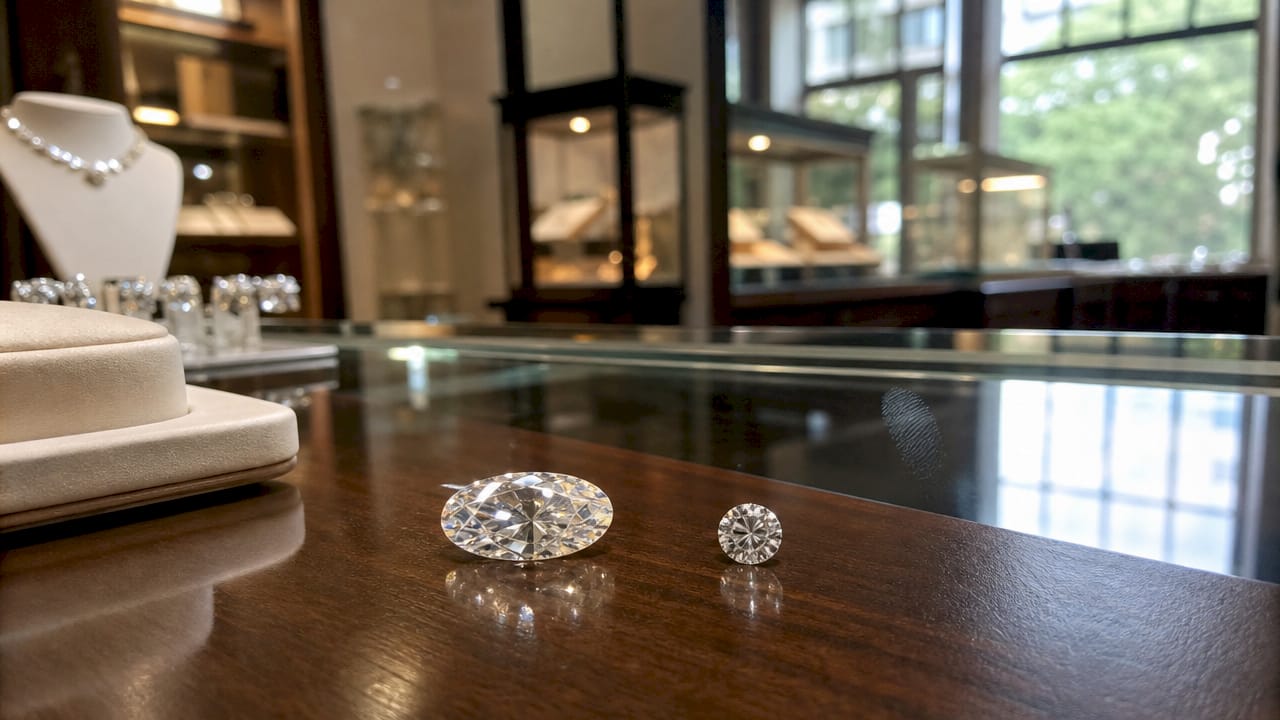
Shape plays an equally important role. Elongated shapes like oval, marquise, and pear spread their weight across a larger surface area. A 1-carat oval diamond typically looks larger face-up than a 1-carat round brilliant, even though both weigh exactly the same. Round brilliants, while the most popular shape, tend to have a smaller face-up diameter relative to their weight because of how the cut is structured.
| Diamond shape | Face-up appearance at 1 carat | Cut depth impact |
|---|---|---|
| Round brilliant | Moderate face-up size | Deep cut reduces visible diameter |
| Oval | Larger face-up size | Elongated spread maximizes appearance |
| Marquise | Largest face-up size | Slim profile creates illusion of size |
| Princess | Moderate face-up size | Square shape concentrates weight |
| Pear | Large face-up size | Tapered point extends visual length |
Pro Tip: If you want a diamond that looks as large as possible for your budget, prioritize cut quality and consider an elongated shape like oval or marquise before increasing carat weight.
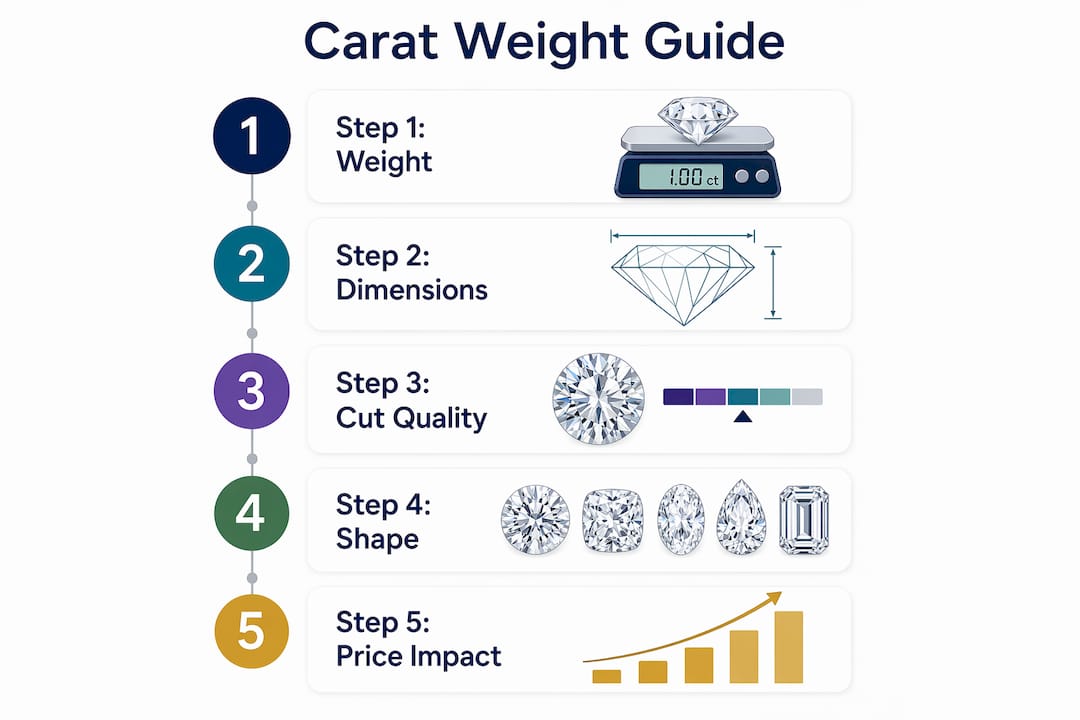
The takeaway is direct: a well-cut 0.90-carat diamond can look larger than a poorly cut 1.10-carat stone. Cut quality and shape are the tools that control perceived size. Carat weight alone does not tell you how impressive a diamond will look in a setting.
How to buy smarter by understanding carat weight
The most effective buying strategy centers on the magic size principle. Choosing a diamond just below a milestone weight, such as 0.90 or 0.95 carats instead of 1.00 carats, can save hundreds or even thousands of dollars with no visible difference to the naked eye. That savings can then fund a better cut grade, which has a far greater impact on beauty than the missing 0.05 carats.
A practical approach to buying by carat weight:
- Set your budget first. Decide the maximum you will spend before you look at carat sizes. This prevents the common trap of anchoring to a round number like “I need a 1-carat diamond.”
- Target just-under magic sizes. Look at 0.45–0.49 ct, 0.90–0.99 ct, and 1.40–1.49 ct ranges. These stones look identical to their milestone counterparts but cost less.
- Prioritize cut grade. An excellent or ideal cut grade returns more light and makes any carat weight look its best. Never sacrifice cut to gain carat weight.
- Balance clarity and color. For diamonds under 1 carat, SI1 clarity and G or H color are typically eye-clean and offer strong value. Redirect the savings toward carat or cut.
- Check the face-up dimensions. Ask for the millimeter measurements of any diamond you consider. Two stones at the same carat weight can differ by a full millimeter in diameter depending on cut depth.
Pro Tip: Ask your jeweler for the exact millimeter diameter of a diamond before buying. A 1-carat round brilliant should measure approximately 6.4–6.5 mm across. If it measures significantly less, the cut is too deep and you are paying for hidden weight.
The carat weight and value relationship rewards buyers who understand the nuances. Shoppers who fixate on hitting a specific carat number often overpay while getting a less beautiful diamond than someone who spent the same budget more strategically.
How does carat weight vary by jewelry type?
Carat weight significance changes depending on the piece of jewelry. Engagement rings carry the highest carat expectations because the center stone is the focal point of the design. Earrings and pendants typically feature smaller carat totals than engagement rings, because the viewing distance and setting style change what looks proportionate.
Common carat weight ranges by jewelry type:
- Engagement rings: Center stones typically range from 0.50 to 2.00 carats for most buyers. The average in the U.S. market sits around 1.0 to 1.2 carats.
- Stud earrings: Total carat weight (TCW) of 0.25 to 1.00 carat per pair is standard. Larger studs above 1.00 TCW are considered statement pieces.
- Pendant necklaces: Solitaire pendants commonly range from 0.25 to 1.00 carat. Larger pendants above 1.00 carat are typically reserved for special occasions or high-end designs.
- Tennis bracelets: Total carat weight ranges widely, from 2.00 to 10.00 carats across the full bracelet, because the stones are smaller and numerous.
- Fashion rings: Cocktail and right-hand rings often use multiple smaller stones, with total carat weight ranging from 0.50 to 3.00 carats depending on the design.
The carat weight per jewelry type also connects to practical wearability. A 3-carat solitaire ring is a bold statement piece. The same 3 carats spread across a tennis bracelet looks elegant and wearable every day. Matching carat weight to the jewelry type and the wearer’s lifestyle produces the best result.
Key Takeaways
Carat weight drives diamond price exponentially, but cut quality and shape determine how large and brilliant a diamond actually looks.
| Point | Details |
|---|---|
| Carat equals weight, not size | One carat is 0.2 grams; visual size depends on cut depth and diamond shape. |
| Price rises exponentially | Larger diamonds are rarer, so cost per carat accelerates sharply with weight. |
| Magic sizes cost more | Diamonds at 0.5, 1.0, and 2.0 carats carry a demand premium; buying just below saves money. |
| Cut controls appearance | A well-cut lighter diamond can look larger than a poorly cut heavier stone. |
| Carat varies by jewelry type | Engagement rings, earrings, and bracelets each have appropriate carat weight ranges. |
What I’ve learned after years of watching buyers get carat weight wrong
The most common mistake I see is treating carat weight as a status number rather than a practical measurement. Buyers walk in saying “I want a 1-carat diamond” the same way they might say “I want a size 10 shoe.” The number feels concrete and safe. But a 1-carat diamond with a mediocre cut looks dull and smaller than a 0.85-carat stone with an excellent cut. The number on the certificate does not tell you what the diamond looks like.
The magic size strategy is real, and it works. I have watched buyers save significant money by choosing a 0.92-carat stone over a 1.00-carat stone, then put that savings toward a better cut grade. The result was a diamond that looked bigger and brighter than the 1-carat option they originally wanted. That is not a compromise. That is a better outcome.
The question I always recommend asking a jeweler is simple: “What are the millimeter dimensions of this stone?” A jeweler who cannot answer that question, or who deflects to the carat weight alone, is not giving you the full picture. The face-up diameter tells you what you will actually see every day. The carat weight tells you what the scale says.
One more thing worth knowing: carat and karat are not the same word used two ways. Carat measures gemstone weight; karat measures gold purity. Mixing them up is an easy mistake that can lead to real confusion when reading jewelry descriptions. Knowing the difference makes you a more confident buyer from the first conversation.
— Andrew
Find your ideal diamond at Superjeweler
Superjeweler carries diamonds across every carat range, from delicate accent stones to statement center diamonds, all at prices that reflect real value rather than retail markup.

Whether you are searching for engagement rings under $1,000 or want to explore the full selection of lab-grown diamonds in popular carat weights, Superjeweler makes it straightforward to compare options side by side. Every listing includes the stone’s specifications so you can apply the magic size strategy and evaluate cut quality before you buy. Free worldwide shipping and a satisfaction guarantee mean you can shop with confidence at every budget level.
FAQ
What does carat weight mean for a diamond?
Carat is the unit of weight used for diamonds, where one carat equals 0.2 grams. It is one of the 4Cs used by the GIA to evaluate diamond quality and value.
Does a higher carat diamond always look bigger?
No. A deeper cut diamond can appear smaller face-up than a lighter stone with a shallower cut. Shape also affects perceived size, with elongated shapes like oval and marquise appearing larger than round stones of the same weight.
What is the magic size strategy for buying diamonds?
The magic size strategy means choosing a diamond just below a milestone weight, such as 0.95 carats instead of 1.00 carats, to avoid the demand premium at round numbers while getting a nearly identical appearance for less money.
What is the difference between carat and karat?
Carat measures the weight of a gemstone; karat measures the purity of gold, where 24-karat gold is pure gold. The two terms apply to completely different materials and measurements.
What carat weight is best for an engagement ring?
Most engagement ring buyers in the U.S. choose center stones between 0.50 and 2.00 carats, with 1.0 to 1.2 carats being the most common range. The best carat weight depends on budget, finger size, and the buyer’s preference for cut quality versus size.
Recommended
- The Role of Carat Weight in Diamond Value and Size
- How carat weight influences diamond value in 2026
- Necklace Carat Weight Explained for Smarter Shopping
- Why Diamond Quality Matters for Engagement Rings
