When shopping for an engagement ring, many buyers confuse diamond shape with diamond cut, two distinct characteristics that dramatically influence a ring’s appearance and brilliance. Diamond shape refers to the geometric outline you see from above, like round, oval, or princess, while cut describes how well facets are arranged to reflect light. Understanding this difference empowers you to select a diamond shape that matches your style and maximizes sparkle. This guide clarifies popular shapes, explains how cut quality affects brilliance, and helps you choose confidently for your engagement rings journey.
Table of Contents
- Key takeaways
- What defines a diamond shape versus a diamond cut?
- Popular diamond shapes and their visual characteristics
- Expert nuances: how cut quality and viewing experience affect shape choice
- How to choose the right diamond shape for your engagement ring
- Find the perfect diamond shape at SuperJeweler
- FAQ
Key Takeaways
| Point | Details |
|---|---|
| Shape versus cut difference | Shape is the outline seen from above while cut describes facet arrangement and light performance. |
| Round is most brilliant | Round diamonds are the most popular for maximum brilliance due to their symmetrical design and optimized light return. |
| Cut quality matters | Cut quality directly impacts sparkle and fire, so a poorly cut stone can look dull even if the shape is popular. |
| Specify shape and cut | When shopping, specify both your preferred shape and expected cut quality to ensure you get the style and sparkle you want. |
What defines a diamond shape versus a diamond cut?
Diamond shape refers to the geometric outline of a diamond viewed from above, distinct from cut describing facet arrangement and light performance quality. When you look down at a diamond, the shape is what you see: round, oval, princess, emerald, or pear. Cut, however, describes how precisely a diamond’s facets are arranged, their angles, and proportions, all of which determine how brilliantly the stone reflects light back to your eye.
Many shoppers mistakenly use these terms interchangeably, asking for a “princess cut” when they mean a princess shape with excellent cut quality. This confusion matters because shape affects the ring’s overall style and personality, while cut quality directly impacts sparkle and fire. A poorly cut round diamond will appear dull despite its popular shape, whereas an excellently cut oval will dazzle with brilliance.
Common shapes include round brilliant, princess, oval, emerald, marquise, pear, cushion, radiant, and Asscher. Each shape can be cut to different quality standards. For example, two oval diamonds might share the same shape outline but differ dramatically in brilliance based on their facet precision and proportions.
Pro Tip: When shopping, specify both your preferred shape and your expectation for cut quality. Ask jewelers to show you how cut grades or symmetry ratings affect the specific shape you’re considering, ensuring you get both the style and sparkle you want.
Understanding this distinction helps you communicate clearly with jewelers and make informed choices. You can prioritize shape based on aesthetic preference while ensuring cut quality delivers the brilliance you expect. This knowledge prevents disappointment and ensures your investment reflects both beauty and performance.
- Shape determines visual outline and style personality
- Cut quality controls light performance and sparkle intensity
- Both factors work together to create a stunning diamond
- Prioritizing one without considering the other leads to suboptimal results
Popular diamond shapes and their visual characteristics
Engagement ring shoppers encounter numerous popular diamond shapes, each offering distinct visual characteristics and light performance. Round brilliant diamonds account for 60-75% of sales due to superior brilliance from 57-58 facets optimized for light return. The round’s symmetrical design maximizes fire and scintillation, making it the benchmark for sparkle.
Princess shapes feature a square outline with pointed corners and brilliant-style facets that deliver exceptional sparkle. This modern shape appeals to buyers seeking contemporary style with impressive light performance. Oval diamonds combine the brilliance of round cuts with an elongated silhouette that flatters fingers and appears larger per carat weight.
Emerald shapes showcase step-cut facets arranged in concentric rectangles, creating a sophisticated hall of mirrors effect rather than intense sparkle. Asscher shapes offer a similar step-cut approach but in a square format with cropped corners, emphasizing clarity and elegance. These step cuts appeal to buyers who value understated sophistication over maximum brilliance.
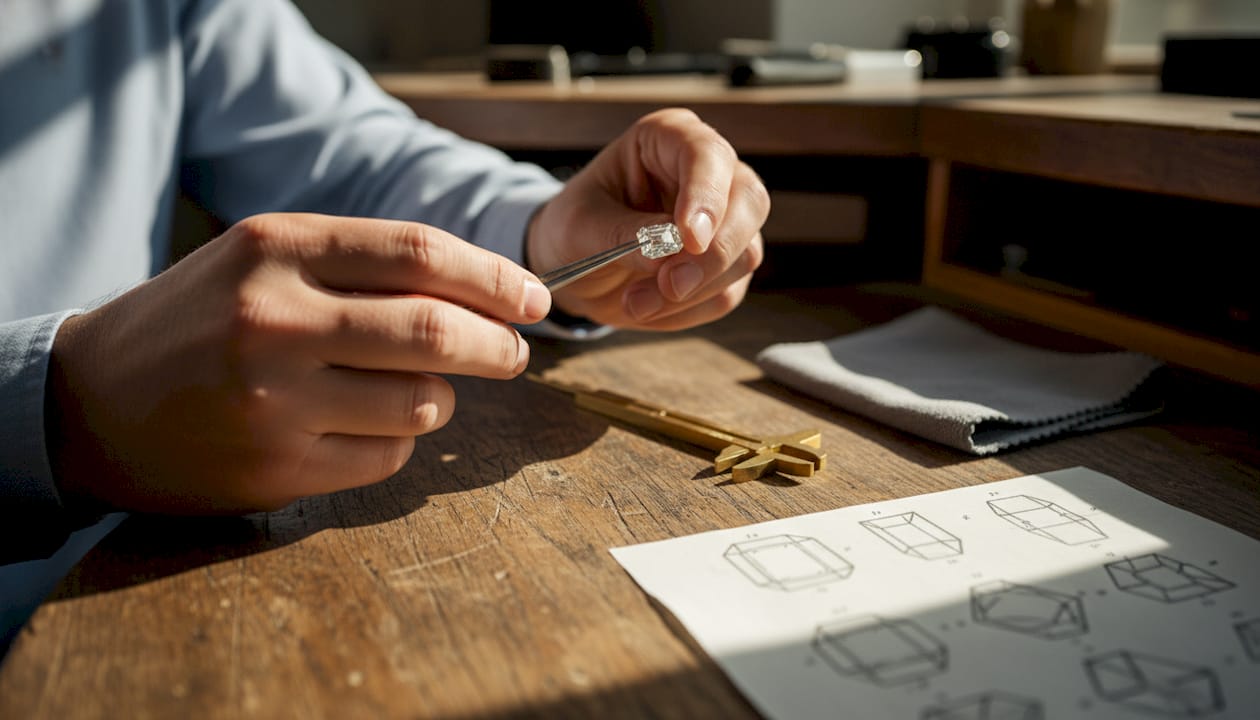
Marquise diamonds feature an elongated shape with pointed ends, maximizing surface area and creating a dramatic, vintage-inspired look. Pear shapes blend the rounded end of an oval with the pointed tip of a marquise, offering asymmetrical elegance. Cushion shapes combine rounded corners with larger facets, delivering a romantic, antique-inspired appearance with strong brilliance.
Radiant shapes merge the outline of emerald cuts with brilliant-style faceting, offering both elegance and sparkle. This hybrid approach appeals to buyers who want step-cut sophistication with more fire than traditional emerald shapes provide.
Brilliant cuts maximize sparkle via triangular and kite facets, while step cuts use concentric rectangular facets for elegant hall of mirrors effect but less scintillation. This fundamental difference in facet arrangement explains why round, princess, oval, and radiant diamonds sparkle intensely, whereas emerald and Asscher shapes offer subdued, mirror-like reflections.
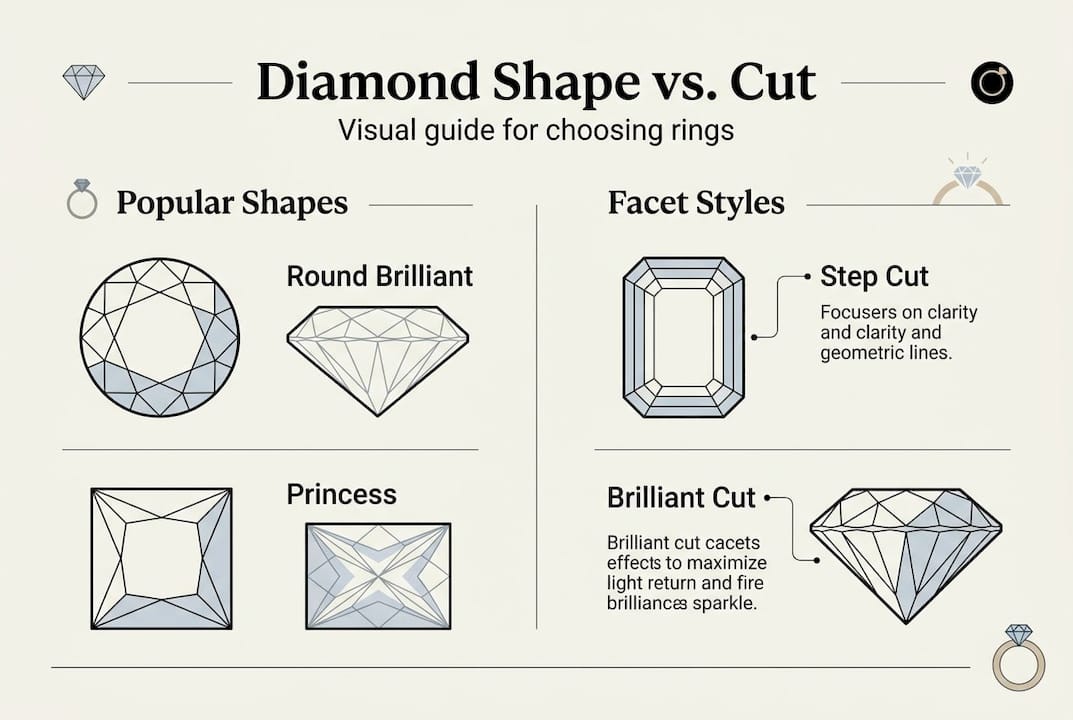
| Diamond Shape | Facet Style | Visual Effect | Best For |
|---|---|---|---|
| Round Brilliant | Brilliant cut | Maximum sparkle and fire | Traditional elegance, maximum brilliance |
| Princess | Brilliant cut | Intense sparkle, modern edges | Contemporary style, bold look |
| Oval | Brilliant cut | Elongated brilliance | Finger-flattering, larger appearance |
| Emerald | Step cut | Hall of mirrors, subdued | Sophisticated, clarity showcase |
| Marquise | Brilliant cut | Dramatic elongation | Vintage style, maximum surface area |
| Pear | Brilliant cut | Asymmetrical elegance | Unique style, vintage romance |
| Cushion | Brilliant cut | Romantic sparkle | Antique-inspired, soft edges |
| Radiant | Brilliant cut | Hybrid brilliance | Emerald outline with sparkle |
| Asscher | Step cut | Art deco elegance | Vintage sophistication, clarity focus |
Shape selection dramatically influences how your engagement rings present on your hand and reflect your personal style. Round brilliants suit those prioritizing sparkle above all else, while emerald and Asscher shapes appeal to minimalists who appreciate clean lines and transparency.
- Brilliant cuts prioritize maximum light return and sparkle
- Step cuts emphasize clarity and elegant reflections
- Elongated shapes like oval and marquise flatter shorter fingers
- Square and rectangular shapes suit bold, modern aesthetics
Expert nuances: how cut quality and viewing experience affect shape choice
GIA proportions and symmetry are critical, yet fancy shapes lack formal cut grades and rely on polish and symmetry, with viewing in person avoiding distortions seen in photos and videos. Only round brilliant diamonds receive an official GIA cut grade ranging from Excellent to Poor, based on precise proportion standards that optimize light performance. Every other shape, collectively called fancy shapes, lacks these standardized cut grades.
For fancy shapes, buyers must evaluate polish and symmetry grades instead of relying on a comprehensive cut grade. Polish describes the smoothness of facet surfaces, while symmetry assesses how precisely facets align. Both factors significantly impact light performance, but they don’t provide the complete picture that a cut grade offers for rounds. This means fancy shape selection requires more careful visual inspection and expert guidance.
The bow-tie effect appears as a dark shadow across the center of elongated brilliant shapes like oval, marquise, and pear diamonds. This phenomenon occurs when light escapes through the pavilion rather than reflecting back to the viewer’s eye. Some bow-tie presence is normal in these shapes, but excessive shadowing diminishes beauty and value. Unfortunately, certificates don’t measure bow-tie intensity, making personal viewing essential.
Photos and videos frequently distort how diamonds reflect light, making bow-ties appear more or less prominent than they actually are. Lighting conditions, camera angles, and image processing all affect how sparkle and shadows present in digital media. A diamond that looks flawless in professional photos might reveal distracting bow-ties or dullness in natural lighting. Conversely, harsh photography lighting might exaggerate minor imperfections that are barely noticeable in person.
Pro Tip: Always view your final diamond candidates in person under multiple lighting conditions before purchasing. Examine the stone in natural daylight, indoor lighting, and spotlighting to understand how it performs in real-world scenarios. This practice reveals true brilliance and any visual issues that photos might hide or exaggerate.
Understanding GIA cut grade importance for round brilliants helps you appreciate why fancy shapes require different evaluation methods. Round diamonds benefit from decades of optical research that established ideal proportion ranges. Fancy shapes lack this standardization, meaning two oval diamonds with identical carat weight, color, and clarity can differ dramatically in beauty based on their unique proportions.
When evaluating fancy shapes, prioritize these factors:
- Symmetry grade of Very Good or Excellent ensures balanced light performance
- Polish grade of Very Good or Excellent maximizes surface brilliance
- Visual inspection under varied lighting reveals true sparkle and any bow-tie effects
- Expert guidance helps identify well-proportioned examples within each shape category
Cut quality remains the most important factor for diamond beauty, regardless of shape. Even the most popular shape will disappoint if cut quality is poor, while an excellently proportioned fancy shape can rival round brilliant sparkle. This reality makes education and careful selection more critical for fancy shape buyers than for those choosing traditional rounds with clear cut grades.
How to choose the right diamond shape for your engagement ring
Selecting the ideal diamond shape involves balancing personal style preferences, finger proportions, lifestyle considerations, and how the shape coordinates with your wedding band. Start by identifying which shapes naturally appeal to you, then refine your choice based on practical factors that ensure long-term satisfaction.
Follow this decision framework to narrow your options:
-
Assess your style personality. Do you gravitate toward classic elegance, modern minimalism, vintage romance, or bold statements? Round brilliants suit timeless tastes, while princess and radiant shapes appeal to contemporary preferences. Emerald and Asscher shapes fit minimalist aesthetics, whereas cushion and pear shapes satisfy vintage lovers.
-
Consider finger shape and length. Elongated shapes like oval, marquise, and pear visually lengthen shorter fingers and create a slimming effect. Round and princess shapes complement any finger type. Wider shapes like emerald and cushion suit longer fingers and provide substantial presence.
-
Evaluate lifestyle and durability. Shapes with pointed corners like princess, marquise, and pear are more vulnerable to chipping and require protective prong settings. Round, oval, and cushion shapes offer greater durability for active lifestyles. If you work with your hands frequently, prioritize rounded shapes with fewer vulnerable points.
-
Test how shapes look on your hand. Visit jewelers to try on different shapes and observe how each proportionally relates to your finger width and length. What looks stunning in photos might feel too large or too small on your specific hand. This hands-on experience prevents buyer’s remorse.
-
Think about wedding band pairing. Curved shapes like pear and marquise often require custom or curved diamond wedding bands to sit flush against the engagement ring. Straight shapes like round, princess, and emerald pair easily with standard straight bands, offering more flexibility and lower costs.
-
Balance brilliance with uniqueness. Round brilliants offer maximum sparkle but less individuality. Fancy shapes provide distinctive character with varying brilliance levels. Decide whether you prioritize unmatched sparkle or a more unique aesthetic that reflects your personality.
Pro Tip: Choose your shape based on genuine personal preference rather than following trends or others’ opinions. You’ll wear this ring daily for decades, so select a shape that resonates with your authentic style, not what’s currently popular or what friends recommend.
Your chosen shape should feel like a natural extension of your personal aesthetic. If you consistently wear classic, understated jewelry, an emerald or Asscher shape likely suits you better than a dramatic marquise. If you love making bold statements with accessories, consider pear, marquise, or radiant shapes that command attention.
Remember that shape preference often evolves during the shopping process. Many buyers start convinced they want one shape, then discover unexpected love for another after trying various options. Stay open-minded and trust your instinctive reactions when viewing diamonds in person. Your immediate emotional response often reveals your true preference better than analytical comparison.
- Start with shapes that match your existing jewelry style
- Try multiple shapes on your hand before deciding
- Consider long-term wearability and durability
- Ensure your choice coordinates with future wedding band plans
Find the perfect diamond shape at SuperJeweler
Now that you understand how diamond shapes influence style and brilliance, explore SuperJeweler’s extensive collection to find your ideal match. Our engagement rings selection features every popular shape, from classic round brilliants to distinctive fancy shapes, ensuring you discover the perfect expression of your style.
Browse our inventory by shop by diamond shape to compare how different outlines look in various settings and metal types. Whether you’re drawn to the timeless elegance of round brilliants, the modern sophistication of princess cuts, or the vintage romance of cushion shapes, our curated selection offers exceptional quality at accessible prices.

We understand that choosing an engagement ring represents a significant investment and emotional decision. That’s why SuperJeweler provides affordable engagement rings without compromising quality, including stunning options under $1,000. Our expert team stands ready to guide you through shape selection, cut quality evaluation, and setting choices that bring your vision to life. With free worldwide shipping, comprehensive warranties, and flexible return policies, you can shop confidently knowing your satisfaction is guaranteed.
FAQ
Which diamond shapes are best for maximum sparkle?
Round brilliant diamonds deliver the highest sparkle due to their 57-58 facets optimized specifically for light return and fire. Princess, oval, and radiant shapes also offer exceptional brilliance through brilliant-style faceting that maximizes scintillation. If sparkle is your top priority, choose brilliant cuts over step cuts like emerald or Asscher.
What does the bow-tie effect mean in fancy diamond shapes?
The bow-tie effect appears as a dark shadow resembling a bow tie across the center of elongated shapes like oval, marquise, and pear diamonds. This occurs when light escapes through the pavilion instead of reflecting back to your eye. Some bow-tie presence is normal, but excessive shadowing diminishes beauty and requires in-person evaluation since certificates don’t measure this characteristic.
How important is it to see a diamond in person before buying?
Viewing diamonds in person is critically important because photos and videos distort light performance and can hide or exaggerate bow-tie effects and brilliance. In-person inspection under natural daylight, indoor lighting, and spotlighting reveals true sparkle and any visual issues. This hands-on evaluation prevents disappointment and ensures your diamond performs beautifully in real-world conditions, not just professional photography.
Are fancy-shaped diamonds graded differently than round ones?
Yes, only round brilliant diamonds receive an official GIA cut grade ranging from Excellent to Poor based on standardized proportions. Fancy shapes lack formal cut grades and are instead evaluated through polish and symmetry grades. This difference means fancy shape buyers must rely more heavily on visual inspection and expert guidance to assess cut quality and light performance.
Do certain diamond shapes look larger than others at the same carat weight?
Elongated shapes like oval, marquise, and pear appear larger than round diamonds of equal carat weight because they spread more surface area across the top. Emerald and Asscher shapes also show substantial face-up size due to their step-cut faceting and broad tables. If maximizing perceived size matters to you, consider these shapes over rounds, which distribute more weight in depth rather than width.
Recommended
- Engagement Rings | SuperJeweler
- Trends in Engagement Rings 2026: Style, Stone, and Savings
- Lab Grown Diamond Rings | SuperJeweler
- Engagement Rings Shop By Diamond Shape | SuperJeweler
